

Tel Aviv (BN24) – Israel launched airstrikes on the headquarters of Syria’s Ministry of Defence and areas near the presidential palace in Damascus on Wednesday, marking a dangerous escalation in the region as sectarian violence in southern Syria spilled into the capital.
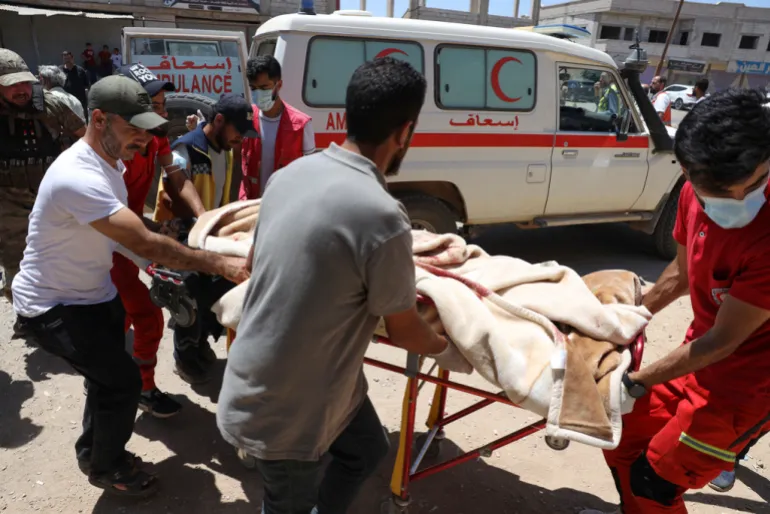
The strikes followed days of fierce clashes between Syrian government forces and Druze fighters in Suwayda province. Footage broadcast by Al Jazeera showed four massive explosions striking the Defence Ministry, sending columns of smoke billowing over Damascus before another airstrike hit close to the palace complex.
Syria’s Interior Ministry later announced a ceasefire in Suwayda, confirmed by Druze spiritual leader Sheikh Yousef Jarbou. The truce, which took effect immediately, was intended to halt all military operations and “fully integrate Suwayda into the Syrian state.”
But the fighting had already left deep scars. According to Syria’s Health Ministry, at least three people were killed and 34 wounded in the Israeli attacks. The UK-based Syrian Observatory for Human Rights reported even higher casualties in Suwayda, estimating more than 250 people killed, including 138 soldiers and security personnel, alongside civilians.
Israel claimed the strikes were meant to protect Syria’s Druze minority, describing them as natural allies threatened by government forces. However, many Druze leaders have historically rejected Israeli overtures and criticized foreign interference.
Israeli Defence Minister Israel Katz framed the bombardment as a final warning. “The warnings in Damascus have ended—now painful blows will come,” he declared in a statement on X. Katz said Israel’s military would sustain operations in Suwayda until Syrian forces withdrew entirely.
Al Jazeera’s Zeina Khodr, reporting live from Damascus, said the strikes were among the most brazen Israeli attacks on the capital in years. “This is a significant escalation,” she noted. “Israel is sending a very direct message that it will not hesitate to deepen its involvement.”
Earlier attempts to end the fighting in Suwayda quickly fell apart. A ceasefire announced on Tuesday collapsed overnight as gun battles erupted between Syrian troops and Druze fighters.
Syrian Defence Ministry officials blamed “groups outside the law” for violating the truce. The ministry said it opened safe corridors for civilians to flee, but local reports described chaotic scenes as residents tried to escape.
Medical sources said more than 200 people were wounded in the violence. Witnesses told Reuters that the fighting began after a Druze merchant was abducted by Sunni Bedouin tribesmen, rekindling old rivalries.
The violence has triggered chaos along the Israeli-occupied Golan Heights. Crowds of Israeli Druze gathered at the border, with some crossing into Syria to support their kin.
Israeli Prime Minister Benjamin Netanyahu personally appealed to the community to stay put. “You can be kidnapped, and you hurt the army’s efforts,” Netanyahu said. “Go back to your homes.”
Despite the pleas, Israeli warplanes continued pounding targets across southern Syria. Public broadcaster Kan reported nearly 160 strikes since Tuesday night, the majority focused on Suwayda.
Al Jazeera’s Khodr said Israel’s demands for a demilitarized zone presented Syria’s leadership with an impossible choice. “If they stay in Suwayda, it will mean more airstrikes. If they pull back, it will be seen as surrender,” she said.
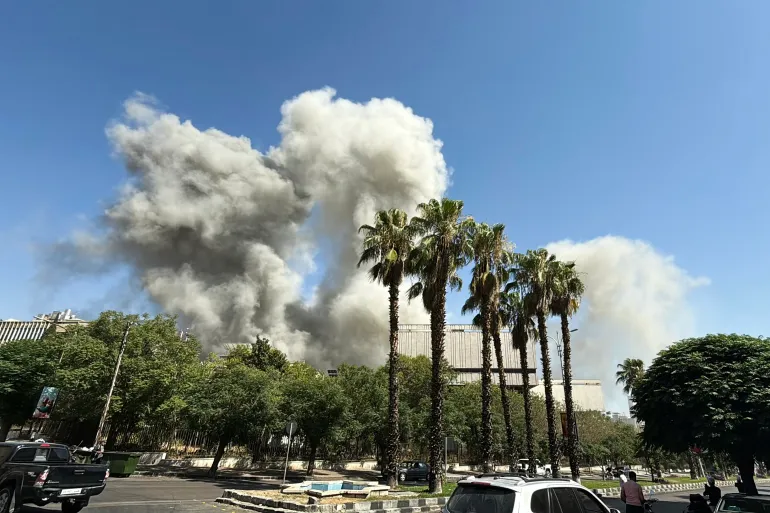
Syria’s Foreign Ministry condemned the attacks as “flagrant violations of sovereignty and international law.” Arab states also criticized Israel’s actions, though the government of President Ahmed al-Sharaa has struggled to rally international backing.
Since Bashar al-Assad’s overthrow in December, the new Syrian authorities have faced resistance from minority groups and former loyalist militias. In a sign of shifting dynamics, the United States recently removed the new ruling faction, Hayat Tahrir al-Sham, from its list of foreign terrorist organizations.
The abrupt escalation appeared to catch Washington off guard. U.S. Secretary of State Marco Rubio voiced concern: “We’re going to be working on that issue as we speak.”
Al Jazeera’s Kimberly Halkett reported from Washington that the Biden administration had hoped to stabilize Syria after more than a decade of war, but Israeli strikes risk undermining that strategy.
Analysts said the crisis in Suwayda underscores the fractured nature of post-Assad Syria. Political analyst Samy Akil told Al Jazeera the failure to create a truly inclusive system was fueling instability. “The government hasn’t backed its promises with tangible action,” Akil said.
Rob Geist Pinfold, a lecturer at King’s College London, said Israel’s alliance with Druze leader Hikmat al-Hijri, whose forces captured government buildings last week, shows it has chosen to continue military dominance rather than seek accommodation with Syria’s new rulers.
“Israel had an opportunity for a reset,” Pinfold said. “Instead, it’s maintaining the status quo—pursuing hegemony and occupation.”





