

A fire at a wedding party in Kinshasa, Congo, left at least 22 people dead and several others injured, the local mayor said Saturday, warning that the toll could still rise.
The fire broke out Friday night, September 4, at a party hall in the Lingwala area of northern Kinshasa and continued burning into early Saturday morning. Norbert Mushinga, the mayor of Lingwala, told the Congolese Press Agency the provisional death toll stood at 22, adding that the figure could increase as authorities continued assessing the scene.
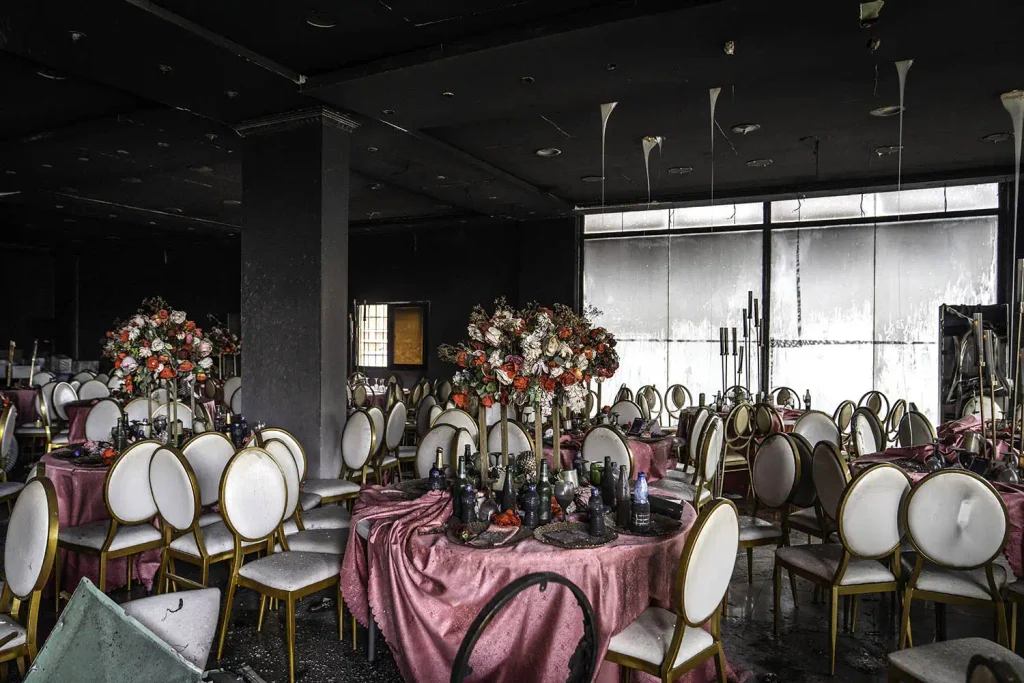
The building’s narrow hallways became constricted as guests tried to escape the flames, according to the Associated Press. Some people, both alive and dead, were laid by the roadside as other attendees worked to help those still alive, while the injured were transported to hospitals across the area, Mushinga said.
What We Know So Far
The exact cause of the fire had not been confirmed as of Saturday. The Kinshasa city government told the Congolese Press Agency that authorities suspected the fire may have started from an electrical issue or from decorations set up for the wedding, though this remained unconfirmed as investigators continued their work.
Among those killed was Guy Kitoko Aloma, a cameraman for Congolese National Radio and Television who was attending the event as a wedding guest, according to the Congolese Press Agency. No additional information about the other victims had been released as of the latest reporting.
Congo’s Deputy Prime Minister and Interior Minister Jacquemin Shabani visited the site Saturday morning. “It is a tragedy,” Shabani said.
Why This Matters
Deadly fires remain a recurring problem in densely populated parts of Kinshasa, where rapid urban development has often outpaced basic safety infrastructure, including adequate fire services. Local media have reported several similar fires already this year, with incidents becoming particularly common during the dry season. The narrow hallway design that appears to have trapped guests trying to escape Friday’s fire reflects a broader pattern in the city’s informal and poorly regulated event venues, where building layouts are not always designed with emergency evacuation in mind.
The death of a well known local broadcast journalist among the victims is likely to draw additional public and media attention to the tragedy within Congo, given his visibility through his work with the country’s national broadcaster.
What Happens Next
Authorities are continuing to investigate the fire’s cause, including the suspected electrical or decoration related origins cited by the Kinshasa government. Mushinga has cautioned that the death toll could rise further as officials complete their assessment of the scene and account for those still hospitalized with injuries.
Given the recurring nature of fires in Kinshasa’s densely populated districts, the tragedy is likely to renew calls for improved fire safety enforcement and infrastructure investment in the city, though it remains unclear whether authorities will pursue specific regulatory changes in response to this incident.
Reporting drawn from the Associated Press, the Congolese Press Agency and People





