

A proposal to name a planned Mississippi River bridge after President Donald Trump has stalled in the Louisiana Legislature after failing to advance in the state Senate, despite earlier approval in the House.
The measure, introduced by Republican state Representative Michael Echols, sought to designate a future bridge linking Highway 30 and Highway 1 as the “President Donald J. Trump Expressway.” The project has long been discussed as part of efforts to improve transportation infrastructure across the Mississippi River.
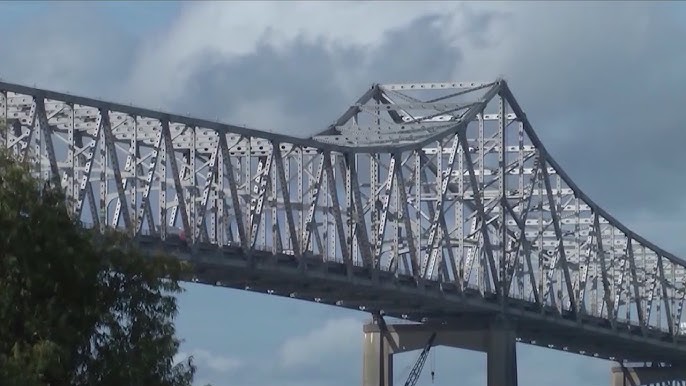
The bill cleared the Louisiana House in March with a 68 to 26 vote. However, it did not receive consideration in the Senate before the legislative session concluded on June 1, effectively halting its progress for the year.
Echols said he was informed by Senate leadership that there was little appetite among lawmakers to move forward with proposals to name roads or bridges after presidents at this time. He expressed disappointment, noting that attaching Trump’s name to the project could have helped attract federal attention and funding support.
The proposal would have required the state’s Department of Transportation and Development to install signage reflecting the designation once the bridge is constructed.
The stalled measure comes amid broader debates in Louisiana over infrastructure naming. A separate proposal introduced by Democratic state Representative Pat Moore sought to rename a portion of Louisiana Highway 15 in honor of former President Barack Obama. That measure advanced through committee but did not reach a full vote in either chamber.
Louisiana remains a stronghold for Republicans, with President Donald Trump receiving a significant share of the vote in the 2024 election. Even so, the failure of the bridge naming proposal highlights limits within the legislature on symbolic measures tied to political figures.
The debate also reflects a wider national trend, as infrastructure naming has increasingly become entangled in political identity and public perception.
Recent efforts to place Trump’s name on public sites have drawn both support and legal challenges. A federal court recently ruled against efforts to add his name to the John F. Kennedy Center for the Performing Arts, concluding that such decisions fall under congressional authority.
In Florida, a separate initiative approved by Governor Ron DeSantis allows for renaming several major airports, including Palm Beach International Airport, after President Donald Trump. That move has already prompted legal challenges, including concerns raised by aviation professionals about potential confusion and safety risks.
Members of the Trump family have rejected claims that such branding efforts could result in financial gain, pointing to agreements that limit revenue from on site merchandise while leaving open the possibility of off site commercial activity.
The collapse of the Louisiana proposal underscores a growing divide between symbolic political gestures and legislative priorities. While naming infrastructure after prominent figures can serve as a form of recognition, lawmakers often weigh such proposals against practical concerns, including funding, timing, and public reception.
In this case, the Senate’s decision not to act suggests a cautious approach to politically charged naming efforts, even within a state that strongly supports the president. It reflects an awareness that such measures can quickly become polarizing, potentially overshadowing the infrastructure projects themselves.
The episode also highlights how infrastructure funding strategies are evolving. While proponents argued that associating the bridge with a sitting president could unlock federal resources, critics question whether such branding meaningfully influences funding decisions or merely politicizes public works.
More broadly, the growing number of disputes over naming rights points to a shift in how public spaces are used to reflect political narratives. As legal challenges increase and public scrutiny intensifies, future efforts to rename major landmarks may face higher barriers, both in legislatures and in the courts.
For now, the proposed Mississippi River bridge project remains without a presidential name, as lawmakers appear to prioritize moving forward with construction over engaging in symbolic debates.
The Independent original





