

Terrorists launched coordinated assaults on Christian communities across northern Nigeria during Easter weekend, burning a church and homes in Chibok, Borno State, killing at least seven worshippers during Easter Sunday services at two Kaduna churches, and abducting five siblings including a two-year-old toddler in a midnight raid—attacks that underscore escalating violence targeting Christian populations during religious observances.
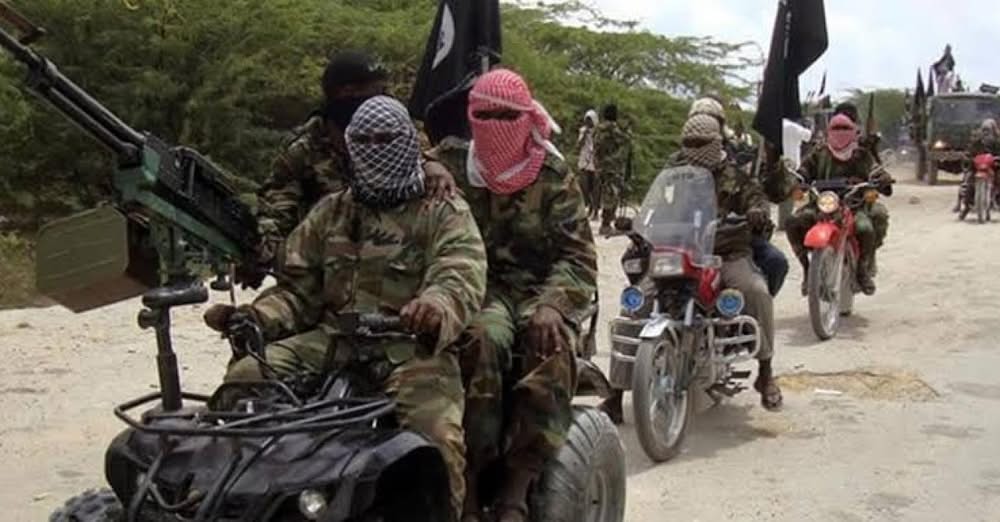
Fresh terror struck Kwapul community in Chibok Local Government Area, Borno State, as suspected insurgents carried out a late-night raid Saturday that extended into early Sunday hours. SaharaReporters learned that the insurgents set a church and several homes ablaze in what residents characterized as a coordinated attack on the predominantly Christian settlement.
Although no fatalities were documented in the Chibok assault, the attack left families displaced and traumatized, with growing calls for urgent security intervention to protect vulnerable rural populations. Locals disclosed that “attackers operated for hours without resistance,” underscoring fears that rural communities remain highly vulnerable despite years of government counterinsurgency efforts that have consumed enormous resources while failing to eliminate threats.
The attack transpired at a particularly sensitive time as Christian communities observed the Easter season—a period repeatedly targeted in Nigeria’s conflict-prone regions where religious violence has become tragically routine. In recent years, numerous Christian-majority communities across Borno, Adamawa, and Plateau states have experienced similar assaults with churches attacked, worshippers killed, and homes destroyed, heightening concern over the timing and psychological impact of these incidents.
Chibok itself carries a painful legacy that resonates far beyond Nigeria’s borders. In April 2014, more than 270 schoolgirls were abducted from their dormitories by Boko Haram insurgents, drawing global condemnation and exposing the catastrophic scale of insecurity in northeastern Nigeria. Over a decade later, while some girls have been rescued or escaped, others remain missing, and the trauma continues affecting the community whose name became synonymous with governmental failure to protect its citizens.
Residents now fear the continuation of persistent attacks and chronic insecurity that prevents normal life and economic development. Local leaders are urging the Nigerian government and security agencies to respond swiftly, warning that inaction could embolden attackers and deepen the humanitarian crisis already displacing millions across the nation’s northeast.
Meanwhile, tragedy struck the Ariko community in Kachia Local Government Area, Kaduna State, on Easter Sunday when terrorists executed coordinated attacks on two Christian worship centers, killing at least seven people and abducting several others during morning services celebrating the resurrection of Jesus Christ.
The bloody assault, which occurred during early morning hours, targeted congregants at the First ECWA Church and St. Augustine Catholic Church while they gathered for Easter worship. The Councillor representing Awon Ward, Mark Bawa, confirmed the harrowing incident to journalists, disclosing that attackers arrived in large numbers and laid siege to both churches simultaneously.
“The attackers came in large numbers. They surrounded the area and began shooting sporadically at worshippers. Several people were killed, and many others were taken away into the bush,” Bawa stated according to The PUNCH, describing scenes of chaos and terror as armed men fired indiscriminately into congregations.
Bawa noted that sources indicated at least seven people have been verified dead, though the final casualty count remained uncertain as he traveled to the community. “I am currently on my way to the community to ascertain the exact number of casualties. Some sources said seven persons were killed, while others claimed eight. I will provide an update once details are confirmed,” Bawa explained.
Residents lamented that the assailants operated for prolonged periods without any resistance from security agencies. Bawa attributed the delayed response to chronic lack of telecommunications coverage in the rural district, which prevented locals from calling for help as the slaughter unfolded—a infrastructure deficit that has repeatedly proven fatal when communities face armed attacks.
The vulnerability of the area has raised fresh concerns among Southern Kaduna leaders who have repeatedly warned about thinning security presence in the hinterlands where government forces maintain minimal deployment despite escalating violence. The Easter Sunday attack represents the latest in a series of targeted assaults on religious gatherings in the state.
Only two months earlier in February 2026, terrorists invaded the Kurmin Wali community, also in Kachia Local Government Area, where scores of worshippers were kidnapped during a church service. Despite the outrage sparked by the February incident and renewed calls for protection, the latest bloodbath suggests that killers continue operating with near-impunity in the region where governmental authority has effectively collapsed.
Attempts to secure official response from the Kaduna State Police Command proved unsuccessful. The Command’s spokesperson, DSP Mansir Hassan, did not answer multiple calls seeking confirmation of casualty figures or the condition of abducted victims—a pattern of official silence that frustrates communities desperate for information about missing loved ones and security interventions.
Sahara Reporters also documented that terrorists carried out a daring midnight raid in Kachia, Kaduna State, abducting five siblings from a single household. The victims, including a two-year-old toddler named Irene, were taken from their family compound around 11:45 p.m. Saturday, April 4, 2026, in an assault that has devastated the family.
A family member told SaharaReporters that gunmen struck under darkness cover, breaching the compound’s security and leaving the household in terror. “Kidnappers entered our compound in Kachia and kidnapped five of my siblings, including two-year-old Irene,” the source stated, adding that the family remains in shock while “praying to God for their safe return.”
The identities of the other four siblings have not been made public, but the abduction of a toddler underscores the increasing depravity of the banditry crisis plaguing Southern Kaduna. The willingness to kidnap very young children—who have minimal ransom value but maximum psychological impact on families—suggests criminals are employing terror tactics beyond mere financial motivation.
This latest abduction follows a pattern of unbridled aggression in Kachia Local Government Area that has transformed the district into one of Nigeria’s most dangerous territories. The Sunday morning terrorist targeting of First ECWA Church and St. Augustine Catholic Church in the Ariko community, which killed at least seven worshippers and abducted several others, occurred mere hours after the midnight family abduction.
The convergence of multiple attacks within a 24-hour period across Kachia suggests either coordinated operations by a single group or the proliferation of multiple armed factions operating simultaneously in the territory—both scenarios indicating catastrophic security failures. The timing during Easter weekend appears calculated to maximize psychological trauma and media attention while striking when Christian communities gather in predictable locations.
The attacks raise profound questions about Nigerian security forces’ capacity and willingness to protect vulnerable populations in rural areas where government presence remains minimal despite years of promises about restoring order. The ability of armed groups to operate for hours without military intervention—even when attacking churches filled with worshippers—suggests either inadequate force deployment or institutional dysfunction preventing effective response to emergencies.
The telecommunications deficit that prevented Ariko residents from summoning help illustrates how infrastructure deficiencies compound security vulnerabilities in ways that prove lethal during crises. Without cellular coverage, isolated communities cannot alert authorities when attacks commence, allowing perpetrators extended time to kill, abduct, and loot before fleeing.
For Christian communities across northern Nigeria, the Easter weekend violence confirms their worst fears about targeted religious persecution that shows no signs of abating. The pattern of attacks during major Christian holidays—including previous Christmas and Easter assaults—suggests deliberate efforts to terrorize believers and potentially drive Christian populations from regions where they have lived for generations.
The economic impacts extend beyond immediate violence. Communities living under constant threat cannot maintain normal agricultural activities, attend markets, or send children to schools—creating cycles of poverty and underdevelopment that make entire regions increasingly ungovernable. Displaced populations crowd into urban areas lacking infrastructure to accommodate them, straining already inadequate public services.
International human rights organizations have repeatedly documented religious violence patterns in Nigeria while criticizing governmental responses as inadequate to the crisis scale. The attacks occur despite substantial military budgets and international security assistance aimed at combating Boko Haram, Islamic State West Africa Province, and bandit groups terrorizing rural populations.
For the families awaiting news of abducted loved ones—including the siblings taken from their Kachia compound—the uncertainty proves agonizing. Kidnapping victims in Nigeria face uncertain fates ranging from ransom negotiations to forced labor, sexual violence, forced marriage, or execution if families cannot pay demanded sums often exceeding what impoverished rural households can possibly raise.
As Easter Sunday concluded and communities mourned their dead while searching for the missing, the fundamental questions persisted about whether Nigerian authorities possess either the capacity or political will to protect citizens from armed groups that operate with apparent impunity across vast territories. The weekend’s violence suggests that despite years of conflict and countless promises, the security situation for vulnerable populations continues deteriorating rather than improving—a reality with devastating human consequences for millions living in fear.
Sahara Reporters





