

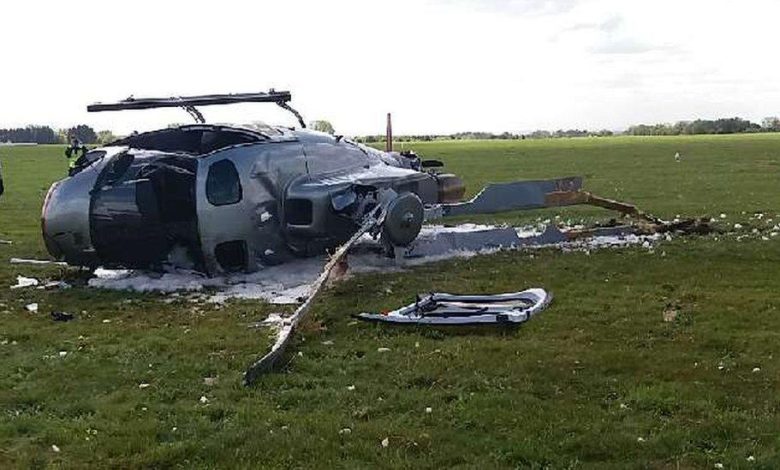
A military helicopter operated by Qatar’s armed forces crashed into the country’s territorial waters during a training mission, killing all seven people on board, including three Turkish nationals, officials from both countries said Sunday.
Authorities said the aircraft went down after experiencing a technical malfunction while carrying out routine operations. The Qatari Ministry of Defence and the Turkish Ministry of National Defence each confirmed the fatalities and identified those killed in the incident.
The victims included four members of Qatar’s armed forces, one officer assigned to the joint Qatar-Turkey military command, and two Turkish civilian technicians affiliated with the defense sector. Qatari officials identified the deceased as pilot Captain Mubarak Salem Daway al-Marri, Sergeant Fahad Hadi Ghanem al-Khayarin, Corporal Mohammed Maher Mohammed and Captain Saeed Nasser Samekh. Also killed were Major Sinan Tastekin of the Qatar-Turkey Joint Forces and Turkish nationals Suleiman Cemra Kahraman and Ismail Anas Can.
In a statement, Qatar’s Defence Ministry expressed condolences to the families of those killed. Turkish officials confirmed that one of their service members and two personnel connected to the defense company Aselsan were among the dead.
The Turkish Ministry of National Defence said the helicopter had been participating in a training exercise tied to the joint command structure when it crashed. Qatari officials similarly described the flight as routine and said the aircraft encountered a technical issue before going down.
Rescue operations concluded Sunday, with authorities confirming that all seven people on board had been recovered. Qatar’s interior ministry said search teams accounted for everyone aboard the aircraft and confirmed the deaths.
Officials have not provided additional details about the mechanical failure, and investigators are continuing to examine the wreckage to determine the precise cause of the crash. There was no immediate indication that hostile activity played a role.
The crash occurred amid heightened tensions across the Gulf region following a series of military exchanges involving Iran, the United States and Israel.
Since late February, when U.S. and Israeli forces carried out strikes on Iranian targets, Qatar has faced repeated retaliatory attacks. Iranian drones and missiles have targeted key infrastructure, prompting defensive interceptions by Qatari forces.
Earlier in the week, strikes on Ras Laffan Industrial City—Qatar’s primary liquefied natural gas hub—caused what officials described as significant damage. Saad al-Kaabi, QatarEnergy’s chief executive and minister of state for energy affairs, told Reuters that the attacks disrupted about 17 percent of the country’s LNG export capacity, resulting in an estimated $20 billion in annual losses.
Al-Kaabi said two of Qatar’s 14 LNG production trains and one of its gas-to-liquids facilities were damaged, marking one of the most serious disruptions to the country’s energy sector in recent years.
Despite the broader security situation, officials have not linked the helicopter crash to ongoing regional hostilities. Both Qatari and Turkish authorities have pointed to mechanical failure as the primary factor, pending the outcome of a full investigation.
Early indications suggest a technical malfunction, but the crash highlights the risks associated with military aviation, particularly during training operations involving multiple countries.
Incidents like this often occur during routine flights, when aircraft undergo repeated use and stress. The involvement of both Qatari and Turkish personnel underscores the complexity of joint military operations, where coordination across forces, equipment standards and maintenance practices is essential.
The presence of technicians from a major Turkish defense contractor suggests the helicopter may have been undergoing support or system-related work at the time, a factor that could become central to the investigation if mechanical failure is confirmed.
The crash also comes as Gulf nations operate under increased strain due to regional conflict. Even if unrelated to external threats, accidents of this nature can affect operational readiness and raise broader safety concerns.
While officials have ruled out immediate signs of hostile involvement, the incident reinforces the importance of strict safety protocols and maintenance oversight in military aviation. The findings of the investigation are likely to be closely examined by both countries and their allies as they assess potential implications for future joint operations.





