

KYIV, Ukraine (BN24) — Russia launched more than 700 attack and decoy drones against Ukraine overnight in the largest single-night barrage of the three-year war, Ukrainian officials reported Wednesday, marking the third record-breaking assault within two weeks as Moscow intensifies its aerial campaign.
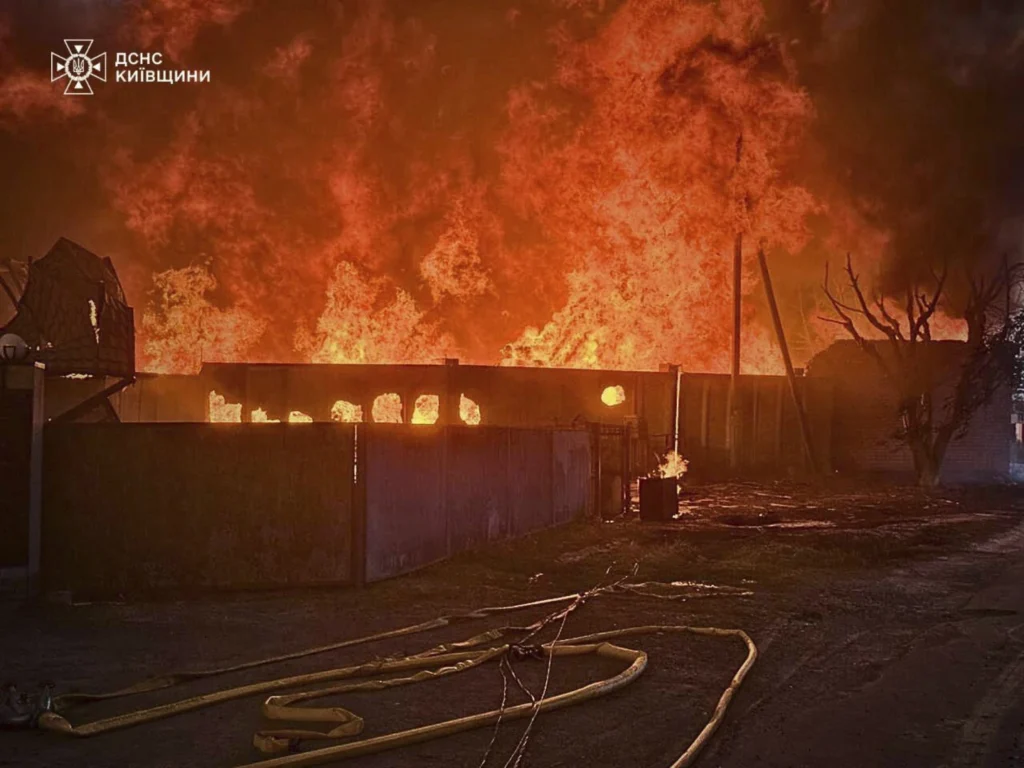
The massive overnight assault included 728 drones and 13 missiles, surpassing Russia’s previous record attacks of 550 drones launched on Friday and 477 drones fired less than a week earlier. The escalating pattern reflects Moscow’s strategy to overwhelm Ukraine’s air defense systems through sheer volume while targeting critical military infrastructure.
Ukrainian President Volodymyr Zelenskyy said the city of Lutsk bore the brunt of the attack, with the western Ukrainian city’s airfields serving as primary targets. Lutsk’s strategic location near the Polish border makes it a crucial hub for receiving Western military aid, positioning the assault as an apparent attempt to disrupt Ukraine’s vital supply lines of foreign weapons.
The timing of the record drone barrage coincides with increased uncertainty surrounding American weapons deliveries and stalled peace efforts led by the United States. Zelenskyy characterized the massive assault as the Kremlin “making a point” amid the diplomatic tensions.
Russia’s Defense Ministry confirmed its forces targeted Ukrainian air bases and declared that “all the designated targets have been hit.” The ministry’s statement underscored Moscow’s focus on degrading Ukraine’s military infrastructure through sustained aerial bombardment.
The attack extended beyond Lutsk to strike 10 regions across Ukraine, resulting in at least one death in the Khmelnytskyi region and two wounded in the Kyiv region, according to Ukrainian officials. The widespread nature of the assault demonstrated Russia’s capability to conduct simultaneous operations across multiple fronts.
NATO member Poland responded to the massive drone attack by scrambling fighter jets and elevating its armed forces to the highest alert level. The Polish Armed Forces Operational Command announced the defensive measures through social media, highlighting the regional security implications of the escalating drone warfare.
Ukraine’s air defense systems successfully intercepted 296 drones and seven missiles during the overnight attack, while an additional 415 drones were either lost from radar tracking or electronically jammed. The defensive response showcased both the effectiveness of Ukrainian air defenses and the overwhelming scale of the Russian assault.
The massive drone attack occurred as Russia’s larger army launched a new offensive to break through sections of the 1,000-kilometer front line, where Ukrainian forces face severe manpower shortages and mounting pressure from sustained Russian advances.
President Donald Trump addressed the escalating situation Tuesday, expressing dissatisfaction with Russian President Vladimir Putin’s unwillingness to modify his ceasefire and peace demands since Trump assumed office in January. Trump indicated Monday that the United States would need to increase weapons shipments to Ukraine, despite Washington’s recent pause in critical weapons deliveries to Kyiv.
Kremlin spokesman Dmitry Peskov acknowledged Trump’s “quite tough style” in diplomatic communications while expressing Moscow’s hope to continue dialogue with Washington aimed at repairing damaged bilateral relations between the two nations.
Zelenskyy urged Ukraine’s international partners to impose stricter sanctions on Russian oil and entities financing the Kremlin’s war effort through petroleum purchases. The Ukrainian leader emphasized that “everyone who wants peace must act” during meetings with Pope Leo XIV in Italy ahead of an international conference focused on Ukraine’s reconstruction.
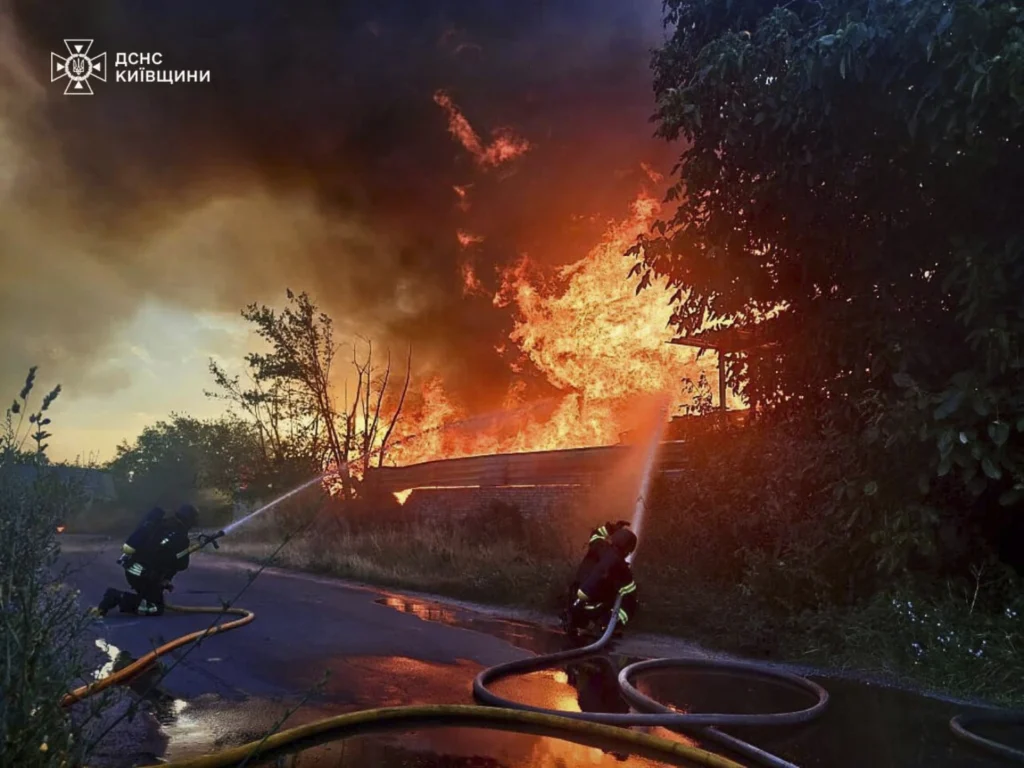
Ukrainian officials reported that their interceptor drones, specifically developed to counter Russian Shahed drones, demonstrated increasing effectiveness against the overnight assault. Zelenskyy announced that domestic production of anti-aircraft drones was being expanded through partnerships with Western countries to meet the growing threat.
Western military analysts warn that Russia continues expanding its drone manufacturing capabilities and could soon achieve the capacity to launch 1,000 drones per night against Ukrainian targets. The Institute for the Study of War noted that Russia’s domestic drone production expansion reflects the growing importance of tactical drones in front-line combat operations.
Ukraine has developed its own offensive drone capabilities, conducting long-range strikes deep into Russian territory as part of its defensive strategy. Russian officials reported that air defenses intercepted 86 Ukrainian drones over six Russian regions overnight, including the Moscow region.
The Ukrainian drone strikes temporarily suspended flights at Moscow’s Sheremetyevo airport and Kaluga’s international airport south of the capital. Alexander Khinshtein, governor of Russia’s Kursk border region, reported that a Ukrainian drone attack on the regional capital killed three people and wounded seven others, including a 5-year-old boy who died while being transported to a hospital.
The escalating drone warfare coincided with a significant legal development as Europe’s top human rights court ruled Wednesday that Russia violated international law during the Ukraine war. The court’s decision marked the first time an international tribunal found Moscow responsible for human rights abuses since the full-scale invasion began in 2022.
The same court also ruled that Russia was responsible for downing Malaysia Airlines Flight 17 in 2014, marking the first time Moscow was named by an international court as responsible for the tragedy that claimed 298 lives. While the court’s decisions carry symbolic weight, their practical enforcement remains limited.
AP




