

WASHINGTON (BN24) — U.S. President Donald Trump on Wednesday pledged a shift from aid to trade during a White House lunch with five West African leaders, as the region grapples with the fallout from sweeping American aid cuts.
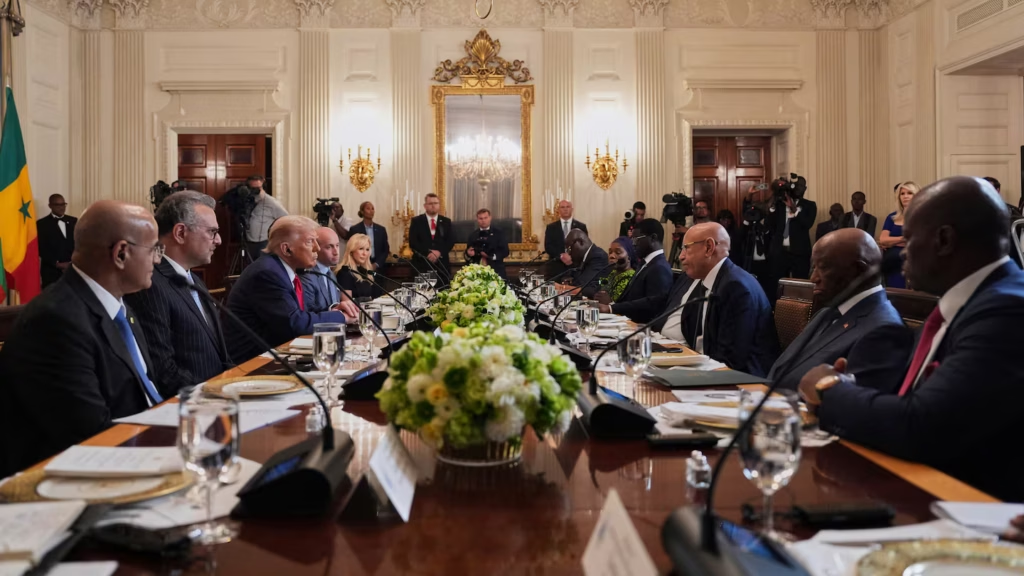
The meeting, which came as a surprise to many observers, followed the administration’s recent decision to dissolve the U.S. Agency for International Development and abandon what officials described as “a charity-based foreign aid model.” Instead, Trump said the United States would focus on partnerships with nations that demonstrate “both the ability and willingness to help themselves.”
“There is great economic potential in Africa,” Trump told the presidents of Liberia, Senegal, Gabon, Mauritania and Guinea-Bissau. He described their countries as “very vibrant places with very valuable land, great minerals, and great oil deposits, and wonderful people.”
The five nations account for only a fraction of U.S.-Africa trade, but they hold vast reserves of natural resources that American officials view as increasingly important. Senegal and Mauritania are also key transit and origin countries for migrants, while Guinea-Bissau has struggled to stem drug trafficking—two issues that have been priorities for the Trump administration.
During the meeting, African leaders adopted a complimentary tone and expressed gratitude to Trump, including thanks for the role Washington played last month in brokering a peace deal between Rwanda and the Democratic Republic of Congo. The agreement aimed to end decades of violence in eastern Congo while securing U.S. access to critical minerals, though analysts have warned the settlement is unlikely to halt the fighting entirely, as at least one major armed group has rejected it.
Mauritania’s president, Mohamed Ould Ghazouani, emphasized his country’s resources to potential investors. “We have a great deal of resources,” he said, citing rare earth minerals, manganese, uranium and possibly lithium. “We have a lot of opportunities to offer in terms of investment.”
Trump, who during his first term used vulgar language to describe African nations, characterized trade as a tool for diplomacy and conflict resolution.
“Trade seems to be a foundation for settling disputes,” he said. “You guys are going to fight, we’re not going to trade. And we seem to be quite successful in doing that.” He added: “There is a lot of anger on your continent.”
The portion of the gathering open to reporters included little discussion of the aid cuts, which critics say could lead to severe humanitarian crises. West African countries are among the hardest hit by the USAID shutdown. According to the Center for Global Development, U.S. support accounted for 2.6% of Liberia’s gross national income—the highest share of any nation.
“We have closed the USAID group to eliminate waste, fraud and abuse,” Trump said, while vowing to forge “new economic opportunities involving both the United States and many African nations.”
Liberian President Joseph Nyuma Boakai later released a statement expressing optimism about the summit’s outcomes and reaffirming Liberia’s commitment to regional stability, democratic governance and inclusive growth.
During the lunch, Trump appeared visibly surprised by Boakai’s English, which he complimented. English has been Liberia’s official language since the country was founded in the early 1800s as a settlement for freed African Americans.
As Trump spoke, the administration was simultaneously notifying developing nations about higher tariffs set to take effect August 1, though the five West African countries were not among those targeted.
Gabon, Liberia, Mauritania and Senegal remain on a list of 36 countries under consideration for inclusion in an expanded U.S. travel ban.





