

South African President Cyril Ramaphosa addressed lawmakers at Cape Town’s City Hall on Thursday, marking the official start of business for the country’s unprecedented multiparty coalition government. This new political landscape emerged after the historic May 29 election, where the African National Congress (ANC) lost its majority for the first time in 30 years.
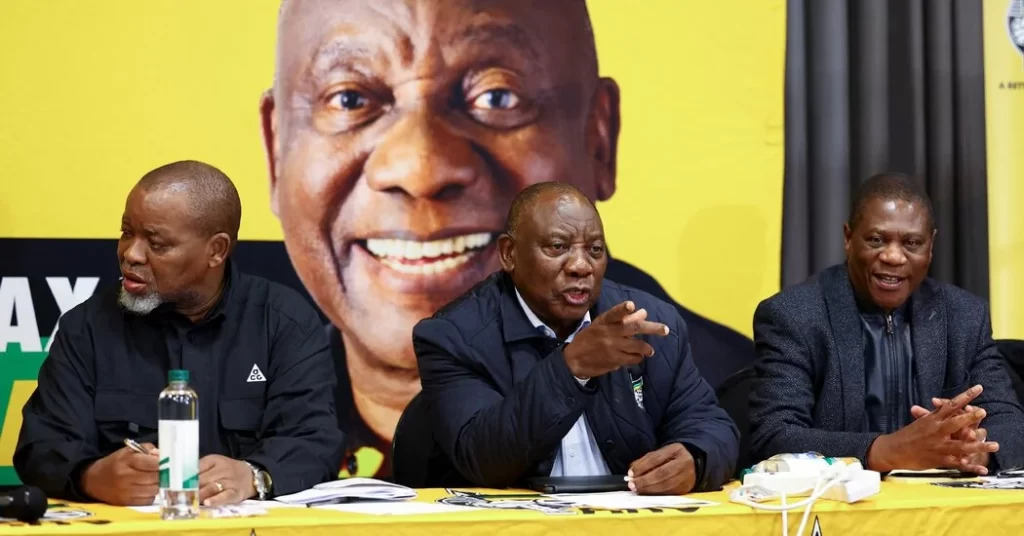
In his speech, Ramaphosa emphasized the unity of the diverse coalition in addressing South Africa’s most pressing issues: the unemployment crisis, crippling poverty and inequality, and the failure of state institutions due to corruption and neglect.
Ramaphosa acknowledged the ANC’s shortcomings, stating, “Despite the achievements of 30 years of democracy … millions of South Africans remain poor, unemployed and they live in a highly unequal society.” He called for collective action, saying, “The circumstances of South Africa today require that we act together.
The new coalition government, dubbed a “government of national unity,” brings together at least 10 parties, including the Democratic Alliance, previously the ANC’s main political rival. This shift has resulted in a new official opposition, the newly-founded MK Party led by former president Jacob Zuma.
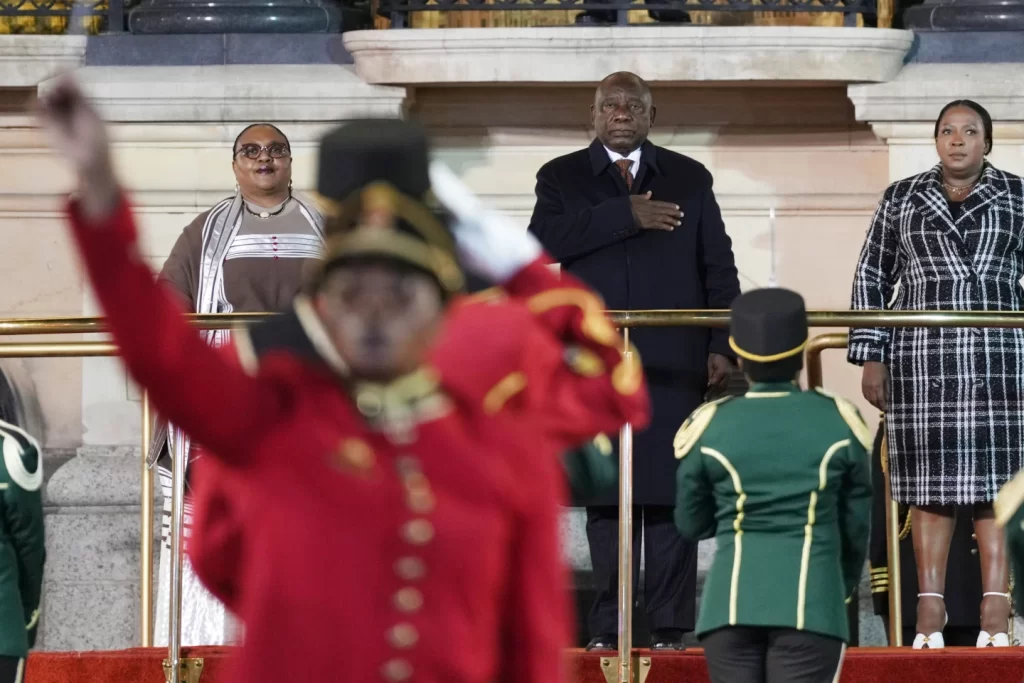
Ramaphosa outlined broad plans to address South Africa’s challenges, including creating job opportunities in various sectors, eliminating corruption and bureaucratic red tape, and prioritizing economic growth and development.
The president’s speech was met with general approval from lawmakers, reflecting the new political alliances. However, the task ahead remains daunting, with South Africa facing a 32% unemployment rate and being considered the world’s most unequal country by wealth distribution.
As Ramaphosa begins his second and final five-year term, he faces the challenge of keeping this diverse coalition united while addressing the country’s deep-rooted problems. The success of this new political experiment could have significant implications for South Africa’s future and its role as a leader on the African continent.
The speech, which opened what South Africa calls “the seventh administration,” represents a crucial moment in the country’s post-apartheid history. It underscores the evolving nature of South African politics and the urgent need for effective governance to address longstanding socio-economic challenges.
As the country embarks on this new chapter, all eyes will be on Ramaphosa and his coalition partners to see if they can deliver on their promises of unity and progress. The coming months and years will be critical in determining whether this new approach to governance can bring about the meaningful change that many South Africans have long been waiting for.
apnews.com





