

The U.S. Supreme Court handed President Donald Trump a significant legal defeat Monday, refusing to hear his appeal of a jury’s $5 million finding that he sexually abused writer E. Jean Carroll in a New York department store dressing room in the mid-1990s and later defamed her when he publicly denied the allegation.
The court declined the case in a brief, unexplained order, as is customary when the justices turn away an appeal. There were no noted dissents, meaning the 2023 jury verdict now stands as final on that question.
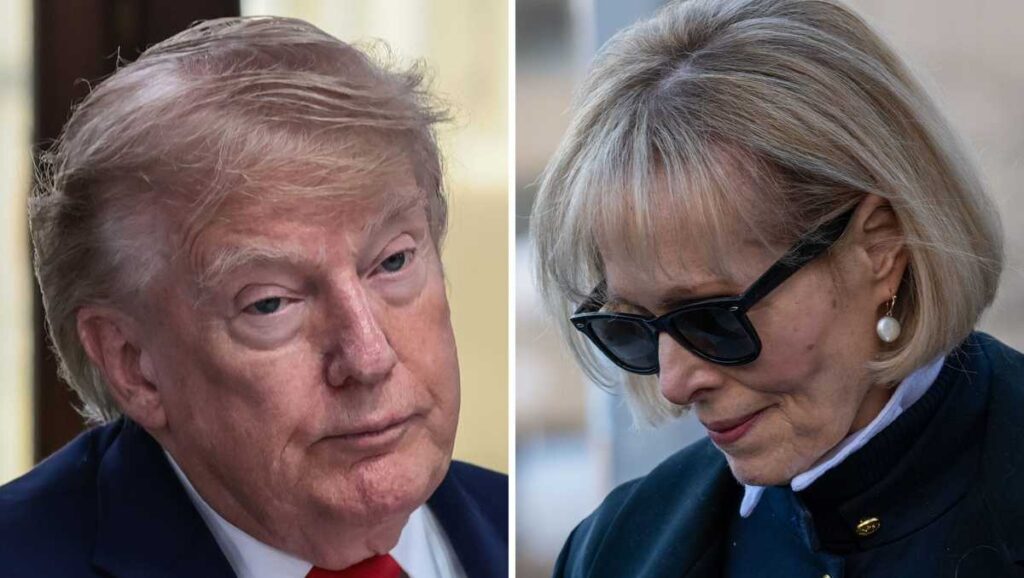
What We Know So Far
The ruling closes Trump’s last avenue of challenge to the verdict from the first Carroll trial, in which a Manhattan federal jury found him liable for sexual abuse and defamation and awarded Carroll $5 million in damages.
Carroll’s attorney Roberta Kaplan welcomed the outcome in direct terms. “Today’s Supreme Court decision affirms once and for all the jury’s unanimous verdict that President Donald J. Trump sexually assaulted and defamed E. Jean Carroll,” she said in a statement. “His multiple efforts to appeal that verdict have all failed and today’s ruling ends his quest to avoid accountability for his actions.”
Trump reacted sharply on social media, calling the court’s decision “surprising” and vowing to keep fighting. “This Case is really against the United States of America, and all it stands for, and should never be allowed to happen to another President, or Candidate to be,” he wrote.
A spokesman for his legal team described the ruling as part of what he called Democrat-funded witch hunts, NBC confirmed.
Carroll first made her allegations in 2019 and filed a defamation lawsuit against Trump the same year after he publicly called her a liar. A second lawsuit followed in 2022 under a New York state law designed to assist survivors of sexual assault from years past.
That second case, which included post-presidency defamation claims, was the first to reach trial and was the case the Supreme Court declined to review Monday, the Associated Press confirmed.
Trump’s legal team had argued that Manhattan-based U.S. District Judge Lewis Kaplan made a series of evidentiary errors that unfairly boosted Carroll’s case.
Specifically, Trump’s lawyers contested the judge’s decision to allow testimony from two other women, Jessica Leeds and Natasha Stoynoff, who separately accused Trump of sexual misconduct, as well as the admission of the Access Hollywood tape. Trump has denied all three women’s allegations.
Carroll’s lawyers countered that the evidence was properly admitted because it spoke to Trump’s alleged prior conduct and pattern of behavior.
They also noted that the New York-based Second U.S. Circuit Court of Appeals, which upheld the verdict in 2024, found that the evidentiary decisions were not a determining factor in sustaining the jury’s findings.
A separate $83.3 million defamation verdict awarded to Carroll by a different jury after a second trial remains under appeal. Trump’s legal team is arguing that those claims should be dismissed on presidential immunity grounds.
Trump has successfully challenged other major legal judgments. A New York civil fraud penalty of more than $500 million was thrown out by a New York appeals court, and the Supreme Court granted him broad immunity from criminal prosecution in 2024.
Monday’s Carroll ruling, however, represents a setback that his own lawyers appeared not to expect, given Trump’s characterization of the court’s decision as “surprising.”
What The Court And Legal Experts Are Saying
The Supreme Court offered no explanation for its refusal, which is standard practice when the justices decline to take up a case. The absence of any noted dissent suggests no justice believed the case merited further review.
Carroll’s attorney noted that every court that has examined the evidentiary questions Trump raised on appeal has rejected his arguments. “This question is not worthy of review,” Kaplan had written in urging the justices to pass on the case.
Trump’s attorney Justin Smith, who argued in court filings that the verdict amounted to “mistreatment of a President” that “cannot be allowed to stand,” has since been nominated by Trump to serve as a federal appeals court judge.
Why This Matters
Monday’s Supreme Court action, taken on the same day the court handed down several other consequential rulings, carries significance on multiple levels.
The most immediate is legal finality. The $5 million Carroll verdict is now permanent. Trump’s broader effort to use the appellate process to defer, delay, or erase accountability for the jury’s findings has run its course on this particular verdict.
The broader context is the pattern of Trump’s legal strategy across multiple fronts. His administration has aggressively tested the limits of executive power since returning to office in January 2025, and the Supreme Court has been a central arena for resolving those challenges.
On the same day it closed the door on the Carroll appeal, the court issued a landmark ruling expanding presidential authority to fire leaders of certain independent agencies, overturning a precedent dating to 1935. It also blocked Trump from removing Federal Reserve Governor Lisa Cook, ruling five to four that he had failed to follow legally required procedures.
Together, Monday’s rulings produced a mixed picture for a president who has pushed legal boundaries consistently and broadly since his return to power. The expansion of firing authority over executive agencies was a significant victory. The Carroll ruling and the Cook decision were setbacks.
For Carroll, who first brought her allegations to public attention in 2019 and has pursued her legal case through multiple trials, appeals, and nearly six years of litigation, Monday’s ruling is the capstone of a process she initiated against one of the most powerful figures in the world. The jury’s finding that Trump sexually abused her, now affirmed as final by the highest court’s refusal to disturb it, will remain part of the permanent public record regardless of what happens in the separate $83.3 million defamation case still making its way through the courts.
What Happens Next
The $83.3 million defamation verdict from the second Carroll trial remains in active litigation. Trump has argued those claims should be dismissed on presidential immunity grounds, an argument that will now proceed through the federal court system without the benefit of any Supreme Court intervention on the earlier case to bolster his legal position.
The Supreme Court’s refusal to take up Monday’s case sets no binding precedent on the immunity or evidentiary questions Trump raised, since the court’s denial of review is not a ruling on the merits.
However, it does remove the possibility of a high court decision that might have reshaped how lower courts handle the remaining defamation claims.
Trump said he would fight the Carroll cases “with all of my power and strength.” His legal team has consistently framed the litigation as politically motivated. Carroll and her attorneys have consistently maintained that the jury heard the evidence, reached its conclusion, and that every subsequent court to review that conclusion has upheld it.
That record now includes the U.S. Supreme Court itself.
AP/Reuters




