

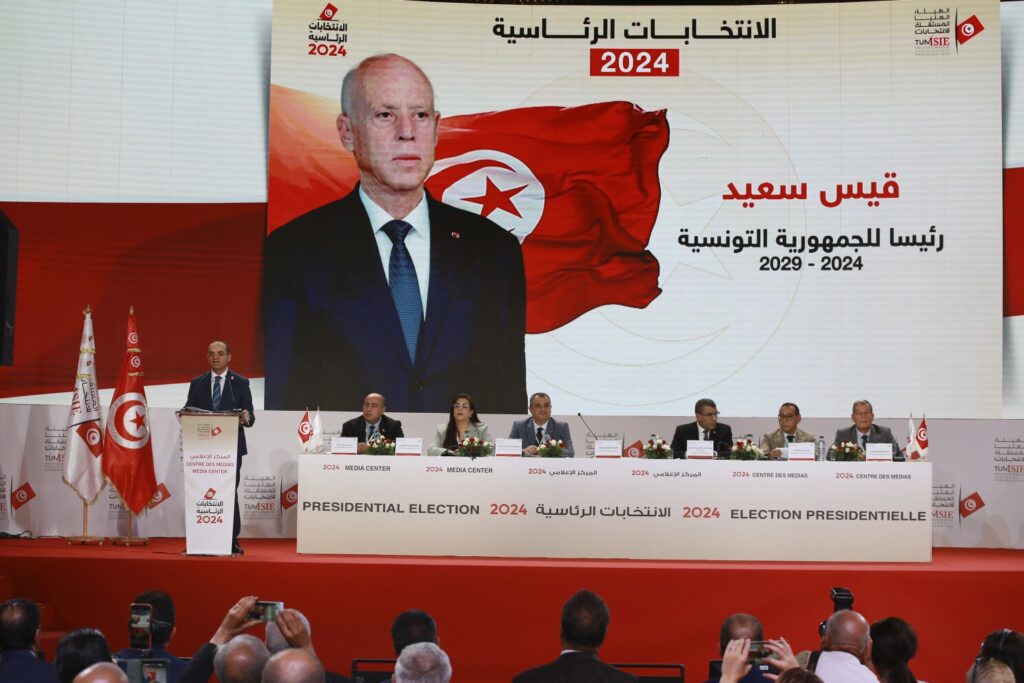
President Kais Saied took the oath of office Monday for his second term as Tunisia’s leader, following a sweeping electoral victory amid concerns over democratic regression and a continued crackdown on opposition figures.
The 66-year-old former law professor, who secured 90.7% of the vote, used his inauguration speech to call for a “cultural revolution” in Tunisia, focusing on unemployment, terrorism, and corruption. Addressing parliament, Saied declared, “The aim is to build a country where everyone can live in dignity.”
The inauguration comes after a turbulent first term marked by significant changes to Tunisia’s post-Arab Spring political landscape. Saied suspended parliament, rewrote the constitution, and orchestrated the arrest of dozens of critics across politics, media, business, and civil society sectors.
In his address, Saied struck a combative tone against perceived enemies, promising to target “thieves and traitors on the payroll of foreigners.” He blamed “counterrevolutionary forces” for impeding economic progress during his first term.
“The task was not easy. The dangers were great,” Saied told lawmakers. “The arms of the old regime were like vipers circulating everywhere. We could hear them hissing, even if we couldn’t see them.”
The president has justified his actions as necessary measures against corruption and state enemies, appealing to Tunisians disillusioned with the country’s direction since the 2011 uprising that ousted longtime ruler Zine El Abidine Ben Ali.
Despite Saied’s proclaimed commitment to protecting freedoms, his inauguration ceremony highlighted ongoing tensions with the press. Many journalists were barred from covering the event, prompting the National Syndicate of Tunisian Journalists to issue a strong rebuke, condemning “the ongoing blackout policy and restrictions on journalistic work.”
The restrictions on media access underscore broader concerns about democratic backsliding in Tunisia, once hailed as the Arab Spring’s lone success story. Saied’s consolidation of power and crackdown on opposition have raised alarms among democracy advocates both domestically and internationally.





