

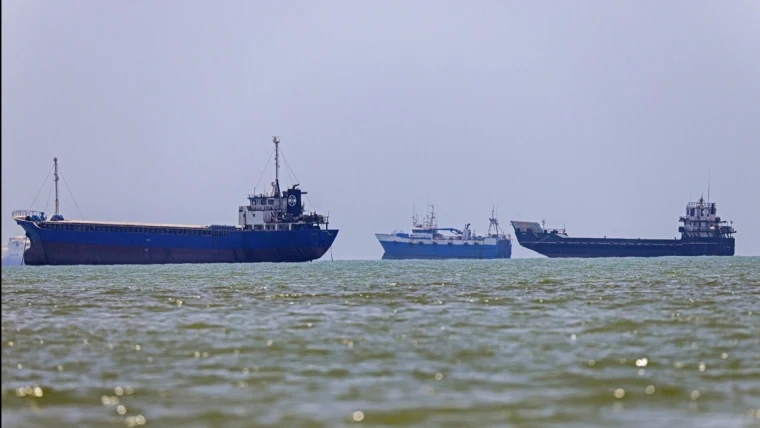
WASHINGTON — The United States launched a fresh wave of military strikes against Iran early Wednesday and revoked a license that had authorized Iranian oil sales as part of the interim peace deal, after three merchant ships were struck in the Strait of Hormuz in the most serious single-day assault on commercial shipping since late April, threatening to unravel a ceasefire that was already showing severe signs of strain.
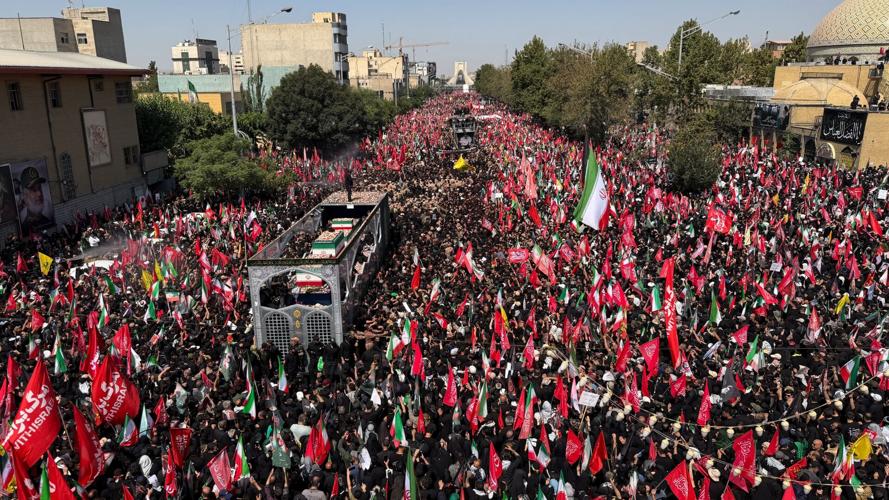
The escalation came as hundreds of thousands of mourners gathered in the Iranian holy city of Qom for the funeral processions of Supreme Leader Ayatollah Ali Khamenei, killed on the war’s first day, adding a combustible emotional dimension to an already volatile diplomatic moment.
What We Know So Far
U.S. Central Command announced the strikes in a statement on social media early Wednesday, saying American forces had acted to “impose heavy costs for targeting and attacking commercial shipping crewed by innocent civilians in an international waterway.” The statement was direct and unambiguous. “Iran’s demonstrated aggression was unwarranted, dangerous, and a clear violation of the ceasefire,” CENTCOM said.
Iranian state media reported explosions in the early morning hours in the southern port city of Sirik, on Qeshm Island, and in Bandar Abbas, without providing immediate details on casualties or structural damage.
The three tanker strikes had occurred in waters off the coasts of Oman and the neighboring United Arab Emirates, the United Kingdom Maritime Trade Operations center confirmed, indicating the ships were most likely using the route near Oman that U.S. and multinational maritime authorities had designated as safe for commercial traffic.
The most severe of the three incidents involved a Qatari liquefied natural gas tanker, the Al Rekayyat, which was struck by a drone that caused a fire in its engine room as the vessel traveled south through the strait near Limah, Oman.
The crew were safe and being evacuated, Reuters confirmed. A second tanker, believed to be the Saudi-flagged supertanker Wedyan, was damaged off Oman, maritime security sources said. A third vessel was struck by a drone separately and sustained damage but continued on its way without reported injuries.
Iranian state television said the LNG tanker had come under attack after ignoring warnings but did not directly claim responsibility for the assault. Iran’s foreign ministry later said Qatar’s accusations were “perplexing” and asserted that commercial vessels faced risks for using routes not coordinated with Tehran, Reuters noted.
Qatar’s response was immediate and formal. Foreign Ministry spokesperson Majed Al-Ansari summoned Iran’s deputy ambassador and handed him a protest note, describing the attack on the Al Rekayyat as an “unacceptable attack” on international navigation and global energy security and a “serious and explicit violation” of international law. Al-Ansari said Qatar holds Iran “fully legally responsible” for the assault.
Hours after the tanker strikes, the U.S. Treasury revoked the general license it had issued on June 22 authorizing the production, delivery, and sale of Iranian crude oil and petrochemical products through August 21.
Iran was given until July 17 to wind down any transactions conducted under the license. Oil prices rose more than three percent following the announcement, Reuters confirmed.
A U.S. official, speaking on condition of anonymity to explain the administration’s reasoning to the Associated Press, said the license was revoked because Iran’s actions in the strait were unacceptable and needed to be met with consequences.
Iran’s foreign ministry condemned the revocation, saying it breached the framework agreement to end the war and warning that Washington would bear full responsibility for the consequences. The ministry added early Wednesday that Iran would take any measure it deemed necessary to safeguard its interests and national security.
What Authorities Are Saying
President Trump had set the tone for Wednesday’s military action on Monday when he told reporters in the Oval Office: “We’re either going to make a deal or we’re going to finish the job. We can knock down their bridges in one hour, we can knock out their energy supply.”
Iran’s Foreign Minister Abbas Araghchi responded by warning that under the terms of the interim ceasefire memorandum, negotiations on a final deal “would not commence if threats continue,” a statement that reflected Tehran’s reading of the agreement as a bilateral commitment rather than a one-sided concession.
Iran’s foreign ministry separately said the decision to revoke the oil license violated the interim deal and that the U.S. bore responsibility for the consequences. Iran’s deputy foreign minister, Kazem Gharibabadi, posted on X that the new American strikes themselves constituted a violation of the ceasefire agreement.
A second U.S. official, speaking anonymously, told Reuters that initial assessments indicated Iran had fired at the three commercial vessels, which would place direct state responsibility for the shipping attacks on Tehran rather than proxy forces or unaffiliated actors.
A separate U.S. official told the Associated Press that negotiators had continued working in good faith toward a final agreement with Iran, suggesting the administration was attempting to maintain a dual track of military pressure and diplomatic engagement simultaneously.
Why This Matters
The convergence of events on Tuesday and Wednesday, tanker strikes, U.S. military retaliation, the oil license revocation, and the funeral of Iran’s slain supreme leader, represents the most acute crisis moment in the U.S.-Iran peace process since the interim memorandum was signed.
The strait’s importance to the global economy cannot be overstated. In peacetime, a fifth of all traded oil and natural gas passes through the channel, according to the Associated Press.
The fresh attacks on Wednesday were the most in a single day since late April, the United Nations International Maritime Organization confirmed, and their impact on shipping confidence was immediate.
Data firm Kpler reported that at least 108 ships had crossed the strait the previous weekend using various routes, a sign that traffic had been recovering.
Whether that recovery continues or reverses in response to Wednesday’s events will determine how quickly the global economic relief promised by the interim deal materializes.
The core disagreement over the strait’s governance has never been fully resolved by the interim agreement and now threatens to sink it entirely.
Iran insists it has the right to approve vessel routes, demand registration with Tehran for northbound traffic, and eventually charge fees for passage through what it considers waters under its sovereignty.
The United States, Qatar, Saudi Arabia, and other Gulf states maintain the strait is an international waterway where Iran has no authority to impose unilateral conditions or charges.
That fundamental legal and strategic disagreement was papered over rather than resolved in the interim deal’s text, and it is now asserting itself with deadly consequences for the ships caught between the two positions.
The revocation of the oil sales license is a meaningful economic blow to Tehran. Iranian oil sanctions had been in place since the 1979 revolution, and the temporary authorization was one of the most tangible concessions the United States had offered as an incentive for Iranian cooperation.
Removing it before the 60-day negotiating period has elapsed signals that Washington is prepared to use economic leverage as a punitive tool even during what is supposed to be a negotiating window, a posture that significantly complicates Iran’s calculations about the value of continued engagement.
The funeral atmosphere in Iran added a dimension that purely transactional analysis cannot fully capture. Hundreds of thousands of mourners in Qom carried flags comparing Khamenei to revered Shiite martyrs and chanted vows of vengeance, with some bearing banners reading “Kill Trump,” Reuters confirmed. Iran’s clerical leadership has used the mourning period to demonstrate domestic control and rally public sentiment in ways that narrow the political space available to any Iranian negotiator who might otherwise seek compromise.
Iran’s new Supreme Leader Ayatollah Mojtaba Khamenei, the slain leader’s son, had not appeared publicly at any of the funeral ceremonies as of Wednesday and was believed to be in hiding following reports that he had been wounded in the same airstrike that killed his father. His absence from the public stage at such a politically critical moment adds further uncertainty to the question of who is actually directing Iran’s decision-making on the straits and in the negotiations.
What Happens Next
Khamenei’s body was expected to arrive in the Iraqi Shiite holy cities of Najaf and Karbala for further processions on Wednesday before being returned to Iran for burial Thursday at the Imam Reza shrine in Mashhad, his birthplace. U.S. officials had indicated that serious negotiations would not resume until after the burial, a timeline that pushes meaningful diplomatic engagement toward the end of the week at the earliest.
A previous round of indirect talks in Qatar ended last week without signs of headway toward a lasting peace agreement, Reuters confirmed. The revocation of the oil license and the new military strikes have significantly raised the temperature heading into whatever talks follow the burial, making a return to the negotiating table harder to orchestrate rather than easier.
Trump’s warning that the United States would “finish the job” if a deal is not reached remains on the table as explicit presidential policy. Whether that threat accelerates Iranian decision-making toward compromise or hardens Tehran’s position against what it characterizes as coercive diplomacy is the central question that the coming days will answer.
For the global economy, the answer matters urgently. The ships waiting to transit the Strait of Hormuz, the energy prices rising in response to Wednesday’s news, and the companies assessing whether the route is safe enough to use, are all waiting for the same thing: an indication that the two governments involved have chosen negotiation over escalation as their primary response to a crisis that their interim agreement was supposed to be resolving.
AP/Reuters





