

(AP) — The United States and Iran have signed an interim agreement aimed at halting hostilities after months of conflict, but President Donald Trump signaled that military action could resume if Tehran fails to meet its commitments.
The agreement, signed during a gathering of global leaders in France, sets out a 60 day window for negotiations toward a permanent settlement while immediately pausing fighting across multiple fronts, including Lebanon.
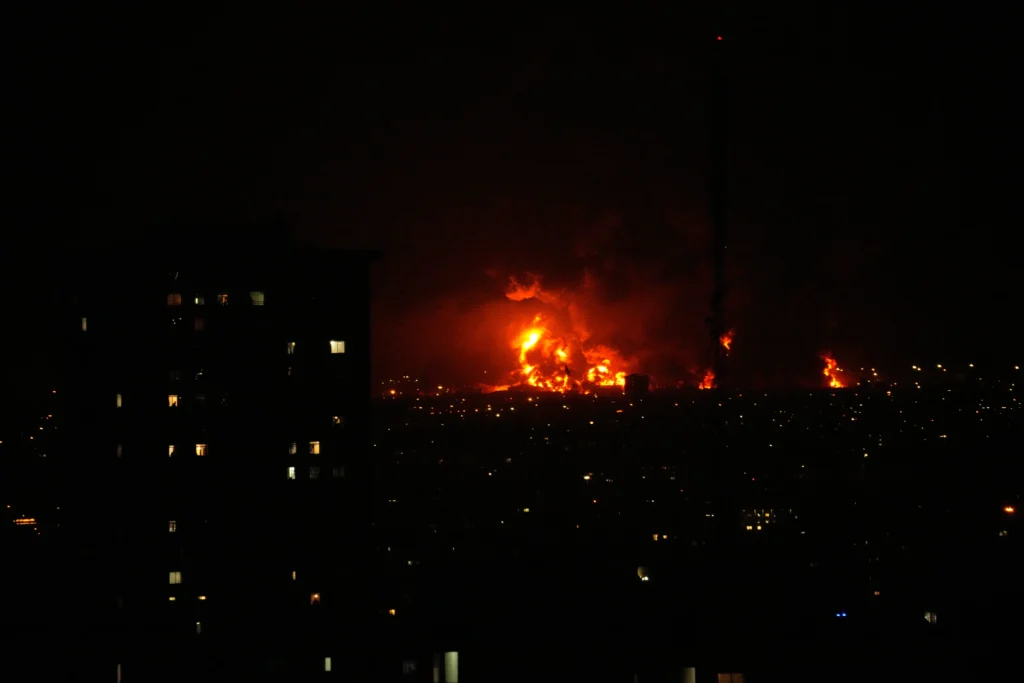
A newly signed US Iran ceasefire deal brings a temporary halt to a costly regional conflict, reopening critical trade routes and easing global economic pressure, even as Washington warns the truce could collapse if conditions are not met.
What we know so far
Details released by both governments show the memorandum takes immediate effect and includes provisions to end hostilities, reopen the Strait of Hormuz and ease certain US sanctions on Iran.
The deal also calls for Iran to dilute its stockpile of highly enriched uranium under international supervision, while reaffirming its longstanding position that it will not pursue nuclear weapons.
President Trump signed the agreement in France alongside world leaders, while Iranian President Masoud Pezeshkian signed separately in Tehran, marking one of the rare formal agreements between the two countries since 1979.
The Associated Press reported that the accord launches a 60 day negotiating period aimed at reaching a long term resolution over Iran’s nuclear program and regional tensions.
Global oil markets reacted quickly, with prices falling on expectations that shipping through the Strait of Hormuz will resume, restoring a key artery for global energy supply.
What authorities are saying
Trump made clear the agreement remains conditional, warning during remarks in France that the United States would respond forcefully to any violations.
He said he hopes the agreement will lead to stability in the Middle East and reduce pressure on global energy markets, but emphasized that military options remain on the table.
Iranian officials presented the deal as a diplomatic success, with senior negotiator Mohammad Baqer Qalibaf stating on state television that the country achieved through talks what it could not through conflict.
Pakistani Prime Minister Shehbaz Sharif, whose government played a mediating role, said both sides had agreed to end military operations and move toward technical discussions in the coming weeks.
European leaders meeting at the Group of Seven summit welcomed the agreement, while continuing to express concern over Iran’s nuclear ambitions and the fragile security situation in Lebanon.
Why this matters
The agreement represents a significant shift after months of conflict that killed thousands, disrupted global trade and fueled inflation through rising energy costs.
Reopening the Strait of Hormuz is particularly critical, as the waterway carries a large share of the world’s oil and gas supplies. Its closure during the conflict contributed to a sharp increase in global prices.
The deal also highlights the limits of military action in resolving complex geopolitical disputes, as key issues such as Iran’s missile program and regional alliances remain largely unresolved.
At the same time, the agreement introduces new uncertainties, especially given Israel’s ongoing military operations in Lebanon and its absence from the negotiations.
What happens next
Negotiators from both sides are expected to begin detailed talks in the coming weeks to address unresolved issues, including Iran’s nuclear program and the timeline for lifting sanctions.
A formal signing ceremony had been planned in Switzerland, but conflicting statements from officials leave its status unclear.
If negotiations succeed, the agreement could evolve into a broader framework for regional stability. If talks fail, the risk of renewed military escalation remains high, with both sides signaling readiness to return to confrontation.
While the agreement offers immediate relief to global markets and reduces the risk of broader regional war, its long term durability remains uncertain. The structure of the deal gives Iran early economic benefits, including the ability to resume oil exports, while leaving many of Washington’s original objectives unresolved.
This imbalance could create political backlash in the United States, particularly among lawmakers skeptical of concessions made without firm guarantees on Iran’s nuclear and missile capabilities.
At the same time, the agreement underscores the growing importance of intermediary nations such as Pakistan and Qatar in brokering complex international negotiations, reflecting a shift in diplomatic influence.
Perhaps most critically, the exclusion of Israel from the core negotiations introduces a potential fault line that could undermine the deal, especially if military operations in Lebanon continue despite the ceasefire framework.
The coming weeks of negotiations will likely determine whether this agreement becomes a foundation for lasting stability or a temporary pause before renewed confrontation.





