

Co-host Mexico opened the World Cup with a 2 to 0 victory over South Africa on Thursday in a high intensity match at Estadio Azteca that featured three red cards and a historic breakthrough for the host nation.
The win marked Mexico’s first ever victory in an opening match of the tournament after seven previous attempts, delivering a long awaited result in front of more than 80,000 fans inside one of football’s most iconic venues.
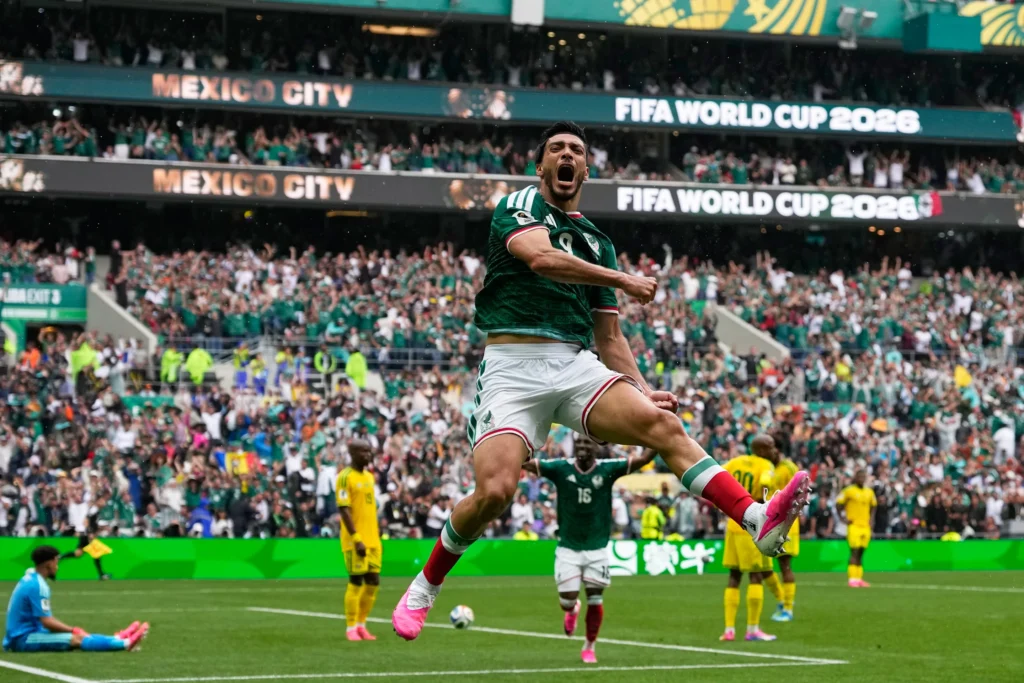
Early goals and a charged atmosphere set the tone for the match, though repeated disciplinary incidents overshadowed stretches of play as tensions escalated on the field.
What we know so far
Mexico seized control early when Julián Quiñones scored in the ninth minute, finishing low past South Africa goalkeeper Ronwen Williams. The goal was the fastest in a World Cup opener since 2006.
South Africa’s challenge weakened early in the second half when midfielder Sphephelo Sithole was sent off for denying a clear scoring opportunity. Mexico capitalized on the advantage, with Raúl Jiménez adding a second goal with a close range header to secure the result.
The match turned increasingly physical. A second South African player, Themba Zwane, was dismissed after a video review for striking an opponent, while Mexico defender César Montes also received a red card late in stoppage time.
The three ejections made it the most red cards ever issued in a World Cup opening match.
What authorities and players are saying
Mexico defender Israel Reyes described the moment as a defining experience, saying the atmosphere inside the stadium reflected years of anticipation for players and supporters alike.
Substitute Eric Lira emphasized the sense of responsibility on the squad, noting that the team approached the match with a focus on securing a strong start for the host nation.
From the stands, fans echoed that sentiment. Reuters quoted supporters inside the stadium celebrating what many described as the end of a long standing opening match drought.
Why this matters
The result carries symbolic and competitive significance. Mexico not only secured three points in Group A but also broke a longstanding pattern of underperformance in tournament openers.
The match also marked a historic milestone for Estadio Azteca, which became the first stadium to host three World Cups, reinforcing Mexico’s central role in global football.
However, the high number of red cards raises concerns about discipline and officiating consistency early in the tournament. Matches marked by frequent dismissals can disrupt team strategies and influence group stage outcomes.
Market analysis and economic impact
The successful opening match provided a boost to the host nation’s tourism and event economy. Large scale fan gatherings across Mexico City, including at public viewing zones, drew tens of thousands of spectators, supporting local businesses and hospitality services.
Despite celebrations, heavy rain shortly after the match dispersed crowds in key areas such as the Angel of Independence, illustrating how external factors can quickly shift the economic momentum tied to major events.
Globally, the expanded 48 team format is expected to generate increased broadcasting revenue, sponsorship deals and tourism flows across host countries Mexico, the United States and Canada.
Competitive landscape and tournament outlook
Mexico’s strong start positions the team well in Group A, though questions remain about consistency and discipline. The red card shown to Montes could impact defensive options in upcoming matches.
South Africa, now facing pressure after an opening loss and reduced squad depth due to suspensions, will need a swift recovery to remain competitive in the group stage.
The broader tournament landscape remains highly competitive, with traditional powers and emerging teams adapting to the expanded format, which introduces more matches and increased physical demands.
What happens next
Mexico will face South Korea in its next group match in Guadalajara, while South Africa is set to play Czechia in Atlanta.
Player availability, particularly following suspensions, will shape tactical decisions for both teams as the group stage progresses.
Teams will also look to refine discipline and maintain composure, as early red cards could prove decisive in determining advancement to the knockout rounds.
Mexico’s opening victory delivered both relief and momentum for the host nation, but the chaotic nature of the match underscored the challenges ahead. As the tournament unfolds, maintaining discipline and consistency may prove just as important as early success in shaping the path to a deeper run.
AP/Reuters/ESPN





