

(AP/Reuters)— A late-night runway collision at LaGuardia Airport, New York, left two pilots of Air Canada dead and dozens injured after an incoming passenger jet struck an airport fire truck, triggering a major emergency response and a federal investigation.
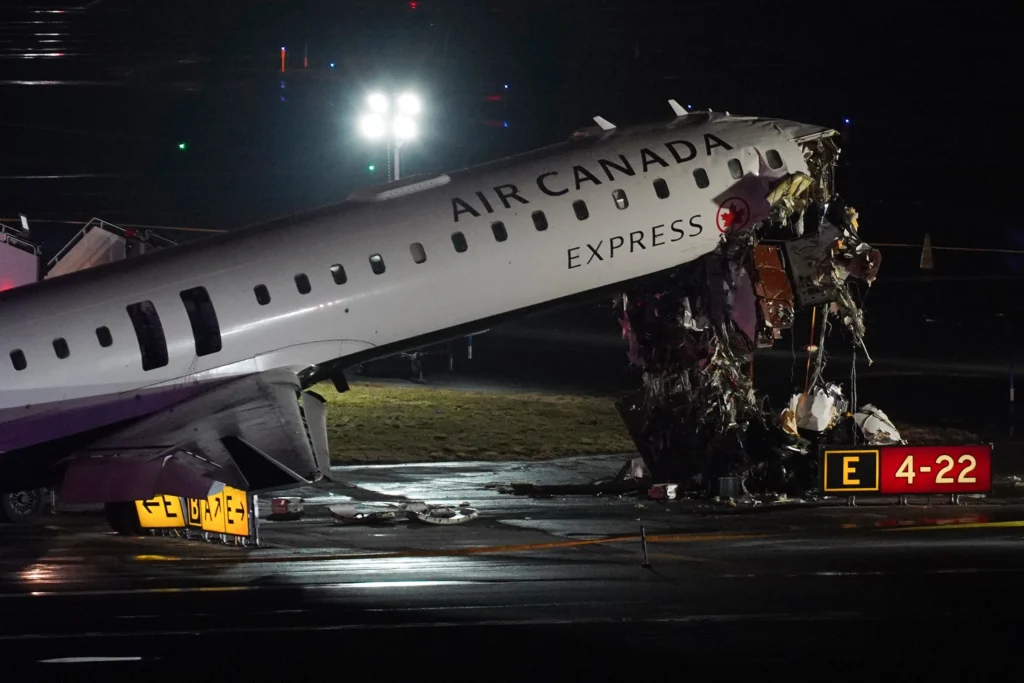
Officials said the crash occurred Sunday night as an Air Canada regional aircraft was landing, colliding with a fire vehicle that had entered the runway while responding to a separate incident. The impact crushed the front section of the aircraft and caused significant injuries among passengers and crew.
The pilot and copilot were killed in the collision, according to authorities. Both were based in Canada, said Kathryn Garcia, executive director of the Port Authority of New York and New Jersey, which operates the airport.
The aircraft, operated by Jazz Aviation on behalf of Air Canada, was carrying 72 passengers and four crew members from Montreal. Approximately 40 people were taken to hospitals, with several suffering serious injuries. By Monday, most had been released, though some remained under medical care.
Two Port Authority employees inside the fire truck were also injured but were not believed to have life-threatening conditions.
Garcia said the fire truck had been dispatched to assist a United Airlines flight that had reported an onboard odor issue. The emergency vehicle was crossing the runway when it was struck by the landing jet.
Audio recordings from air traffic control communications captured the moments leading up to the crash. A controller appeared to grant clearance for the vehicle to cross the runway before urgently attempting to halt its movement.
“Stop, Truck 1. Stop,” the controller said, according to the transmission, before redirecting another aircraft away from the runway.
Flight tracking data indicated the aircraft was traveling at approximately 24 miles per hour at the time of impact.
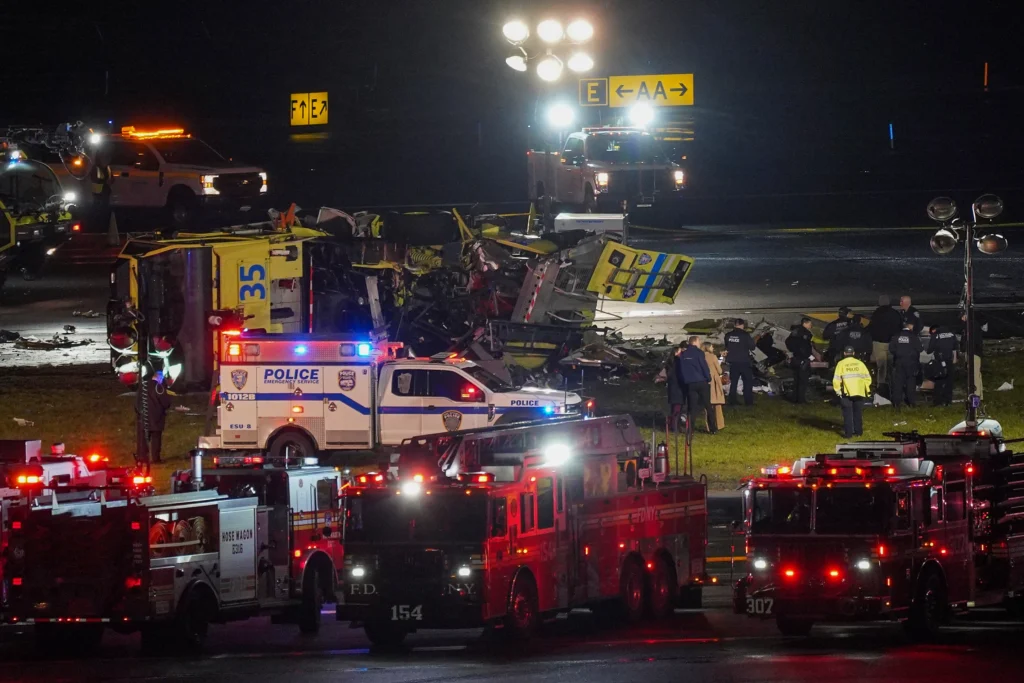
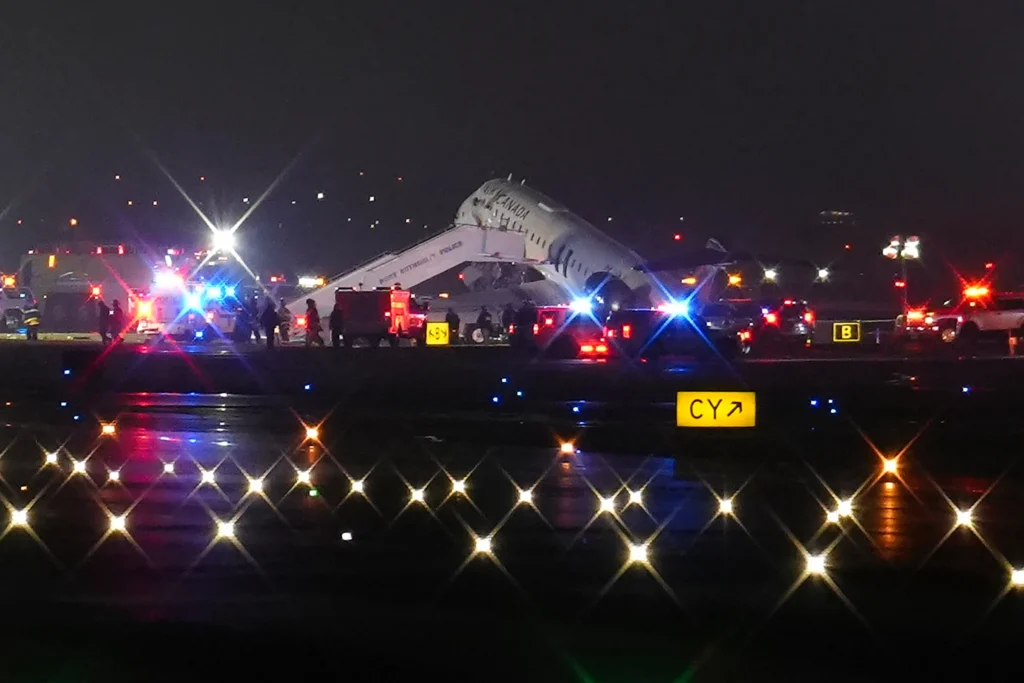
Images from the scene showed extensive damage to the aircraft’s nose, with debris hanging from the cockpit area. The fire truck was also heavily damaged and overturned nearby. Emergency crews used mobile stairways to evacuate passengers from the aircraft.
The airport was shut down following the crash and remained closed into Monday afternoon as investigators began examining the scene.
The National Transportation Safety Board is leading the investigation, with support from the Federal Aviation Administration. Officials said a team of technical experts had been deployed to determine the sequence of events and identify contributing factors.
Aviation analysts told Reuters that investigators will likely focus on communication between air traffic control and ground crews, as well as runway procedures and staffing levels.
Safety expert Anthony Brickhouse said radio transmissions suggest both the aircraft and the fire truck may have received clearance, raising questions about coordination. “Communication is going to be a major part of this investigation,” he said.
Passengers at the airport described confusion and anxiety in the aftermath of the crash. Some reported seeing the collision or its immediate aftermath from nearby aircraft.
Arturo Davidson, who was waiting on a flight to Miami, said passengers were informed of an accident shortly after it occurred. About 20 minutes later, they were told the airport would close and flights would be canceled.
Flight disruptions quickly spread, with hundreds of departures canceled and delays expected to continue as operations gradually resumed. Data from FlightAware showed more than 500 flights had been canceled at LaGuardia by Monday.
New York City officials warned of ongoing traffic congestion, road closures and increased emergency activity near the airport.
The incident comes amid growing scrutiny of aviation safety in the United States. Industry data cited by the FAA shows dozens of runway incursions recorded in recent months, raising concerns about coordination between aircraft and ground vehicles.
The crash also follows several high-profile aviation incidents, including a 2025 midair collision involving a regional jet and a military helicopter that resulted in multiple fatalities.
Recent staffing shortages among air traffic controllers and transportation security personnel have added pressure to an already strained system, particularly during periods of high travel demand.
Canadian Transport Minister Steve MacKinnon said his government is working closely with U.S. authorities as the investigation continues.
The collision at LaGuardia highlights a critical vulnerability in airport operations: the coordination between aircraft and ground vehicles in active runway environments. These areas require precise timing and communication, and even minor lapses can have severe consequences.
Early indications suggest that communication breakdowns may have played a role. If both the aircraft and the fire truck were cleared to use the same runway, investigators will likely examine procedural safeguards designed to prevent such conflicts.
The involvement of an emergency vehicle responding to another aircraft issue adds complexity. Airports must balance rapid emergency response with strict runway control, and this incident underscores how those priorities can collide under pressure.
The broader context of staffing shortages and increased air traffic further complicates the picture. With controllers managing high workloads, the margin for error can narrow, particularly during nighttime operations when visibility and fatigue may be factors.
This crash is likely to intensify calls for enhanced runway safety measures, including improved communication protocols, advanced monitoring systems and stricter enforcement of clearance procedures.
As investigators work to determine the cause, the incident serves as a stark reminder of the risks inherent in aviation operations and the importance of maintaining rigorous safety standards across all aspects of airport activity.





