

President Donald Trump said Monday he is postponing planned U.S. military strikes on Iran’s energy infrastructure for five days, citing what he described as productive discussions aimed at easing tensions in the Middle East.
The decision came just hours before a deadline the United States had set for Iran to reopen the Strait of Hormuz, a vital shipping route for global oil supplies. Trump said the pause would allow ongoing talks to continue, raising the possibility of a diplomatic breakthrough in a conflict that has escalated sharply in recent weeks.
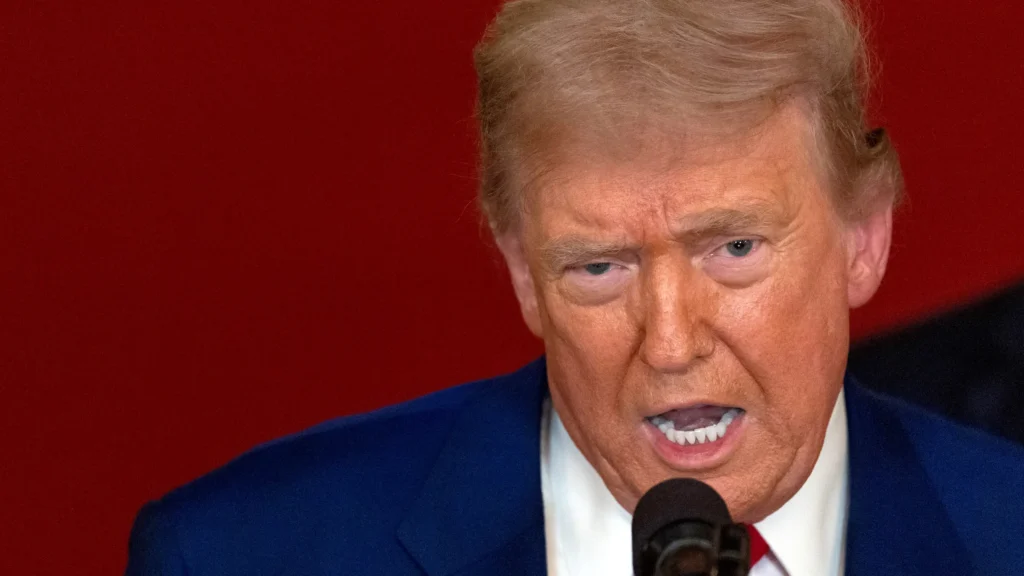
In a statement posted on his Truth Social platform, Trump said U.S. and Iranian officials had engaged in “very good and productive conversations” over the past two days. He added that the delay in military action would depend on the outcome of continued discussions.
“Based on the tone of these discussions, I have directed that any planned strikes on Iranian power plants and energy infrastructure be postponed for five days,” Trump said, adding that talks would continue throughout the week.
The move follows escalating threats tied to the Strait of Hormuz, a narrow passage that handles a significant portion of the world’s oil shipments.
Iranian officials had warned that any attack on their coastal facilities would trigger sweeping retaliation, including potential disruption of maritime traffic in the Gulf. The country’s National Defence Council said attempts to strike Iranian territory could lead to widespread instability in regional shipping lanes.
Iran has also signaled it may restrict access to the strait, allowing passage only under certain conditions, a move that has already reduced tanker traffic and pressured global energy markets.
According to The Associated Press, Trump’s decision to delay strikes represents the latest shift in a strategy that has included both military threats and overtures toward negotiation.
Despite the pause in U.S. strike plans, fighting across the region continued.
Israeli forces carried out strikes in southern Lebanon, including the destruction of a key bridge over the Litani River. Lebanese President Joseph Aoun described the attack as a possible precursor to a broader ground operation.
At the same time, U.S. and Israeli forces continued operations targeting Iranian positions, while Israel’s military reported intercepting additional Iranian missile launches.
Airstrikes also hit the headquarters of Iraq’s Popular Mobilisation Forces in Baghdad after attacks targeted a U.S. diplomatic and logistics facility near the city’s main airport.
The conflict, which began with U.S. and Israeli strikes on Iran in late February, has spread across multiple countries, increasing the risk of a wider regional war.
The ongoing instability has had significant effects on global energy markets. Oil prices have surged since the start of the conflict, with Brent crude rising sharply amid fears of supply disruptions.
Energy analysts say any prolonged restriction of shipping through the Strait of Hormuz could have far-reaching economic consequences, given the waterway’s role as a key transit route for oil and liquefied natural gas.
Meanwhile, Russia has raised concerns about the risks of military activity near sensitive nuclear sites. Kremlin spokesman Dmitry Peskov warned that strikes near Iran’s Bushehr nuclear power plant could have serious consequences and urged a return to diplomatic solutions.
The International Atomic Energy Agency has not reported any damage or radiation concerns linked to recent strikes in the region.
Trump’s decision to delay military action highlights the shifting dynamics of the conflict, where threats of escalation have been paired with intermittent diplomatic engagement.
Iranian state media characterized the delay as a sign that Washington was stepping back following firm warnings from Tehran. At the same time, Iranian officials have indicated willingness to continue discussions, with regional intermediaries such as Turkey playing a role in facilitating communication.
According to remarks cited by Al Jazeera and Reuters, diplomatic channels remain active even as military operations continue across the region.
The human toll of the conflict continues to mount. Reports indicate that more than 1,500 people have been killed in Iran, with additional deaths in Lebanon, Israel and among U.S. forces. Millions have been displaced, particularly in Lebanon and parts of Iran.
The scale of the crisis has drawn international attention, with governments and humanitarian organizations warning of worsening conditions if fighting continues.
The decision to delay strikes on Iran’s energy infrastructure reflects a tactical pause rather than a clear de-escalation. By holding off on military action, the United States appears to be testing whether diplomatic engagement can achieve objectives that force alone may not.
The Strait of Hormuz remains central to the standoff. Control over this critical chokepoint gives Iran significant leverage, allowing it to influence global energy flows even without direct confrontation. This dynamic complicates military planning, as any disruption could have immediate economic repercussions worldwide.
Trump’s approach illustrates a broader strategy that combines pressure with negotiation. However, the rapid shifts between threats and diplomacy may also create uncertainty, both for allies and adversaries, about U.S. intentions.
The continued military activity across multiple fronts suggests that the conflict is becoming more complex, involving a growing number of actors and geographic areas. This expansion increases the risk of unintended escalation, particularly as infrastructure and strategic assets become targets.
Ultimately, the five-day delay may offer a narrow window for diplomacy, but the underlying tensions remain unresolved. Without a broader agreement addressing security concerns on all sides, the conflict is likely to continue posing risks to regional stability and global markets.





