

The Pentagon is reviewing plans to deploy up to 10,000 additional U.S. troops to the Middle East as tensions with Iran intensify, expanding a growing American military presence in the region, according to reporting by The Wall Street Journal and Sky News.
The proposed deployment would add to the thousands of service members already sent, including about 5,000 Marines and sailors and roughly 2,000 troops from the Army’s 82nd Airborne Division. Defense officials cited by The Wall Street Journal indicated the reinforcements could include infantry units and armored vehicles, significantly increasing the United States’ operational capabilities.
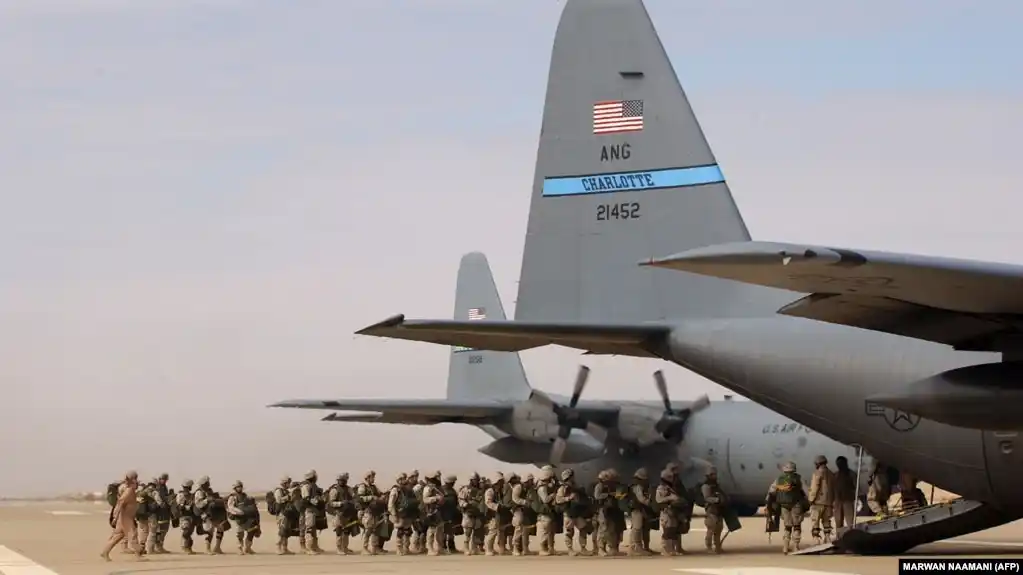
White House officials emphasized that no final decision has been announced. “All announcements regarding troop deployments will come from the Department of War,” White House spokeswoman Anna Kelly said in remarks carried by The Wall Street Journal. She added that President Donald Trump “always has all military options at his disposal.”
The potential troop increase comes as the Trump administration continues to pursue a diplomatic agreement with Iran while simultaneously strengthening its military posture. According to The Wall Street Journal, the additional forces would likely be positioned within range of key Iranian strategic locations, including Kharg Island, a major oil export terminal.
Neither the Pentagon nor the White House provided additional comment when contacted by other outlets, including The New York Post.
Reuters previously disclosed that U.S. officials have examined scenarios involving the use of ground forces on Iranian territory. Those discussions have included securing the Strait of Hormuz, a critical global shipping route, as well as Kharg Island. Reuters also reported that U.S. officials have considered the possibility of deploying troops to safeguard Iran’s stockpile of highly enriched uranium.
The developments come amid continued warnings from the White House. Press secretary Karoline Leavitt said Wednesday that President Trump is prepared to escalate military action if negotiations fail.
“President Trump does not bluff and he is prepared to unleash hell,” Leavitt told reporters. “Iran should not miscalculate again. Their last miscalculation cost them their senior leadership, their navy, their air force and their air defense system.”
Iranian officials have publicly rejected a 15-point peace proposal presented by the United States through Pakistan, signaling ongoing resistance to diplomatic overtures. Tehran has also disputed U.S. claims that talks have been productive.
Sky News, citing U.S. defense officials, reported that the Pentagon’s deliberations are aimed at providing President Trump with broader military options, even as he has pointed to what he described as constructive diplomatic engagement. According to the outlet, the administration recently extended a pause on potential strikes against Iranian energy infrastructure, setting a new deadline of April 6.
The Strait of Hormuz remains a central point of concern. Iran’s actions affecting the waterway, one of the world’s most vital oil transit routes, have contributed to rising global energy prices since the conflict began. Any further disruption could have significant economic consequences worldwide.
The possibility of deploying additional U.S. ground forces reflects a dual-track strategy by the Trump administration, combining diplomatic pressure with military readiness. Analysts say the approach is intended to strengthen Washington’s negotiating position while maintaining the ability to respond rapidly to any escalation.
At the same time, the uncertainty surrounding the potential deployment underscores the fluid nature of the situation. It remains unclear where the additional troops would be stationed or whether they would take on combat, deterrence or logistical roles.
The consideration of sending up to 10,000 more troops to the Middle East represents a significant escalation in U.S. military posture, even if the deployment is ultimately intended as a deterrent rather than a prelude to direct conflict. Increasing troop levels expands operational flexibility, allowing for a wider range of scenarios, from defensive positioning to potential offensive operations.
One of the most notable aspects of the reported planning is the focus on strategically critical sites such as the Strait of Hormuz and Kharg Island. Control or protection of these locations would have far-reaching implications, not only for military strategy but also for global energy markets. Any disruption in the flow of oil through the Strait of Hormuz can quickly drive up prices and destabilize economies.
The reported discussions about securing Iran’s nuclear material also point to broader concerns about proliferation and regional security. Such a mission would be complex and highly risky, potentially requiring sustained ground operations in contested territory.
At the same time, the administration’s messaging reflects a calculated effort to apply pressure on Tehran. Public statements emphasizing military readiness, combined with ongoing diplomatic outreach, suggest a strategy designed to force concessions without immediately resorting to large-scale conflict.
However, the approach carries significant risks. Increasing troop levels in a volatile region can raise the likelihood of miscalculation, particularly if Iranian forces or allied groups interpret the buildup as preparation for an attack. Any direct confrontation involving U.S. ground troops could quickly escalate into a broader regional war.
The involvement of multiple actors, including Israel and regional allies, further complicates the situation. Coordinating military and diplomatic efforts across such a complex landscape presents ongoing challenges for U.S. policymakers.
Ultimately, the decision on whether to proceed with the deployment will likely depend on developments in both the military and diplomatic arenas. If negotiations show progress, the additional forces may serve primarily as leverage. If talks collapse, the presence of those troops could enable a rapid shift toward more direct engagement.
NewYorkPost/SkyNews





