

Hackers believed to be linked to Iran have accessed the personal email account of FBI Director Kash Patel and released photographs and documents online, the group and federal officials confirmed Friday.
The hacking group, calling itself Handala Hack Team, posted images and a sample of emails it claims were taken from Patel’s personal inbox. In a message published on its website, the group said Patel had joined a list of individuals it has successfully targeted.
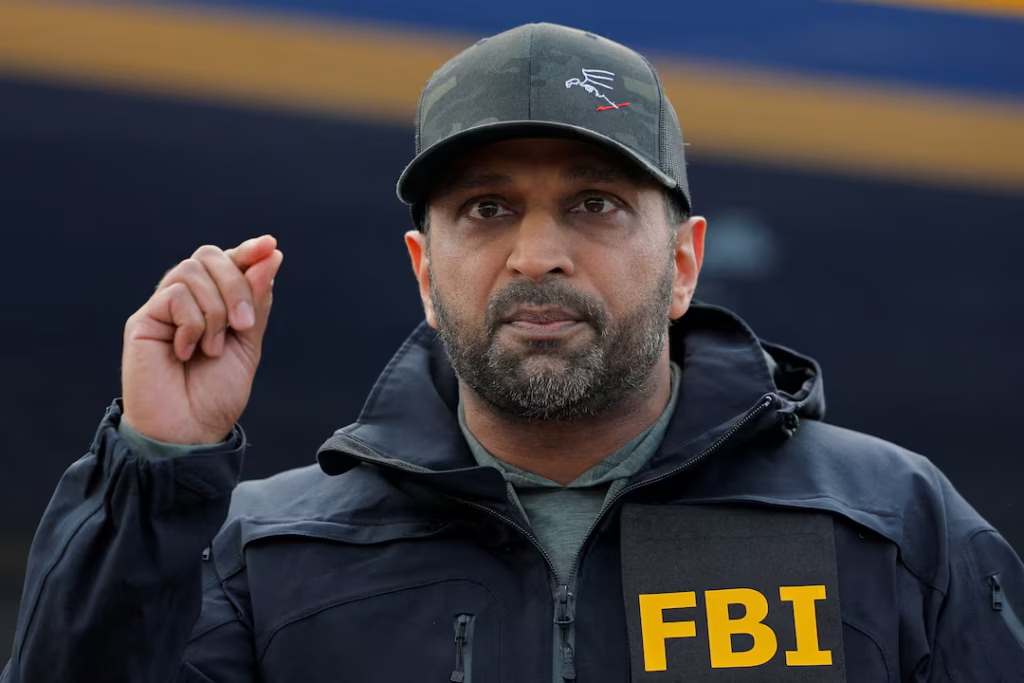
The released material includes personal photographs appearing to show Patel in various settings, including smoking cigars, riding in a vintage convertible and posing for a mirror selfie. The group also posted a selection of more than 300 emails it said were taken from the account, with messages dated between 2010 and 2019.
The FBI acknowledged the incident, confirming that Patel’s personal email account had been targeted. In a statement, agency spokesman Ben Williamson said officials had taken steps to address any potential risks.
“We have taken all necessary steps to mitigate potential risks associated with this activity,” Williamson said, adding that the compromised material was “historical in nature and involves no government information.”
Reuters reported it could not independently verify the authenticity of the emails released by the hackers. However, the email address identified by the group matches one previously linked to Patel in earlier data breaches documented by cybersecurity firm District 4 Labs.
Google, which operates the Gmail service used by Patel, did not immediately respond to a request for comment.
Handala portrays itself as a pro-Palestinian activist hacking collective, but cybersecurity analysts in Western countries have linked the group to Iranian government cyber units. Researchers believe such groups often operate under multiple identities to obscure their origins.
The hackers have recently claimed responsibility for other cyber incidents. Earlier this month, the group said it had breached Michigan-based medical technology company Stryker and deleted a large volume of data. The company has not publicly confirmed the extent of any damage.
On Thursday, Handala also claimed to have released personal data belonging to employees of defense contractor Lockheed Martin working in the Middle East. Lockheed Martin said it was aware of the claims and has measures in place to address cyber threats.
Cybersecurity experts say the breach of Patel’s personal account appears to be part of a broader effort to target high-profile U.S. officials. Gil Messing, chief of staff at Israeli cybersecurity firm Check Point, said the incident reflects a strategy aimed at undermining confidence and creating unease among government leaders.
“This type of operation is designed to embarrass officials and make them feel vulnerable,” Messing said.
The use of personal email accounts as targets is not new. Foreign hackers have repeatedly focused on private communications belonging to senior officials, which are often less secure than government systems. In 2016, hackers gained access to the personal Gmail account of John Podesta, chairman of Hillary Clinton’s presidential campaign, and released large volumes of emails. In 2015, hackers accessed the personal account of then-CIA Director John Brennan and disclosed sensitive information.
U.S. intelligence assessments have previously warned of similar activity. A report reviewed by Reuters earlier this month indicated that Iran and affiliated groups could respond to recent military developments with lower-level cyber operations targeting American networks.
Analysts say such attacks typically aim to gather intelligence, damage reputations or signal capability without crossing thresholds that might trigger a direct military response.
There are also concerns that additional stolen data may be released. In a separate case last year, another hacking group using the name “Robert” told Reuters it was considering publishing a large cache of data allegedly taken from individuals close to President Donald Trump, including White House chief of staff Susie Wiles. That claim has not been independently verified, and the group has not responded to inquiries in recent months.
The latest breach highlights ongoing vulnerabilities associated with personal digital accounts, particularly among high-ranking officials who may be frequent targets of foreign intelligence operations.
The breach of FBI Director Kash Patel’s personal email account underscores a growing trend in modern cyber conflict, where attackers focus on individuals rather than institutions. Personal accounts are often easier to compromise than secured government systems, making them attractive targets for intelligence gathering and public exposure.
In this case, the apparent release of personal photographs and older emails suggests the primary goal may be reputational damage rather than access to sensitive national security information. By publishing personal content, hackers can create embarrassment, distract leadership and shape public narratives.
The timing of the attack is also significant. As tensions between the United States and Iran continue to rise, cyber operations offer a way for Tehran to project power without engaging in direct military confrontation. These types of actions fall into a category often described as “gray zone” tactics, which exist below the threshold of open conflict but still carry strategic impact.
The involvement of groups like Handala illustrates the challenge of attribution in cyber warfare. By operating through proxy identities, state-linked actors can maintain plausible deniability while still advancing their objectives.
For U.S. officials, the incident serves as a reminder of the importance of cybersecurity practices across both official and personal platforms. Even when no classified information is involved, breaches can have broader implications for trust, credibility and national security perception.
Looking ahead, experts warn that similar attacks may continue, particularly if geopolitical tensions remain high. The potential for additional leaks or targeted cyber campaigns could further complicate an already volatile international environment.
Reuters





