

Nigeria’s army announced Sunday it had rescued 31 civilians who were taken hostage during an attack on a church in northwestern Kaduna state while five people were found dead at the scene, demonstrating both the continuing vulnerability of Christian worshippers and the military’s capacity to respond when deployed effectively.
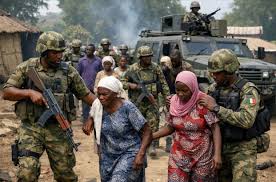
The army disclosed the attack occurred during Easter church services in Ariko village in the Kachia local government area. Troops were in pursuit of the attackers following the rescue operation, military officials added, indicating the perpetrators had fled into surrounding terrain after abandoning their captives during combat with security forces.
The chairman of the Christian Association of Nigeria for Kaduna state, Caleb Maaji, confirmed that two churches were attacked in Ariko village on Sunday morning. He stated that seven people were killed and an unknown number taken hostage, though his casualty figures differed from the military’s account. “Findings are still ongoing,” Maaji told Reuters, acknowledging that complete information remained unavailable as investigators examined the attack scene.
Northwest Nigeria has struggled for years with violence including mass kidnappings for ransom and village raids, with armed groups operating from vast forest hideouts across the region. The persistent insecurity has displaced millions and crippled economic development in territories where government authority remains tenuous despite military operations consuming substantial resources.
According to DW, the army confirmed the attack occurred during Easter celebrations at a church in northwestern Kaduna state. “Through a swift response, (troops) have successfully foiled a terrorist attack leading to the rescue of 31 civilians abducted during an Easter church service” in Ariko village, the military stated officially, characterizing the operation as a success despite the confirmed deaths.
Military officials added that troops engaged the attackers in a “firefight,” forcing the “terrorists to abandon 31 hostages” as they fled to avoid casualties and capture. Local media documented that a Catholic and an evangelical church were targeted simultaneously in what appeared to be a coordinated assault designed to maximize casualties and hostages.
Maaji also confirmed that assailants targeted two churches in Ariko village on Sunday, adding that seven people were killed and several others were abducted before military intervention. The military, however, reported five victims were found dead at the scene—a discrepancy that may reflect bodies discovered after initial military assessments or differing counts between civilian witnesses and security personnel.
The attack in Ariko village, located approximately 100 kilometers (62 miles) north of the capital Abuja, transpired despite the police chief ordering “massive security deployment” including at places of worship during Easter. The successful attack despite heightened security measures raised questions about intelligence failures and resource allocation that allowed armed groups to strike predictable targets during major religious observances.
For years, several states in northwest and central Nigeria, including Kaduna, have been terrorized by criminal gangs known locally as bandits which carry out mass kidnappings for ransom and village raids. Nigeria, Africa’s most populous nation, has witnessed rising violence despite the army strengthening security in the region to combat these groups—suggesting that military solutions alone cannot resolve the complex security crisis.
In January, gunmen attacked churches during mass in Kaduna and rounded up more than 170 worshippers in an incident that drew international attention and prompted renewed calls for governmental action to protect vulnerable populations. The pattern of church attacks during major Christian holidays suggests deliberate targeting rather than random violence.
The security situation has attracted attention from U.S. President Donald Trump, who has characterized the violence in Nigeria as a “genocide” of Christians—language the Nigerian government has strongly rejected as inaccurate and inflammatory. Nigeria, home to over 250 ethnic groups, is roughly divided between Muslims in the north and Christians in the south, with significant mixing in central regions where much of the violence occurs.
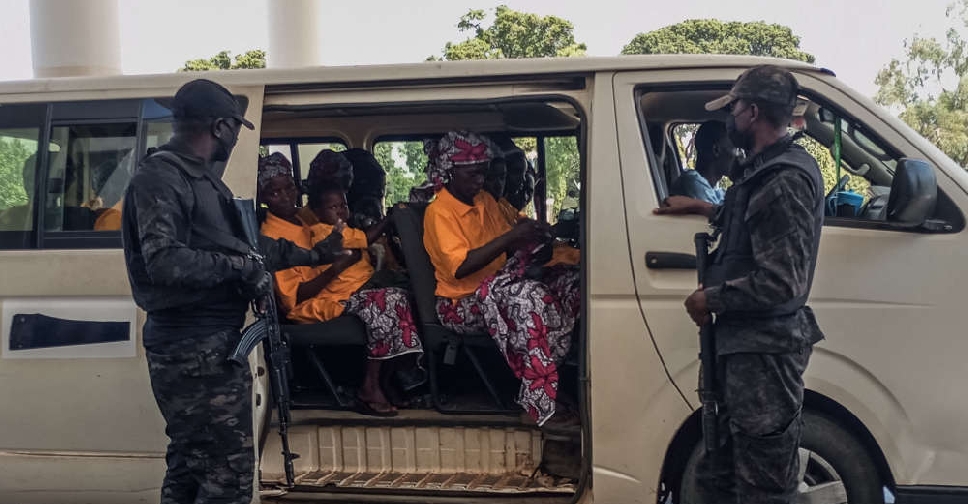
The BBC confirmed that thirty-one civilians held hostage following the Sunday morning church attack in northwest Nigeria were rescued by military forces. The army emphasized that soldiers engaged attackers in a “fierce firefight,” forcing them to flee and leave the hostages and the bodies of dead victims behind—a account suggesting the rescue resulted from military pressure rather than negotiations.
Attacks and kidnappings for ransom constitute common occurrences in northern Nigeria as the country grapples with security threats from extremist groups and armed gangs locally known as bandits. Although the army claimed it responded swiftly to Sunday’s attack, local media documented that residents stated the gunmen operated for extended periods without facing resistance—contradicting official accounts and suggesting delayed military response.
As a result of the firefight, officials declared the “fleeing terrorists” had sustained “significant casualties, as evidenced by blood trails along their escape routes.” The claim remained unverified by independent sources, and blood trails could reflect wounded attackers or injured hostages being dragged during the chaos.
Troops had been deployed to hunt the insurgents and reinforce security in surrounding areas. The army urged residents to share information that could support operations against groups fueling insecurity across the country—an appeal reflecting the military’s dependence on civilian intelligence to locate armed groups operating in familiar terrain.
In a separate incident, Nigeria’s military killed 65 bandits following an offensive in Zamfara state, the AFP news agency documented Sunday, days after a large group of bandits abducted residents from villages in the state. Police confirmed Saturday that mass abduction had occurred in villages earlier in the week and a manhunt had been launched.
Late last year, the Trump administration raised concerns about the treatment of Christians in Nigeria and urged the government to do more to improve security and strengthen protection for Christian communities. Trump had previously claimed there was a “Christian genocide” underway in Nigeria—an allegation strongly rejected by Nigeria’s government, which emphasized that Muslims, Christians, and people of no faith were victims of attacks.
In February, U.S. troops were deployed to Nigeria to train its forces and provide intelligence assistance in their fight against extremist militants and other armed groups. The American military presence reflected Washington’s growing concern about instability in Africa’s most populous nation and the potential for regional spillover if Nigeria’s security situation continues deteriorating.
The successful rescue of 31 hostages from the Easter Sunday attack represents a rare positive outcome in Nigeria’s chronic security crisis, where kidnapping victims often remain in captivity for months until ransoms are paid or are never recovered at all. The swift military response—if accounts of immediate deployment are accurate—demonstrates what can be accomplished when security forces react decisively to attacks in progress.
However, the fact that attackers successfully assaulted two churches during Easter services despite warnings and supposedly heightened security illustrates persistent vulnerabilities that armed groups continue exploiting. The ability of gunmen to kill at least five people and initially abduct 31 others before military intervention suggests that preventive security measures remain inadequate even during high-alert periods.
For Christian communities across northern Nigeria, the rescue provides some reassurance that military forces can save hostages when properly deployed and equipped. However, the underlying pattern of repeated attacks on churches and worshippers demonstrates that reactive rescues cannot substitute for proactive security that prevents assaults from occurring in the first place.
As Nigerian authorities continue investigating the Easter Sunday attack and pursuing the perpetrators who escaped military forces, fundamental questions persist about whether the government can establish sufficient security presence in rural areas to protect vulnerable populations from armed groups that operate with disturbing frequency despite years of counterinsurgency operations and billions spent on military equipment and training.
BBC/Reuters





