

Cameroon’s President Paul Biya has appointed his son, Franck Emmanuel Biya, as Vice President of the Republic and Head of the Armed Forces, consolidating family control over the country’s political and military structures at a time of heightened unrest following disputed elections that triggered nationwide protests and international scrutiny.
The appointment, announced in an official decree dated April 4, 2026, also designates Franck Biya as Minister Delegate at the Ministry of Defence, placing him at the center of Cameroon’s security architecture. The document declares: “Mr Franck Emmanuel BIYA is appointed Vice President of the Republic of Cameroon.”
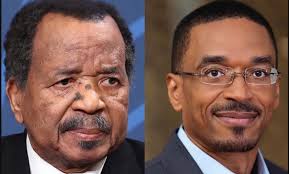
The decree further specifies: “Mr Franck Emmanuel BIYA is appointed Head of the Armed Forces,” granting the president’s son command authority over military forces that have repeatedly been accused of using excessive force against civilian demonstrators opposing his father’s continued rule.
Expanding his authority, the decree notes: “The Vice President of the Republic, Mr Franck Emmanuel BIYA, is also appointed Minister Delegate at the Ministry of Defence of the Republic of Cameroon,” creating an unprecedented concentration of executive, military, and defense portfolio responsibilities in a single individual whose primary qualification appears to be family lineage.
Citing constitutional provisions and defense laws, the presidency claimed the appointments were made in line with “service requirements,” adding that the decree “shall be registered, published according to the procedure of urgency, and inserted in the Official Gazette.” The invocation of urgency procedures prevented legislative debate or public consultation about the dynasty-building maneuver.
The move transpired months after Biya, 92, was sworn in for an unprecedented eighth term following a disputed election that opposition candidates and international observers have characterized as fraudulent. Biya secured 54 percent of the vote in the election, defeating opposition candidate Issa Tchiroma Bakary, who polled 35 percent according to official tallies.
Tchiroma Bakary has rejected the outcome, insisting he was the rightful winner and accusing authorities of electoral fraud—claims the government denies while offering no credible evidence to support the legitimacy of results that statistical analysts have questioned. Despite the controversy, Biya characterized the election as “satisfactory” and commended the electoral body for its conduct while congratulating security forces for containing demonstrations without addressing allegations of excessive force that left dozens dead.
The Constitutional Council dismissed multiple petitions challenging the results, citing insufficient evidence or lack of jurisdiction—rulings that critics contend demonstrate the judiciary’s subservience to executive authority rather than independent constitutional interpretation.
Biya, who has ruled Cameroon since 1982 after succeeding former president Ahmadou Ahidjo through a constitutional transfer of power, now faces renewed criticism from opponents who accuse him of tightening his grip through both political manipulation and military intimidation. The elevation of his son to the vice presidency and armed forces leadership intensifies concerns over succession planning and democratic governance in the Central African nation as calls for reform continue growing.
Reuters documented that Cameroon’s parliament on Saturday overwhelmingly approved a constitutional amendment to reintroduce the position of vice president—a measure the government claims will ensure continuity but which opposition figures characterize as consolidating executive power and facilitating dynastic succession.
In a joint session of the ruling party-dominated National Assembly and Senate, lawmakers voted 200 to 18 in favor, with four abstentions, to pass the bill. The lopsided vote reflected the ruling party’s parliamentary dominance rather than genuine multiparty consensus about constitutional changes with profound implications for governance.
The bill stipulates that the vice president will automatically assume the presidency if President Biya dies, resigns, or becomes incapacitated—creating a succession mechanism that bypasses competitive elections and ensures power remains within the ruling family. Biya, 93 according to Reuters reporting, has led the oil- and cocoa-producing Central African country since 1982 and ranks as the world’s oldest serving head of state. Public discussion about his health is banned under laws criminalizing speculation about the president’s physical condition.
According to the legislation, a copy of which was reviewed by Reuters, the vice president will be appointed and dismissed by the president, serving for the remainder of the president’s seven-year term. However, the interim leader would be prohibited from initiating constitutional changes or running in a subsequent election—restrictions intended to portray the succession mechanism as temporary despite creating circumstances where an appointed vice president could govern for years.
The government has argued that the reform safeguards institutional stability in case of sudden leadership vacancy. Biya has 15 days to promulgate the bill under constitutional procedures, though given that he engineered the amendment to benefit his son, prompt signature appears certain.
Critics, including opposition lawmakers, argue the amendment weakens democratic institutions and exacerbates centralization of power in an already authoritarian system where meaningful political competition has been systematically suppressed. Joshua Osih, a member of parliament and chairman of the opposition Social Democratic Front, declared the changes were a missed opportunity to boost national unity and democratic governance in a nation torn by civil conflict since 2017.
“This text weakens legitimacy, reinforces centralisation, and ignores a major historical grievance,” Osih emphasized, calling instead for a system where the president and vice president are jointly elected, reflecting Cameroon’s origins as a union of British and French-administered territories that achieved independence through distinct historical paths.
The reintroduction of the vice presidency marks Cameroon’s first major constitutional revision since 2008 when presidential term limits were scrapped in a move that sparked nationwide protests which were met with violent crackdown by security forces. The term limit elimination allowed Biya to continue ruling indefinitely, transforming what had been constitutional democracy into personalized authoritarian rule.
The vice presidency was previously part of Cameroon’s governance structure but was abolished in 1972 following a constitutional referendum during an earlier era when centralization was pursued as a strategy for national unity. The position’s restoration under dramatically different circumstances—specifically to facilitate dynastic succession—represents a fundamental departure from even the pretense of democratic governance.
For opposition figures and civil society activists in Cameroon, the appointments confirm their worst fears about Biya’s intentions to create a family dynasty that perpetuates authoritarian control beyond his lifetime. The concentration of both executive authority and military command in Franck Biya’s hands provides him with tools to suppress dissent and maintain power through force if popular resistance emerges.
The international community has remained largely silent about the succession maneuvering despite its obvious departure from democratic norms. Western governments that routinely criticize authoritarian practices elsewhere have offered no condemnation of Biya’s dynasty-building, reflecting geopolitical calculations that prioritize stability over democratic accountability in a region facing multiple security challenges.
For Cameroonians who have endured more than four decades of Biya family rule, the appointments represent the formalization of what many already understood—that political power in their country functions as hereditary property rather than public trust subject to democratic accountability. Whether the population will accept indefinite Biya family rule or whether the succession arrangements will trigger resistance remains uncertain.
As Franck Biya assumes his new roles as vice president, armed forces commander, and defense minister, he inherits both enormous power and profound legitimacy deficits. His elevation occurred through presidential decree rather than popular mandate, and his qualifications for commanding military forces or governing a diverse nation of 28 million people remain unclear beyond his fortunate birth.
The coming months will reveal whether Cameroon’s political and military establishments accept dynastic succession as inevitable or whether factions within the regime begin positioning themselves to contest power once the elder Biya—now 92 or 93 depending on sources—eventually passes from the scene. For now, the Biya family’s grip on Cameroon appears secure, sustained by military force, constitutional manipulation, and international indifference to the erosion of democratic governance in Central Africa.
Reuters/Nation.africa/Arisetv





