

President Donald Trump warned Tuesday that “a whole civilization will die tonight” if Iran fails to meet his latest deadline to reach a deal, as airstrikes intensified and tensions escalated across the region.
The warning came hours before Trump’s 8 p.m. Eastern deadline for Tehran to agree to terms that include reopening the Strait of Hormuz, a critical global shipping route for oil. Iran signaled it would respond forcefully if the United States follows through on its threats.
Iran’s ambassador to the United Nations said any U.S. action would be met with “immediate and proportionate” retaliation, calling Trump’s statements a dangerous escalation and accusing Washington of encouraging potential violations of international law.
Even before the deadline, new strikes were reported across Iran. Two bridges and a train station were hit, while U.S. forces struck military-related targets on Kharg Island, a key location tied to Iran’s oil production. It marked the second time American forces have targeted the island since the conflict began.
Trump has repeatedly set deadlines throughout the conflict, often extending them, but insisted this latest ultimatum would not change without a major diplomatic breakthrough. At the same time, his public statements have left uncertainty about the exact scope of possible U.S. action.
He has tied reopening the Strait of Hormuz to avoiding broader attacks, while also suggesting the waterway is more critical to other countries than to the United States. Trump has also raised the possibility of deploying ground forces to secure Iranian oil assets, even as he indicated that large-scale combat operations could wind down.
The mixed signals have added to uncertainty as rhetoric on both sides has intensified.
Iranian President Masoud Pezeshkian said 14 million people have volunteered to defend the country, including himself. The statement came as Trump warned that U.S. forces could destroy Iran’s bridges and power plants within hours and suggested the country could face devastating consequences.
It remained unclear whether the latest airstrikes were directly tied to Trump’s broader threats. Some targets appeared linked to Iran’s transportation network, and Israel’s prime minister said Israeli aircraft struck bridges and rail lines used for military purposes.
Iran launched missiles toward Israel and Saudi Arabia, prompting defensive responses and the temporary closure of a major bridge connecting Saudi Arabia and Bahrain.
While Iran lacks the advanced military capabilities of the United States and Israel, its ability to disrupt shipping through the Strait of Hormuz has had a significant impact on the global economy, increasing pressure on Washington to find a resolution.
Diplomatic efforts are continuing, though Iran has rejected the latest U.S. proposal. Officials involved in negotiations said talks remain active but face major obstacles.
In a social media post Tuesday morning, Trump repeated his warning, saying that without a deal, “a whole civilization will die tonight,” while also leaving open the possibility of a breakthrough.
Iranian officials have called on civilians to form human chains around power plants, a move intended to deter attacks on critical infrastructure. Similar actions have been taken in past periods of heightened tension, though the scale of the current effort remains unclear.
Military leaders in Iran also signaled a broader response if the United States escalates, warning that regional energy supplies could be disrupted for years.
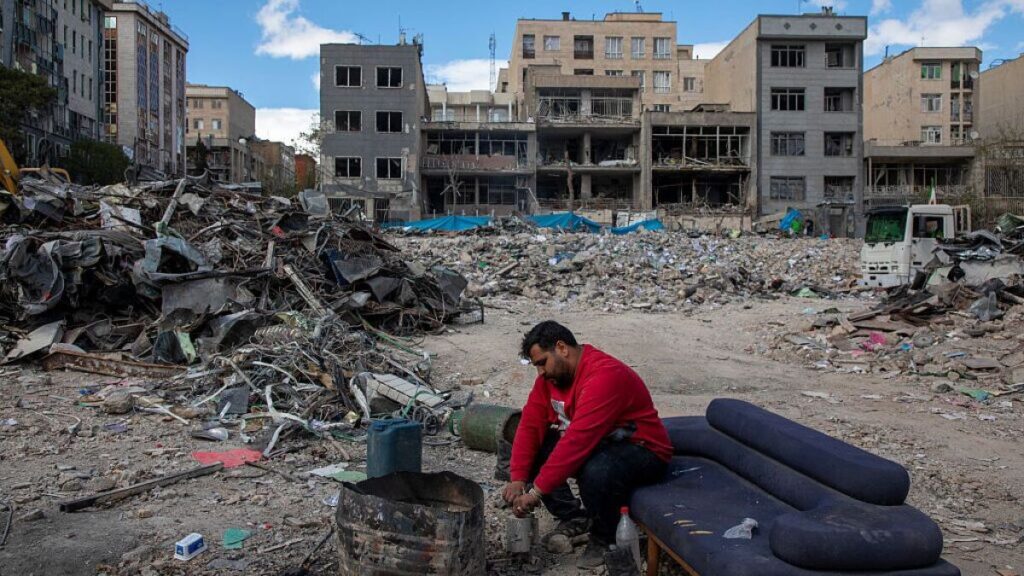
On the ground in Tehran, residents expressed growing concern about the impact of continued strikes. One teacher, speaking anonymously for safety reasons, said prolonged attacks could severely damage basic services and daily life.
International leaders have urged restraint. France’s foreign minister warned that targeting civilian and energy infrastructure could violate the laws of war and lead to further escalation. The United Nations human rights chief also criticized the rhetoric from all sides, including threats to destroy large parts of a country.
Meanwhile, intense airstrikes continued across Iran, including in residential areas. Israel said it targeted a petrochemical facility in the south and struck multiple bridges used by Iranian forces to transport military equipment.
A U.S. official, speaking on condition of anonymity, said the strikes on Kharg Island were focused on previously identified military targets and were not aimed at oil infrastructure.
Saudi Arabia reported intercepting multiple missiles and drones launched by Iran and temporarily closed the King Fahd Causeway, a key road link to Bahrain, where the U.S. Navy’s Fifth Fleet is based.
The conflict has caused widespread casualties. More than 1,900 people have been killed in Iran since the fighting began, though official figures have not been updated in recent days. In Lebanon, more than 1,500 people have died and over one million have been displaced. Additional deaths have been reported in Israel, neighboring areas and among U.S. service members.
At the center of the crisis is the Strait of Hormuz, where shipping has been severely disrupted since the conflict began earlier this year. The disruption, combined with attacks on regional energy infrastructure, has driven global oil prices sharply higher, increasing costs for fuel and basic goods worldwide.
Iran has rejected a temporary ceasefire proposal, saying it wants a permanent end to the war. However, indirect talks between the United States and Iran are continuing, with mediators from several countries working to reach a compromise before the deadline.
Iran has linked reopening the Strait of Hormuz to relief from economic sanctions, and U.S. officials have signaled some openness to easing restrictions, particularly on Iran’s oil sector, to stabilize global markets.
President Donald Trump’s warning marks one of the most severe rhetorical escalations in the conflict, raising fears of a dramatic expansion of military action. His use of sweeping language underscores both the urgency of the deadline and the uncertainty surrounding what actions may follow if diplomacy fails.
The focus on the Strait of Hormuz highlights the global stakes of the الأزمة. As a critical route for oil shipments, any prolonged disruption has immediate consequences for energy markets and economies worldwide. This has increased pressure on all sides to find a resolution, even as positions remain far apart.
Iran’s strategy appears to rely on both military pressure and symbolic actions, including public mobilization and threats to regional energy supplies. While it cannot match the military strength of the United States and its allies, its ability to disrupt key shipping lanes gives it significant leverage.
At the same time, the growing number of civilian casualties and warnings from international leaders about potential violations of international law add another layer of complexity. Calls for restraint reflect concern that further escalation could trigger a broader regional conflict with long-term consequences.
With diplomacy ongoing but uncertain, the situation remains highly volatile. The hours surrounding the deadline are likely to determine whether the conflict moves toward a negotiated outcome or a more dangerous phase of escalation.
AP





