

A man armed with a large knife was shot and killed by police Saturday after he attacked three people in a busy New York City subway station, authorities said.
Officers responded to an emergency call shortly before 10 a.m. at Grand Central Terminal, where they encountered the suspect behaving erratically and holding a weapon. Police Commissioner Jessica Tisch said the man ignored repeated commands to drop the knife and advanced toward officers before he was shot.
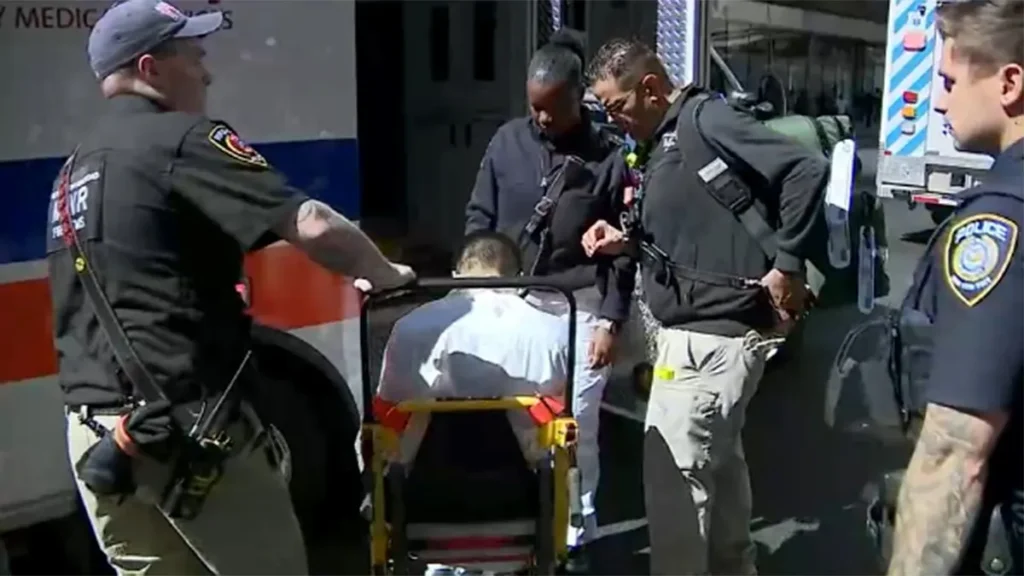
“He continued to pose a serious threat after injuring multiple people,” Tisch said at a news briefing, adding that officers attempted to calm the situation before using force.
Authorities identified the suspect as Anthony Griffin, 44. He was taken to Bellevue Hospital, where he was pronounced dead. Officials said he had prior arrests.
Three victims — two men, ages 84 and 65, and a 70-year-old woman — were injured in the attack. Police said their wounds were not believed to be life-threatening, though one man suffered severe cuts to the head and face and another sustained a skull fracture. The woman had a shoulder injury.
Investigators said the suspect first attacked a person on one platform before moving to another area of the station and injuring two more individuals. Transit Chief Joseph Gulotta said early findings suggest the violence was random.
New York Gov. Kathy Hochul praised officers for their swift response, saying they acted quickly to stop the threat as the investigation continues.
Transit officials temporarily suspended some train stops at the station and urged commuters to avoid the area as police secured the scene.
Witness Beau Lardner described hearing loud bangs before seeing crowds rush toward exits. He said the surge of passengers fleeing the platforms was unlike anything he had experienced during years of commuting through the station.
The incident highlights ongoing concerns about safety in one of the nation’s busiest transit systems, even as officials have increased police presence in recent years. While violent crime in the subway remains relatively rare compared to overall ridership, high-profile attacks continue to shape public perception and commuter behavior.
The response by officers reflects a broader shift in policing strategy that emphasizes rapid intervention when a suspect poses an immediate threat. In this case, authorities stressed that de-escalation efforts were attempted before deadly force was used, underscoring the challenges officers face in fast-moving situations involving armed individuals in crowded public spaces.
The apparent randomness of the attack adds to concerns about unpredictability in urban transit environments. Unlike targeted incidents, such acts can heighten anxiety among riders and complicate prevention efforts.
From a policy standpoint, the event may renew debate over mental health services, transit security measures and the balance between enforcement and prevention. Officials have increasingly pointed to the need for coordinated responses that combine policing with social services to address underlying risks before they escalate into violence.
AP





