

(AP) — Djibouti President Ismaïl Omar Guelleh has secured a sixth term in office after official results showed he won 97.81% of the vote in Friday’s presidential election, extending more than two decades of leadership in the strategically located Horn of Africa nation.
Election authorities indicated the vote proceeded without major disruptions, while celebrations broke out at the presidential palace, where supporters gathered to congratulate the 78-year-old incumbent on his decisive victory.
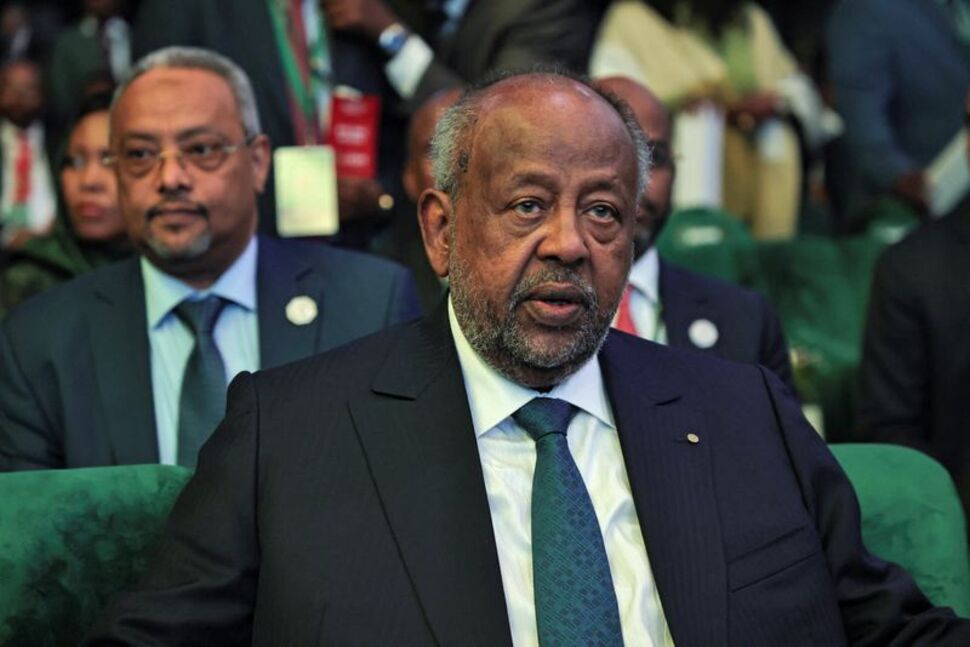
Guelleh faced only one challenger, Mohamed Farah Samatar, a former member of the ruling party. Analysts have long suggested that elections in Djibouti offer limited competition, with opposition groups frequently boycotting the process over concerns about political restrictions and lack of transparency.
Guelleh first took office in 1999, succeeding his uncle, Hassan Gouled Aptidon, and has since maintained a firm hold on power. Legislative changes in recent years, including the removal of presidential age limits, have further solidified his ability to remain in office.
Djibouti’s geopolitical importance continues to shape both its domestic and international standing. The country hosts military bases from several global powers, including the United States, China, France and Japan, due to its position along a vital maritime corridor connecting the Red Sea to the Gulf of Aden. Revenue from these bases, along with port services supporting neighboring Ethiopia, remains central to the national economy.
While officials highlighted the orderly nature of the vote, critics argue that the absence of robust political competition raises questions about democratic governance in the country. Opposition leaders have repeatedly pointed to constraints on free expression and political participation, concerns that persist despite the government’s emphasis on stability.
Guelleh’s latest victory reinforces a broader pattern across parts of Africa where long-serving leaders maintain power through dominant-party systems and constitutional adjustments. In Djibouti’s case, stability and strategic alliances have often been prioritized over political pluralism, particularly given the country’s role in global security and trade routes.
The overwhelming margin of victory may strengthen Guelleh’s position internationally, especially with foreign partners reliant on Djibouti’s military and logistical infrastructure. However, the lack of competitive electoral dynamics could deepen scrutiny from democracy advocates and international observers.
Looking ahead, the key challenge for Djibouti lies in balancing its strategic importance with internal political reform. As global attention on governance standards increases, sustained one-party dominance may come under greater pressure, even as the country continues to benefit from its critical geographic location.





