

(Politico/NYPOST) — Rep. Eric Swalwell on Sunday halted his campaign for California governor after a series of sexual misconduct allegations triggered a rapid collapse of political support and intensified scrutiny from both state and federal officials.
In a statement posted on social media, Swalwell acknowledged past “mistakes in judgment” while maintaining that the allegations against him are untrue. He said he would contest the claims personally but would not allow the controversy to continue overshadowing the campaign.
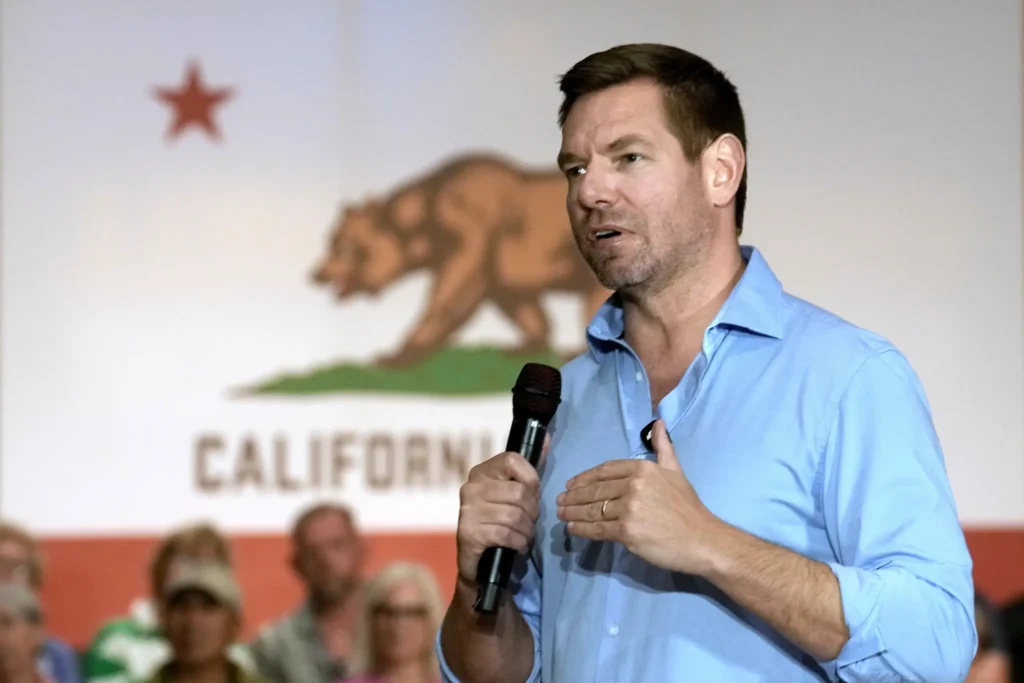
The decision followed a week of escalating fallout after accusations surfaced from a former staff member and additional claims emerged in subsequent media accounts, including reporting by the San Francisco Chronicle and CNN. The allegations prompted a swift withdrawal of backing from key allies, including prominent lawmakers and campaign officials.
Senior Democratic figures, among them Adam Schiff and Alex Padilla, urged Swalwell to step aside, while former House Speaker Nancy Pelosi emphasized that the claims warranted a full and transparent review outside the context of an active campaign.
Swalwell also faces legal scrutiny beyond California. The Manhattan District Attorney’s Office is examining allegations tied to an incident in New York City in 2024, further complicating his political standing.
The sudden exit reshapes an already unpredictable race in the nation’s most populous state. Swalwell had recently gained traction among Democratic voters, with growing financial support and endorsements positioning him as a leading contender. His withdrawal leaves a fragmented field that includes figures such as Katie Porter and Tom Steyer, neither of whom has established a dominant lead.
Republican candidate Steve Hilton criticized Swalwell’s initial entry into the race, while San Jose Mayor Matt Mahan said the move to suspend the campaign came too late.
The controversy also drew a response from California Democratic Party Chair Rusty Hicks, who described the allegations as deeply troubling and indicated that candidates must evaluate their viability in light of the unfolding situation.
Swalwell’s name is expected to remain on the primary ballot despite his withdrawal, leaving uncertainty about how voters will respond in the upcoming election.
Swalwell’s abrupt exit highlights how quickly political fortunes can shift when allegations emerge during a campaign, particularly in an era where media exposure and public reaction move at a rapid pace. His trajectory—from a rising contender to political isolation within days—illustrates the fragility of coalition-based support in competitive statewide races.
The development may also alter the strategic dynamics of the California governor’s contest. With a crowded Democratic field, the removal of a high-profile candidate could reduce vote fragmentation, potentially benefiting remaining contenders seeking to consolidate support. At the same time, it introduces new uncertainty about voter alignment and turnout.
The situation underscores the increasing role of accountability and transparency in modern campaigns. Allegations of misconduct, whether proven or contested, can have immediate and far-reaching consequences, influencing not only individual candidacies but also broader party strategies.
Legal proceedings and ongoing investigations will likely shape the next phase of this story. The outcome could carry implications beyond the governor’s race, including potential impacts on Swalwell’s position in Congress and on public trust in elected officials.





