

The United States and Iran are weighing a return to negotiations in Pakistan as early as this week, even as a new U.S. naval blockade targeting Iranian ports heightens tensions and disrupts global energy markets.
President Donald Trump indicated Tuesday that discussions could restart within days, pointing to renewed diplomatic momentum following the collapse of high-level talks over the weekend. In remarks to the New York Post, Trump suggested Washington is inclined to resume negotiations in Islamabad, praising Pakistan’s military leadership for facilitating the process.
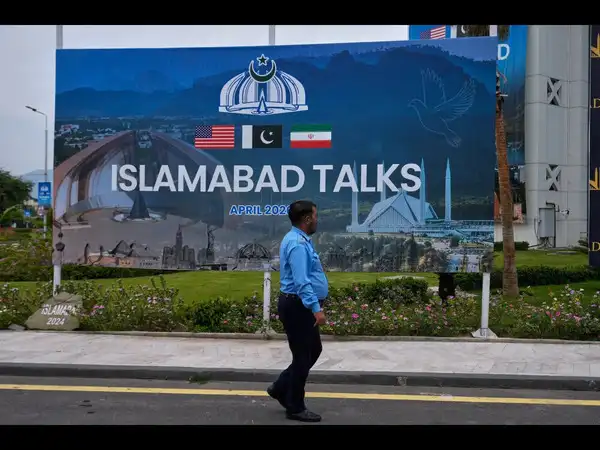
“Something could be happening over the next two days,” Trump said, adding that Pakistan remains a preferred venue for renewed engagement.
Sources familiar with the discussions, cited by Reuters, said both sides are considering sending delegations back to Islamabad, with a tentative window later this week. While no fixed date has been confirmed, officials on both sides have left open the possibility of meetings between Friday and Sunday.
The renewed diplomatic signals come days after negotiations between U.S. Vice President JD Vance and Iran’s parliamentary speaker, Mohammad Bagher Qalibaf, ended without agreement. The talks, the highest-level direct engagement between the two countries in decades, had raised hopes of extending a fragile ceasefire that has largely held despite continued hostility.
A U.S. official said efforts to reach a deal remain active, describing ongoing communication as forward-moving. Pakistan’s Prime Minister Shehbaz Sharif also indicated that mediation efforts are continuing behind the scenes.
Trump has reiterated that any agreement must prevent Iran from obtaining nuclear weapons, maintaining a firm stance that enriched nuclear material must be removed and subject to verification. Vance echoed that position, saying Washington had identified areas for limited compromise while remaining firm on core demands.
Despite the diplomatic overtures, the conflict has intensified economically and militarily. Following the breakdown in talks, the United States moved to block shipping traffic to and from Iranian ports, a measure enforced by U.S. Central Command beginning Monday. The blockade stops short of fully closing the Strait of Hormuz, allowing vessels not linked to Iran to continue transit through the critical waterway.
Iran has condemned the move and warned of retaliation, including potential strikes on naval vessels and regional ports. Iranian officials have also insisted the strategic passage remains under their control, signaling a willingness to escalate if the blockade expands.
The Strait of Hormuz remains a central flashpoint in the conflict. Before hostilities began, the narrow channel carried roughly one-fifth of global oil and gas supplies. Iran’s earlier restrictions on the passage, combined with the U.S. response, have significantly disrupted global energy flows and heightened fears of a broader economic shock.
Shipping data reviewed by Reuters showed limited vessel movement through the strait since the blockade began, though some ships not bound for Iranian ports have continued to pass. The movements highlight the complex enforcement environment, as U.S. forces attempt to restrict Iranian-linked traffic without fully halting international trade.
The economic impact has been immediate. Oil prices, which surged sharply after the blockade announcement, retreated Tuesday amid renewed hopes for diplomacy. Brent crude fell below $100 per barrel, while U.S. crude also declined after earlier gains. Analysts say the prospect of resumed talks has eased immediate concerns over prolonged supply disruptions.
Still, uncertainty remains high. Financial institutions and energy analysts warn that even a partial blockade could remove millions of barrels of oil from the global market. The International Monetary Fund, World Bank, and International Energy Agency have all cautioned against panic measures such as stockpiling or export restrictions, noting the risk of amplifying market volatility.
NATO allies, including Britain and France, have declined to participate in the U.S. blockade, instead urging efforts to reopen the waterway and stabilize shipping routes. Their stance underscores the limited international support for the operation and highlights divisions among Western allies over how to manage the crisis.
Meanwhile, the broader conflict continues to reverberate across the region. Israel has maintained military operations in Lebanon, while Iran has sought compensation from regional governments it accuses of supporting U.S. actions. The overlapping conflicts complicate ceasefire efforts and increase the risk of miscalculation.
The current ceasefire between the United States, Israel, and Iran has largely held for a week, though both sides continue to exchange sharp warnings. Trump has claimed that Iran’s naval capabilities were significantly degraded during the conflict, while Iranian officials have vowed to respond forcefully to any perceived violations.
The potential resumption of talks reflects a delicate balance between confrontation and diplomacy. While both sides are signaling openness to negotiation, their actions suggest a strategy of applying maximum pressure while keeping diplomatic channels open.
For the United States, the blockade represents a high-stakes attempt to weaken Iran’s economic leverage without triggering a full-scale regional war. By targeting Iranian ports rather than closing the entire strait, Washington appears to be calibrating its approach to avoid alienating allies and disrupting global trade beyond a manageable level.
Iran, for its part, is leveraging its geographic position and influence over the strait to maintain bargaining power. Its threats to retaliate against shipping and regional infrastructure highlight the risks of escalation, particularly if enforcement of the blockade becomes more aggressive.
The role of Pakistan as a mediator is also significant. Islamabad’s ability to host and facilitate talks positions it as a key diplomatic player, potentially reshaping regional alliances and influence. Trump’s public praise for Pakistan’s military leadership suggests Washington may be seeking to strengthen ties with the country as part of a broader strategy.
Energy markets remain highly sensitive to developments. Even the hint of resumed negotiations has been enough to ease prices, demonstrating how closely global markets are tied to geopolitical signals. However, analysts warn that any breakdown in talks or escalation at sea could quickly reverse those gains.
Looking ahead, the next round of talks—if confirmed—will likely focus on bridging gaps over nuclear restrictions and verification mechanisms. These issues have long been central to U.S.-Iran tensions and remain the primary obstacle to a lasting agreement.
The coming days will be critical in determining whether diplomacy can gain traction or whether the situation will drift toward further escalation. For now, both sides appear to be testing the limits of pressure while leaving the door open for negotiation.
Reuters/Tribune





