

Donald Trump posted a digitally altered image depicting himself in a close embrace with Jesus Christ on Wednesday, escalating an ongoing public clash between his administration and Pope Leo XIV.
The image, shared on Trump’s Truth Social platform, shows the president standing at a microphone with an American flag behind him, leaning forward with his eyes closed as he presses his forehead against a similarly posed depiction of Jesus. The original version circulating online included a caption suggesting divine favor, while Trump added his own commentary, writing: “The Radical Left Lunatics might not like this, but I think it is quite nice!!!”
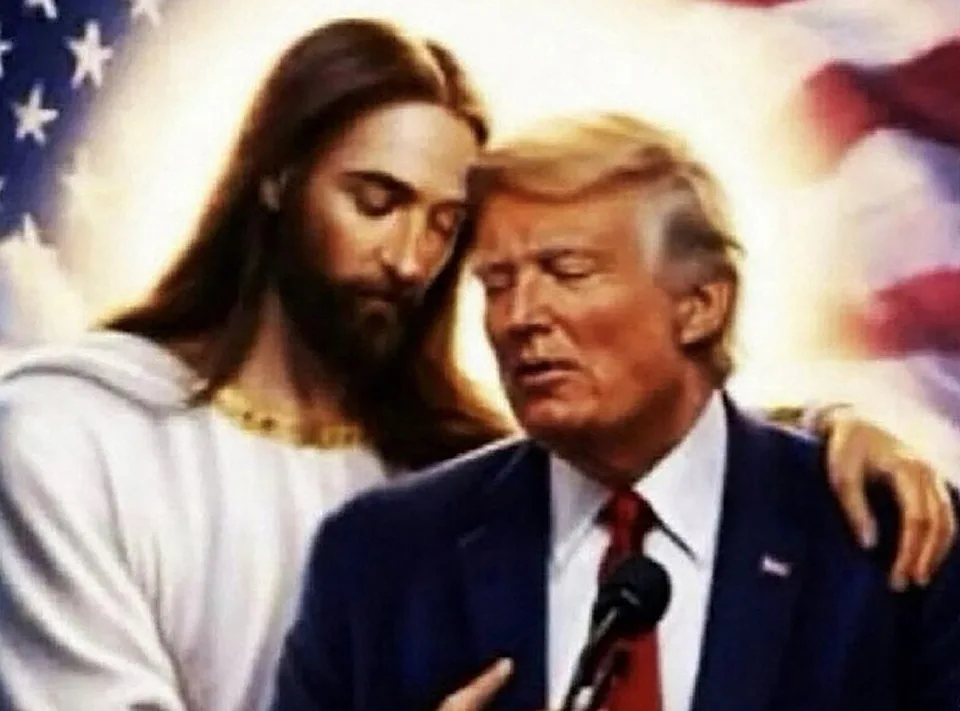
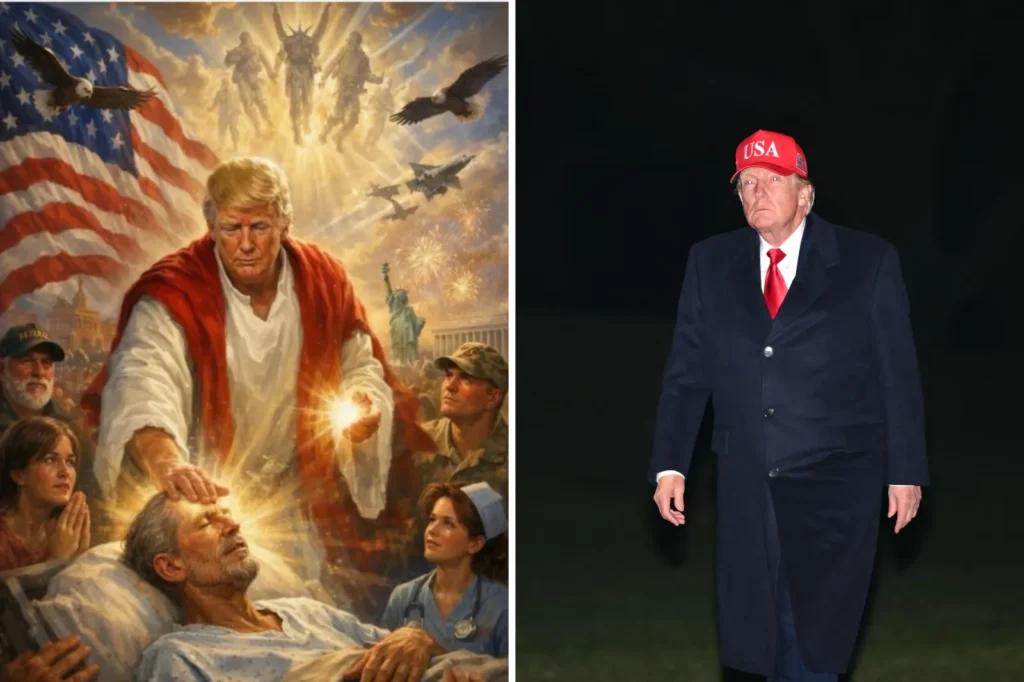
The post follows a series of exchanges between Trump and Pope Leo XIV that have drawn attention from political and religious leaders. Earlier in the week, Trump shared another image portraying himself in a Christ-like manner, which sparked widespread criticism before being removed.
Trump, who does not regularly attend church services, maintains strong support among Christian voters, including Catholics. His relationship with Pope Leo has grown increasingly strained in recent days, particularly over disagreements tied to international conflict and moral responsibility in warfare.
In a separate message posted Tuesday, Trump urged others to inform the pope about violence against protesters in Iran and reiterated his stance that Iran must not obtain nuclear weapons. The remarks were part of a broader series of criticisms directed at the Vatican’s position on global conflicts.
Vice President JD Vance, who converted to Catholicism in 2019, also weighed in on the dispute. Speaking Tuesday evening, Vance challenged remarks attributed to the pope suggesting that followers of Christ do not support those who engage in acts of war. He emphasized the need for caution when addressing theological matters, signaling disagreement within the administration with the pope’s framing.
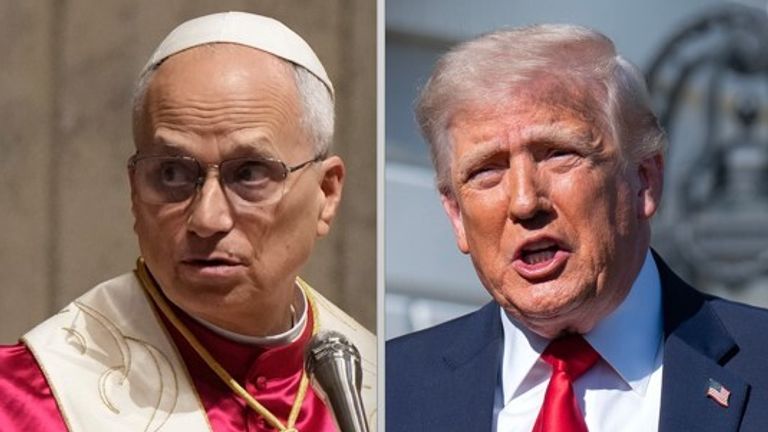
Pope Leo XIV responded earlier this week, stating he would not be deterred by criticism from political leaders. During a speech delivered Monday in Algiers, he condemned what he described as powerful nations violating international law and engaging in practices he characterized as modern forms of domination, though he did not identify specific countries.
The online reaction to Trump’s latest post appeared less intense than the backlash triggered by his earlier image. Still, prominent figures within Catholic organizations and U.S. politics continued to comment on the growing divide.
The Knights of Columbus, one of the largest Catholic lay organizations in the United States, issued a statement defending the pope. Supreme Knight Patrick Kelly said Pope Leo XIV has consistently promoted peace and dialogue amid global conflict. “The Holy Father’s words are rooted in the Gospel and are not political messaging,” the statement said.
Meanwhile, House Speaker Mike Johnson acknowledged that criticism of the pope was likely given his comments on geopolitical issues. Speaking at a news conference, Johnson indicated he was surprised by the pope’s remarks suggesting that prayers from those engaged in warfare may not be heard. He pointed to the long-standing concept of “just war” within Christian theology, which addresses the moral justification for armed conflict under specific conditions.
Johnson’s remarks appeared to reference comments Pope Leo XIV delivered in late March at St. Peter’s Square, where the pontiff cited scripture to emphasize that violence contradicts the teachings of Christ.
The latest exchange underscores a widening rift between political leadership in Washington and the Vatican at a time of heightened global tensions. While disagreements between U.S. administrations and religious leaders are not new, the public and highly personal tone of this dispute marks a notable shift.
President Donald Trump’s use of religious imagery in political messaging reflects a broader strategy aimed at reinforcing his connection with faith-based supporters. However, such imagery also risks alienating religious communities that view the blending of sacred symbols with political rhetoric as inappropriate or disrespectful. The mixed response to his latest post suggests that public reaction may be evolving, with some fatigue setting in after repeated controversies.
The involvement of senior administration officials, including Vice President JD Vance, indicates that the disagreement extends beyond individual remarks and into broader ideological differences. At the center of the dispute is a fundamental question about the role of religion in shaping views on war and international policy.
Pope Leo XIV’s emphasis on peace and moral accountability aligns with longstanding Catholic teachings that prioritize diplomacy and humanitarian considerations. However, his comments have placed him at odds with political leaders who argue that military action can be justified under certain circumstances, particularly in matters of national security.
The reference to the “just war” doctrine by House Speaker Mike Johnson highlights this tension. While the doctrine provides a theological framework for evaluating the ethics of war, its interpretation varies widely, and its application to modern conflicts remains a subject of debate among scholars and policymakers.
The broader geopolitical context also plays a significant role. With ongoing conflicts involving Iran and other regions, statements from both political and religious leaders carry heightened significance. The pope’s criticism of global powers, even without naming specific countries, is likely to be interpreted through the lens of current events, adding to diplomatic sensitivities.
Domestically, the dispute may influence public discourse among American Catholics, a diverse group with varying political views. While some may support the administration’s stance, others may align more closely with the pope’s calls for restraint and moral reflection. This dynamic could have implications for political engagement and voter sentiment in the months ahead.
Ultimately, the episode reflects a broader intersection of politics, religion, and communication in the digital age. Social media platforms have amplified the reach and immediacy of such disputes, turning what might once have been private disagreements into highly visible public debates. As both sides continue to articulate their positions, the interplay between faith and السياسة—translated into civic and moral debate—will remain a focal point in both domestic and international conversations.
Reuters





