

John Korir delivered a record-breaking run to defend his title at the Boston Marathon on Monday, while compatriot Sharon Lokedi captured the women’s title in a commanding performance that underscored Kenya’s dominance in distance running.
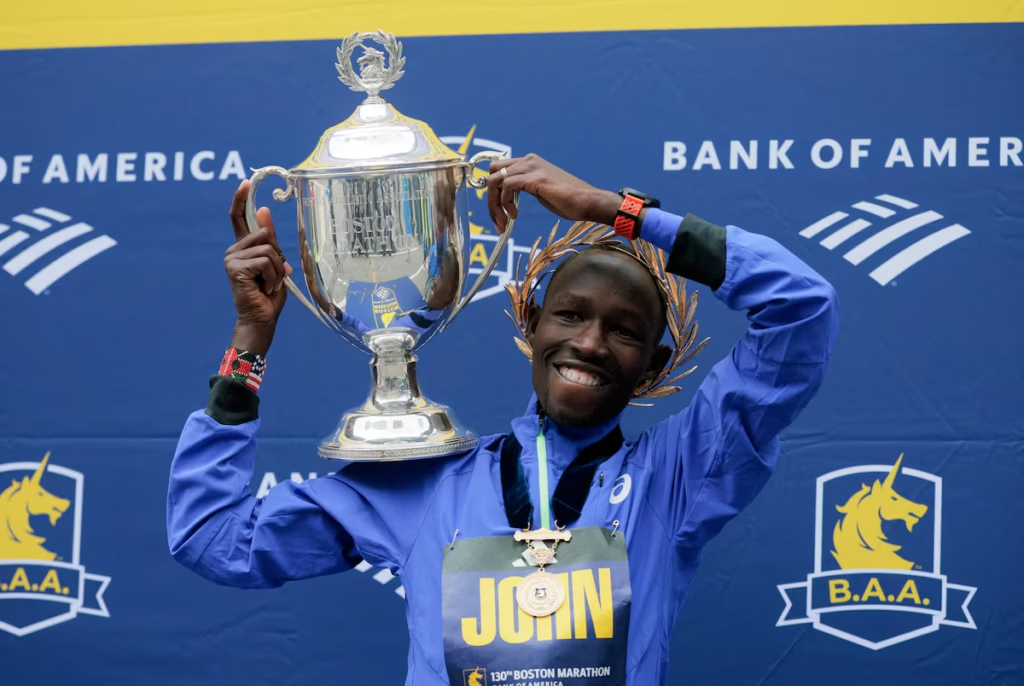
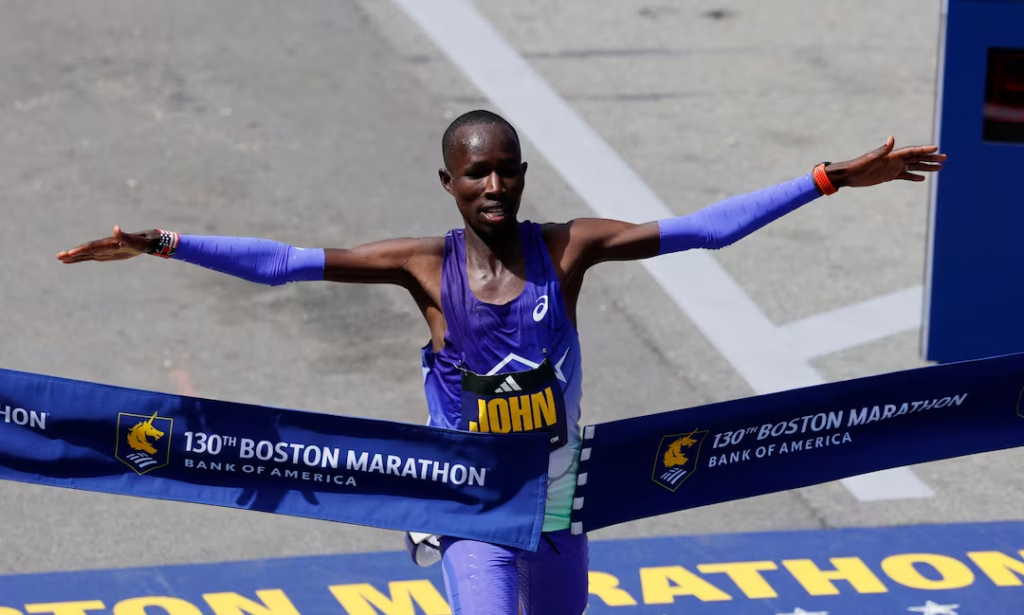
Korir surged to victory in 2 hours, 1 minute, 52 seconds, setting a new course record and eclipsing the previous mark that had stood for more than a decade. His performance came after a decisive move late in the race, where he broke away from a tightly packed field and ran unchallenged through the final miles.
Lokedi followed with a strong showing in the women’s race, crossing the finish line in 2:18:51 to claim the title for the second consecutive year. Her victory capped a standout day for Kenyan athletes, who secured top positions across both races.
Race officials pointed to the pivotal role of Heartbreak Hill, where both winners made their decisive moves. Korir accelerated before the 20-mile mark, overtaking early leader Milkesa Mengesha and quickly building a lead that would prove insurmountable.
Korir had remained within a large lead group through the early stages, conserving energy as competitors moved through the opening miles. The race reached its turning point as the field approached the later stages, with Korir’s surge creating separation from his closest challengers.
By the final stretch, he had extended his advantage significantly, maintaining a steady pace that brought him across the line well ahead of the competition. Alphonce Simbu finished second in 2:02:47, followed by Benson Kipruto in third at 2:02:50. All three athletes finished faster than the previous course record.
“I knew I could defend my title, but I didn’t expect a time like this,” Korir said after the race, reflecting on his performance. The win marks his fourth consecutive marathon victory, adding to his growing reputation as one of the sport’s leading competitors.
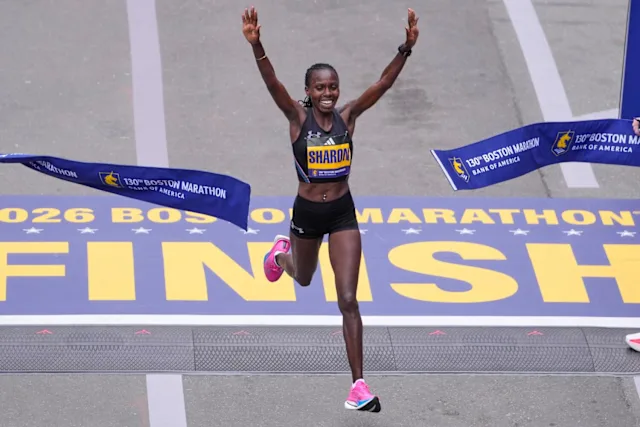
In the women’s race, Lokedi employed a patient approach, staying within the lead pack through much of the course before making her move in the closing stages. The race remained tightly contested until the Newton hills, where the field narrowed to a smaller group of contenders.
Lokedi broke away shortly before the final stretch, opening a gap that continued to widen as she powered toward the finish. Loice Chemnung finished second in 2:19:35, while Mary Ngugi-Cooper secured third place in 2:20:07, completing a sweep of the podium for Kenya.
“I stayed patient and trusted my plan,” Lokedi said. “Once I moved ahead, I focused on maintaining the pace.”
Weather conditions contributed to the fast times, with cool temperatures and a favorable tailwind aiding runners throughout the course. The race also featured remarkable depth, with numerous athletes finishing near elite benchmarks.
Details released by World Athletics highlighted the competitive field, while coverage from Reuters emphasized the record-breaking nature of Korir’s run and Lokedi’s decisive finish.
Korir’s record-setting performance reflects a broader shift in marathon racing, where athletes are increasingly capable of delivering elite times even on historically challenging courses like Boston. Though the course does not qualify for official world records due to its design, performances of this caliber signal a rising standard across the sport.
His late-race surge illustrates a growing emphasis on strategy and endurance. Rather than pushing aggressively from the start, top runners are conserving energy for decisive moves in the final miles. This approach allows for stronger finishes and often leads to significant time gains over competitors.
Lokedi’s victory further highlights the importance of pacing and race awareness. Her ability to remain composed within the pack before accelerating at the right moment demonstrates the tactical discipline required at the highest level of competition.
Kenya’s sweep of top positions reinforces its long-standing dominance in distance running. Factors such as high-altitude training environments, structured development programs and a deep pool of talent continue to give Kenyan athletes a competitive edge on the global stage.
The depth of this year’s field also points to increased competitiveness in marathon racing. With more athletes capable of running at elite speeds, races are becoming less predictable and more dynamic. This trend is likely to push performances even further in the years ahead.
Environmental conditions also played a role. The combination of cool weather and a steady tailwind created favorable racing conditions, though such factors alone do not account for the scale of Korir’s achievement.
The Boston Marathon remains one of the most prestigious events in athletics, and this year’s race delivered both record-breaking performances and compelling competition. Korir’s historic run and Lokedi’s commanding victory stand as defining moments in the ongoing evolution of marathon racing.
AP/WorldAthletics





