

Israeli air and artillery strikes across southern Lebanon killed at least 14 people on Sunday, including two children and two women, marking the deadliest day since a ceasefire between Israel and Hezbollah took effect earlier this month, Lebanese health authorities said.
The escalation came as Israel issued urgent evacuation warnings to residents in multiple towns beyond a designated border zone, signaling heightened concern over renewed hostilities despite the truce brokered with support from the United States.
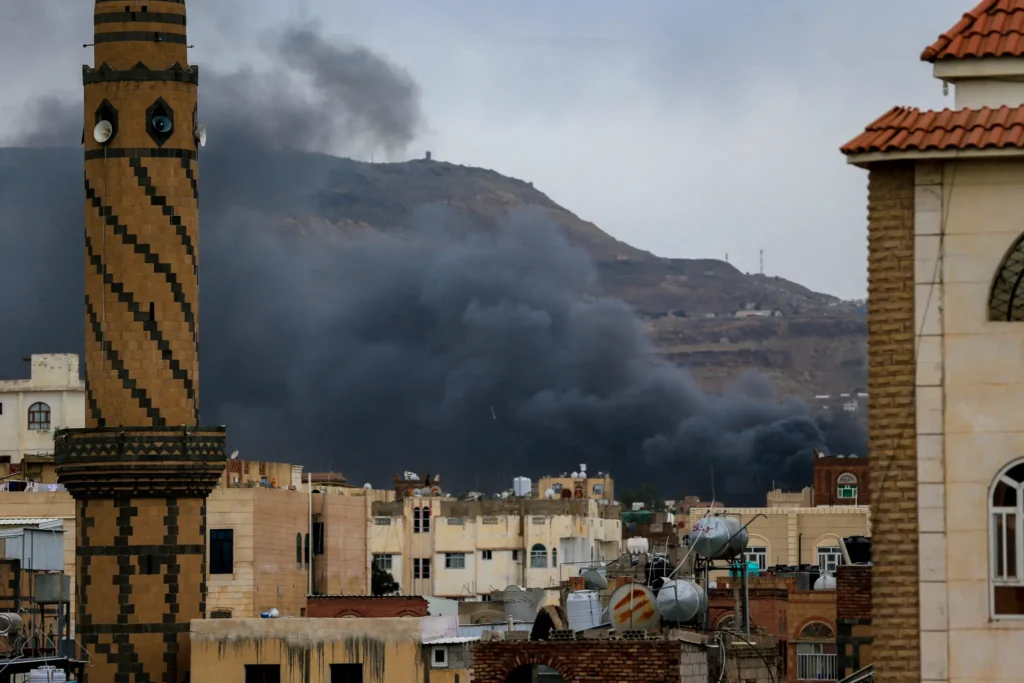
Lebanon’s Ministry of Health said dozens more were wounded in the strikes, which targeted areas across the south. The ministry described the casualties as the highest recorded since the ceasefire began on April 16, underscoring growing instability along the border.
The Israeli military confirmed it carried out a series of coordinated strikes, stating that its forces targeted fighters, launch sites and weapons storage facilities used by Hezbollah. Military officials argued that the operations were necessary to prevent attacks on Israeli troops and communities.
Earlier in the day, an Israeli military spokesperson urged civilians in several southern towns to leave immediately, warning that remaining in the area could put their lives at risk. The directive applied to communities beyond a zone near the border where Israeli forces have maintained a presence.
Israeli Prime Minister Benjamin Netanyahu, speaking during a cabinet meeting, said continued military action was justified by what he described as repeated violations of the ceasefire by Hezbollah.
“From our perspective, what obliges us is the security of Israel, the security of our soldiers, the security of our communities,” Netanyahu said, adding that Israel would continue to act forcefully under the terms agreed upon with international mediators.
Hezbollah rejected those claims and said it would continue its operations against Israeli forces as long as Israeli attacks persisted. In a statement, the group indicated it would not rely on diplomatic efforts it views as ineffective and accused Lebanese authorities of failing to protect the country.
Clashes continued throughout the day. Hezbollah said it launched attacks on Israeli troops inside Lebanese territory and on a rescue unit responding to earlier fighting. The Israeli military said one of its soldiers, a 19-year-old, was killed in a drone strike, while six others were wounded.
Separately, Israel’s air defense systems intercepted three drones before they crossed into its territory after warning sirens sounded in northern areas.
The exchange of fire has placed increasing pressure on a ceasefire that had reduced large-scale combat but failed to fully halt violence. Both sides have repeatedly accused each other of breaching the agreement, raising fears that the conflict could escalate further.
The truce, initially set to run through mid-May, has been fragile from the outset. Israeli forces have continued operations within a strip of land along the border, while Hezbollah has maintained attacks on Israeli positions, citing ongoing military activity as justification.
According to Lebanese officials, more than 2,500 people have been killed since the latest phase of fighting began in early March. The death toll includes hundreds of women, children and medical workers, though authorities have not provided a detailed breakdown distinguishing civilians from fighters.
Israeli officials say attacks by Hezbollah have killed civilians in northern Israel and at least 16 Israeli soldiers during the same period.
The latest surge in violence highlights the limitations of the current ceasefire arrangement and reflects deeper strategic tensions that remain unresolved. While the agreement succeeded in reducing the intensity of fighting, it did not address core disputes, including the presence of armed groups near the border and Israel’s security concerns.
The expansion of evacuation warnings beyond the established buffer zone suggests a shift in Israel’s operational posture. By urging civilians to leave areas farther north, Israeli forces may be preparing for broader military actions or attempting to create additional distance between civilian populations and potential targets.
For Hezbollah, continued attacks serve both military and political purposes. The group seeks to demonstrate resilience and maintain its role as a central force in the conflict, particularly amid regional tensions linked to the broader confrontation involving Iran and its allies.
The situation also places Lebanon in a difficult position. With limited control over armed groups operating within its territory, the government faces pressure from both domestic and international actors to prevent further escalation while protecting civilians.
Economically and socially, the renewed violence risks deepening Lebanon’s ongoing crisis. Displacement, infrastructure damage and loss of life could compound existing hardships in a country already grappling with financial instability and political uncertainty.
Regionally, the conflict carries broader implications. Continued instability along the Israel-Lebanon border could draw in additional actors or trigger wider confrontations, particularly given the interconnected nature of alliances in the Middle East.
From a global perspective, prolonged unrest may affect energy markets and international security dynamics, especially if tensions spill over into neighboring areas or disrupt key trade routes.
Diplomatic efforts have so far struggled to bridge the gap between the parties. The persistence of hostilities despite the ceasefire indicates that underlying grievances remain unaddressed, and confidence between the sides is minimal.
Without a more comprehensive framework that tackles these core issues, the risk of repeated flare-ups remains high. The current pattern of limited ceasefires followed by renewed violence suggests a cycle that is difficult to break without sustained international engagement and concessions from both sides.
As the death toll rises and both sides exchange blame, the fragile ceasefire between Israel and Hezbollah faces increasing strain. The latest strikes and counterattacks underscore the volatility of the situation and the challenges of maintaining peace in a region marked by longstanding conflict.
Authorities continue to monitor developments closely, while civilians in affected areas face growing uncertainty as evacuation warnings expand and the threat of further violence looms.
SaudiGazette/Reuters





