

The Nigerian military issued an urgent security advisory Sunday warning residents of the northeast region that Boko Haram and Islamic State West Africa Province are planning suicide bomb and improvised explosive device attacks during the Eid-el-Kabir celebrations scheduled for Wednesday, May 28, as a separate band of armed militants raided a palace in Kwara State the same night, abducting the Emir’s wives and setting the royal compound ablaze.
The twin security events unfolded on a single Sunday, illustrating the geographic breadth of Nigeria’s armed violence crisis and the specific threat profile that accompanies major public holidays in a country where militant groups have repeatedly used crowded celebrations as killing grounds.
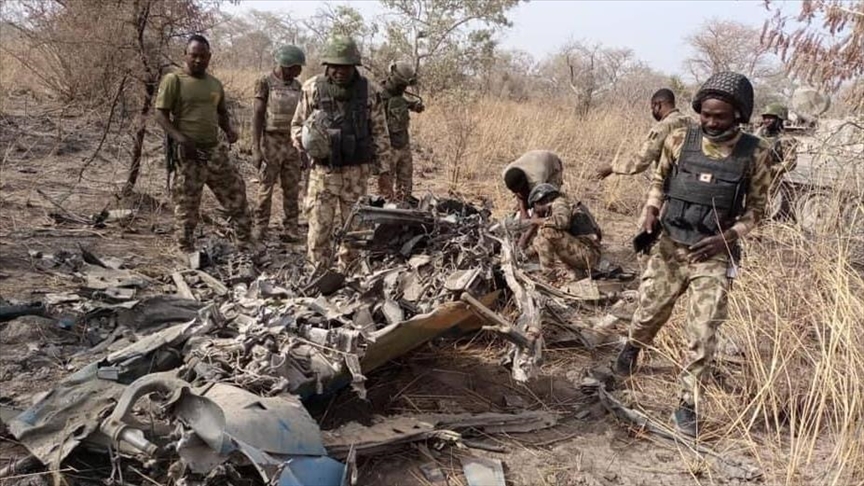
The advisory, signed by Lieutenant Colonel Sani Uba on behalf of the Headquarters Joint Task Force North East, Operation HADIN KAI, cited credible intelligence indicating that remnant elements of both Boko Haram and ISWAP were actively planning to exploit the festive period by targeting civilian gatherings.
“Credible intelligence available to the Command indicates the possibility of isolated attempts by remnant Boko Haram Terrorist and Islamic State West Africa Province elements to exploit the festive period to carry out attacks against civilian targets using suicide bombers and IEDs, particularly in areas of high population concentration,” Uba said in the advisory.
The military said troops had already been forward-deployed to critical and vulnerable locations across all sectors of the northeast theater. Intelligence, surveillance, and reconnaissance assets were fully activated. Patrols had been intensified. Security forces were operating in close coordination with sister agencies, the Civilian Joint Task Force, and community vigilance groups.
“Operation HADIN KAI reassures all residents of the North East that troops are on standby, fully prepared, and firmly in control,” the statement said. “The command remains resolute in its determination to deny terrorists any freedom of action and ensure that the Eid El Kabir celebrations proceed in an atmosphere of peace, safety, and dignity for all.”
What the Military Is Asking of Residents
The advisory translated the security posture into specific behavioral guidance for residents in affected communities. People were urged to conduct Eid prayers close to their homes and avoid large open gatherings wherever possible. Vigilance was emphasized in high-traffic locations including markets, motor parks, prayer grounds, and banking halls — places where large numbers of people concentrate predictably and where a single explosive device produces maximum casualties.
The public was instructed to report suspicious persons, unattended objects, or unusual movements immediately to the nearest military checkpoint, police station, or civil-military liaison point. Traditional rulers, religious leaders, media organizations, and community stakeholders were separately called on to encourage timely intelligence sharing and support the security effort at the grassroots level.
The command also cautioned residents against the spread of unverified information that could generate panic. “Refrain from spreading unverified information or rumours capable of causing public panic. Rely only on official information from verified government and security channels,” the advisory stated.
Kwara State: Palace Burned, Emir’s Wives Seized
While the military was issuing its northeast alert, a large group of heavily armed bandits was descending on the Yashikira community in Baruten Local Government Area of Kwara State, a border district in north-central Nigeria where armed group activity has been escalating for months.
The attackers arrived late Sunday night, firing indiscriminately as they entered the community. Local vigilantes were overwhelmed. The bandits operated for several hours without organized resistance as terrified residents fled into surrounding bush.
The gunmen struck the palace of the Emir of Yashikira directly, setting parts of the royal compound on fire before forcing their way through and abducting multiple residents, among them women, children, and several of the Emir’s wives.
“Bandits invaded Yashikira in the night. They set the palace on fire and kidnapped women and children, including the Emir’s wives,” a resident told Sahara Reporters.
A second witness described the scale of the chaos. “The attackers came in large numbers with sophisticated weapons. People were running in different directions. Many residents escaped into the bush while the bandits carried away several persons,” the source said.
The exact number of abducted victims had not been confirmed as of the time the incident was first disclosed. No official statement had been issued by Kwara State authorities or the state police command. Sahara Reporters confirmed the attack through multiple residents with direct knowledge of events.
Community members in Baruten said the Yashikira raid was not an isolated incident but the latest in a pattern of attacks they had repeatedly reported to authorities without adequate response. They said porous border routes surrounding Baruten LGA had made the area a consistent entry corridor for armed groups crossing in from neighboring states, and that security agencies had failed to address repeated warnings about rising bandit activity in surrounding villages.
Holiday Attacks as a Deliberate Strategy
The military’s decision to issue a public advisory before Eid-el-Kabir rather than simply absorbing the intelligence and deploying quietly reflects a calculated judgment that the information value of community vigilance outweighs the risk of causing public anxiety. It also reflects a hard-learned lesson from years of holiday attacks in the northeast, where Boko Haram and ISWAP have used the predictable concentration of worshippers at prayer grounds to execute mass casualty bombings that became one of the defining characteristics of the insurgency’s most lethal phase.
Suicide bombings at Eid prayers, Christmas celebrations, and Friday mosque gatherings have killed hundreds of civilians in Borno, Yobe, and Adamawa states over the past decade. The pattern has been consistent enough that any year in which the military does not warn communities before major holidays would itself be notable. What the advisory cannot guarantee is that every member of every congregation in every village across the northeast’s vast geography will receive it, understand it, and be in a position to act on it.
The Kwara State attack introduces a separate but related dimension. Yashikira sits in Baruten LGA on the border with Benin Republic, an area that has seen increasing bandit incursion from nomadic armed groups that operate across porous international boundaries without respect for Nigerian state borders or the communities that live along them. The targeting of the Emir’s palace is not arbitrary — royal compounds represent authority, legitimacy, and social order in ways that make them symbolic targets for groups seeking to demonstrate their capacity to strike anywhere and humiliate the institutions that communities rely on for stability.
The abduction of the Emir’s wives carries a specific strategic message. It signals to the community that no one, regardless of status, is beyond the reach of the attackers. It generates terror and compliance far beyond the immediate circle of victims. And it puts the government in the position of having to respond visibly and quickly to an assault on a traditional institution, with the costs of failure measured not just in lives but in the erosion of whatever legitimacy the state retains in communities that have already been asking for protection and not receiving it.
Nigeria faces both threats simultaneously: organized jihadist insurgency in the northeast operating with military discipline and ideological direction, and criminal banditry in the northcentral and northwest operating with firearms and impunity that no longer requires ideological framing. Managing them with a single security architecture, stretched across one of Africa’s largest countries, is a governing challenge that Wednesday’s Sallah celebrations will test in real time.
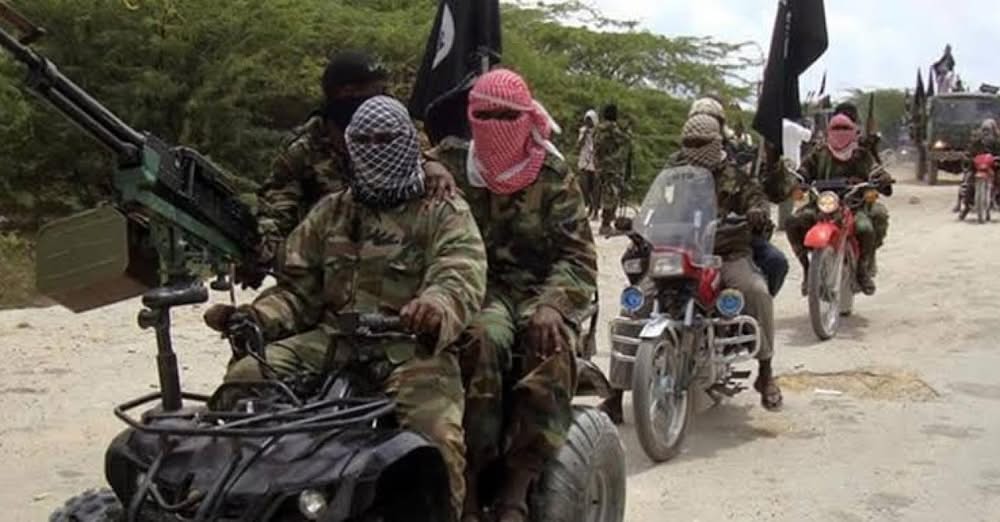
PremuimTimes/SaharaReporters





