

Iran miscalculated badly if its leadership believed the approaching midterm elections would force President Donald Trump into accepting an unfavorable deal to end the nearly three-month-old conflict, Trump declared Wednesday at a White House Cabinet meeting, pushing back directly against what he described as Tehran’s strategy of waiting him out.
“They thought they were gonna outwait me,” Trump said. “You know, ‘We’ll outwait him. He’s got the midterms.’ I don’t care about the midterms.”
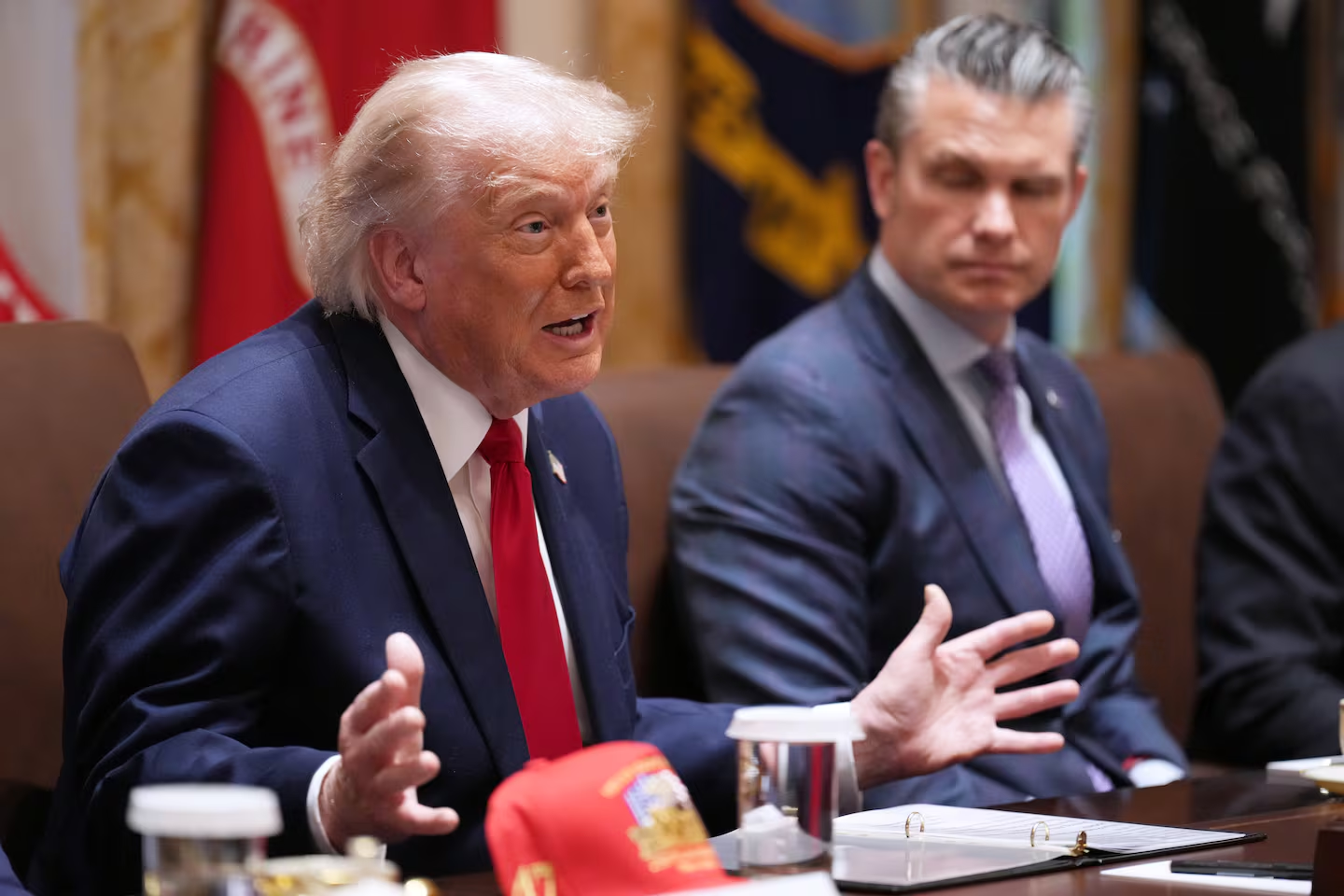
The statement was aimed squarely at Iranian leaders who American officials believe have calculated that domestic political pressure from rising gasoline prices and voter frustration with the war’s economic costs would eventually compel Trump to accept terms he would otherwise reject. Trump spent much of Wednesday’s Cabinet meeting making the opposite case.
He described Iran as negotiating on fumes and said he expected a deal to materialize, while leaving the military option explicitly on the table. “They want very much to make a deal,” he said. “So far, they haven’t gotten there. We’re not satisfied with it, but we will be — either that or we’ll have to just finish the job.”
The war began nearly three months ago when the United States and Israel launched strikes on Iran on February 28. Trump had initially predicted it would last four to six weeks. He has periodically suggested a deal was days away, only to pull back from that optimism. Over the weekend he declared that his administration and Tehran had “largely negotiated” a settlement, a characterization that officials with knowledge of the ongoing talks did not fully confirm.
Iran’s Bet and Why Trump Says It Will Fail
The political logic behind Iran’s alleged waiting strategy is not difficult to follow. Republicans are widely expected to face a difficult midterm environment in November, driven in significant part by fuel prices that have climbed sharply since the Strait of Hormuz, which normally carries a fifth of the world’s seaborne oil and gas, was effectively shut down by the war. A party that loses the House loses the ability to pass legislation. A party that loses the Senate loses the ability to confirm the president’s nominees. A president facing those prospects has historically been more willing to make concessions to end an unpopular conflict before voters go to the polls.
Trump’s argument Wednesday was that Iran had misread him. He said he was not operating on an electoral calendar and that Tehran would not be able to use the November elections as a deadline to extract better terms. Whether that statement reflects genuine indifference to political consequences or a calculated negotiating posture designed to prevent Iran from treating November as leverage is impossible to establish from the outside. What is clear is that Trump wanted those words on the record in a way that would reach Tehran’s leadership.
Republican Pressure From the Other Direction
While Trump was telling Iran that the midterms would not rush him into a weak deal, he was simultaneously facing pressure from within his own party that the deal taking shape was already too weak regardless of timing.
Republican senators Roger Wicker of Mississippi, Lindsey Graham of South Carolina, and Ted Cruz of Texas have all said publicly that the emerging framework was too favorable to Iran. Their specific objection was that the deal resembled the nuclear agreement President Barack Obama negotiated, which Trump dismantled during his first term, and which Trump’s base has treated ever since as a symbol of Democratic weakness toward Tehran.
The framework, according to two regional officials and one senior Trump administration official who spoke anonymously to discuss sensitive negotiations, would require Iran to surrender its stockpile of highly enriched uranium in exchange for sanctions relief. The International Atomic Energy Agency has confirmed Iran holds 440.9 kilograms of uranium enriched to 60 percent purity, a short technical step from weapons-grade material. How the uranium would be transferred and to whom remained unresolved, with one regional official saying those details would be subject to a 60-day follow-on negotiation after any initial agreement.
Trump said he was not comfortable with either Russia or China taking custody of the enriched material, even though both countries maintain the closest existing relationships with Tehran and nuclear analysts had identified them as potential acceptable custodians from Iran’s perspective.
The Midterms in Context
Trump’s dismissal of midterm pressure landed against a political landscape that was, the same day, demonstrating precisely the kind of volatility that makes Republican lawmakers nervous. The night before his Cabinet meeting, Trump’s endorsed candidate Ken Paxton defeated incumbent Texas Republican Senator John Cornyn in a party primary. Trump hailed the result at the Cabinet meeting as a preview of the midterm landscape.
Democrats saw the same result differently. Paxton, who faces a felony fraud indictment and whose wife filed for divorce on grounds his opponents have publicly characterized, had won a solidly Republican Senate seat’s primary in a way that Democrats said made it genuinely competitive in November for the first time in years.
Reuters reviewed Trump’s public statements since January and found an increasing frequency of references to Washington construction projects including White House renovations, the National Mall Reflecting Pool, and plans for a large arch. Republican lawmakers who spoke privately said those references reflected a leader whose attention was not consistently focused on the economic pressures driving voter dissatisfaction.
Lebanon, Abraham Accords, and the Complications Piling Up
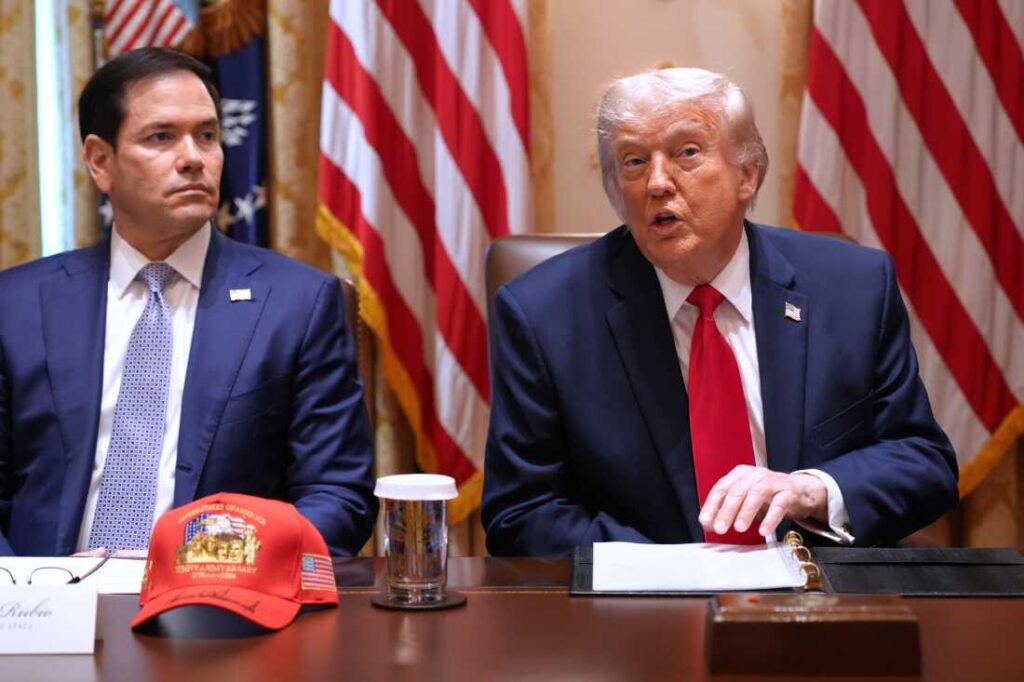
Trump also pushed Wednesday for his requirement that any Iran deal include commitments from Kuwait, Saudi Arabia, Qatar, and Pakistan to join the Abraham Accords, the normalization agreements between Arab states and Israel from his first term. “We’re, you know, requesting strongly that they join,” Trump said.
The reaction from the allies he was addressing has been something less than enthusiasm. Barbara Leaf, a retired U.S. ambassador to the United Arab Emirates and senior State Department official under President Biden, said Gulf country officials who were on a call with Trump over the weekend when he pressed the accords idea told her the pitch was met with “stunned silence.” A person familiar with the call disputed that characterization, speaking anonymously about the private conversation, and said some allies responded positively.
Saudi Arabia has consistently conditioned any normalization with Israel on a guaranteed pathway to a Palestinian state, something Israel has consistently opposed. Pakistan does not recognize Israel. Qatar is serving as a mediator in the conflict and maintains its own complex political position.
On Lebanon, the administration’s emerging agreement included language calling for a ceasefire between the United States and its allies against Iran and its proxies, while preserving Israel’s right to act in self-defense. Netanyahu announced Tuesday that Israel was deepening its Lebanon operation, and Israeli forces clashed with Hezbollah overnight along a southern Lebanese river. Iran has insisted any deal must cover Lebanon. Those two positions remain unreconciled.
Jonathan Conricus, a former Israeli military spokesman now at the Foundation for Defense of Democracies in Washington, said the deal’s critics were right to worry about what Iran would do with sanctions relief. “We’re not done fighting, because the Iranian regime isn’t done,” Conricus said, arguing that Tehran would move quickly to restore its military capability and rebuild its proxy networks.
Barbara Leaf, now at the Middle East Institute, said American allies in the region had concluded that supporting Trump’s effort to end the conflict was their only available option regardless of their reservations. “They see no other way out,” she said. “And they see no other way out because of many of these early mistakes that the president and the administration made in conducting the war.”
The Electoral Claim and What It Conceals
Trump’s insistence that he does not care about the midterms is best understood not as a statement of personal psychology but as a message in an ongoing negotiation. Its intended audience was in Tehran, not in the American press corps. By saying publicly and emphatically that no electoral clock would pressure him, Trump was attempting to remove what Iranian leaders may have viewed as their most reliable source of leverage in a war they did not start and cannot easily escalate further.
Whether it works depends on whether Iran’s leadership believes it. If they do, the pressure to reach a deal on American terms increases. If they treat it as a bluff and continue waiting, the costs of the war keep climbing on both sides while November approaches regardless of what Trump says about it.
The harder strategic question that Wednesday’s Cabinet meeting left unanswered is what Trump considers an acceptable outcome at this point. His Republican critics say the framework is too soft. Iran has not publicly committed to its terms. The Lebanon question is unresolved. The Abraham Accords demand has produced silence from its intended audience. And the midterm elections that Trump says he is unconcerned about are getting closer every day.
AP/Reuters





