

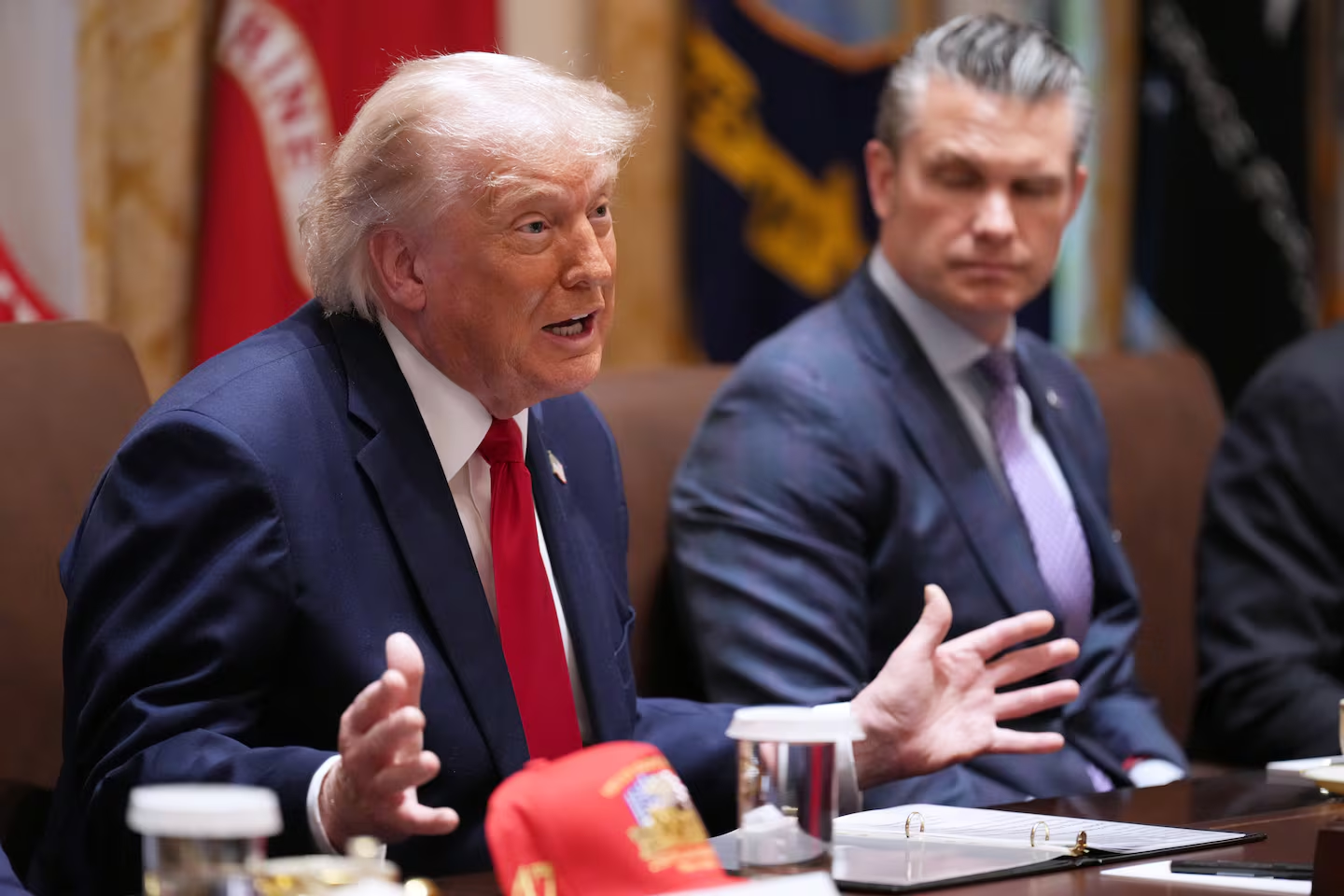
Donald Trump issued a sharp warning toward Oman during a Cabinet meeting, signaling rising tension around control of the Strait of Hormuz as negotiations with Iran remain unsettled.
Speaking to reporters, Trump said no country would be allowed to control the vital shipping lane, adding that Oman must align with U.S. expectations or face consequences. His remarks came as discussions continue over a possible agreement aimed at reopening the strait, which has remained largely shut for nearly three months.
The president reiterated his push for broader regional alignment through the Abraham Accords, urging Middle Eastern nations to formally establish ties with Israel as part of any long term resolution tied to the Iran conflict.
The comments, delivered during an unscripted exchange, were later amplified through official U.S. channels, reinforcing Washington’s position at a time when diplomacy remains fragile.
Rising pressure on Hormuz negotiations
The Strait of Hormuz, one of the world’s most critical energy corridors, handles a significant share of global oil and gas shipments. Its closure has disrupted supply chains and driven up energy prices worldwide, with economists warning that the ripple effects could linger even if access is restored soon.
U.S. efforts to reopen the route have included both diplomatic outreach and military positioning. Earlier plans to escort commercial vessels were shelved shortly after being announced, reflecting the complexity of the situation on the ground.
At the same time, talks with Iran have yet to produce a binding agreement. While both sides have signaled progress, key issues such as uranium stockpiles, sanctions relief and regional security guarantees remain unresolved.
Oman, a long standing U.S. partner, has historically played a neutral role in mediating tensions between Washington and Tehran. The country has not publicly indicated any intention to jointly control the strait with Iran, despite speculation surrounding potential interim arrangements.
The United States and Oman maintain deep ties spanning security cooperation, trade agreements and diplomatic engagement. Analysts note that Trump’s remarks could complicate that relationship, particularly as Oman continues to serve as a quiet intermediary in regional disputes.
Political and diplomatic fallout
Trump also suggested that progress on an Iran deal could hinge on whether regional allies agree to expand participation in the Abraham Accords. He indicated that the United States may reconsider its approach to negotiations if those conditions are not met.
On Capitol Hill, lawmakers from both parties have begun raising concerns about the administration’s strategy. A proposed War Powers measure has stalled, reflecting unease over continued military involvement without broader congressional backing.
Meanwhile, critics argue that the president’s rhetoric risks undermining already delicate negotiations. Advocacy groups and legal experts have pointed to international law constraints on threats of force, warning that such language could escalate tensions rather than resolve them.
Trump’s comments highlight a growing shift toward leveraging both diplomacy and pressure tactics simultaneously, a strategy that carries significant risk in a region already on edge. By tying the reopening of the Strait of Hormuz to wider geopolitical goals, including normalization with Israel, the administration is effectively expanding the scope of negotiations beyond the immediate conflict with Iran.
This approach may strengthen U.S. bargaining power in the short term, but it also introduces additional variables that could delay or derail a final agreement. Countries like Oman, which have traditionally acted as stabilizing intermediaries, may find themselves caught between competing expectations.
The stakes extend far beyond regional politics. With global energy markets tightly linked to Hormuz, any miscalculation could trigger renewed volatility, deepen economic strain and prolong uncertainty for both producers and consumers.
For now, the path forward remains uncertain. Talks continue, but the tone has shifted, with sharper rhetoric signaling that diplomacy is entering a more fragile and unpredictable phase.
Aljazeera/TheIndependent





