

French authorities detained hundreds of people overnight after celebrations following Paris Saint-Germain’s dramatic Champions League triumph descended into violence across Paris and other cities, officials said Sunday.
The unrest followed PSG’s penalty shootout victory over Arsenal in the final held in Budapest, a match that ended 4-3 and triggered widespread street celebrations that quickly spiraled out of control in parts of the country.
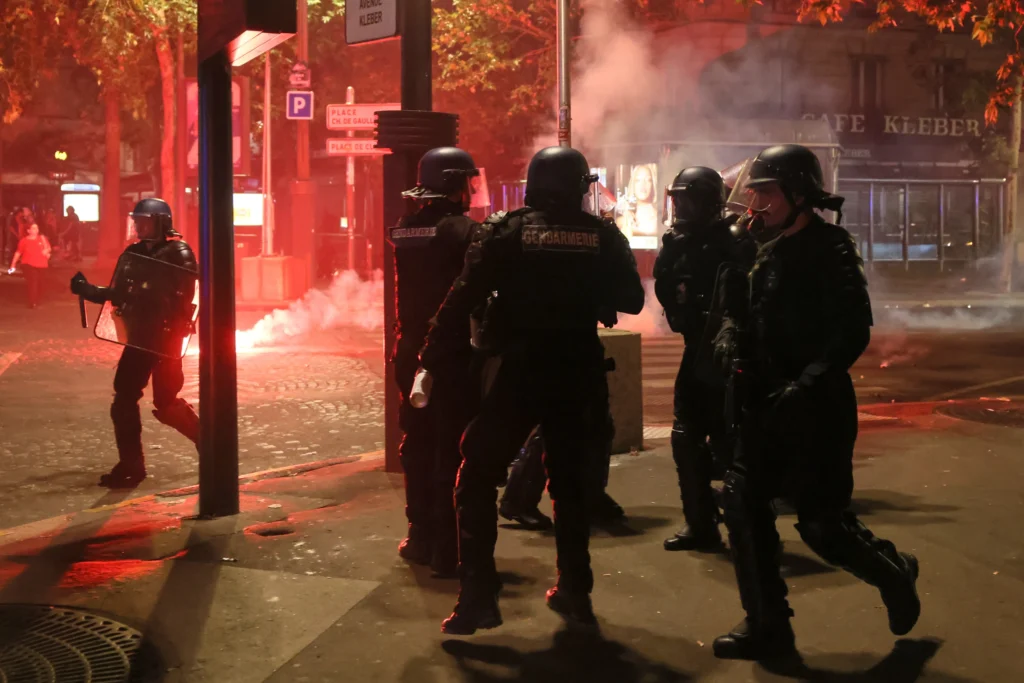
France’s Interior Ministry said at least 326 people were taken into custody nationwide, with roughly 235 arrests recorded in Paris alone. The The Associated Press later cited officials as putting the nationwide total closer to 400 detentions, including nearly 300 in the capital, as clashes spread to about 15 cities.
Large crowds, estimated at about 20,000 people, flooded the Champs Elysees shortly after the final whistle. Police moved in as some revelers ignited fireworks, set off flares, and vandalized property. Law enforcement officers confiscated large quantities of pyrotechnics, while fires were reported in several areas.
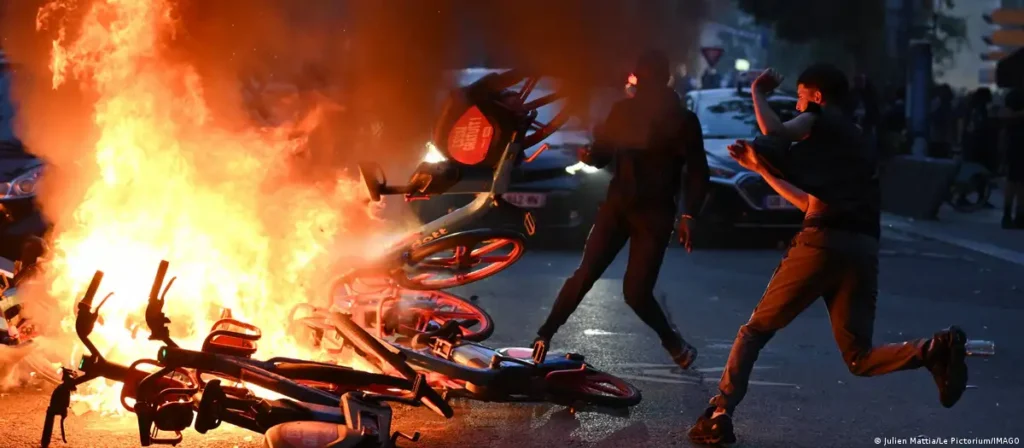
Authorities said damage occurred near the Parc des Princes stadium, where a bakery and a restaurant were hit during disturbances involving more than 1,000 people. Barricades constructed from bicycles blocked nearby streets before officers cleared the area. Sections of the Peripherique ring road were also briefly shut down as crowds spilled into traffic routes.
Interior Minister Laurent Nunez said seven police officers were injured and condemned the violence as unacceptable. Despite the unrest, he confirmed that planned victory celebrations at the Champ de Mars near the Eiffel Tower would proceed, where the team is expected to appear before being received by President Emmanuel Macron at the Elysee Palace.
Police said smaller groups were responsible for much of the destruction, including incidents where shops were looted, vehicles were set ablaze, and a police station in Paris’s 8th district was briefly targeted before officers dispersed the crowd.
Political reactions quickly followed. Marine Le Pen criticized the unrest, arguing that celebrations in France too often turn violent, while authorities stressed that security measures had been significantly reinforced to avoid a repeat of past incidents.
Officials deployed approximately 22,000 officers across the country in anticipation of post match celebrations, reflecting heightened concern after similar scenes last year, when more than 500 arrests were made nationwide and fatalities were reported following PSG’s earlier European success.
The scale of the unrest highlights a recurring challenge for French authorities as major sporting victories increasingly double as flashpoints for disorder. While football celebrations traditionally unite fans, the pattern of violence tied to high profile matches raises questions about crowd control, policing strategy, and broader social tensions, particularly in urban centers like Paris.
Security experts note that gatherings of this size often attract not only supporters but also opportunistic groups who exploit the chaos. The rapid escalation from celebration to confrontation underscores the limits of even large scale deployments such as the 22,000 officers mobilized for this event.
The government’s decision to proceed with official celebrations suggests confidence in its security apparatus, yet it also reflects the political sensitivity of balancing national pride with public safety. With global sporting events continuing to draw massive crowds, France may face growing pressure to rethink how it manages victory celebrations without triggering widespread disruption.
AP/DW





