

President Donald Trump announced Saturday that he would personally headline the Great American State Fair on the National Mall after a string of musical performers withdrew from the celebration of America’s 250th anniversary, citing concerns that the event marketed to them as nonpartisan had become a vehicle for political messaging aligned with the president.
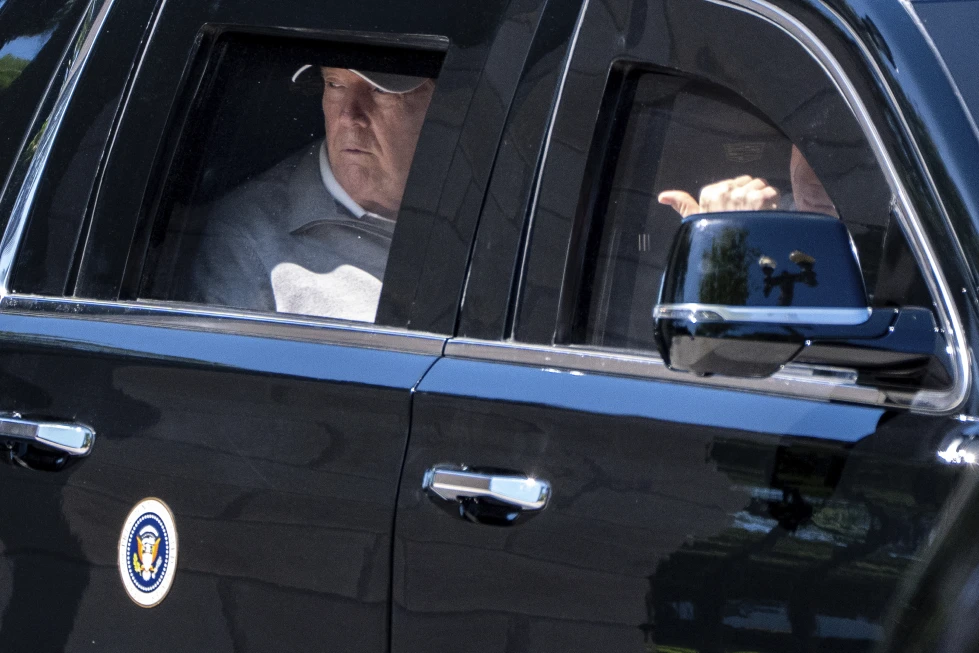
Trump framed the artist departures with characteristic confidence on his Truth Social platform, describing the performers who withdrew as “highly paid, Third Rate ‘Artists'” with a case of nerves, and volunteering himself as the replacement.
“I understand Artists are getting ‘the yips’ having to do with their performance,” Trump wrote, adding that he was considering bringing “the man who some say is the Greatest President in History (THE GOAT!), DONALD J. TRUMP, to take the place of these highly paid, Third Rate ‘Artists.'”
Freedom 250, the organization running the event, confirmed the billing Saturday. “We are excited to announce that President Trump will personally kick off this historic celebration on Wednesday, June 24,” the group said in a statement.
Trump’s post referenced “Wednesday” twice without specifying a date. The White House did not immediately clarify the discrepancy.
The fair itself is scheduled to run June 25 through July 10 on the National Mall, featuring exhibits, family attractions, concerts, military flyovers, and other programming. Freedom 250 spokeswoman Danielle Alvarez emphasized the breadth of the event beyond any single performance.
Who Left and Why
The departures began Thursday and moved quickly. Bret Michaels, the Commodores, Martina McBride, Morris Day, and Young MC all withdrew from their scheduled appearances within a short window, citing variations of the same fundamental concern: they had been told they were signing on for a nonpartisan American celebration and discovered the event’s political character was something different.
Michaels wrote on Instagram that he had understood his performance would honor veterans, first responders, teachers, and working Americans across the political spectrum. He said the event had “evolved into something much more divisive” and cited threats he described as “completely unfounded and unforgivable.”
McBride was direct in her Instagram statement. “I was presented with an opportunity to perform at a nonpartisan event but that turned out to be misleading,” she wrote.
Young MC expressed similar frustration on social media. The Commodores kept their explanation brief, saying they chose “not to publicly affiliate with any single political party.”
The artists’ concern about the event’s political identity was not difficult to explain in factual terms. Freedom 250 describes itself publicly as nonpartisan. In practice, it was launched by Trump, is led by Keith Krach, a businessman and philanthropist who served as a State Department appointee during Trump’s first term, and is now being headlined by the president himself.
Who Is Still Coming
Three performers remained on the bill as of Friday: rapper Flo Rida, Vanilla Ice, and Fab Morvan of Milli Vanilli.
Morvan, whose group achieved massive commercial success in the late 1980s and early 1990s before being discredited after it emerged that neither Morvan nor fellow front man Rob Pilatus sang on the group’s records and that they lip-synced during live performances, told the Associated Press he was attending in a spirit of unity. “I’m here to entertain and unite people, not divide them,” Morvan said in an emailed statement. “Let’s celebrate life and music and take a trip down memory lane.”
A Vanilla Ice representative told the AP the rapper was “proud to help celebrate America’s 250th Anniversary” and that “everyone is welcome to attend and celebrate USA’s Birthday and our Freedom.” A representative for Flo Rida did not respond to a comment request.
The actual vocalists whose voices appeared on Milli Vanilli records, including sisters Jodie and Linda Rocco, told the AP they were not invited to perform at the event.
Trump’s Alternative Vision
In a second post after his initial announcement, Trump suggested that the entire concert framework might be better abandoned in favor of something more explicitly political. “We should have a giant MAKE AMERICA GREAT AGAIN RALLY, for 250, instead of having overpriced singers, who nobody wants to hear, whose music is boring, and yet who do nothing but complain,” Trump wrote.
Freedom 250 spokeswoman Rachel Reisner told the New York Times that the organization remained focused on events that honor American history and engage all Americans.
Artists and Trump: A Long-Running Tension
The withdrawals are the latest chapter in a years-long pattern of cultural friction between the Trump administration and the entertainment industry. Trump has supporters in entertainment, including Sylvester Stallone and Nicki Minaj, but far more prominent figures have publicly opposed him or declined association with his events. Taylor Swift, Robert De Niro, Billie Eilish, and Bruce Springsteen have all endorsed Democratic candidates or explicitly condemned Trump. Elton John and Kenny Loggins have formally objected to their music being used at Trump rallies or in campaign videos.
The Kennedy Center became a specific flashpoint after Trump removed its existing leadership and had his name placed on the building. Multiple artists with scheduled appearances there, including Bela Fleck, Renee Fleming, and Issa Rae, subsequently canceled.
A 250th Anniversary and a Divided Nation
America’s semiquincentennial should, by any reasonable cultural logic, be the least contested event on the national calendar. The 250th anniversary of a nation’s founding is the kind of milestone that transcends ordinary political cycles, offering a rare occasion when citizens across ideological differences can find common ground in shared history, shared sacrifice, and shared aspiration.
The fact that Freedom 250 has instead become a controversy illustrates how thoroughly the current political environment has colonized spaces that were once treated as above or beyond partisanship. The artists who withdrew were not making a political statement when they accepted. They were making what they understood to be a civic one. The distinction collapsed when the event’s political character became visible.
Trump’s suggestion that the entire celebration be converted into a Make America Great Again rally captures the core tension. From his perspective, celebrating American greatness and celebrating his presidency are not meaningfully separate things. From the perspective of artists who declined to affiliate with any single political party, that conflation is exactly the problem.
The National Mall on the Fourth of July is supposed to belong to everyone. The question the Great American State Fair has raised, without fully answering, is whether it still can.
AP original story




