

Israel and Iran traded military strikes on Monday in the most significant escalation since a ceasefire took hold in April, fueling concerns that the region could slide back into full scale conflict.
The Israeli military said it carried out a broad aerial operation targeting Iranian defense infrastructure, describing the strikes as an effort to dismantle systems rebuilt after earlier joint attacks by the United States and Israel. Military officials said dozens of aircraft were involved in the operation, guided by intelligence assessments that identified key strategic sites.
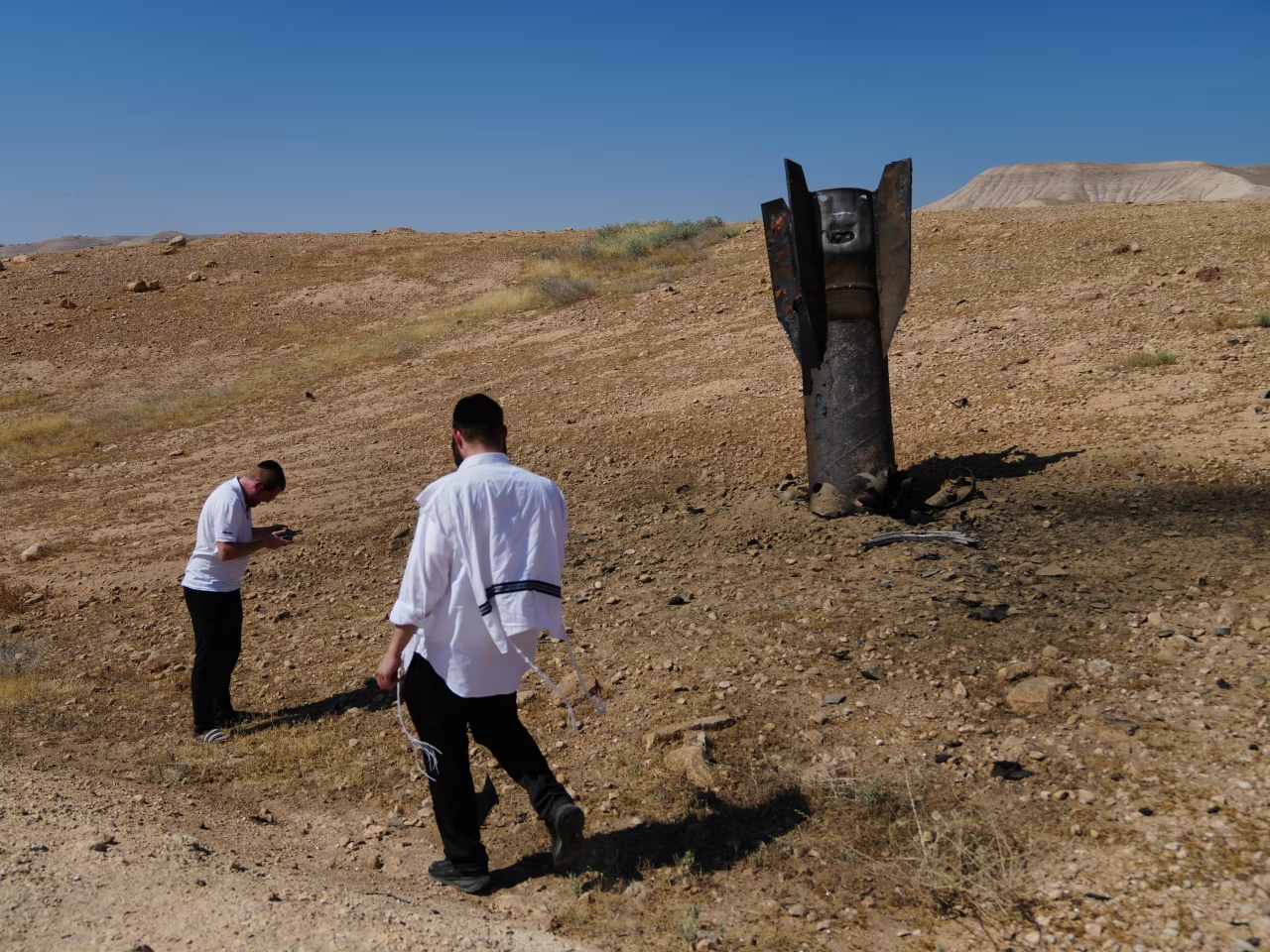
Iran responded within hours. Its Revolutionary Guards announced missile strikes on targets inside Israel, including what they described as comparable energy facilities. Iranian officials framed the attack as retaliation for earlier strikes on a petrochemical complex in the southwest of the country.
Explosions were reported across central and southern Israel as incoming missiles triggered air defense systems. The Israeli military warned civilians to seek shelter as a second wave of projectiles approached. Emergency services later indicated there were no immediate reports of casualties, though searches continued for debris from intercepted missiles.
The Associated Press confirmed that Israeli authorities detected multiple missile launches and issued nationwide alerts, marking one of the most intense exchanges since the ceasefire was reached in early April.
The confrontation quickly widened beyond the two countries. A group in Yemen aligned with Iran announced it would block Israeli maritime activity in the Red Sea and claimed responsibility for launching missiles toward Israeli territory. Israeli officials acknowledged detecting at least one projectile from that direction, though no injuries were reported.
At the same time, Israeli strikes extended deeper into Iran, with officials confirming hits on industrial and military sites, including a petrochemical facility in the Mahshahr area. Iranian media outlets cited by Reuters said the site sustained damage, while authorities began evacuating surrounding zones.
Iranian officials warned that further attacks on energy infrastructure could disrupt global markets. A spokesman for the foreign ministry said the United States would bear responsibility for any escalation, arguing that Israel does not act independently in such operations. U.S. officials, cited by Axios and other outlets, rejected claims that Washington authorized the latest strikes.
The renewed hostilities threaten two fragile ceasefire arrangements that have largely held since April. Reuters noted that both the U.S.-Iran truce and a separate understanding involving regional actors are now at risk as military actions intensify.
President Donald Trump, who helped broker the earlier pause in fighting, insisted the latest exchange would not derail ongoing diplomatic efforts. Speaking to the Financial Times, he said negotiations with Tehran remained on track despite the flare up. His remarks also highlighted growing tension with Israeli leadership, as he suggested decisions on escalation ultimately rest with Washington.
Meanwhile, Israel has continued military operations in neighboring Lebanon despite calls to deescalate. Israeli officials maintain that their campaign against Hezbollah is separate from any agreement involving Iran, a stance that complicates broader peace efforts.
Inside Iran, the impact of the strikes was immediately visible. State media cited by international outlets reported the suspension of flights at a major airport in Tehran and precautionary evacuations near industrial zones. The developments point to concerns about further attacks and potential damage to critical infrastructure.
Iranian military leaders warned that their response could expand if strikes continue, describing the latest missile launches as a signal of a wider campaign if necessary.
The latest exchange underscores how quickly the current ceasefire framework can unravel. While both sides appear to be calibrating their actions to avoid an all out war, the targeting of energy infrastructure introduces a new and dangerous dimension. Such sites are not only strategic military assets but also central to global oil and gas supply chains, raising the risk of economic fallout far beyond the region.
The involvement of allied groups, including those operating in the Red Sea, suggests the conflict is no longer confined to direct Israel Iran engagement. Instead, it is evolving into a broader regional contest with multiple fronts, increasing the likelihood of miscalculation.
Diplomatic efforts face mounting pressure. While Washington continues to push for a negotiated settlement, the gap between military actions and political messaging is widening. Iran’s insistence that the United States bears responsibility for Israeli actions further complicates any path to deescalation.
For now, both sides appear to be signaling strength while leaving room for restraint. But with each round of strikes, the margin for error narrows, and the prospect of a wider conflict becomes harder to contain.
AP/Reuters/TheIndependent





