

The United States announced a $25 million reward Wednesday for information leading to the capture of Juan Carlos Gonzalez, known as Pelon, whom officials have identified as the new leader of Mexico’s Jalisco New Generation Cartel.
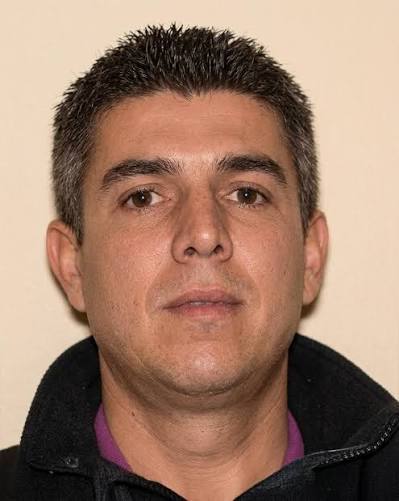
The reward, raised from an earlier $5 million offer, was part of a broader package of roughly $100 million to $102 million in rewards, with figures varying slightly across official statements, targeting several top leaders of the cartel, known by its Spanish acronym CJNG. The Justice Department simultaneously unsealed indictments against five alleged cartel leaders.
Officials said Gonzalez, a dual Mexican and American citizen, is the stepson of former cartel leader Nemesio Ruben Oseguera Cervantes, known as El Mencho, and is believed to have taken control of the organization following Oseguera Cervantes’s death.
What We Know So Far
Oseguera Cervantes was killed by the Mexican military in February during a capture operation that relied on U.S. intelligence, an operation that officials said triggered a burst of violence in Jalisco state afterward.
Acting Attorney General Todd Blanche said the cartel and similar organizations rely on violence and fear to control the flow of deadly narcotics, including fentanyl, cocaine and methamphetamine, into the United States. DEA Administrator Terrance Cole said intelligence gathered by the agency supports the assessment that Gonzalez has assumed leadership of the cartel.
Among those named in the newly unsealed indictments are Julio Alberto Castillo Rodriguez, described as Oseguera Cervantes’s former son in law, and Hugo Gonzalo Mendoza Gaytan, described as his godson. All of the defendants face charges of drug trafficking and firearms offenses, officials said.
The announcement follows sanctions the United States imposed weeks earlier against 50 people and companies linked to the cartel, including Gonzalez himself, which froze assets and blocked financial transactions with those named. The Trump administration also restricted visas for family members and business associates connected to cartel leadership.
CJNG is one of eight Mexican cartel organizations designated by the United States as a foreign terrorist organization. Officials describe it as the largest cartel in Mexico, with a presence in 21 of the country’s 32 states and operations extending into several other countries, including the United States. The organization’s business activities reportedly range from drug trafficking to legitimate agricultural production, including avocados.
What Authorities Are Saying
Cole told reporters that El Mencho’s death did not end the cartel’s operations, describing the organization’s continued activity as evidence of its resilience and the ongoing threat it poses. He said the investigation targeting CJNG’s leadership is only beginning and that authorities do not intend to relent.
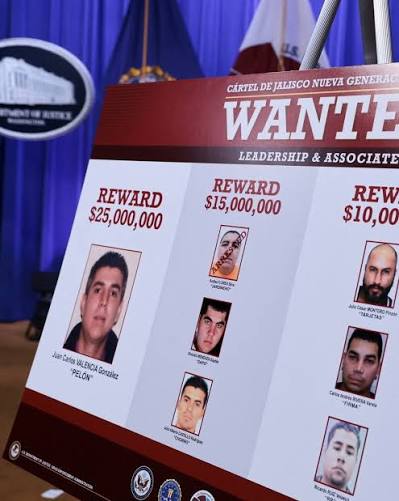
Derek Maltz, a former acting head of the Drug Enforcement Administration, said the reward announcement reveals how sophisticated cartel organizations like CJNG and its rival, the Sinaloa Cartel, have become. He said these groups now operate with continuity plans that ensure operations continue smoothly even after major leadership losses, treating their drug trafficking enterprise with the same operational planning a large legitimate business might use to manage risk.
Why This Matters
The reward escalation reflects the Trump administration’s broader campaign to pressure Mexican cartels and, by extension, the Mexican government under President Claudia Sheinbaum, to intensify crackdowns on organized crime, with U.S. officials at times raising the possibility of direct military action against cartel targets.
The case also highlights a persistent challenge in U.S. counternarcotics strategy: removing a cartel’s top leader does not necessarily disrupt its operations if the organization has built out a durable succession structure. Fentanyl’s extraordinarily high potency, and its role in hundreds of thousands of American overdose deaths in recent years, has made dismantling groups like CJNG a central priority for federal law enforcement, even as officials acknowledge the difficulty of meaningfully weakening organizations that function with corporate level planning and resilience.
Gonzalez’s dual citizenship adds a distinct dimension to the case, since prosecuting or extraditing an American citizen involved in cartel leadership raises different legal considerations than pursuing purely foreign nationals, potentially giving U.S. authorities additional prosecutorial tools if he is captured.
What Happens Next
U.S. officials are relying on the expanded reward money to generate tips that could lead to Gonzalez’s capture, alongside continued financial pressure through sanctions targeting his associates and business interests. Prosecutors are expected to move forward with the newly unsealed indictments against the five other named cartel leaders regardless of the outcome of the search for Gonzalez.
Given the cartel’s demonstrated succession planning following El Mencho’s death, officials are likely to face continued questions about whether targeting individual leaders, even high value figures like Gonzalez, can meaningfully disrupt an organization built to withstand exactly this kind of leadership loss.
Reporting drawn from USA Today and the Associated Press, citing the U.S. Department of Justice, the U.S. State Department, the Drug Enforcement Administration and former DEA acting administrator Derek Maltz.





