

(AP/Reuters) — Airstrikes launched by Pakistan into eastern Afghanistan have killed at least 13 people, most of them children, Afghan Taliban officials said Wednesday, marking a sharp escalation in cross border tensions between the neighboring countries after months of deadly clashes.
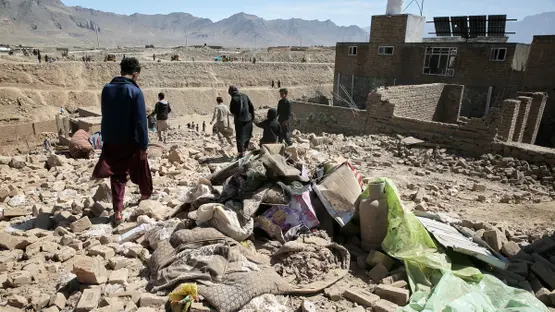
Afghan authorities said the strikes targeted residential areas in the provinces of Khost, Kunar and Paktika, leaving 11 children, one woman and one elderly man dead. At least 14 others, largely women and children, were injured in the bombardment, according to Taliban spokesperson Zabihullah Mujahid, who described the attacks as a violation of Afghanistan’s sovereignty.
Pakistan had not issued an official public response by Wednesday, though security officials indicated to Reuters that the strikes were aimed at militant hideouts allegedly used by Pakistani insurgents operating from Afghan territory.
What we know so far
The latest violence follows an attack by suspected Pakistani Taliban fighters on a security post in Hasan Khel, located in Pakistan’s Khyber Pakhtunkhwa province near the Afghan border. Pakistan’s Interior Ministry said six members of the Federal Constabulary were killed in that assault, while eight attackers were later neutralized by security forces.
Interior Minister Mohsin Naqvi attended funeral prayers in Peshawar and pledged an intensified campaign against militant groups, emphasizing that Pakistan would continue operations to secure its territory.
Afghan officials, however, maintain that civilians bore the brunt of the latest airstrikes, with homes struck in multiple locations. Pakistan disputes accusations of targeting civilians and insists its operations are directed at militant infrastructure.
What authorities are saying
Taliban leadership in Kabul condemned the strikes and warned of potential retaliation, noting that previous incidents have triggered cross border military responses. Mujahid asserted that Afghanistan would not tolerate repeated violations of its airspace.
Pakistani officials, while not formally acknowledging the strikes, have consistently accused Afghanistan of harboring the Tehrik e Taliban Pakistan, a militant group responsible for attacks inside Pakistan. Kabul denies the allegations, insisting that militancy within Pakistan is a domestic issue.
Security analyst Masood Khan, speaking from Islamabad, said Pakistan’s primary objective remains dismantling cross border militant networks. He pointed to a directive from Taliban leader Mullah Haibatullah Akhundzada calling on militants to halt attacks against Pakistan, adding that enforcement of such orders could ease tensions.
Why this matters
The renewed airstrikes signal a breakdown of fragile diplomatic efforts aimed at stabilizing relations between the two countries. Earlier this year, China facilitated talks in Urumqi, where both sides pledged to avoid escalation and explore peaceful solutions. Those commitments now appear increasingly strained.
The conflict also threatens regional stability, particularly as both nations grapple with economic pressures and internal security challenges. Prolonged border closures since October have already disrupted trade, leaving thousands stranded and affecting supply chains in border communities.
From a market perspective, continued instability could deter foreign investment in both countries, particularly in infrastructure and energy projects tied to regional connectivity initiatives. Pakistan’s already fragile economy may face additional strain if security operations intensify, while Afghanistan’s humanitarian situation risks further deterioration.
What happens next
Diplomatic channels remain open, with China and other regional actors continuing to encourage dialogue. However, without concrete steps to address mutual security concerns, the risk of further military exchanges remains high.
Analysts warn that sustained escalation could draw in broader regional interests, complicating efforts to restore stability. The enforcement of anti militant commitments by Afghan authorities will likely be a key factor in determining whether tensions ease or deepen in the coming weeks.
As both nations weigh their next moves, the latest strikes underscore the volatility of a border that has long been a flashpoint. The path forward will depend on whether diplomacy can regain traction or whether cycles of retaliation continue to define relations between Kabul and Islamabad.





