

The United States launched a fresh wave of military strikes across Iran on Wednesday, widening a fast-moving confrontation that is testing a fragile ceasefire and raising new concerns about global energy supplies and regional stability.
The latest action, confirmed by U.S. Central Command, targeted what officials described as multiple military sites inside Iran. The strikes were carried out on the orders of President Donald Trump, who has warned Tehran of consequences if negotiations to end the conflict remain stalled.
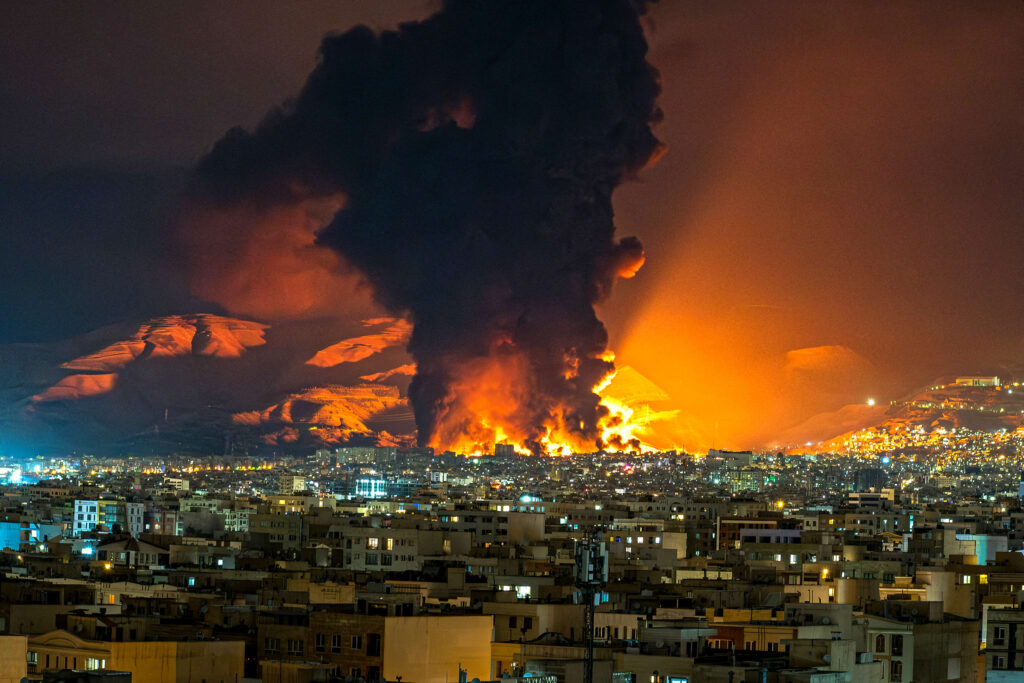
Military officials said the operation followed what they described as continued aggression by Iran, including attacks on U.S. aligned positions in the region. The developments mark a second consecutive day of American strikes and one of the most serious escalations since both sides agreed to a ceasefire earlier this year.
What we know so far
Explosions were reported across southern Iran, including in Bandar Abbas, Sirik and Minab, according to Iranian state and semiofficial media outlets cited by Reuters and NBC News. The targeted areas are located near the Strait of Hormuz, a strategic maritime corridor that carries a significant share of the world’s oil and gas shipments.
U.S. Central Command indicated that earlier operations struck air defense systems, radar installations and ground control facilities. Officials also confirmed that an American aircraft disabled an oil tanker in the Gulf of Oman after it attempted to move Iranian crude in violation of a U.S. enforced maritime blockade.
The vessel, identified as the M T Settebello, was struck in its engine room after repeated warnings, according to Central Command spokesperson Capt. Tim Hawkins. India’s foreign ministry said three sailors were missing following the strike, while others were rescued.
The strikes followed an incident involving a U.S. Army helicopter near the Strait of Hormuz. A U.S. official, speaking to The Associated Press and NBC News on condition of anonymity, said the aircraft collided with an Iranian drone. The crew survived.
What authorities are saying
President Trump said the United States would intensify its military campaign if Iran failed to reach an agreement, stating that further action would come swiftly. In remarks carried by NBC News and Fox News, he indicated that dozens of missiles had already been used in strikes targeting Iranian military infrastructure.
Defense Secretary Pete Hegseth told reporters at U.S. Central Command headquarters that American forces would continue to target facilities that weaken Iran’s military capabilities.
Iranian officials condemned the attacks. President Masoud Pezeshkian described the targeting of infrastructure as an act of desperation and warned that Iran would remain steadfast. Foreign Minister Abbas Araghchi and spokesperson Esmail Baghaei said Tehran would reassess its participation in ongoing negotiations.
At the United Nations, Iran’s ambassador Amir Saeid Iravani said his country would not negotiate under pressure, urging Washington to halt threats if it seeks a diplomatic solution.
Why this matters
The renewed strikes underscore the fragility of the ceasefire reached earlier this year and highlight the growing risk of a broader regional conflict involving U.S. allies and Iranian aligned forces.
The confrontation is already reverberating across global markets. Benchmark crude prices climbed above 93 dollars per barrel on Wednesday, reflecting concerns that Iran could disrupt shipping through the Strait of Hormuz. The narrow waterway handles roughly a fifth of global oil flows, making it a critical pressure point in the standoff.
President Trump said the U.S. military has been quietly helping oil shipments bypass Iranian interference, claiming that more than 100 million barrels have moved through the strait under U.S. protection. The figure has not been independently verified.
Rising energy costs are beginning to feed into broader economic pressures, with higher fuel prices affecting transportation, manufacturing and food supply chains worldwide. Analysts warn that prolonged instability could complicate inflation control efforts in major economies.
Market analysis and economic impact
Energy markets have reacted sharply to the escalating conflict, with traders pricing in the risk of supply disruptions. Insurance costs for tankers operating in the Gulf have increased, while shipping routes are being adjusted to reduce exposure to potential attacks.
The disruption also threatens regional investment flows, particularly in infrastructure and energy projects tied to Gulf exports. Countries dependent on imported oil could face widening trade deficits if prices remain elevated.
At the same time, defense sector stocks have seen gains, reflecting expectations of increased military spending tied to the conflict.
Competitive and geopolitical landscape
The crisis is unfolding within a complex geopolitical environment. Israel, under Prime Minister Benjamin Netanyahu, continues its own military campaign against Iran aligned groups, including Hezbollah in Lebanon, further complicating diplomatic efforts.
China has attempted to mediate between Washington and Tehran, while Gulf states hosting U.S. forces, including Bahrain and Kuwait, have strengthened defensive measures after intercepting incoming missiles.
Qatar has also entered the diplomatic arena, sending a delegation to Tehran for talks aimed at reducing tensions, according to officials familiar with the discussions.
What happens next
Despite the escalation, both Washington and Tehran appear to be leaving the door open for negotiations. However, major disagreements remain, particularly over Iran’s nuclear program and the lifting of economic sanctions.
The United States is demanding that Iran abandon its stockpile of highly enriched uranium, while Tehran is seeking sanctions relief and access to frozen assets before finalizing any agreement.
Analysts say bridging these gaps will be difficult, especially as domestic political pressures in both countries shape their negotiating positions.
As strikes and counter strikes continue, the conflict is entering a more volatile phase with global implications. The coming days will test whether diplomacy can regain momentum or whether military escalation will define the next chapter in a crisis already reshaping energy markets and regional security.
AP/Reuters/Skynews/NBC




