

President Donald Trump is preparing to introduce a new round of tariffs affecting as many as 60 countries, signaling another major escalation in his administration’s trade agenda despite concerns from some senior officials that broader import duties could increase costs for consumers and complicate the political landscape ahead of the United States midterm elections.
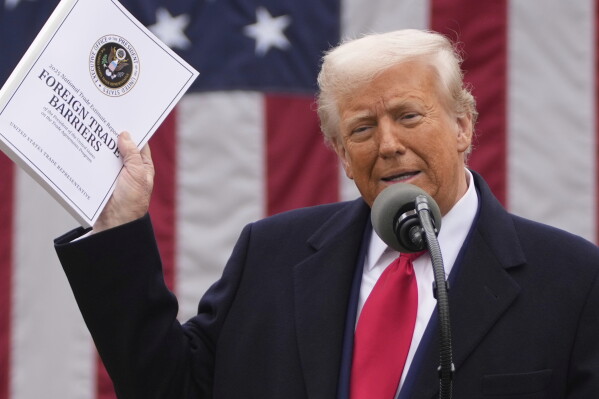
The proposed measures come as the administration searches for new legal pathways to impose tariffs after earlier trade actions faced court challenges. They also arrive during a period of heightened geopolitical tensions that have already pushed global energy prices higher.
The Trump administration is considering new tariffs ranging from 10 percent to 12.5 percent on imports from dozens of countries after a temporary global tariff policy is scheduled to expire later this week.
Officials familiar with the discussions say the proposed duties would rely on ongoing trade investigations into labor practices and industrial production rather than the emergency powers previously used for broad tariff actions.
The move follows recent tariff increases on Canada and Brazil and could significantly expand Washington’s trade dispute with key economic partners across Europe, Asia and the Americas.
What We Know So Far
President Trump imposed a 50 percent tariff on a broad range of Canadian goods Monday after introducing 25 percent duties on imports from Brazil days earlier.
Attention has now shifted to a broader package of trade measures expected to affect approximately 60 countries.
The Financial Times, cited by the Daily Mail, said the administration is considering tariffs between 10 percent and 12.5 percent as part of an investigation into alleged forced labor practices initiated earlier this year.
Separate trade investigations are examining manufacturing capacity and supply chain issues involving the European Union, China, Japan, India, Mexico, South Korea, Vietnam, Taiwan, Switzerland, Norway, Singapore, Thailand, Malaysia, Indonesia, Cambodia and Bangladesh.
Officials indicated the initial tariff rates would likely remain close to the current 10 percent level, although additional investigations could provide legal grounds for substantially higher duties later.
The proposed measures come as the administration prepares for the expiration of its temporary 10 percent global tariff framework on Friday.
Administration officials have reportedly relied on alternative trade laws after earlier broad reciprocal tariffs announced in 2025 were struck down by the Supreme Court.
Reuters also confirmed that President Trump is expected to introduce new tariffs on dozens of countries this week, although the news agency said it could not independently verify details contained in the Financial Times report.
What Authorities Are Saying
Officials familiar with internal discussions told the Financial Times that some senior advisers have encouraged the President to preserve recently negotiated trade agreements rather than expand tariffs further.
The administration has previously negotiated reduced tariff rates with several trading partners during 2025.
Trade officials continue to argue that investigations into labor practices, manufacturing overcapacity and supply chain vulnerabilities provide legitimate legal authority for additional import duties.
The White House has not publicly confirmed the final scope of the proposed tariff package.
Reuters noted that administration officials are simultaneously pursuing other investigations that could support higher tariffs under existing trade laws.
In recent months, trade negotiators have also recommended discussions with trading partners over sectors including critical minerals and aircraft components instead of immediately imposing additional duties.
Why This Matters
The proposed tariff expansion could affect a significant share of global trade.
Many of the countries under review are among America’s largest trading partners, supplying products ranging from electronics and automobiles to industrial equipment, clothing and consumer goods.
Higher import duties often increase costs for foreign exporters, but economists note they can also raise prices for American businesses and consumers depending on how supply chains adjust.
The timing is also politically significant.
The administration is pursuing a tougher trade agenda while voters continue to express concerns about inflation, consumer prices and overall economic conditions.
At the same time, conflict in the Middle East has contributed to higher energy prices, creating additional economic pressures that could influence business investment and household spending.
The latest tariff proposal reflects a broader shift in the administration’s trade strategy.
Rather than relying primarily on emergency powers that face legal challenges, officials are increasingly using targeted trade investigations under existing commercial laws to justify new import restrictions.
This approach may strengthen the administration’s legal position while allowing it to continue pursuing many of its economic objectives.
However, expanding tariffs across dozens of countries also increases the possibility of retaliatory trade measures from affected governments.
Previous rounds of tariffs prompted several trading partners to introduce duties on American exports, affecting industries including agriculture, manufacturing and consumer products.
Financial markets will also closely monitor whether the proposed measures remain limited to relatively modest tariff rates or eventually expand through additional investigations into strategic industries.
The combination of ongoing geopolitical tensions, elevated energy prices and renewed trade disputes could create further uncertainty for businesses operating across international markets.
What Happens Next
The administration is expected to announce whether the new tariff package will take effect before the temporary global tariff policy expires later this week.
Trading partners could respond through negotiations, legal challenges or reciprocal trade measures depending on the scope of the final announcement.
Businesses, investors and global markets will also watch for the outcome of additional trade investigations that could authorize higher tariffs on selected industries in the months ahead.





