

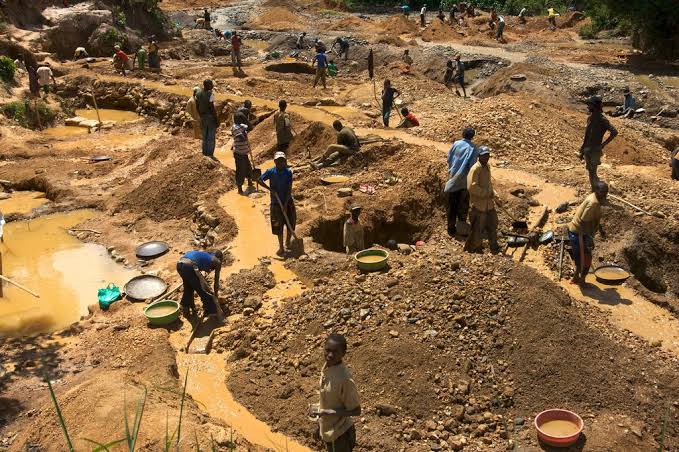
At least 33 suspects arrested on suspicion of illegal mining were found dead in the custody of Nigeria’s Security and Civil Defence Corps this week, with a local commander pointing to a suspected disease outbreak, though national headquarters said the actual cause has not yet been confirmed.
The suspects had been detained since the security agency, known as the NSCDC, carried out coordinated arrests September 15 and 16 in the M.I. Wushishi and Lukoto area of Niger State as part of efforts to curb illegal mining. Niger State Commandant Suberu Siyaka Aniviye said the bodies were discovered in the early hours of Thursday, September 17, and have been deposited at General Hospital in Minna for further medical examination to establish the cause of death.
Aniviye attributed the deaths to a suspected disease outbreak in a statement Thursday. NSCDC National Headquarters pushed back on that characterization, saying the cause of death remains unconfirmed and that claims linking the deaths to any specific disease are subject to medical and laboratory testing. “The NSCDC wishes to clarify that reports attributing the deaths to any specific disease remain subject to medical and laboratory confirmation. The Corps will, therefore, refrain from speculation until the outcome of the medical examination is established,” national spokesperson Babawale Afolabi said.
What We Know So Far
The NSCDC said its operation resulted in the arrest of scores of suspected illegal miners and the recovery of various exhibits, as part of what the agency described as its renewed effort to rid Niger State of illegal mining activity. Niger State’s NSCDC spokesperson, Abubakar Muti, confirmed the deaths to the Associated Press, saying the detainees had been held since the Tuesday and Wednesday arrests.
Following the deaths, the NSCDC’s Commandant-General, identified in one account as Ahmed Audi and in another as Abubakar Audi, an inconsistency in name that had not been resolved across available reporting, directed the formation of a high powered investigative team led by the Deputy Commandant-General in charge of Intelligence and Investigation. Afolabi said the team has been mandated to conduct a comprehensive investigation into the circumstances leading to the deaths, including the suspects’ condition upon arrest, their length of time in custody, detention conditions, medical attention provided, and other relevant factors.
The Commandant-General also directed that priority be given to the health and welfare of everyone currently in custody, and that measures be taken to protect personnel who may have had contact with those affected. The NSCDC said it is working in coordination with other security agencies to manage the situation and appealed to the public and the families of the deceased to remain calm and avoid any actions that could lead to a breakdown of law and order.
What Authorities Are Saying
The NSCDC extended condolences to the families of the deceased and said the circumstances surrounding the deaths would be thoroughly investigated and addressed based on established facts. The agency reaffirmed its commitment to human rights enforcement and international human rights standards while carrying out its mandate to protect lives, property and critical national infrastructure.
Why This Matters
The gap between the local commandant’s disease outbreak explanation and national headquarters’ more cautious, unconfirmed framing highlights the seriousness with which the national leadership appears to be treating the incident, given the potential implications of dozens of deaths occurring within a security agency’s custody. By explicitly distancing itself from the local disease claim and ordering a comprehensive independent investigation into detention conditions and medical care, national headquarters signaled it is not ruling out other explanations, including possible failures in how the suspects were held or treated while detained.
The scale of the deaths, more than 30 people dying in custody within roughly 48 hours of their arrest, raises significant questions regardless of the eventual cause, particularly around the conditions suspects were held under and whether adequate medical monitoring was available during their detention. The investigation’s stated scope, covering the suspects’ condition at arrest through their treatment in custody, suggests authorities recognize the need to examine whether agency conduct contributed to the deaths rather than treating a disease explanation as sufficient on its own.
What Happens Next
The high powered investigative team appointed by the Commandant-General is expected to conduct its inquiry into the full circumstances of the deaths, though no timeline has been given for when findings will be released. Medical examination results from General Hospital in Minna are still pending and are expected to play a central role in establishing the actual cause of death.
Given the NSCDC’s stated commitment to thoroughly investigate and address the incident based on established facts, further public statements are likely once the medical examinations and the investigative team’s inquiry are complete. The outcome could carry significant implications for the agency depending on what the investigation finds regarding detention conditions and medical care provided to the suspects.
Reporting drawn from the Associated Press, Daily Post Nigeria and Punch Nigeria




