

A Georgia judge on Tuesday sentenced the teenager who admitted killing two students and two teachers at Apalachee High School to life in prison without the possibility of parole, concluding that the attack was carefully planned and that the defendant had shown no genuine remorse.
Colt Gray, 16, pleaded guilty to 55 criminal charges, including murder, in connection with the Sept. 4, 2024, shooting at Apalachee High School in Barrow County, northeast of Atlanta. Under Georgia law, the murder convictions required a life sentence, leaving the court to determine whether Gray would ever be eligible for parole. Judge Nicholas Primm ruled that he would not.
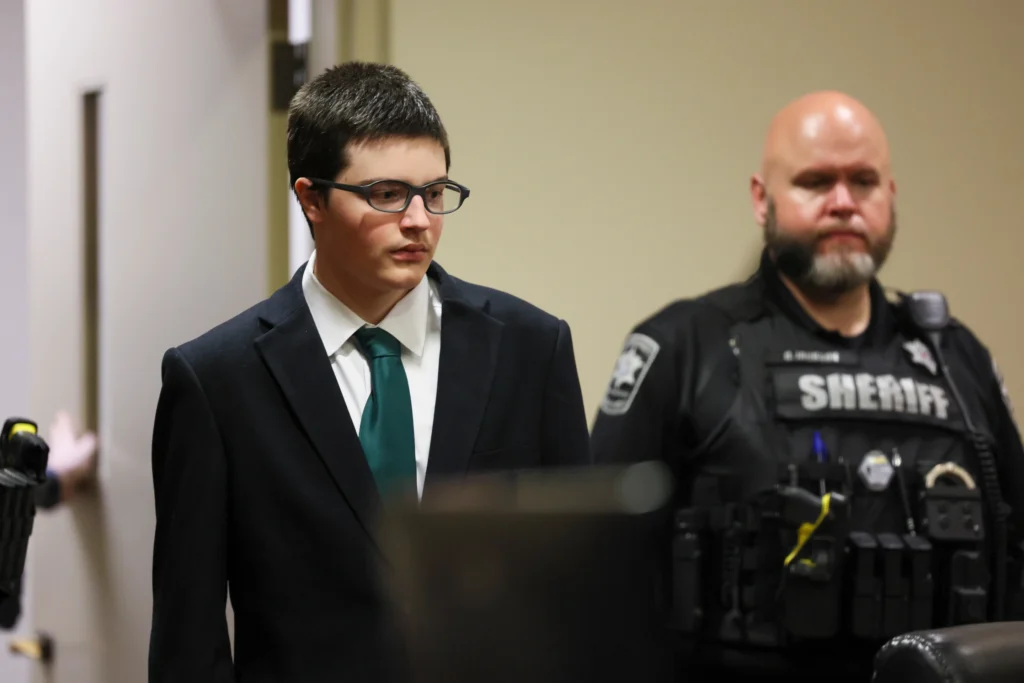
“You do not seem to be tormented by what you did,” Primm told Gray during sentencing. “You seem to relish following in the footsteps of the murderers you idolize.”
What we know so far
The attack claimed the lives of teachers Richard “Ricky” Aspinwall, 39, and Cristina Irimie, 53, along with 14 year old students Mason Schermerhorn and Christian Angulo. Another teacher and eight students were wounded, seven of them by gunfire.
Victims’ relatives spent days addressing the court, describing the lasting emotional impact of the shooting and urging the judge to ensure Gray would never be released.
District Attorney Brad Smith argued that the teenager remained a continuing danger, telling the court investigators found no evidence suggesting he could fully value human life in the future.
Defense attorney W. Charlton Allen acknowledged Gray’s troubled upbringing but asked the judge to leave open the possibility of parole, arguing that the teenager was capable of rehabilitation and deserved hope for the future.
Investigators detailed months of planning
During the sentencing hearing, prosecutors presented evidence showing Gray had become deeply fascinated with notorious mass killers through online communities devoted to violent crimes.
Investigators testified that he admired previous school shooters, collected thousands of images of them and discussed gaining similar notoriety through a school attack. They also played recorded telephone conversations in which Gray appeared pleased by the attention his crimes had received online.
Prosecutors said the shooting was only one part of a broader plan to achieve lasting notoriety.
Family described years of instability
Gray’s maternal grandmother testified that her grandson experienced an unstable childhood marked by family conflict, substance abuse within the household and repeated pleas for mental health treatment that were never fully pursued. She said she regularly visited him in detention and believed he had improved with counseling and medication.
A defense psychologist described Gray as a lonely teenager who struggled with a chaotic upbringing and became immersed in online communities focused on school shootings.
Judge Primm acknowledged those failures but said they did not excuse Gray’s deliberate decisions.
“The failure does not absolve you from who you chose to idolize, worship and become,” the judge said.
What authorities are saying
District Attorney Brad Smith said the sentence reflected what victims’ families had sought throughout the proceedings.
“This is not a happy day. This is a relief day,” Smith told reporters after the hearing, adding that prosecutors hoped they had honored those affected by the shooting.
Judge Primm said the sentence could never erase the pain suffered by survivors and families but concluded that permanent imprisonment was necessary because of the calculated nature of the attack.
Why this matters
The Apalachee High School shooting renewed national debate over school security, youth mental health, firearm access and parental responsibility.
The case also drew attention because Gray’s father was separately convicted after prosecutors argued he knowingly provided his son with the rifle used in the attack despite warning signs about his behavior.
Legal experts say the sentence reinforces Georgia courts’ willingness to impose life without parole on juvenile defendants convicted of the most serious crimes when evidence shows extensive planning and extreme violence.
The case has also intensified discussions over preventing radicalization through online communities that glorify mass shootings, an issue investigators identified as central to Gray’s actions.
What happens next
Gray will spend the remainder of his life in the Georgia prison system without the possibility of parole. His guilty plea concludes the criminal proceedings against him, although the case is expected to continue influencing policy discussions on school safety, juvenile justice and firearm accountability across the United States.
Sources: Associated Press; NBC News.





