

The United States and Iran exchanged military strikes over the weekend for the first time in roughly a month, and the United Arab Emirates said Monday its air force intercepted an Iranian drone over its territorial waters, in an escalation that followed weeks of relative calm in the six month conflict.
U.S. Central Command said it struck two Iranian rocket launchers on Iran’s Larak Island Sunday after observing forces from Iran’s Revolutionary Guard Corps preparing to launch rockets carrying sea mines into the Strait of Hormuz. U.S. military officials described the action as limited and precise, disputing Iranian characterizations of the strike as aggression. It marked the first confirmed American strike on Iran since July 29, when the U.S. announced a heavy wave of strikes on dozens of Revolutionary Guard targets. Semiofficial Iranian outlets reported explosions near Larak island, and Iran’s Revolutionary Guard said there were casualties, without specifying a number.
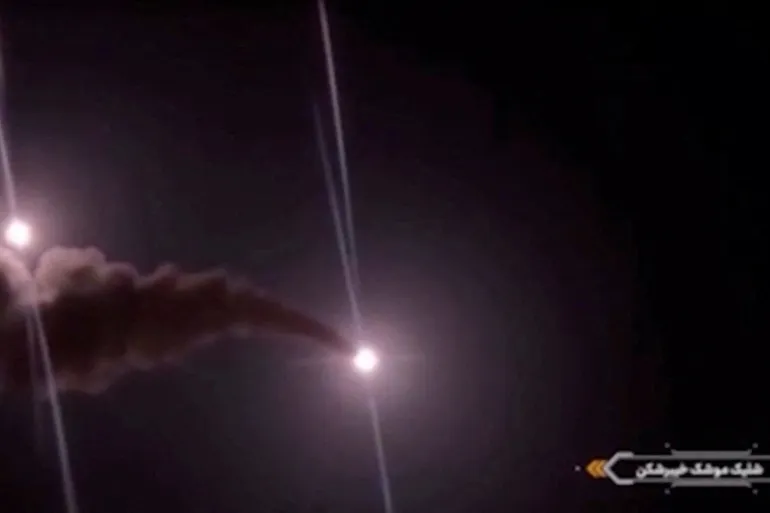
Iran responded by firing missiles at U.S. sites in Jordan; Jordan’s military said it intercepted eight missiles that entered its airspace. Iranian media separately reported that Iran’s army struck the UAE’s Al Minhad air base early Monday, a claim the UAE’s Defense Ministry explicitly and directly denied, calling it false.
What We Know So Far
The UAE’s Defense Ministry said it “dealt with” an Iranian drone detected approaching from Iran over its territorial waters, reporting no damage from the incident. The UAE’s Foreign Ministry called the drone incursion a dangerous escalation and a blatant violation of the country’s sovereignty, security and stability, and said the UAE reserves the right to respond.
Separately, President Donald Trump posted an AI generated video clip Sunday on Truth Social, writing “Kharg Island being blown to smithereens!!!” and declaring that Iran’s main oil export hub was under attack, without providing further detail. Several hours later, no evidence had emerged that Kharg Island had actually been struck, and an Iranian official dismissed the claim as laughable. The White House and Defense Department did not immediately respond to requests for comment. Kharg Island handled about 90 percent of Iran’s oil exports before the war began, and any actual strike on the facility would severely disrupt Iran’s energy trade and place significant additional pressure on its economy.
Iran’s Foreign Ministry said early Monday that Iran would not hesitate to exercise its right to legitimate self-defense and would respond decisively to any military aggression. Iranian President Masoud Pezeshkian, speaking before departing for the Shanghai Cooperation Organization summit in Kyrgyzstan alongside Foreign Minister Abbas Araghchi, said Iran was not seeking war but would respond decisively to aggressors. The summit brings together leaders including Chinese President Xi Jinping, Russian President Vladimir Putin and Indian Prime Minister Narendra Modi, with Pezeshkian scheduled to meet Putin on the sidelines Tuesday.
Economic Pressure Continues Alongside Military Escalation
The renewed fighting followed weeks in which Washington had focused on ratcheting up economic pressure on Iran rather than military action, aiming to force concessions including the reopening of the Strait of Hormuz, through which a fifth of the world’s traded oil passed before the war. U.S. Treasury Secretary Scott Bessent was scheduled to host Group of 20 finance minister meetings in North Carolina on Monday and Tuesday, part of a broader push to pressure other countries into helping economically isolate Iran by threatening consequences for continued business with Tehran.
Two weeks earlier, the UAE suspended all trade with Iran after saying it came under fire from two Iranian missiles that splashed harmlessly into the Persian Gulf near shipping traffic, a claim Iran denied. Bessent later suggested that pressure from Washington had contributed to the UAE’s decision to suspend trade. Trump said last week he was in no hurry to bring Iran back to the negotiating table, continuing to characterize Iran’s leadership as weakened, even as recent appointments to Iran’s senior security leadership have signaled continued defiance from Tehran despite decades of sanctions and limited tolerance for internal dissent.
As fighting resumed over the weekend, the price of Brent crude oil climbed above $90 a barrel, up about 25 percent from the war’s start, adding a growing economic complication for Trump ahead of the U.S. midterm elections. Trump had ordered U.S. forces to hold off on new strikes starting August 1, a pause requested by Gulf allies Qatar, Saudi Arabia and the UAE, making the weekend’s renewed American strike a notable departure from that earlier restraint.
Gulf Investment Shifts Amid Prolonged Strait Disruption
The extended blockage of the Strait of Hormuz has pushed Gulf nations to retool their broader investment strategies, redirecting billions of dollars toward alternative infrastructure including energy pipelines and ports. The conflict has exposed the region’s heavy reliance on the strait, which handled roughly 20 percent of global oil flows before the war effectively closed it for much of the past six months. Trade has increasingly shifted toward Saudi ports on the Red Sea and the UAE’s eastern ports, though those facilities offer smaller capacity than the routes they are replacing, limiting how fully they can offset the disruption.
Why This Matters
The direct contradiction between Iran’s claimed strike on the UAE’s Al Minhad air base and the UAE’s explicit denial underscores how difficult it remains to verify competing military claims in a conflict where both sides have strong incentives to shape the narrative around each exchange. Trump’s unsubstantiated Kharg Island claim, later unsupported by any evidence, adds a similar layer of uncertainty to public understanding of the conflict’s actual battlefield developments, given the claim’s specificity and its potential to affect oil markets before being clarified.
The UAE’s drone interception and its sharp public condemnation illustrate how the conflict continues to draw in Gulf states beyond the primary combatants, even as those same states, including the UAE, Saudi Arabia and Qatar, have simultaneously pushed for de-escalation and previously persuaded Trump to pause strikes earlier this month. The reversal of that pause suggests the underlying tensions driving the conflict, particularly around Iran’s control of the Strait of Hormuz, remain unresolved despite weeks of relative military quiet.
What Happens Next
Diplomatic activity is continuing on multiple fronts, with Pezeshkian’s attendance at the Shanghai Cooperation Organization summit and planned meeting with Putin offering Iran an opportunity to reinforce ties with non-Western powers even as it faces mounting economic pressure from Washington. Bessent’s G20 finance minister meetings this week are expected to further the U.S. campaign to isolate Iran economically, building on measures like the UAE’s trade suspension.
Whether the weekend’s exchange of strikes represents a renewed sustained escalation or an isolated flare-up remains unclear, particularly given Trump’s continued public insistence that he is in no hurry to resume negotiations. Continued volatility in oil prices is likely as markets react to both confirmed military developments and unverified claims like Trump’s Kharg Island post, adding further uncertainty for global energy markets already strained by the prolonged Strait of Hormuz disruption.
Reporting drawn from the Associated Press and Reuters




