Home Blog Page 3

Iran Executes Mosque Attack Suspects As Political Killings Rise

0

Iranian authorities on Monday carried out the execution of two men convicted of setting fire to a mosque during anti government protests, as rights groups point to a sharp increase in arrests and political executions since the outbreak of conflict earlier this year.

The judiciary, through its Mizan News Agency, announced that Mehrdad Mohammadi Nia and Ashkan Maleki were put to death after the Supreme Court upheld their sentences. Officials identified the pair as key figures in an attack on the Jafari Mosque in Tehran’s Gisha district during demonstrations that spread across the country in late 2025 and early 2026.

Authorities said the men were found guilty of arson, damaging public property, confronting security forces, blocking roads, and engaging in actions deemed harmful to national security. The judiciary also ordered the seizure of their assets. The specific capital charge applied in the case was not disclosed.

The executions come amid a broader crackdown linked to protests that erupted following the sharp collapse of Iran’s currency, the rial. What began as economic unrest quickly evolved into widespread demonstrations across major cities.

Security forces responded with force in early January, leading to a high number of casualties. Iran’s Supreme Council of National Security has acknowledged more than 3,000 deaths, while a United Nations investigator has placed the toll at no fewer than 5,000. Other estimates from humanitarian groups suggest the number could be significantly higher, though verification remains difficult due to a government imposed internet blackout at the time.

Human rights organization Amnesty International said last week that more than 6,000 people have been detained since the conflict began in February. Those detained include protesters, journalists, lawyers, and activists. The group documented at least 39 executions tied to political cases during the same period, raising concerns about the pace and fairness of judicial proceedings.

Amnesty also cited allegations of enforced disappearances, torture, and coerced confessions, along with trials that failed to meet international legal standards. Iranian officials have repeatedly rejected such claims, maintaining that all convictions follow due legal process and involve serious criminal offenses.

Separate figures from rights monitors indicate Iran remains among the world’s most active countries in carrying out executions. Amnesty’s annual review recorded more than 2,100 executions in 2025 alone, accounting for a large share of global totals.

State media coverage, including reporting cited by Aawsat, framed the executed men as central perpetrators of violence during the protests. Authorities have also accused foreign actors, including the United States and Israel, of encouraging unrest, claims that outside observers and rights groups dispute.

The executions highlight an intensifying strategy by Iranian authorities to reassert control through the judicial system following months of unrest. By linking protest related actions to national security charges, the government appears to be signaling a zero tolerance approach to dissent, particularly during a period of heightened regional tensions.

The scale of arrests and reported executions suggests a coordinated effort to deter future demonstrations. However, such measures may carry long term risks. Analysts note that harsh crackdowns can deepen public grievances, especially when driven by economic hardship and political frustration.

The lack of transparency surrounding charges and trial procedures also raises questions about due process. In high profile cases tied to protests, limited access to independent legal representation and rapid sentencing timelines have drawn sustained criticism from international observers.

At the same time, the broader geopolitical context cannot be ignored. With Iran engaged in ongoing tensions involving the United States and regional actors, domestic stability has taken on added importance for the government. Authorities may view internal dissent as a vulnerability that could be exploited externally.

If current trends continue, Iran could face increasing diplomatic pressure over human rights concerns, even as it prioritizes internal control. The situation underscores a growing divide between domestic policy priorities and international expectations regarding legal standards and civil liberties.

Euronews/Aawsat

The French Navy intercepted a Russian oil tanker in the Atlantic Ocean, marking their fourth shadow fleet seizure

0

 French naval commandos rappelled from helicopters onto a sanctioned oil tanker in the Atlantic Ocean on Sunday, seizing the vessel more than 400 nautical miles west of France in international waters and ordering it escorted to the French mainland, as President Emmanuel Macron posted video of the boarding operation and Russia called the action illegal piracy.

The tanker, identified as the Tagor, had traveled from Russia’s Arctic port of Murmansk and was flying what French authorities said was a false flag. Vessel tracking data from MarineTraffic showed the 252-meter ship sailing under a Madagascar flag. French maritime authorities said inspection of the vessel’s papers confirmed the flag irregularity. The Russian captain refused to comply with the French navy’s orders, and a Brest prosecutor confirmed that forcibly taking control of the vessel became necessary. A criminal investigation was opened on charges of failure to prove a vessel’s nationality, absence of a legitimate flag, and refusal to comply with naval instructions.

The operation was carried out with support from the United Kingdom, Macron confirmed in a post on X Monday showing commandos descending onto the ship’s deck from a hovering helicopter.

“It is unacceptable for ships to circumvent international sanctions, violate the law of the sea, and fund the war that Russia has been waging against Ukraine for more than four years,” Macron wrote. “These ships, that don’t respect the most elementary rules of maritime navigation, are also a threat to the environment and everyone’s security.”

By Monday, the Tagor was steaming under naval escort toward an anchorage off northwestern France for further inspection.

Russia’s Response

The Kremlin reacted with immediate condemnation. Spokesman Dmitry Peskov told reporters Monday that Russia considered the interception illegal and that it bordered on piracy. “We absolutely disagree that they are being carried out in full compliance with international law,” Peskov said.

Russia previously deployed a naval frigate in April to escort two sanctioned vessels through the English Channel after similar interception operations, and the Kremlin said at that time Moscow reserved the right to defend against what it characterized as piracy. Estonia subsequently announced it would stop detaining Russian shadow fleet tankers, citing concern that such actions risked provoking a Russian military response.

Peskov said Monday that Russia would take measures to ensure the safety of its shipping cargo in response to the latest seizure.

The Fourth French Interception

The Tagor is the fourth sanctioned tanker France has boarded since September. French forces seized the Benin-flagged tanker Boracay off the Atlantic coast in October, and Macron later said a probe was examining whether the vessel had been used as a launch platform for a drone incursion into Danish airspace that forced the closure of airports in Denmark. The Grinch was intercepted in the Mediterranean in January and released in February after paying a multimillion-euro penalty. The Deyna was boarded in the Mediterranean in March, and its owners paid an undisclosed fine to secure its release in April.

The pattern of seizure, penalty, and release has drawn criticism from sanctions advocates who argue the fines have not been large enough to meaningfully deter the use of shadow fleet vessels. Russia has assembled what Western intelligence assessments estimate to be a flotilla of nearly 600 vessels under EU sanctions, typically old tankers of deliberately opaque ownership, carrying Russian oil to buyers including India and China at discounted prices that still generate substantial revenue for Moscow.

The Economics Behind the Fleet

Oil revenue is a structural pillar of Russia’s war financing. The income from petroleum exports allows the Kremlin to continue funding military operations without forcing the kind of domestic austerity that would generate political pressure on Putin’s government. The EU has now issued 19 successive packages of sanctions against Russia since the February 2022 invasion, but Moscow has adapted to most measures and continues to move millions of barrels of oil to non-Western markets.

The current moment offers Russia an additional incentive to keep its shadow fleet moving. The Iran war has pushed global oil prices sharply higher, meaning the premium on any barrel that reaches an international buyer has increased. The combination of discounted Russian crude and elevated global prices has made shadow fleet operations particularly profitable, even accounting for the higher insurance and operational costs that come with vessels of uncertain status.

Reuters noted that the greatest practical disruption to Russian oil exports has come not from European naval interceptions but from Ukrainian drone and missile strikes on Russian oil production and refining facilities, which have reduced Moscow’s capacity to capitalize on the price spike.

British Prime Minister Keir Starmer said in March that he had authorized the British military to board shadow fleet vessels. Shipping data shows that dozens of sanctioned tankers have continued to cross British waters since that authorization, suggesting enforcement has been selective rather than comprehensive.

Interceptions as Signal, Not Solution

France’s fourth shadow fleet seizure in eight months, executed with helicopter-deployed commandos and posted to social media with the unmistakable quality of a political statement, is more accurately understood as a message than as a meaningful constraint on Russian oil exports.

The shadow fleet comprises hundreds of vessels. Four interceptions, however operationally impressive, do not dent a network of that scale. The vessels that have been seized and fined have generally been released after financial penalties that their operators have demonstrated willingness to absorb as a cost of doing business. The Grinch paid a multimillion-euro fine and returned to operation. The Deyna’s owners paid and recovered their ship. The economic logic of shadow fleet operations, particularly at current oil prices, can withstand a fine at the end of each voyage more easily than the vessels can be permanently removed from service.

The interceptions do serve genuine purposes beyond the individual vessels involved. Each seizure creates uncertainty for shadow fleet operators about which routes and which national enforcement zones carry elevated risk. Each one generates diplomatic pressure on the countries whose flags these vessels fly falsely, since the Madagascar and Benin flag links in recent cases create conversations with those governments about how their maritime registries are being exploited. And each one forces Russia to spend political and diplomatic capital defending operations that it publicly characterizes as legitimate commercial activity.

What the interceptions have not done is stop Russian oil from reaching its buyers. India and China are purchasing Russian crude at scale, and neither country has shown any indication of accepting Western pressure to curtail those purchases. Until either the buyers change their behavior or the sanctions enforcement is applied at a scale that genuinely disrupts the shadow fleet’s economics rather than penalizing its occasional participants, the Tagor’s successors will keep sailing.

AP/Reuters/Euronews

Explosion at South Korea Defense Facility Kills 5 Workers, Injures 2

0

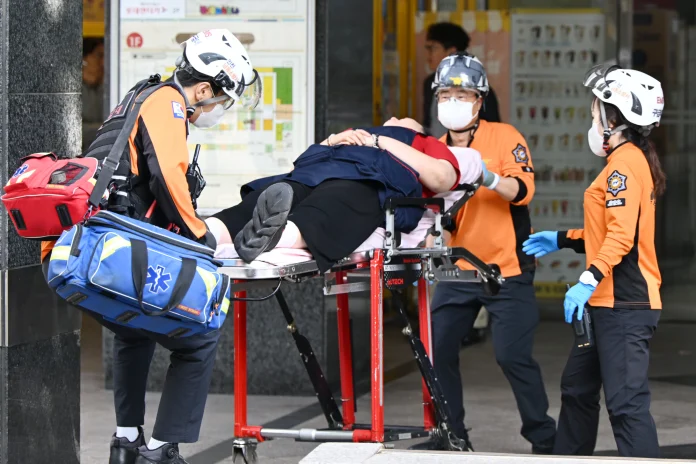
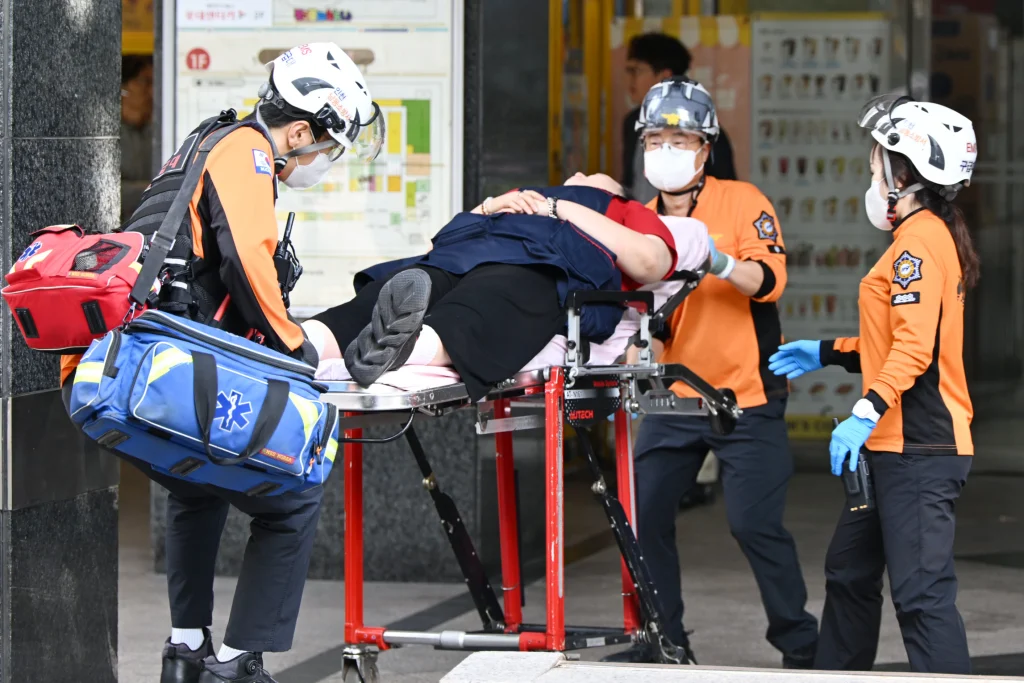
An explosion followed by a fire tore through a defense manufacturing facility in central South Korea on Monday, leaving five workers dead and two others injured, emergency officials confirmed.

The blast occurred at a worksite operated by Hanwha Aerospace in the city of Daejeon at approximately 10:59 a.m., prompting a large scale response from fire and rescue teams. Around 100 personnel were deployed to contain the flames, which were fully brought under control shortly after 1 p.m.

Authorities said all five victims were found at the scene. Two additional workers were hurt, including one who suffered severe burns across the body and remains in critical condition, while the other sustained less serious injuries.

Preliminary information from fire officials indicates the explosion may have occurred during cleaning operations involving explosive materials. Investigators are working to determine the exact sequence of events that led to the blast.

The facility is a key site for Hanwha Aerospace, where large propulsion systems and tactical surface to surface weapons are developed. Officials noted that the complex is classified as a government designated security zone.

The incident marks the latest in a series of deadly accidents at the same company. Similar explosions at the facility in 2018 and 2019 claimed multiple lives, raising ongoing concerns about industrial safety at high risk defense production sites.

The latest explosion highlights the inherent risks associated with handling volatile materials in defense manufacturing, particularly in facilities engaged in propulsion and weapons system development. Even routine procedures such as maintenance or cleaning can pose significant hazards if strict safety protocols are not followed or if materials degrade over time.

Repeated incidents at the same company suggest potential systemic challenges, including oversight gaps, aging infrastructure, or procedural weaknesses. While investigations will focus on immediate causes, the pattern of past accidents is likely to intensify scrutiny from regulators and the public.

The strategic importance of such facilities adds another layer of complexity. As key contributors to national defense capabilities, they operate under pressure to maintain production timelines, which can sometimes conflict with safety priorities if not carefully managed.

This event may prompt broader reviews across South Korea’s defense industry, particularly in facilities dealing with explosive compounds. It also underscores a global issue in military manufacturing, where balancing operational efficiency with worker safety remains an ongoing challenge.

YonhapNewsAgency/AP

US Retaliates with Airstrikes in Iran After Drone Attack, Kuwait Signals Missile Alerts

0

The United States carried out targeted airstrikes on Iranian military infrastructure over the weekend after Tehran shot down an American drone, escalating tensions that quickly spilled across the region as Kuwait reported incoming missile and drone fire.

U.S. Central Command said the strikes focused on radar systems and drone related facilities near the southern Iranian city of Geruk and on Qeshm Island. Officials described the operation as a direct response to what they called hostile actions by Iran, including the destruction of a U.S. MQ 1 drone flying over international waters.

In a statement, the command said American fighter aircraft struck air defense assets, a ground control station, and two attack drones that were viewed as immediate threats to maritime traffic in nearby waterways.

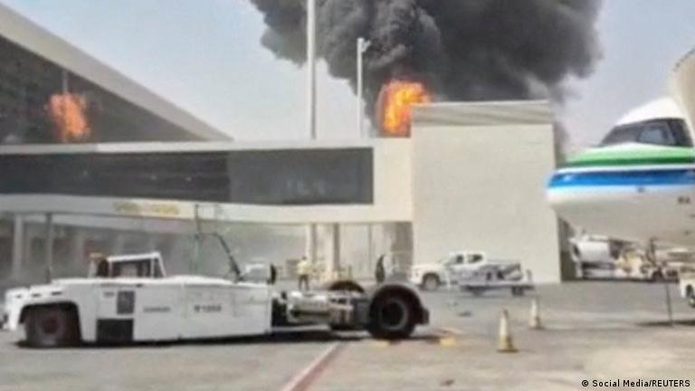
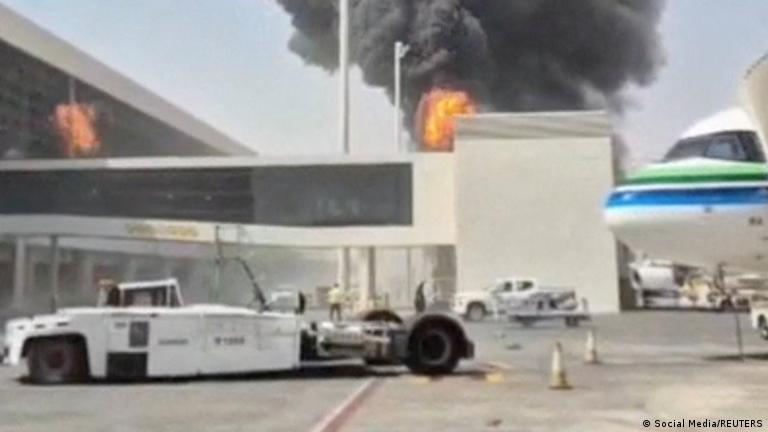
Iran signaled retaliation soon after, announcing it had launched its own strike, while authorities in Kuwait confirmed that projectiles had entered their airspace, raising fears of a broader regional escalation.

The latest exchange has further strained an already fragile ceasefire between Washington and Tehran. Diplomatic efforts to reach a lasting agreement remain underway, but repeated military confrontations have cast doubt over the prospects for a breakthrough.

The conflict has also intensified pressure on global energy markets. Iran continues to exert control over the Strait of Hormuz, a vital shipping route for oil supplies, disrupting maritime traffic and contributing to rising fuel prices worldwide.

Meanwhile, violence has expanded beyond the immediate U.S. Iran standoff. Fighting between Israel and the Iran backed group Hezbollah has escalated despite a separate truce. Israeli forces have maintained positions deeper inside Lebanese territory, while Hezbollah has continued launching drone attacks toward Israel.

The latest military exchange underscores how quickly localized incidents can spiral into wider regional instability. The downing of a single drone triggered a chain reaction involving multiple countries, highlighting the fragile nature of current ceasefire arrangements.

Control of the Strait of Hormuz remains one of the most significant pressure points in the crisis. Any sustained disruption in this corridor can have immediate global economic consequences, particularly for energy dependent nations already facing inflationary pressures.

The involvement of Kuwait signals a dangerous expansion of the conflict’s geographic footprint. Even indirect exposure to missile or drone activity raises the risk of drawing additional states into the confrontation, whether through defensive responses or alliance commitments.

At the same time, the parallel escalation between Israel and Hezbollah suggests that the broader network of alliances tied to Iran is becoming increasingly active. This multi front dynamic complicates diplomatic efforts, as progress in one area can be undermined by flare ups elsewhere.

If the current pattern continues, the region may shift from contained exchanges to a more sustained cycle of retaliation, increasing the likelihood of miscalculation. Analysts warn that without a clear de escalation framework, even limited strikes could evolve into a wider conflict involving multiple state and non state actors.

The Associated Press original

8 Killed Including Infant as Bus Slams Into Barrier and Catches Fire in Western Turkey

0

A passenger bus traveling overnight in western Turkey crashed into roadside barriers and erupted in flames early Sunday, killing eight people, including a 9 month old child and his father, and leaving dozens injured, authorities and local media said.

The crash occurred around 1:40 a.m. on the Denizli Aydin highway near the Tirkaz area, where the vehicle, operated by Pamukkale Tourism, was en route from Izmir to the coastal city of Antalya. The bus was carrying 38 passengers and three crew members at the time of the collision.

Emergency crews were dispatched swiftly after the impact, including medical teams, disaster response units, police, and firefighters. Officials said the bus caught fire shortly after striking the barrier, intensifying the severity of the incident.

Rescuers were able to extinguish the flames, but eight people were pronounced dead at the scene. Among those killed were the driver, identified as 50 year old Mustafa Fevzi Merdun, and several passengers, including a father and his infant son.

The victims were identified by local media as Merve Erik, Fatma Kartal, Gulitay Boga, Zehra Eyiol, Hayriye Arikan, and Civan Sen, along with his 9 month old son Eyip Mirac Sen.

Thirty three others sustained injuries and were transported to hospitals in the region for treatment. Authorities said some victims required urgent medical care, though detailed conditions were not immediately disclosed.

Images from the scene showed the charred remains of the bus along the roadside as investigators and emergency teams assessed the damage. The vehicle was later removed, and traffic resumed several hours after the highway had been closed.

Officials have opened an investigation into the cause of the crash.

The incident occurred during the final day of Eid al Adha, a major holiday period in Turkey that often sees heavy travel across the country.

The crash highlights persistent concerns over road safety during peak travel periods in Turkey, when highways become congested with long distance travelers. Holiday traffic surges, combined with overnight driving schedules, can increase risks related to driver fatigue, reduced visibility, and high speed travel.

While the exact cause of the crash remains under review, collisions involving highway barriers followed by fire often point to high impact speeds or mechanical failure, both of which can leave little time for corrective action.

The involvement of a commercial passenger bus also raises broader questions about regulatory oversight, vehicle maintenance standards, and driver work conditions in the intercity transport sector. Accidents involving buses tend to result in higher casualty figures due to the number of occupants, amplifying the human toll.

The timing of the crash during a major holiday further underscores a recurring pattern seen globally, where festive travel periods are accompanied by spikes in road accidents. Authorities often face challenges balancing traffic flow with enforcement of safety measures during such times.

As investigations continue, the tragedy may renew calls for stricter monitoring of long distance bus operations and enhanced safety protocols, particularly during high traffic seasons.

People/AP

Deadly Myanmar Blast Near China Border Kills Over 45; Village Destroyed

0

A powerful explosion at a building believed to be storing mining explosives tore through a village in northeastern Myanmar on Sunday, killing more than 45 people and injuring dozens, rescue workers and local media said.

The blast struck around midday in Kaungtup village in Namhkam township, an area near the Chinese border that is under the control of the Ta’ang National Liberation Army, an ethnic armed group engaged in conflict with Myanmar’s central authorities.

Rescue teams working at the scene said at least 46 bodies, including six children, had been recovered by evening. The victims were taken for cremation as emergency crews continued searching through debris. One rescuer, who spoke to The Associated Press on condition of anonymity due to security concerns, said at least 74 injured people were transported to a nearby hospital.

Another responder in Namhkam gave a similar account, saying the blast killed around 40 people and caused widespread destruction to homes in the surrounding area, with more than 100 buildings damaged.

Independent media outlets in Myanmar, including the Shan State based Shwe Phee Myay news agency, placed the death toll higher, estimating between 50 and 55 fatalities. Images circulating online showed thick smoke rising over the village and structures reduced to rubble.

China’s state broadcaster CCTV said the explosion resulted in multiple casualties and extensive damage to residential buildings, though it did not confirm specific figures. Early findings indicated that the blast originated at a storage site containing large quantities of explosives used for mining operations.

In a statement shared on its Telegram channel, the Ta’ang National Liberation Army acknowledged that gelignite had been stored at the site for use in mining and quarrying. The group said an investigation into the cause of the explosion is underway.

Gelignite, commonly used in industrial blasting, can become unstable if improperly handled or stored for long periods, raising questions about safety conditions at the facility.

The region has been under the control of the armed group since late 2023, when an alliance of ethnic forces launched a major offensive against Myanmar’s military. Although a ceasefire was reached following talks mediated by China last year, tensions remain high across the region.

Myanmar has faced ongoing instability since the military seized power in 2021, ousting the elected government of Aung San Suu Kyi. The takeover sparked widespread protests that evolved into armed resistance, leaving large parts of the country gripped by conflict.

The explosion highlights the growing risks associated with industrial activities in conflict zones, where oversight and safety enforcement are often limited or absent. In areas controlled by armed groups, storage and handling of hazardous materials such as explosives can fall outside formal regulatory frameworks, increasing the likelihood of catastrophic accidents.

The incident also underscores the broader humanitarian impact of Myanmar’s prolonged instability. Communities in contested regions often face a dual threat from both armed conflict and unsafe infrastructure tied to informal economies such as mining and quarrying.

Beyond the immediate loss of life, the destruction of homes and displacement of residents is likely to deepen hardship in a region already strained by conflict and limited access to medical care. Recovery efforts may also be complicated by the area’s political status, which restricts coordination with central authorities and international aid organizations.

The proximity to the Chinese border adds another layer of concern, as cross border implications of such incidents can heighten regional sensitivities, particularly where trade and security interests intersect.

As investigations continue, the tragedy may renew scrutiny over how explosive materials are managed in unstable regions and whether stronger safeguards can be enforced despite ongoing conflict.

EnglishAawsat/AP

Trump Calls for Canceling America’s 250th Birthday Concert and Replacing It With a MAGA Rally After Five Headliners Quit

0

 America’s planned 250th birthday concert on the National Mall collapsed into open chaos Saturday as President Donald Trump called for the whole event to be scrapped and replaced with a Make America Great Again rally, five of nine headlining acts quit over safety fears and political concerns, and the remaining lineup drew a wave of mockery on social media.

Trump announced all of it on Truth Social in a pair of posts that careened from self-promotion to fury to calls for cancellation.

“We should have a giant MAKE AMERICA GREAT AGAIN RALLY, for 250, instead of having overpriced singers, who nobody wants to hear, whose music is boring, and yet who do nothing but complain,” Trump wrote Saturday night. “Cancel it, just like I canceled my involvement with the failing and unsafe to be in Kennedy Center.”

Pix: dailymail

Earlier in the day he had volunteered himself as the replacement headliner, describing himself in a lengthy post as “the Number One Attraction anywhere in the World, the man who gets much larger audiences than Elvis in his prime, and he does so without a guitar.” He called himself “THE GOAT” — his own shorthand for greatest of all time — and said he would give a major speech at what he described as an “AMERICA IS BACK Rally.”

“Same time, same location,” Trump wrote. “Only Great Patriots invited — It will be a Wild and Beautiful Celebration of America!”

Freedom 250, the organization behind the event, confirmed Saturday that Trump would personally kick off the celebration on June 24, calling it a historic moment. The broader fair is scheduled to run June 25 through July 10.

The unraveling began Wednesday when Freedom 250 announced a concert lineup that included Bret Michaels, the Commodores, Martina McBride, Morris Day and the Time, and Young MC alongside Vanilla Ice, Flo Rida, C+C Music Factory, and Milli Vanilli’s Fab Morvan. By Saturday, five of the nine headliners had quit. The four who remain — Vanilla Ice, Flo Rida, C+C Music Factory, and Morvan — are acts whose commercial peaks came three decades ago, a fact that social media users did not let pass without comment.

The departing artists told largely the same story. They had been recruited for what they were told was a nonpartisan celebration of America’s anniversary. When they looked more closely, they concluded the event was politically aligned with the Trump administration and that performing would put them in the middle of a fight they had not signed up for.

Michaels, the Poison front man, was among the last to exit and among the most specific about his reasons. He said he had been sold on an event honoring veterans, first responders, teachers, and working Americans and had been excited to participate on those terms. He said the event had “evolved into something much more divisive than what I agreed to be a part of,” and said threats against his family, friends, and bandmates had forced his hand.

“Concerns have also been raised regarding the safety of my fans, band, crew, family and myself, including threats that are completely unfounded and unforgivable,” Michaels said in a statement. “This isn’t about politics. It’s about staying true to what I’ve always believed in.”

McBride said in an Instagram statement that she had been “presented with an opportunity to perform at a nonpartisan event but that turned out to be misleading.” The Commodores said briefly that they chose “not to publicly affiliate with any single political party.” Young MC expressed similar frustration.

Vanilla Ice, whose real name is Robert Matthew Van Winkle, defended his decision to stay. He told TMZ the point was simple. “I’m here to party with America, man. Music is made to bring people together and that’s what we are here to do.” He said he did not take the political dimension seriously and did not think anyone else should either.

Trump’s call to cancel the Freedom 250 concerts arrived the same weekend he acknowledged stepping away from his Kennedy Center renovation project after a federal judge blocked his plans. U.S. District Judge Christopher Cooper ruled Friday that the Kennedy Center board had exceeded its authority when it added Trump’s name to the building and halted the administration’s plans to close the venue for a multi-year renovation.

Trump responded to the ruling by attacking the judge on Truth Social, calling for his impeachment and declaring the building structurally unsafe and financially doomed. “The Kennedy Center is broken, unsafe, and $busted, and has been for many years!” Trump wrote. “So now, the Kennedy Center will collapse, both structurally and financially.”

He drew the explicit connection to Freedom 250 himself, framing both situations as instances of an institution resisting his direction and requiring either full control on his terms or abandonment.

Trump’s comparison of himself to Elvis Presley on Saturday was not new territory. He has referenced the comparison repeatedly over the years, including a 2018 comment at an event in Tupelo, Mississippi, where he recalled being told he resembled Presley as a young man. That same year, after awarding Elvis the Presidential Medal of Freedom posthumously, Trump said he had attended one of his concerts. Earlier this year, Trump toured Graceland in Memphis and asked a staff member whether they thought he could beat Elvis in a fight. The employee said Elvis would have let him win.

Trump campaign events have long featured Presley songs including “Suspicious Minds,” “If I Can Dream,” and “An American Trilogy.” His Saturday comparison, characterizing himself as drawing larger crowds than Elvis without needing a guitar, was the most direct version of the parallel yet, offered in the context of explaining why he was the superior replacement for acts that had backed out of a national birthday celebration.

The collapse of the Freedom 250 concert lineup is not primarily a story about artists being difficult or about political cowardice. It is a story about what happens when a national celebration is organized in a way that makes its political alignment undeniable while its public marketing describes it as nonpartisan.

Freedom 250 was launched by Trump. It is led by a Trump State Department appointee. Trump announced himself as the headliner. Trump subsequently called for the concerts to be replaced with a MAGA rally. These are not ambiguous signals. They are a clear and sequential demonstration of what the event is and who controls it.

The artists who withdrew were not wrong when they said the event’s character had shifted from what they were told. The event’s character was always what it turned out to be. What shifted was their ability to maintain the fiction that accepting a booking was a civic act rather than a political one.

Trump’s instinct to convert everything he touches into a rally is genuine and consistent. From his perspective, there is no meaningful distinction between a celebration of American history and a celebration of his administration’s view of that history. The 250th anniversary of the nation’s founding is, to Trump, an occasion that belongs to the movement he leads rather than to the country at large.

The artists who disagreed with that premise withdrew. The ones who stayed either share it or have decided the performance fee is worth the association. And somewhere on the National Mall in late June, whatever form the event ultimately takes, a president who compares himself to Elvis will take the stage to celebrate a country he has said was dead before he saved it.

Dailymail/USWeekly/AP

Zaporizhzhia Nuclear Plant Strike: Ukraine Denies Claims Amid Mass Drone Attacks

0

 Russia accused Ukraine on Sunday of striking Europe’s largest nuclear power plant with a drone, while Ukraine flatly denied involvement and called the claim propaganda, as the two sides traded attacks across a wide arc of territory and Russian drone strikes drew reports of civilian casualties and infrastructure damage across multiple regions.

Russia’s state nuclear company Rosatom said a drone hit part of reactor 6 at the Zaporizhzhia Nuclear Power Plant on Saturday, damaging a wall of the turbine hall. Rosatom said no radiation was released. The International Atomic Energy Agency confirmed it had been informed of the reported strike and was seeking direct access to inspect the site. In a statement, the agency said attacking nuclear facilities “is like playing with fire.”

Ukraine rejected the accusation entirely, characterizing the Russian claim as propaganda and accusing Moscow of using the occupied facility as an instrument of nuclear blackmail. The Zaporizhzhia plant, which Russian forces seized in the early weeks of the full-scale invasion in 2022, has been at the center of repeated safety alarms throughout the war as fighting has periodically occurred in its vicinity and power connections to the plant have been disrupted multiple times.

Overnight Strikes Across Russia

Russian regional governors reported Ukrainian drone strikes across several regions overnight into Sunday, with damage confirmed in Saratov, Kirov, Belgorod, Rostov, and Voronezh.

Saratov governor Roman Busargin said civilian infrastructure had been damaged in the Volga region, which hosts several oil refineries and has been a recurring target of Ukrainian long-range drone campaigns in recent months. In the Kirov region, situated more than 1,300 kilometers from Ukrainian-held territory, governor Alexander Sokolov said drones struck a facility in the Urzhumsky district — a strike notable for its depth inside Russian territory.

Belgorod authorities confirmed three civilians were wounded in strikes on the border region. Governors in Rostov and Voronezh also reported overnight drone activity in their areas.

A separate wave of strikes overnight into Saturday hit oil facilities in two southern Russian regions, local officials said, part of what has become a near-daily Ukrainian campaign targeting the energy and industrial infrastructure that funds Moscow’s prosecution of the war.

In Russian-occupied Crimea, Moscow-backed governor Sergei Aksyonov announced restrictions on petrol sales following continued Ukrainian attacks on fuel infrastructure near the peninsula, a signal that the campaign was producing supply disruptions that civilian populations on the peninsula were beginning to feel directly.

The Nuclear Plant and the Dispute Over Responsibility

The conflicting accounts over the Zaporizhzhia strike illustrate the particular difficulty of establishing facts at a nuclear facility that sits inside Russian-occupied Ukrainian territory, beyond independent verification by Ukrainian officials or Western monitors, and where both sides have an established interest in controlling the narrative.

Russia’s version places blame on Ukraine and frames the strike as an attack on nuclear safety. Ukraine’s version characterizes the claim as fabricated to generate international pressure and distract from Russian military conduct. The IAEA, whose authority to inspect the plant has been constrained throughout the war by the Russian military presence there, said it was attempting to gain access to assess the reported damage firsthand.

The IAEA’s language about playing with fire was pointed. The agency has repeatedly warned since the plant’s seizure in 2022 that military activity near or at a functioning nuclear facility creates catastrophic risks, and that the seven safety pillars it considers essential for nuclear security have been intermittently violated at Zaporizhzhia throughout the conflict.

Whether the drone that allegedly struck reactor 6 was Ukrainian, Russian, or undetermined in origin, the incident adds another entry to a record of Zaporizhzhia incidents that nuclear safety experts have described as an unacceptable pattern of risk accumulation around the largest nuclear facility in Europe.

Nuclear Facilities and the Limits of War

The disputed Zaporizhzhia strike arrives at a moment when nuclear infrastructure has become a recurring feature of the broader conflict landscape. Russia has claimed attacks on its own Bushehr plant during the Iran war. Ukraine’s Zaporizhzhia facility has been a flashpoint since 2022. The IAEA has been making the same arguments about nuclear safety in conflict zones for three years, with limited effect on either side’s conduct.

The specific risk at Zaporizhzhia is not simply that a strike might cause a radiation release today. It is that a facility operating well below normal safety standards, with backup power systems that have been tested to their limits and cooling systems dependent on external power connections that have been repeatedly disrupted, represents an accumulated fragility that grows more dangerous with every additional incident. A turbine hall wall is not a reactor core. But the direction of travel matters as much as the specific location of any single strike.

Both Russia and Ukraine know that a Zaporizhzhia disaster would be a catastrophe without boundaries — radioactive contamination does not respect front lines, and the political and humanitarian consequences of a major release at Europe’s largest nuclear plant would fall on both sides of the conflict and well beyond. That mutual understanding has so far provided a floor beneath which neither side has been willing to go. How much margin remains above that floor, given everything that has already happened at and around the plant since 2022, is a question neither government has answered publicly.

Kenya Pushes Ahead With US Backed Ebola Facility Despite Court Order and Public Backlash

0

Kenya’s government is moving forward with plans to establish an Ebola quarantine and treatment facility in partnership with the United States, even as a High Court ruling temporarily halts the project pending legal review.

Health authorities said Saturday the proposed center, to be located at Laikipia Air Base north of Nairobi, is part of a broader effort to strengthen the country’s emergency response systems. The facility is intended primarily for American citizens exposed to Ebola in the Democratic Republic of Congo, where an outbreak has intensified in recent weeks.

Officials in Kenya’s Ministry of Health said the initiative would bolster surveillance, isolation capacity, and rapid response readiness, adding that additional treatment units are being prepared at Kenyatta National Hospital and the Kenya National Police Hospital.

A source involved in the response confirmed to CNN that U.S. personnel assigned to support the operation arrived in Kenya over the weekend. The deployment is part of a coordinated effort involving multiple U.S. agencies, including the Department of Health and Human Services.

The move comes amid mounting legal and public resistance. High Court Judge Patricia Nyaundi issued an order late Thursday barring the government from admitting individuals exposed to or infected with Ebola under any foreign agreement until a constitutional challenge is resolved. The case is scheduled to return to court on June 2.

The plan has drawn criticism from civil society groups and medical professionals, who argue that Kenya risks becoming a containment site for a disease not currently present within its borders. The Katiba Institute, which filed the legal challenge, warned the arrangement raises serious constitutional and public health concerns.

Tensions escalated after U.S. Secretary of State Marco Rubio said Washington would not allow Ebola cases onto American soil, a stance that critics in Kenya say reflects a double standard. The U.S. proposal envisions a 50 bed quarantine unit for individuals who may have been exposed but are not yet showing symptoms. Those who develop the illness would be transferred to specialized facilities outside the United States.

The outbreak, first confirmed in mid May in the Democratic Republic of Congo, has been linked to the Bundibugyo strain of the virus, which currently has no approved vaccine or targeted treatment. Health officials have recorded more than 1,000 suspected cases and at least 220 deaths, though international agencies warn the true scale may be significantly higher due to delayed detection and limited contact tracing in conflict affected areas.

The virus has already spread into neighboring Uganda, where authorities have confirmed several cases and one death. While Kenya has not reported any infections, the country remains on alert due to its proximity and regional travel links.

Medical unions in Kenya have sharply criticized the government’s handling of the agreement, calling for greater transparency and warning of potential strain on an already stretched healthcare system. Union leaders have also questioned why Kenya was selected as the host country given the outbreak’s epicenter lies elsewhere.

Beyond Africa, isolated suspected cases have emerged in countries including Brazil, India, and Italy, though none have been confirmed as part of the current outbreak after testing. Health officials globally remain on high alert as cross border travel raises the risk of further spread.

The dispute over the Ebola facility underscores a broader geopolitical and public health dilemma. While the United States frames the plan as a logistical solution to protect its citizens abroad, critics argue it shifts risk onto a partner nation that may lack the same level of containment infrastructure.

Kenya’s willingness to proceed despite legal and public resistance reflects the complex interplay between international cooperation and domestic accountability. Financial support and strategic partnerships often influence such decisions, particularly in regions where healthcare systems rely on external funding.

At the same time, the backlash reveals deep public sensitivity to infectious disease threats, shaped by past outbreaks and concerns about government transparency. The legal challenge could set an important precedent for how cross border health interventions are negotiated and implemented.

As global health threats become more interconnected, the situation highlights the need for clearer international frameworks that balance rapid response with local consent and safety assurances. Without that balance, even well intentioned interventions risk fueling mistrust and resistance.

CNN/AP

Paris Saint-Germain Champions League Win Sparks Riots: Over 400 Arrested Across France

0

French authorities detained hundreds of people overnight after celebrations following Paris Saint-Germain’s dramatic Champions League triumph descended into violence across Paris and other cities, officials said Sunday.

The unrest followed PSG’s penalty shootout victory over Arsenal in the final held in Budapest, a match that ended 4-3 and triggered widespread street celebrations that quickly spiraled out of control in parts of the country.

France’s Interior Ministry said at least 326 people were taken into custody nationwide, with roughly 235 arrests recorded in Paris alone. The The Associated Press later cited officials as putting the nationwide total closer to 400 detentions, including nearly 300 in the capital, as clashes spread to about 15 cities.

Large crowds, estimated at about 20,000 people, flooded the Champs Elysees shortly after the final whistle. Police moved in as some revelers ignited fireworks, set off flares, and vandalized property. Law enforcement officers confiscated large quantities of pyrotechnics, while fires were reported in several areas.

Authorities said damage occurred near the Parc des Princes stadium, where a bakery and a restaurant were hit during disturbances involving more than 1,000 people. Barricades constructed from bicycles blocked nearby streets before officers cleared the area. Sections of the Peripherique ring road were also briefly shut down as crowds spilled into traffic routes.

Interior Minister Laurent Nunez said seven police officers were injured and condemned the violence as unacceptable. Despite the unrest, he confirmed that planned victory celebrations at the Champ de Mars near the Eiffel Tower would proceed, where the team is expected to appear before being received by President Emmanuel Macron at the Elysee Palace.

Police said smaller groups were responsible for much of the destruction, including incidents where shops were looted, vehicles were set ablaze, and a police station in Paris’s 8th district was briefly targeted before officers dispersed the crowd.

Political reactions quickly followed. Marine Le Pen criticized the unrest, arguing that celebrations in France too often turn violent, while authorities stressed that security measures had been significantly reinforced to avoid a repeat of past incidents.

Officials deployed approximately 22,000 officers across the country in anticipation of post match celebrations, reflecting heightened concern after similar scenes last year, when more than 500 arrests were made nationwide and fatalities were reported following PSG’s earlier European success.

The scale of the unrest highlights a recurring challenge for French authorities as major sporting victories increasingly double as flashpoints for disorder. While football celebrations traditionally unite fans, the pattern of violence tied to high profile matches raises questions about crowd control, policing strategy, and broader social tensions, particularly in urban centers like Paris.

Security experts note that gatherings of this size often attract not only supporters but also opportunistic groups who exploit the chaos. The rapid escalation from celebration to confrontation underscores the limits of even large scale deployments such as the 22,000 officers mobilized for this event.

The government’s decision to proceed with official celebrations suggests confidence in its security apparatus, yet it also reflects the political sensitivity of balancing national pride with public safety. With global sporting events continuing to draw massive crowds, France may face growing pressure to rethink how it manages victory celebrations without triggering widespread disruption.

AP/DW