Home Blog Page 10

Tennessee Republican Lawmakers Advance Bill Allowing Death Penalty for Women Who Obtain Abortions

0

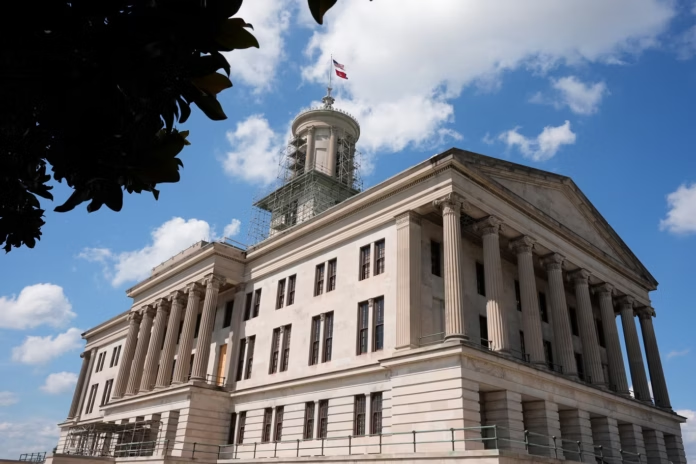
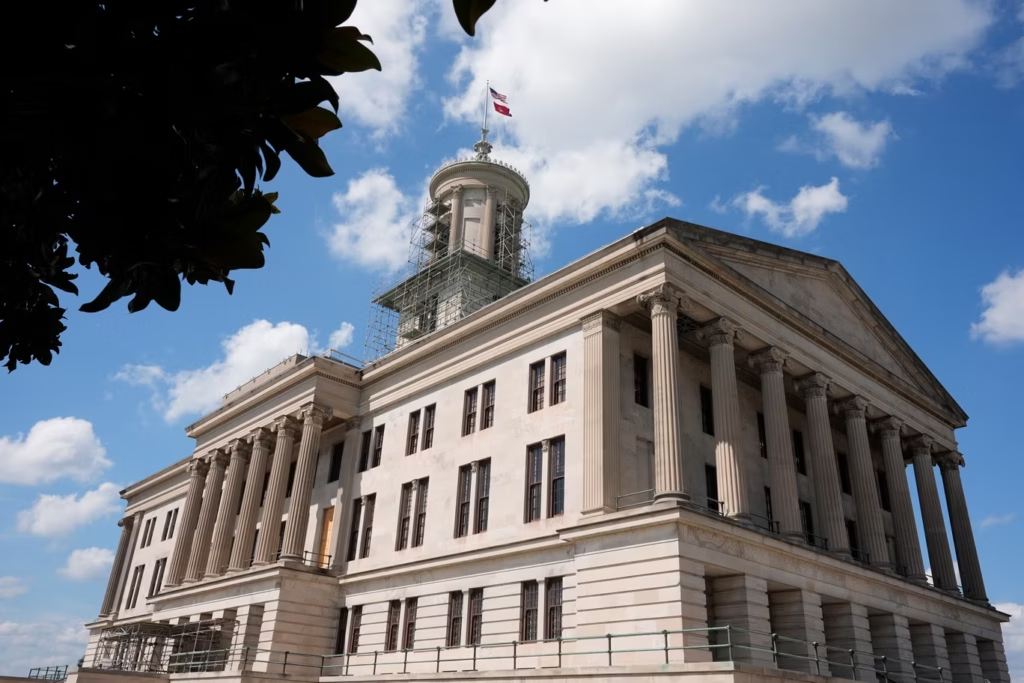
 (TheIndependent) — Republican lawmakers in Tennessee have introduced legislation that would authorize prosecutors to seek the death penalty against women who obtain abortions, a proposal that would mark one of the most sweeping expansions of criminal liability in the nation’s post-Roe legal landscape.

House Bill 570, filed in the Tennessee General Assembly, would permit women to be charged with homicide if they are found to have been “involved in the homicide of her own unborn child.” Under Tennessee law, certain homicide convictions carry sentences of life imprisonment, life without parole and, in limited circumstances, capital punishment.

The measure was sponsored by state Rep. Jody Barrett and state Sen. Mark Pody. The proposal has been formally introduced but has not yet been scheduled for committee debate.

Details of the legislation, first described by The Independent and later examined by The Tennessean, indicate that the bill would remove long-standing legal protections that have shielded pregnant women from prosecution under Tennessee’s existing abortion framework. Instead, the proposal would align the death of an unborn child with the legal treatment of a person who has been born alive, placing abortion squarely within the state’s homicide statutes.

The proposal emerges against the backdrop of Tennessee’s already stringent abortion laws. The state’s Human Life Protection Act — enacted as a trigger ban after the U.S. Supreme Court overturned Roe v. Wade in 2022 — prohibits nearly all abortions from the point of fertilization. The statute contains no explicit exceptions for rape or incest. Physicians who violate the law face a Class C felony charge, punishable by fines and up to 15 years in prison.

House Bill 570 would extend potential criminal exposure directly to women who terminate pregnancies. Prosecutors could pursue fetal homicide charges, offenses that may carry the harshest penalties available under Tennessee law.

The bill includes narrow exceptions. It states that spontaneous miscarriages would not be subject to prosecution. It also carves out protection for what it characterizes as the unintentional death of an unborn child resulting from life-saving medical procedures performed to preserve the life of the mother or to attempt to save the unborn child. The amendment text does not specify additional exemptions.

The measure further stipulates that prosecutions could not be applied retroactively. Alleged conduct occurring before July 1 — the date the bill would take effect if enacted — would not be subject to its provisions.

Public endorsements of the proposal have amplified national attention. State Rep. Monty Fritts, a Republican co-sponsor who is campaigning for governor, has consistently argued that abortion should be treated as a capital offense. In remarks carried by the Tennessee Holler, Fritts described abortion as murder and asserted that, if unborn children are legally recognized as human beings, terminating a pregnancy should fall under homicide statutes.

Clint Pressley, president of the Southern Baptist Convention, expressed support for the legislation on social media, framing the measure as an effort to provide unborn children with equal protection under the law. He characterized the proposal as a means of extending legal safeguards from conception to natural death.

The Foundation to Abolish Abortion, a nonprofit advocacy organization, has also endorsed the bill, stating that its mission is to promote public policy granting unborn human beings equal protection.

Neither Barrett nor Pody immediately responded to requests for comment from The Independent.

The introduction of House Bill 570 signals a new phase in abortion policy debates following the Supreme Court’s 2022 decision that returned regulatory authority to the states. While many states have enacted bans or restrictions aimed at providers, proposals explicitly targeting pregnant women with criminal penalties — particularly capital punishment — remain rare.

Legal scholars note that such measures could invite immediate constitutional challenges, even in a post-Roe environment. Although the Supreme Court removed federal protections for abortion access, questions surrounding due process, equal protection and cruel and unusual punishment would likely shape any litigation if the bill advances.

The proposal also raises practical questions for prosecutors and courts. Establishing intent, medical causation and the precise circumstances of pregnancy termination could complicate enforcement. Medical professionals have warned that heightened criminal exposure may further chill obstetric care in states with strict abortion bans, particularly in emergency situations where physicians must weigh maternal health risks against potential legal scrutiny.
National abortion-rights organizations have long argued that criminalizing women marks a significant escalation beyond earlier legislative strategies focused primarily on providers. While Tennessee’s current law already subjects physicians to felony penalties, extending homicide liability to pregnant women would broaden the scope of enforcement in unprecedented ways within the state.

Supporters counter that equal protection for unborn children necessitates parity in legal consequences. They frame the measure as a logical extension of existing fetal homicide statutes, which already treat harm to unborn children as criminal in certain contexts.

The bill’s legislative prospects remain uncertain. It must clear committee hearings and secure majority votes in both chambers before reaching the governor’s desk. Even if enacted, court challenges would likely delay implementation.

The measure underscores the evolving nature of abortion policy in conservative-led states. Since 2022, lawmakers have tested the boundaries of state authority, with proposals ranging from travel restrictions to expanded civil liability. Tennessee’s House Bill 570 stands out for its potential to impose the ultimate criminal penalty.

As the debate unfolds, the proposal has already intensified scrutiny beyond state lines. With the nation deeply divided over abortion rights, Tennessee’s latest legislative move is poised to become a focal point in the broader struggle over how far states may go in redefining the legal status of unborn children and the women who carry them.

Whether House Bill 570 advances or stalls, it reflects a sharpening ideological divide in the post-Roe era — one that continues to reshape American law, politics and public discourse.
Mexican Soldiers Kill High-Ranking Cartel Figure Accused of Bounties on Troops as Violence Escalates

0

Mexican soldiers have killed another senior cartel figure who Defense Minister Ricardo Trevilla said was orchestrating a wave of coordinated attacks and offering cash bounties of more than $1,000 for every soldier slain, intensifying a deadly confrontation between security forces and organized crime groups.

Trevilla said the operation targeted a key lieutenant within the powerful Jalisco-based criminal network blamed for launching widespread assaults on military personnel following a recent high-profile raid. Authorities accused the cartel leader of directing gunmen to ambush patrols, set up roadblocks and reward attackers financially for each member of Mexico’s armed forces killed.

The defense chief described the suspect as a central coordinator of the retaliatory campaign that has rattled parts of western Mexico. According to Trevilla, intelligence reports indicated the cartel figure promised payments exceeding $1,000 per soldier killed, a tactic officials say was designed to inflame violence and embolden gunmen.

Security officials said the latest killing came amid a broader crackdown against the cartel after a decisive military strike that eliminated its top leadership. In the days following that raid, heavily armed groups carried out multiple assaults on military and law enforcement units, triggering fierce gun battles across several municipalities.

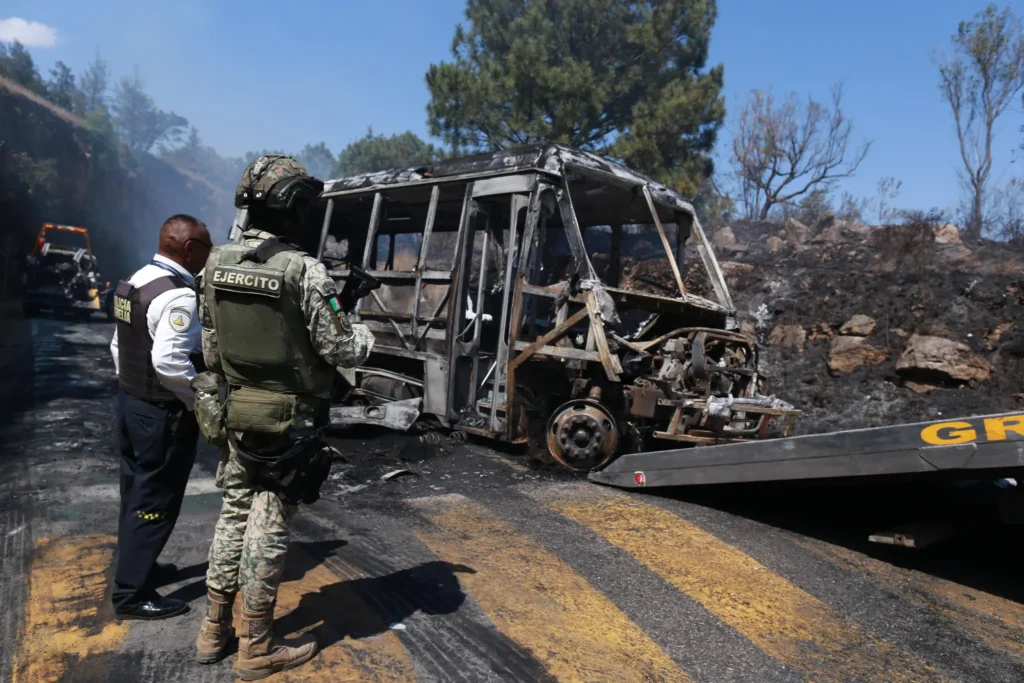
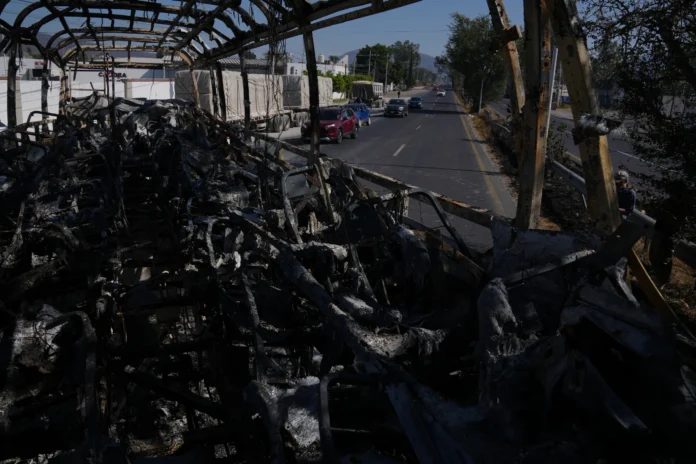
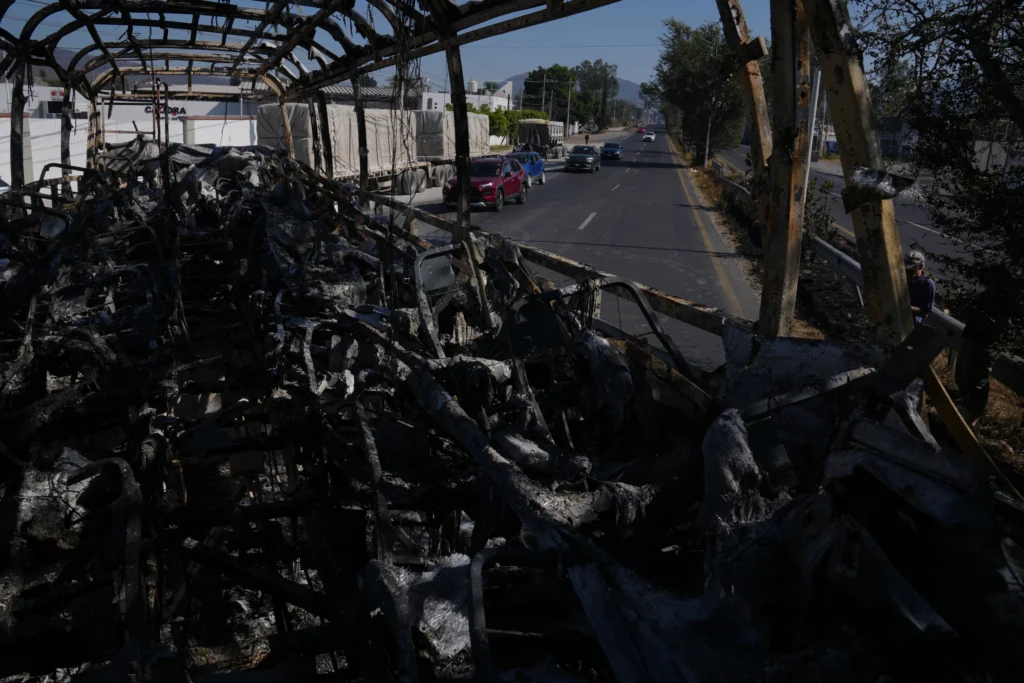
Authorities said dozens of security personnel were targeted in coordinated attacks, with gunmen blocking highways, torching vehicles and attempting to isolate military convoys. Federal forces responded with ground and aerial deployments aimed at dismantling the cartel’s command structure and restoring order.

Mexico’s Security Secretary Omar García Harfuch said the new offensive seeks to prevent further retaliation and disrupt the financial incentives allegedly driving the bloodshed. He noted that security agencies are monitoring possible regrouping efforts within the cartel that could spark additional violence.

Officials said the slain cartel commander played a leading role in mobilizing armed cells and distributing funds to attackers. His death, they added, represents a significant blow to the organization’s operational capacity, though authorities cautioned that splinter factions may attempt to continue the campaign.

The cartel at the center of the conflict is widely regarded as one of Mexico’s most heavily armed criminal organizations, with access to military-grade weapons, drones and explosives. U.S. authorities have previously linked the group to large-scale trafficking of fentanyl, methamphetamine and cocaine into the United States.

In response to the unrest, federal and state governments have increased patrols and urged residents in affected areas to remain cautious. Schools in some regions suspended classes temporarily as security forces worked to dismantle barricades and clear highways.

President Claudia Sheinbaum said federal forces are committed to pursuing those responsible for attacks on soldiers and civilians. She emphasized that the government will not allow criminal groups to intimidate the armed forces through targeted killings or financial incentives.

“We will continue to act with determination,” Sheinbaum said, adding that authorities are coordinating intelligence efforts across multiple states to prevent further escalation.

Investigations into the attacks remain ongoing. Prosecutors are working to identify additional suspects accused of financing or carrying out the assaults. Officials said more arrests are expected as operations continue.

The killing of the high-ranking cartel member underscores the volatile struggle between Mexico’s security forces and powerful trafficking organizations. While authorities portray the latest strike as a strategic victory, security analysts warn that sustained pressure and coordinated intelligence efforts will be essential to prevent further cycles of retaliation.

For now, military commanders say they remain on heightened alert, wary of renewed efforts by cartel factions seeking to avenge fallen leaders and reassert control through violence.

FIFA Unveils Full Match Schedule for FIFA Series 2026 as 48 Nations Prepare for Expanded Global Tournament

0

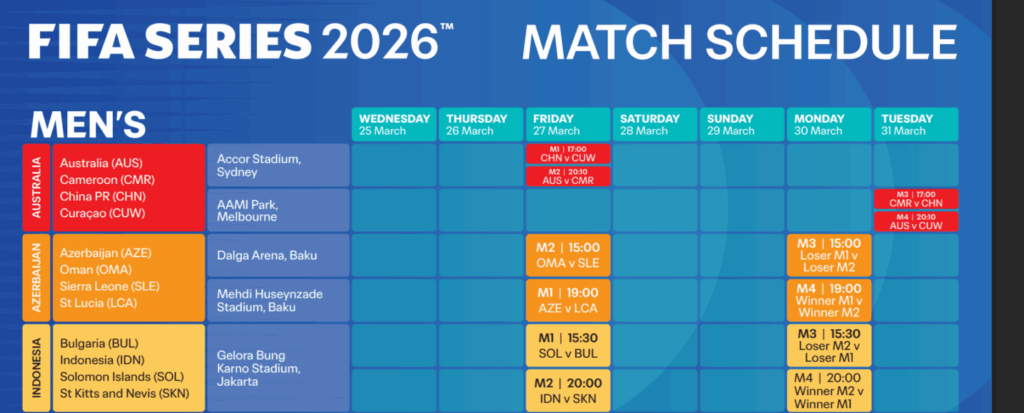
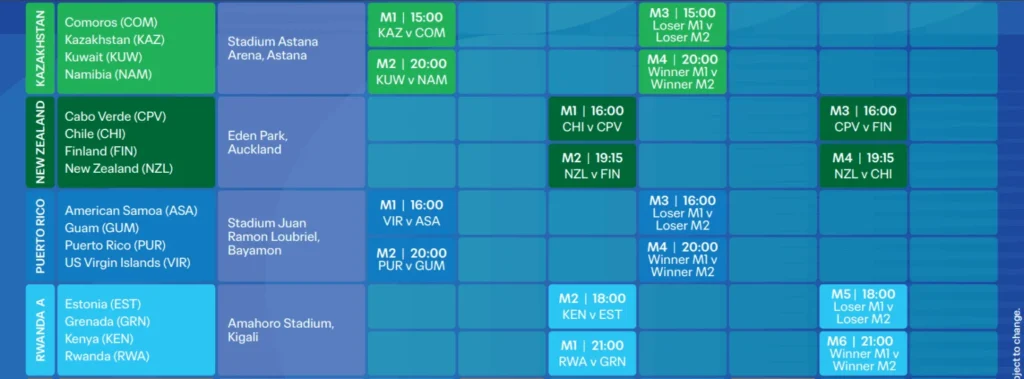
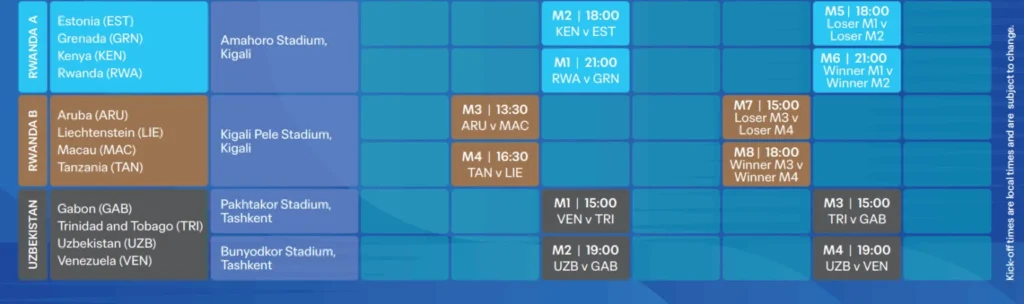
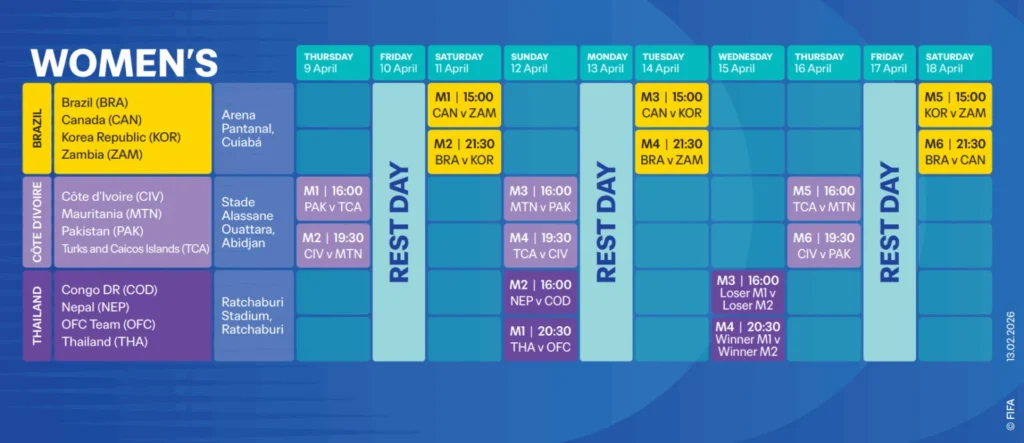
ZURICH, Switzerland (BN24) — World football’s governing body has made public the complete match schedule for the upcoming FIFA Series 2026, confirming that 48 national teams will compete in the expanded edition of the international friendly competition during the March and April 2026 window.

The timetable, made available Monday on FIFA’s official platform, outlines fixtures involving teams from all six continental confederations. The tournament format reflects a broader push to increase intercontinental matchups outside traditional championship settings.

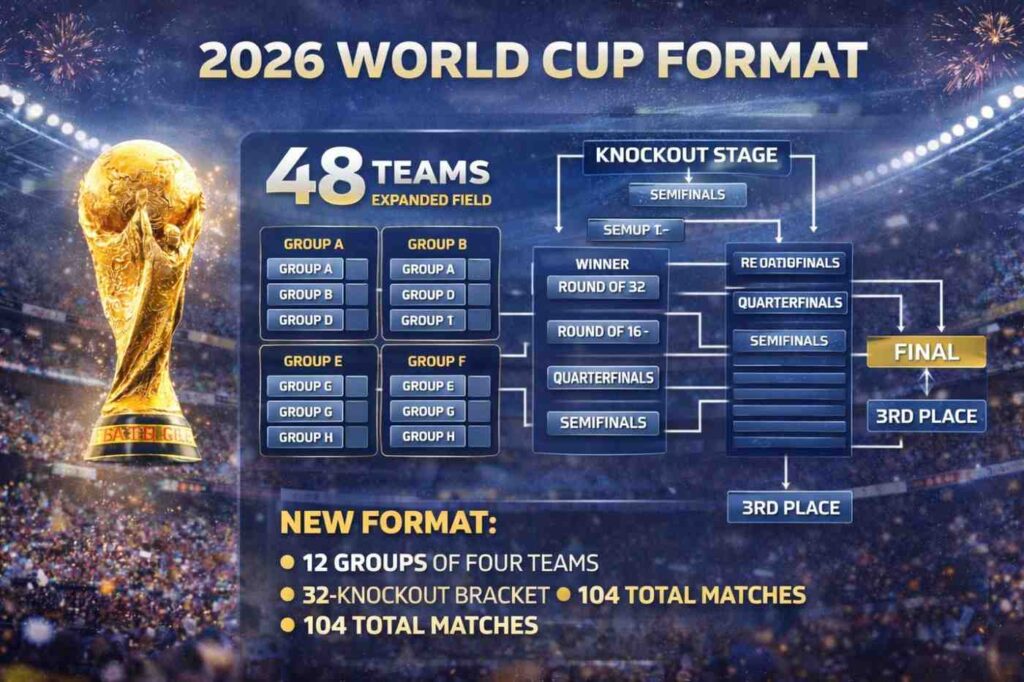
The 2026 edition will feature 12 groups of four teams each nine in the men’s competition and three in the women’s division. Eleven FIFA Member Associations will serve as hosts, with Rwanda staging two separate groups. Additional host nations include Australia, Azerbaijan, Brazil, Côte d’Ivoire, Indonesia, Kazakhstan, New Zealand, Puerto Rico, Switzerland, Thailand and Uzbekistan.

All contests will be recognized as official international friendlies and carried by global broadcast partners, ensuring worldwide access for supporters and commercial stakeholders. The matches also present participating federations — particularly those with limited exposure to cross-confederation opponents — an opportunity to test themselves against unfamiliar styles of play.

Flexible Formats Within Groups

FIFA indicated that participating associations selected their preferred competitive structure within their respective groups. Some opted for a semifinal-and-final bracket arrangement, while others chose a round of predetermined fixtures. Regardless of format, each group will produce one winner.

To maintain competitive intensity, any match tied at the end of regulation will proceed directly to a penalty shootout. Extra time will not be played, a measure designed to limit player workload while ensuring decisive outcomes.

FIFA described the schedule as a continuation of the pilot edition staged in 2024. The governing body confirmed host nations and group compositions in January 2026, laying the foundation for the final match calendar released this week.

Part of Broader Development Strategy

In its announcement, FIFA framed the competition as part of a wider initiative to promote more balanced growth across global football. The governing body pointed to the value of meaningful fixtures outside marquee tournaments such as the upcoming FIFA World Cup 2026.

“The FIFA Series™ continues to deliver on our commitment to inclusive football development,” FIFA said in its statement. “By bringing teams from different confederations together in competitive settings, we are strengthening the sporting and cultural fabric of the game while giving emerging nations greater visibility on the international stage.”

The organization has increasingly emphasized competitive parity and broader access to high-level fixtures, particularly for smaller federations that rarely face opponents from outside their continental zones.

Strategic Timing Ahead of World Cup Expansion

While the FIFA Series is formally categorized as a friendly competition, its strategic timing carries broader implications.

The 2026 calendar year will be dominated by preparations for the expanded 48-team World Cup, a format shift that mirrors the scale of the FIFA Series itself. By staging intercontinental friendlies months before the World Cup, FIFA appears to be creating rehearsal environments for federations adjusting to larger tournament structures and more diverse opposition pools.

For emerging football nations, the exposure may extend beyond technical development. Increased broadcast reach can enhance sponsorship prospects and strengthen diplomatic sports ties between federations. Hosting rights granted to countries such as Rwanda and Kazakhstan signal FIFA’s continued effort to decentralize elite football events away from traditional power centers in Europe and South America.

The absence of extra time is also notable. With domestic seasons and continental competitions crowding the football calendar, player welfare has become a recurring concern among clubs and national associations. Direct penalty shootouts after regulation offer a compromise: decisive outcomes without extended physical strain.

Commercial considerations are equally significant. Globally televised fixtures during a traditionally quieter international window provide inventory for sponsors and broadcasters, reinforcing FIFA’s year-round event strategy. The 2024 pilot reportedly demonstrated strong engagement in developing markets, a factor that likely influenced the expansion to 48 teams.

However, some analysts suggest that maintaining competitive credibility will depend on fixture quality and player availability. As friendlies, the matches may not always feature full-strength squads, particularly from top-ranked nations managing congested schedules. The tournament’s long-term relevance could hinge on whether it evolves into a more formalized competition structure.

Still, the breadth of confederation representation underscores FIFA’s central objective: widening access to meaningful international competition. In many cases, smaller associations face financial or logistical hurdles arranging intercontinental matches independently. Centralized coordination through the FIFA Series reduces those barriers.

The complete schedule including match dates, venues and kick-off times is now accessible through FIFA’s official channels. The March April 2026 window will mark the second staging of the initiative and the first at full scale.

As global football prepares for an expanded World Cup era, the FIFA Series may serve as both a developmental tool and a testing ground for new competitive models. Whether it becomes a permanent fixture in the international calendar will likely depend on competitive balance, commercial returns and feedback from participating federations. For now, FIFA’s latest move signals a clear direction: a more interconnected, globally distributed version of the international game, designed to ensure that exposure and opportunity extend well beyond football’s traditional strongholds

FIFA proposes one‑minute off‑field rule for injured players

0

ZURICH, Switzerland (BBC) — Football’s global governing body, FIFA, is supporting a proposed rule that would require players who receive medical treatment on the field to remain off the pitch for at least one minute before returning to play, a measure designed to deter time-wasting and maintain match tempo.

The proposal is scheduled for consideration at the annual general meeting of the International Football Association Board, the independent authority responsible for setting and amending the Laws of the Game. If endorsed, the change would be formally written into football’s global rulebook.

According to BBC Sport, which detailed the plan Monday, the measure has gathered support as lawmakers seek practical solutions to address stoppages that disrupt the rhythm of matches.

Currently, the Laws of the Game do not mandate a fixed period that an injured player must remain off the field after treatment. Individual competitions retain discretion to apply their own guidelines.

Existing Domestic Models

Several leagues have already experimented with similar policies.

The Premier League implemented a 30-second off-field requirement at the start of the 2023–24 season. The move was intended to discourage players from exaggerating contact and slowing play during critical phases of matches.

FIFA also tested a more stringent two-minute exclusion during the Arab Cup in December. That trial, however, prompted criticism from coaches and stakeholders who argued that an extended absence could unfairly penalize teams, particularly in tightly contested matches.

FIFA’s refereeing chief, Pierluigi Collina, indicated the experiment aimed to limit gamesmanship and preserve the flow of play. The governing body has repeatedly emphasized the need to balance player welfare with the integrity of competition.

A comparable approach is already embedded in the regulations of Major League Soccer, where a player who remains on the ground for more than 15 seconds and requires medical attention must temporarily leave the field. That framework has been cited in discussions as an example of how structured time limits can discourage tactical stoppages.

Toward a Standardized Global Rule

Members of IFAB agreed in January that the absence of a clearly defined time requirement created inconsistencies across competitions. While there was broad consensus that a fixed interval should be codified, debate continued over the precise duration.

The proposed one-minute window is widely viewed as a middle ground shorter than FIFA’s earlier two-minute experiment but longer than certain domestic measures. Supporters contend that 60 seconds is sufficient to deter deliberate delays without imposing excessive competitive disadvantage.

Should IFAB approve the measure, it would apply universally across international and domestic competitions that operate under the Laws of the Game, ensuring global uniformity.

Balancing Fairness, Flow and Player Welfare

The proposal reflects a broader push within football governance to address time management in modern matches. In recent seasons, lawmakers have expanded stoppage-time calculations and strengthened enforcement against dissent and simulation. The injury-treatment debate fits within that pattern.

Critics of lengthy stoppages argue that they disrupt tactical momentum and frustrate spectators. Data compiled by various analytics firms have shown that effective playing time the minutes the ball is actually in play often falls well below the nominal 90-minute match duration. Governing bodies have responded with measures intended to narrow that gap.

Yet any reform touching player health carries sensitivity. Medical professionals stress that decisions regarding head injuries, muscle strains or impact-related concerns must prioritize safety over pace. A mandatory one-minute absence, some observers suggest, may encourage more accurate self-assessment by players who might otherwise feign minor contact.

Conversely, there is concern that teams reduced to 10 players for a full minute during critical defensive sequences could face disproportionate risk. In elite competitions, even brief numerical disadvantages can alter outcomes.

The compromise approach signals recognition of both viewpoints. By shortening the exclusion period from the two-minute trial while still formalizing a requirement, FIFA and IFAB appear intent on discouraging tactical delays without undermining competitive equity.

There are also broader commercial implications. Faster-paced matches enhance broadcast appeal and advertising value, particularly in markets where viewer retention metrics are closely tracked. A more continuous flow may align with global audience expectations shaped by other major sports.

The outcome of the upcoming IFAB meeting will determine whether the one-minute rule becomes part of football’s universal framework. Any amendment would likely take effect at the start of a new competition cycle, allowing leagues and federations to adjust protocols and educate players.

For now, the proposal underscores an ongoing recalibration within the sport’s leadership: preserving fairness and safety while adapting the game’s structure to modern demands.

If adopted, the change would mark another incremental but symbolically significant shift in how football manages time, discipline and competitive balance areas increasingly central to the sport’s global evolution.

DRC-Burundi Border Reopens After Two-Month Closure, Reviving Trade and Raising Hopes in Uvira

0

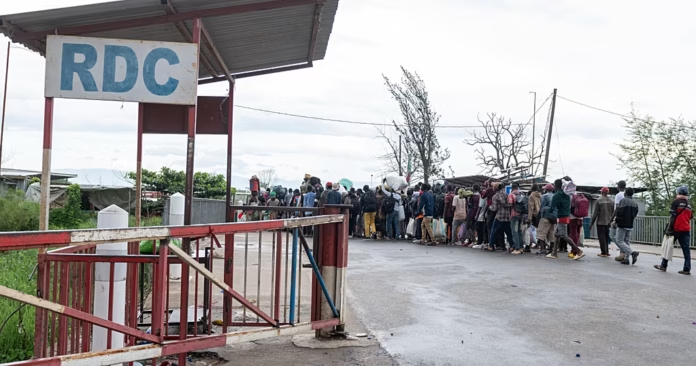
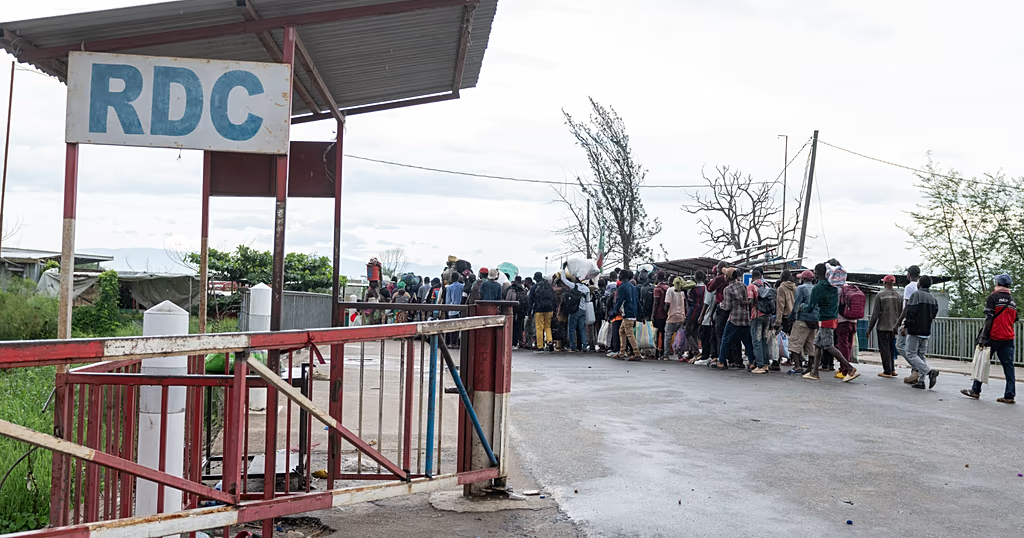
UVIRA, Democratic Republic of the Congo (BN24) Movement resumed Monday at the main crossing between the Democratic Republic of the Congo and Burundi, ending more than two months of closure that had cut off trade, separated families and strained the fragile economy of this lakeside city.

Crowds assembled at the Kavimvira border post on the Congolese side and at Gatumba in Burundi as authorities allowed pedestrians, traders and vehicles to pass through for the first time since late 2025. The reopening followed an announcement by the governor of South Kivu province a day earlier.

The frontier had been sealed after fighters linked to AFC/M23 seized control of Uvira amid escalating insecurity in eastern Congo. Burundi’s government shut its border post in response to the deteriorating security environment, leaving thousands stranded and halting the steady flow of goods that underpins daily life in this region along Lake Tanganyika.

By midmorning Monday, motorcycle taxis ferried passengers once more, bicycles stacked with sacks of produce rolled through the checkpoint and small-scale merchants carried goods across the boundary in scenes residents described as both emotional and long-awaited.

“I am very happy, because for a long time we were looking for a way to return home, but it was not possible,” said Dalili Mussa, a Congolese national who had remained in Burundi during the closure.

Many who crossed Monday had fled weeks earlier as gunfire echoed through neighborhoods. Aline Safi recounted the moment she decided to leave.

“We were in the house with the children when the crackling of bullets and bombs began,” she said. “That’s when we decided to flee to Burundi so as not to become victims.”

According to the United Nations High Commissioner for Refugees (UNHCR), advances by M23 rebels in South Kivu province triggered a notable influx of Congolese civilians into Burundi during the fighting. The agency indicated that the cross-border movement placed additional humanitarian pressure on host communities already grappling with limited resources.

With the crossing now accessible, some refugees have begun returning, though humanitarian organizations caution that conditions remain volatile.

Uvira’s economy, largely informal and heavily reliant on daily exchanges with Gatumba, was hit hard during the suspension. Traders reported shortages of essential goods, price spikes and declining household income as transport links were cut.

“The reopening of the border is a great joy for us and for all the residents of Uvira,” said Bosco Amani, a local trader. “Even in Gatumba, there is celebration. Motorcycles and bicycles are moving. I even saw students leaving their schools to come celebrate at the border.”

For residents, the reopening is both practical and symbolic. Kavimvira is more than a checkpoint; it is a lifeline connecting families, markets and services on both sides of the border. The resumption of traffic restores access to food supplies, medical care and education routes disrupted by the crisis.

Yet beneath the relief lies uncertainty.

The city still bears visible signs of recent clashes. Some buildings show damage, and the security presence remains noticeable. Local leaders have emphasized the need for sustained cooperation between Congolese and Burundian authorities to guarantee safe passage and prevent renewed instability.

The AFC/M23 group, which has been active in eastern Congo for years, has periodically seized territory, prompting displacement and international concern. The resurgence of the movement in South Kivu has once again drawn attention to unresolved grievances and the broader regional dynamics shaping conflict in eastern Congo.

The reopening of the Uvira-Gatumba crossing may signal more than a logistical adjustment; it reflects delicate regional calculations. Burundi’s decision to resume border operations suggests confidence however tentative that immediate threats near Uvira have diminished. At the same time, it underscores the economic interdependence binding border communities.

Cross-border trade in eastern Congo often operates outside formal customs systems, forming a backbone of subsistence for thousands. When the border closed, the impact rippled quickly: food scarcity intensified, informal credit systems stalled and transportation workers lost daily wages. In cities like Uvira, where formal employment opportunities are limited, such disruptions can accelerate poverty and fuel social tensions.

The return of commerce may help stabilize prices and restore income flows. However, economic revival alone cannot guarantee lasting calm. The underlying drivers of conflict in eastern Congo including competition over land, ethnic tensions and regional rivalries remain unresolved.

The involvement of neighboring states has historically complicated peace efforts. While the reopening represents coordination between Kinshasa and Bujumbura, sustained diplomatic engagement will be essential to prevent future closures that could once again isolate border populations.

For humanitarian agencies, the challenge now lies in managing returns while ensuring that displaced families have access to shelter, security and basic services. Premature returns to unstable areas risk exposing civilians to renewed violence.

Residents interviewed at the crossing expressed a shared hope that the border will remain open. For them, stability is measured less by political statements than by the ability to move freely, trade goods and send children to school without fear.

As foot traffic continued throughout the day, the sound of engines and conversation replaced the silence that had defined the crossing for weeks. In Uvira, the steady rhythm of people walking across Kavimvira offered a visible sign of resilience and a reminder that for border communities, peace is inseparable from mobility.

Whether this reopening marks a durable turning point or a temporary pause in a longer cycle of unrest remains uncertain. For now, however, the barrier is lifted, and with it, a measure of hope returns to the shores of Lake Tanganyika.

Manchester United Edge Everton 1-0 as Sesko’s Late Strike Extends Carrick’s Unbeaten Run

0

EPL, England (BN24) — Manchester United climbed into fourth place in the Premier League after substitute Benjamin Sesko struck late to seal a 1-0 victory over Everton on Saturday, extending Michael Carrick’s unbeaten start as manager.

Sesko, introduced from the bench for the sixth consecutive match under Carrick, delivered the decisive moment 19 minutes from full time at Everton’s new 52,000-seat Hill Dickinson Stadium. The Slovenian forward finished off a sweeping counterattack to secure three points that moved United three clear of both Chelsea and Liverpool in the race for Champions League qualification.

The Premier League’s top five teams will earn places in next season’s Champions League, intensifying the competition as the campaign enters its decisive stretch.

Sesko’s resurgence has been striking. After completing a £74 million (approximately $100 million) transfer from RB Leipzig in the offseason, he managed only two goals across his first 22 appearances. Since the dismissal of former manager Ruben Amorim last month, however, the 21-year-old has rediscovered his scoring touch, producing six goals in his last seven outings.

Carrick, a former United midfielder, has overseen a swift change in trajectory. The victory on Merseyside preserved his unbeaten record through six matches in charge. United, once inconsistent and defensively fragile earlier in the season, has now recorded three clean sheets under his leadership after managing only two before Amorim’s departure.

Despite the positive result, the match itself offered a limited spectacle. Both sides were playing for the first time in nearly two weeks, and the lack of rhythm was evident throughout much of the contest.

Everton, guided by David Moyes, nearly capitalized on United’s sluggish start. Goalkeeper Jordan Pickford denied Amad Diallo inside the opening two minutes — the only clear opportunity of a subdued first half.

United’s attack struggled to find fluency. Bryan Mbeumo was again selected ahead of Sesko as the central striker and squandered a chance early in the second period, sending an effort high from a tight angle. Yet Mbeumo played a crucial role in the breakthrough.

The winning sequence began deep inside United’s half. Sesko dropped back to combine with Matheus Cunha, then accelerated into space. Mbeumo’s precisely weighted return pass split Everton’s defense, and Sesko applied a composed finish beyond Pickford.

Everton pushed forward in the closing stages in search of an equalizer. Senne Lammens reacted sharply to tip over a long-range drive from Michael Keane, preserving United’s narrow advantage.

The defeat extended Everton’s winless run at home to seven matches, underscoring their difficulties adjusting to new surroundings. Moyes’ side had entered the contest with hopes of climbing to seventh place and strengthening its bid for European qualification but instead remains on the periphery of that race.

The result also avenged a November meeting at Old Trafford, when Everton claimed a 1-0 win despite playing most of the match with 10 men.

For United, the implications are substantial. After missing out on Champions League participation in recent seasons, the club now appears positioned for a return to Europe’s elite competition.

While the scoreline was narrow, the broader significance of United’s victory may lie in the transformation taking shape under Carrick.

Under Amorim, United often appeared disjointed, particularly in defensive transitions. The team conceded goals at a troubling rate and struggled to maintain structural balance. Carrick’s approach has emphasized compact lines, disciplined pressing triggers, and selective counterattacks rather than sustained possession.

That tactical shift was evident in the build-up to Sesko’s winner. Rather than committing numbers recklessly, United absorbed pressure and struck decisively when space opened up. The move showcased clarity of roles and timing hallmarks of Carrick’s early tenure.

Sesko’s individual turnaround also reflects improved utilization. Instead of operating as an isolated focal point, he has been deployed as an impact substitute, exploiting tired defenses with direct runs and clinical finishing. The strategy has maximized his athletic profile and restored confidence that appeared diminished earlier in the campaign.

Defensively, United’s recent solidity marks another significant development. Clean sheets have become more frequent, and goalkeeper distribution has been streamlined to reduce unnecessary risks. Though Everton created limited opportunities, United’s organization during late pressure demonstrated composure absent in previous months.

The Champions League race remains crowded, with several clubs separated by slim margins. However, United’s upward momentum contrasts with Everton’s stagnation at home and the inconsistency shown by other contenders.

Much will depend on squad rotation and managing fixture congestion as the season intensifies. Carrick has yet to face a prolonged injury crisis or a stretch of matches against multiple top-tier opponents in quick succession. Maintaining defensive discipline while extracting continued production from Sesko will be essential.

For now, United’s revival appears tangible rather than temporary. A team once adrift in mid-table has re-entered the conversation among England’s elite.

As the Premier League campaign narrows toward its conclusion, Carrick’s understated stewardship combined with Sesko’s timely resurgence — may prove decisive in determining whether Manchester United returns to Europe’s grandest stage.

Fire Engulfs Murtala Muhammed International Airport Old Terminal in Lagos, Nigeria

0

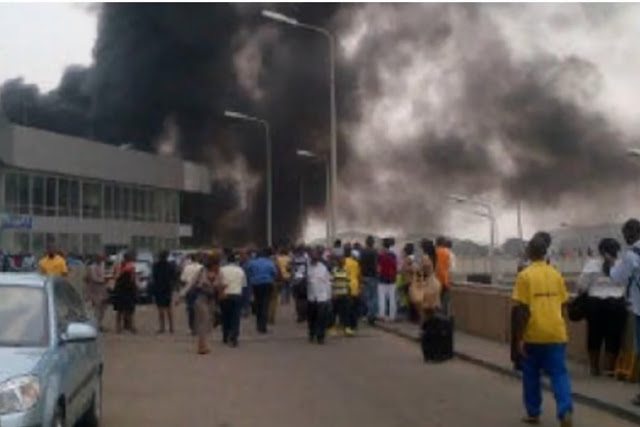
LAGOS, Nigeria (BN24) — Around 10 individuals remain trapped in the control tower of Murtala Muhammad International Airport’s old terminal as a fire continues to rage through the facility, airport officials confirmed.

The blaze, first reported by Sahara Reporters, erupted at the old terminal, which is currently undergoing a multibillion-naira renovation project. According to an airport source, the fire has intensified, particularly on the sixth floor where the control tower is located.

“There are roughly 10 people trapped at the control tower on the sixth floor, and we are making efforts to get them to safety,” the official told Sahara Reporters at approximately 5:15 p.m. “I can’t be sure if there are others trapped anywhere else because there is a lot of smoke right now; the fire is still burning.”

Emergency crews are actively combating the flames, working to prevent the fire from spreading further into the terminal complex. A helicopter has been observed circling the site, though its exact role in the rescue operation remains unclear. Airport personnel speculate that it may be operated by law enforcement, but there is no confirmation that it is assisting in evacuating those trapped.

“The helicopter is just roving around, honestly. We don’t know what it is doing here,” the source added.

The cause of the fire has not yet been definitively determined. However, preliminary assessments suggest an electrical fault may have sparked the blaze, echoing similar incidents in the past.

This is not the first fire to affect Murtala Muhammad International Airport in recent years. On September 6, 2023, a fire broke out at the airport’s international wing. Investigations by the Federal Airports Authority of Nigeria (FAAN) revealed that the incident stemmed from a suspected electrical spark in the ceiling of the baggage hall, where a lithium inverter battery installed in the basement had ignited.

The recurrence of such fires has raised concerns about infrastructure safety and the adequacy of preventive measures in the airport’s older facilities. Aviation safety experts emphasize the need for comprehensive electrical inspections, particularly in areas undergoing renovation.

The ongoing fire at the old terminal could have significant operational and safety consequences. While the airport’s newer terminals remain unaffected, the disruption to the control tower poses immediate risks for air traffic coordination. Officials are closely monitoring flight operations to ensure safety is not compromised.

Analysts note that repeated fire incidents at Murtala Muhammad International Airport highlight broader challenges in maintaining aging infrastructure amid increasing passenger traffic. A multibillion-naira renovation aims to modernize the facility, but incidents like the current blaze underscore the importance of rigorous fire safety protocols and emergency preparedness measures.

Local authorities have mobilized firefighting units and coordinated emergency response teams to contain the fire and rescue those trapped. Residents and airport employees in the vicinity report heavy smoke, while emergency sirens echo across Lagos.

Safety experts suggest that rapid deployment of aerial support and specialized firefighting equipment is critical to preventing the blaze from reaching nearby operational areas, including the newer terminals and adjacent airport facilities.

As of Tuesday evening, firefighters continue battling the flames, and rescue efforts remain ongoing for the ten individuals trapped in the control tower. Authorities have not provided a confirmed timeline for extinguishing the fire or for evacuating all affected personnel.

The incident underscores the pressing need for both preventive infrastructure maintenance and robust emergency response protocols at major transportation hubs. Aviation regulators and airport operators are expected to conduct a detailed post-incident review to identify causes and implement safety enhancements, ensuring the recurrence of such events is minimized.

For now, the focus remains on containing the blaze, safeguarding human life, and restoring normal airport operations at one of Nigeria’s busiest aviation hubs.

Romantic Partner’s Location Led Mexican Forces to ‘El Mencho,’ Triggering Deadly Cartel Clash

0

Mexican authorities located and fatally wounded one of the country’s most powerful cartel leaders after tracing the movements of a woman described as his romantic partner, officials disclosed Monday, detailing an operation that ignited a wave of violence across multiple states.

President Claudia Sheinbaum addressed the nation at a morning news conference, asserting that the country remains “under control” following Sunday’s military action against Nemesio Rubén Oseguera Cervantes, widely known as “El Mencho,” the longtime head of the Jalisco New Generation Cartel.

Gen. Ricardo Trevilla Trejo, Mexico’s defense secretary, told reporters that intelligence gathered from monitoring the whereabouts of a woman close to Oseguera Cervantes led security forces to a compound in Tapalpa, a mountain town in Jalisco state long associated with the cartel’s operations.

According to Trevilla Trejo, special forces moved in after confirming the target’s presence. A firefight erupted when Oseguera Cervantes attempted to flee the property. He sustained injuries during the exchange and was airlifted toward Mexico City for emergency medical care, but died en route, the defense secretary said.

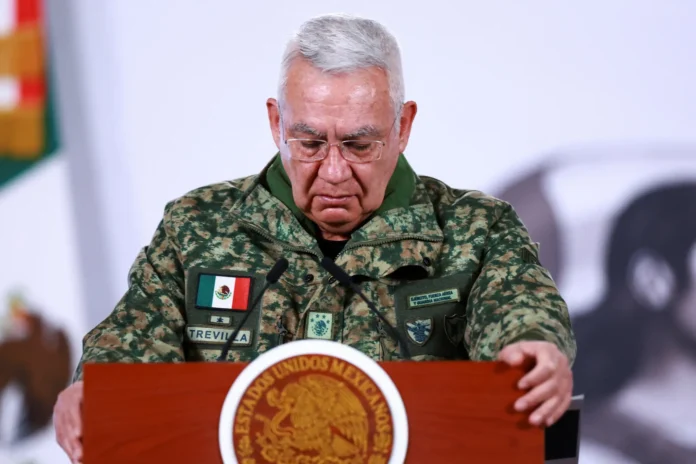
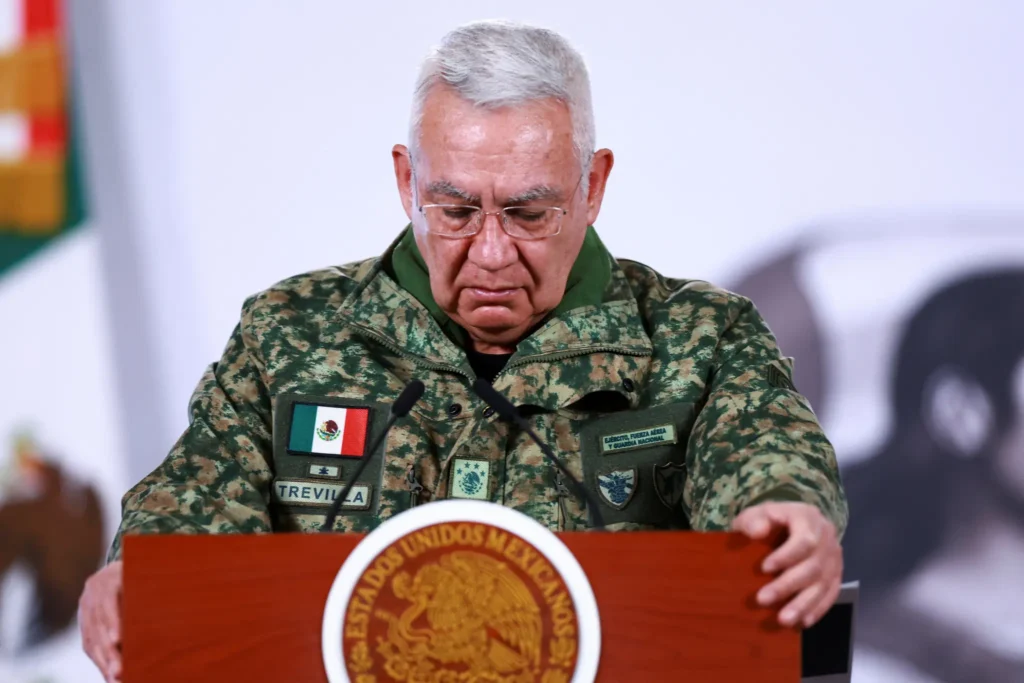
At least eight suspected cartel members and three Mexican security officials were killed during the raid, Trevilla Trejo said, describing the confrontation as “very violent.” While expressing condolences to the families of the fallen officers, he paused and became visibly emotional during the briefing.

Sheinbaum praised the armed forces, saying, “Mexico should be very proud of our armed forces,” and emphasized that authorities are working to stabilize affected areas.

The Jalisco New Generation Cartel, known by its Spanish initials CJNG, has been identified by Mexican and U.S. officials as a dominant criminal organization involved in trafficking methamphetamine and fentanyl into the United States.

Although the operation was carried out by Mexican special forces, U.S. officials confirmed that intelligence support was provided to assist in locating Oseguera Cervantes. The collaboration underscores ongoing bilateral security coordination amid heightened pressure from Washington to confront powerful trafficking groups.

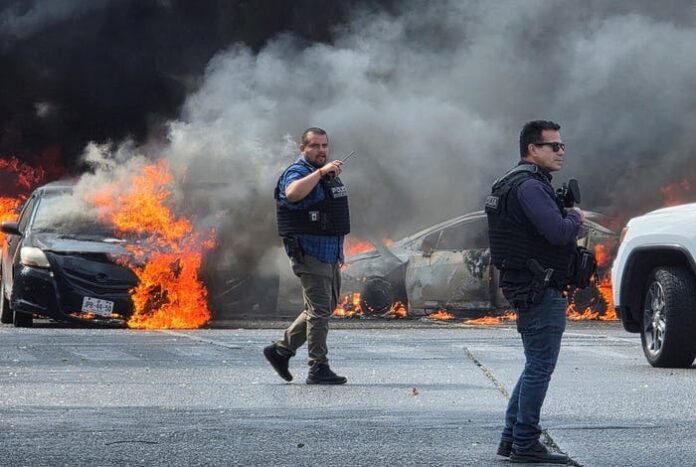
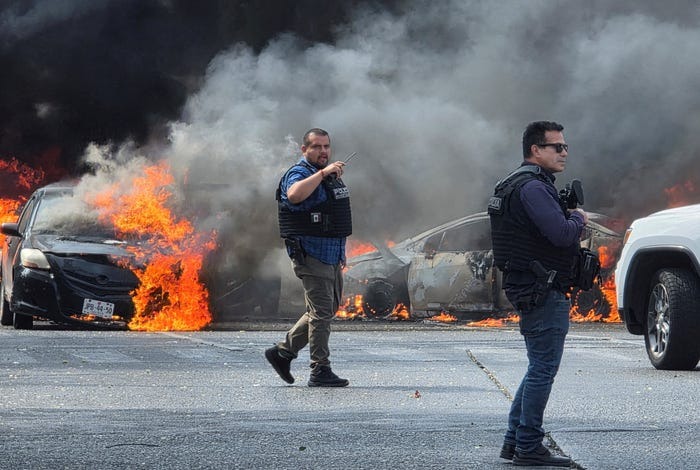
In the hours following confirmation of Oseguera Cervantes’ death, coordinated retaliatory attacks erupted across Mexico. Noticias Telemundo indicated that hundreds of roadblocks were established in 20 states, with the heaviest concentration in Jalisco. Vehicles were set ablaze, highways were obstructed and gunfire was reported in multiple municipalities.

Omar García Harfuch, Mexico’s top security official, said during the same briefing that 70 individuals were detained in connection with the unrest. He added that more than 30 suspected cartel members and 27 law enforcement officers responding to the violence were killed in the aftermath.

Attacks also targeted gas stations and banks, García Harfuch said, as authorities worked to dismantle barricades and restore order.

“The most important thing right now is to guarantee peace and security throughout Mexico, and that’s what’s being done,” Sheinbaum said, noting that major blockades had ceased by Monday.

The unrest disrupted daily life in several cities. In Guadalajara, Jalisco’s capital and Mexico’s second-largest metropolitan area, traffic resumed early Monday after much of the city had shut down a day earlier. The Associated Press noted that more than 1,000 people spent the night at the Guadalajara zoo, sleeping in buses after being unable to leave safely.

Air travel was also affected. Multiple international carriers canceled flights Sunday amid the violence, stranding travelers. A security advisory issued by the U.S. State Department urging American citizens in several Mexican states to “shelter in place” remained active Monday.

The advisory covers Michoacán, Guerrero, Nuevo León, Tamaulipas, Baja California, Nayarit and Jalisco, including Chapala, Guadalajara and the resort city of Puerto Vallarta. An updated notice extended caution to parts of Colima, Guanajuato, Estado de México, Oaxaca, Puebla, Querétaro, San Luis Potosí, Veracruz and Zacatecas.

Sheinbaum indicated that flight operations, particularly in Puerto Vallarta, are expected to normalize by Tuesday.

The method used to locate Oseguera Cervantes highlights the evolving intelligence tactics employed by Mexican authorities. Rather than relying solely on traditional surveillance of known cartel compounds, investigators appear to have leveraged digital tracking and human network analysis focused on close associates. Targeting the social circle of high-profile criminal figures has increasingly become a strategy for penetrating tightly controlled security environments.

The swift and widespread retaliation underscores the CJNG’s operational reach and its capacity to mobilize coordinated actions across state lines. Roadblocks and arson attacks have long been hallmarks of cartel strategy designed to overwhelm security forces and project strength during leadership transitions.

Oseguera Cervantes’ death could trigger internal competition within the organization. Cartel hierarchies often experience instability following the removal of a central figure, particularly one who maintained personal authority over regional commanders. Such transitions can lead either to fragmentation or to a period of intensified violence as factions jockey for control.

The cooperation between Mexican and U.S. agencies also reflects the geopolitical stakes of the operation. With fentanyl trafficking at the center of bilateral tensions, dismantling a figure as prominent as Oseguera Cervantes carries symbolic and strategic weight. However, past experience suggests that eliminating top leaders does not automatically dismantle trafficking networks, which often adapt quickly.

For now, authorities say the immediate objective is stabilization. Whether the death of “El Mencho” marks a turning point in Mexico’s long-running struggle against organized crime — or the beginning of another volatile chapter — remains uncertain.

Nearly 30 Migrants Feared Dead After Boat Capsizes Off Crete, U.N. Warns of Deadliest Mediterranean Start Since 2014

0

Nearly 30 migrants are feared dead after a boat traveling from Libya overturned south of the Greek island of Crete, authorities said Monday, as the United Nations warned that 2026 is already shaping up to be the deadliest year in the Mediterranean since record-keeping began.

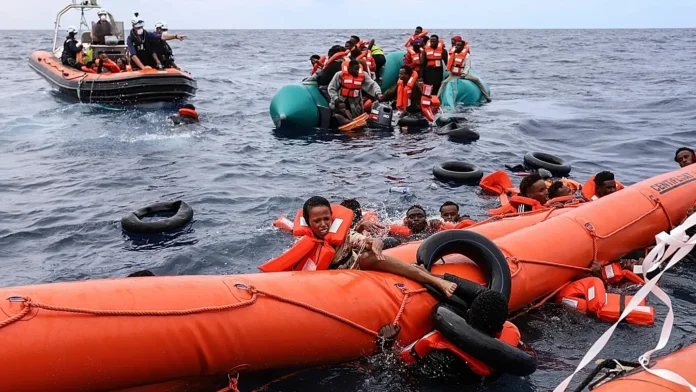
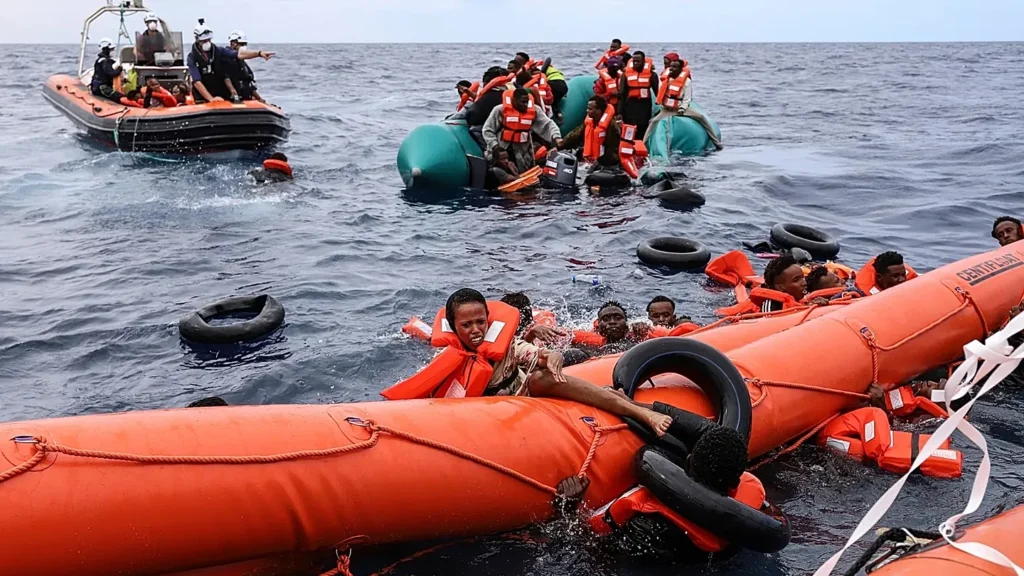
Greek officials and the United Nations’ International Organization for Migration confirmed that the vessel, carrying about 50 people, capsized Saturday roughly 20 nautical miles off Kali Limenes, a port near Crete’s southern tip.

Three men were recovered dead on the day of the incident, and the body of a woman was located floating at sea Sunday. No additional survivors or victims have been found since then.

A spokesperson for the Greek coast guard told The Associated Press that passing commercial ships continue to sweep the area in coordination with maritime authorities. High winds were recorded in the region at the time of the accident, complicating rescue efforts.

Survivors informed authorities that the boat had departed Thursday from Tobruk, Libya, a known launching point for migrants attempting the perilous Mediterranean crossing toward Europe.

Greek officials have detained two Sudanese men, ages 25 and 19, on suspicion of organizing the voyage. They are being investigated as alleged traffickers.

The tragedy adds to an escalating toll across the Mediterranean migration corridor.

In a statement issued Monday, the International Organization for Migration said that at least 606 migrants have been reported dead or missing along the Mediterranean route in the first two months of 2026 alone, citing data from its Missing Migrants Project.

The agency described the figure as the deadliest start to a year in the Mediterranean since it began compiling such records in 2014.

“IOM warns that trafficking and smuggling networks continue to exploit migrants along the Central Mediterranean route, profiting from dangerous crossings in unseaworthy boats while exposing people to severe abuse and protection risks,” the statement said.

The U.N. agency urged governments to strengthen cross-border cooperation and adopt protection-centered strategies aimed at dismantling criminal networks while expanding safe and lawful migration pathways.

“Stronger international cooperation and protection-centered responses are key to tackling these criminal networks and expanding safe and regular pathways to reduce risks and save lives,” the organization added.

The Central Mediterranean route, stretching from North Africa to Italy and Greece, remains one of the world’s most dangerous migration corridors. Many boats departing from Libya are overcrowded and poorly equipped, often lacking adequate life jackets, navigation systems or seaworthy hulls.

The incident off Crete underscores a troubling shift in migration patterns. While the majority of crossings traditionally head toward Italy’s southern coast, traffickers appear increasingly willing to attempt longer and riskier routes toward Greece as European patrols intensify in other sectors. The distance from Tobruk to southern Crete is substantial, and in winter conditions, the risks multiply significantly.

The early spike in fatalities in 2026 may reflect several intersecting pressures. Ongoing instability in parts of North Africa, economic hardship and tightened border enforcement across Europe have left migrants with fewer safe options. As legal migration channels remain limited, smugglers continue to fill the vacuum, offering desperate individuals passage on unsafe vessels.

Maritime conditions during winter months also amplify danger. High winds and rough seas can overwhelm small craft within minutes, leaving passengers little chance of survival, particularly if rescue operations are delayed by weather or distance from shore.

The arrests of the two Sudanese suspects may represent an attempt by Greek authorities to disrupt smuggling rings operating out of eastern Libya. However, experts note that dismantling trafficking networks requires sustained international coordination that addresses both supply and demand. Arrests at sea or upon arrival often capture low-level facilitators rather than the transnational organizers who finance and direct operations.

The mounting death toll also renews debate within the European Union about burden-sharing and migration policy. Southern member states such as Greece and Italy have long argued that frontline countries cannot shoulder rescue and reception responsibilities alone.

As search vessels continue scanning the waters south of Crete, the fate of dozens remains uncertain. With no additional survivors located since Sunday, authorities increasingly fear the worst.

The disaster marks another grim chapter in the Mediterranean migration crisis — one that, according to U.N. data, is accelerating rather than receding in 2026.

AP

Mexico Defense Chief Breaks Down as 25 National Guard Members Killed in CJNG Retaliation After El Mencho Raid

0

Mexico’s top defense official struggled to contain his emotions Monday as he confirmed that 25 members of the National Guard were killed in coordinated retaliatory attacks carried out by the Jalisco New Generation Cartel following the military operation that left its leader dead.

Defense Minister Ricardo Trevilla’s voice cracked and he paused repeatedly as he addressed reporters about what he described as an unprecedented wave of violence targeting Mexican security forces in the western state of Jalisco.

The deadly assaults unfolded after Nemesio “El Mencho” Oseguera Cervantes, head of the Jalisco New Generation Cartel, was killed during a military raid at a property in the state on Sunday. Authorities said Oseguera and six associates died during the operation, setting off a swift and violent backlash from cartel gunmen.

Mexico’s Security Secretary Omar García Harfuch said 25 National Guard personnel lost their lives in what he characterized as “27 cowardly attacks against authorities in Jalisco.” He added that at least 30 suspected cartel members were also killed during the clashes.

According to García Harfuch, the violence extended beyond direct confrontations with federal forces. A prison guard, an agent from the state prosecutor’s office and a civilian woman were also killed amid the unrest. The attacks included ambushes and armed confrontations directed at military and law enforcement patrols.

Authorities said cartel operatives erected more than 250 roadblocks across at least 20 states, using burning vehicles and debris to obstruct highways and disrupt the movement of security forces. The coordinated nature of the retaliation underscored the operational reach of the Jalisco New Generation Cartel, commonly known as CJNG.

The cartel has long been regarded by Mexican and U.S. officials as one of the country’s most powerful and heavily armed criminal organizations, with access to military-grade weapons, rocket launchers, drones and improvised explosive devices.

President Claudia Sheinbaum said federal forces had cleared the roadblocks and regained control in affected areas. She indicated that more than 70 individuals had been detained across seven states as part of a sweeping security response aimed at restoring order.

“We are closely monitoring for any kind of reaction or restructuring within the cartel that could lead to violence,” García Harfuch told journalists, signaling concern that the group could attempt to reorganize or launch additional attacks following the death of its leader.

Foreign governments reacted swiftly to the escalation. The U.S. Embassy urged its personnel in eight cities and in the state of Michoacán to shelter in place and work remotely Monday. Several Mexican states suspended classes as a precaution while security forces intensified patrols.

Oseguera, widely known as “El Mencho,” had been a central figure in Mexico’s drug trade for years. Authorities accused him of overseeing the trafficking of fentanyl, methamphetamine and cocaine into the United States. A reward of up to $15 million had been offered for information leading to his capture.

The scale and coordination of the cartel’s retaliation highlight both the entrenched power of organized crime groups in Mexico and the risks associated with high-value targeting operations. While the elimination of a cartel leader can disrupt command structures, history has shown that such actions can also trigger violent fragmentation or reprisal attacks. The killing of 25 National Guard members in a concentrated period represents one of the deadliest retaliatory episodes against Mexican federal forces in recent years.

Security analysts note that CJNG has cultivated a decentralized yet disciplined network capable of launching synchronized attacks across multiple jurisdictions. The erection of roadblocks in 20 states suggests not only operational planning but also the ability to mobilize resources quickly in response to perceived threats.

For President Sheinbaum’s administration, the confrontation presents both a challenge and a defining moment. A forceful crackdown may reinforce the government’s commitment to confronting cartel violence, but it also risks provoking further bloodshed if splinter factions vie for control or attempt to demonstrate strength.

The emotional response from Defense Minister Trevilla underscored the human toll of the confrontation. Public displays of grief by senior officials are rare in Mexico’s security briefings and may reflect the depth of the losses sustained by federal forces.

In the coming weeks, authorities are likely to focus on dismantling residual CJNG networks and preventing retaliatory cells from regrouping. Whether the death of “El Mencho” weakens the cartel long term or ushers in a new phase of instability remains uncertain. What is clear is that the immediate aftermath has already exacted a heavy price on Mexico’s security forces and intensified concerns about the durability of cartel power across the country.

NYPost

DON'T MISS ANY OF OUR UPDATE