Home Blog Page 119

Australia Enforces World’s First Social Media Ban for Children Under 16

Australia implemented the world’s first nationwide prohibition on social media access for children under 16 when the law took effect at midnight Wednesday, ordering major platforms including TikTok, Instagram, Facebook and YouTube to block young users or face penalties reaching A$49.5 million ($33 million).

The legislation targets ten of the largest social media platforms and has drawn intense scrutiny from technology companies and free speech advocates while winning praise from parents and child safety groups. Governments across multiple continents are monitoring the rollout closely as concerns intensify about social media’s impact on youth mental health and safety, Reuters reported.

“While Australia is the first to adopt such restrictions, it is unlikely to be the last,” Tama Leaver, a professor of internet studies at Curtin University, said. “Governments around the world are watching how the power of Big Tech was successfully taken on. The social media ban in Australia is very much the canary in the coal mine.”

The implementation marks the beginning of a live experiment that lawmakers globally will study as they consider whether countries can effectively block children from accessing technology woven into modern daily life. The measure closes out a year of intense debate over whether such intervention is feasible and appropriate.

Hours before the ban took effect, two 15-year-olds filed a legal challenge at Australia’s highest court arguing the legislation violates their right to free communication. Noah Jones and Macy Neyland, backed by the Digital Freedom Project, contend that teenagers rely on social media for information and social connection, and blocking access could particularly harm vulnerable youth including those with disabilities, Indigenous teenagers, rural children, and LGBTQ+ adolescents, the BBC reported.

The advocacy group warned that the ban could isolate precisely those young people who benefit most from online communities where they find support unavailable in their immediate physical environments.

Australia’s Communications Minister Anika Wells dismissed the legal challenge during parliamentary remarks, vowing the government would not retreat. “We will not be intimidated by threats. We will not be intimidated by legal challenges. We will not be intimidated by big tech. On behalf of Australian parents, we will stand firm,” she said.

The minister’s defiant tone reflects the government’s characterization of the ban as a “delay” rather than permanent prohibition, framing it as giving children more time to mature before encountering social media’s pressures. Officials describe the approach as a treatment plan rather than cure, acknowledging implementation will likely prove messy while insisting they won’t absolve technology companies of responsibility.

For young Australians accustomed to spending hours daily on platforms, the ban represents an abrupt severance from digital social lives. Paloma, a 12-year-old Sydney resident, told the BBC she feels “sad” and “upset” about losing access to communities she built on Snapchat and TikTok where she spends 30 minutes to two hours daily.

“I am part of several communities on Snapchat and TikTok,” Paloma explained. “I’ve developed good friendships on the apps, with people in the US and New Zealand, who have common interests like gaming, and it makes me feel more connected to the world.”

She regularly discusses her life with a same-age boy in New Jersey whom she knows through gaming and TikTok. “I feel like I can explore my creativity when I am in a community online with people of similar ages,” she said, adding that everyone she knows is “a bit annoyed” about the restrictions. “The government is taking away a part of ourselves.”

The legislation places enforcement responsibility on technology companies themselves, requiring them to take “reasonable steps” to prevent children from accessing accounts. The law advises using multiple age assurance technologies including government identification documents, facial recognition, voice analysis, or bank account verification.

Meta, which owns Instagram, Facebook and Threads, began removing Australian children under 16 from its platforms last week in anticipation of the deadline. A company spokesperson told the BBC that “compliance with the law will be an ongoing and multi-layered process.” Snapchat indicated users can verify age through bank accounts, photo identification or selfies.

Of the ten platforms initially covered, all except Elon Musk’s X have pledged compliance using age inference—estimating a person’s age from their online activity—or age estimation, typically based on selfies. Some may also verify through uploaded identification documents or linked financial account details.

How difficult enforcement proves remains uncertain. Young users could potentially circumvent restrictions through fake profiles, joint accounts with family members, or virtual private networks that mask their location. The government acknowledges the platform list will evolve as new products emerge and young users migrate to alternatives.

The rollout begins an experiment that lawmakers frustrated by what they characterize as the technology industry’s sluggish response to harm minimization will watch intently. Countries from Denmark to Malaysia, and even some U.S. states where platforms are rolling back trust and safety features, have announced plans for similar measures.

The push gained momentum following 2021 leaks of internal Meta documents showing the company knew its products contributed to body image problems and suicidal thoughts among teenagers while publicly denying such connections existed. Those revelations, known as the Facebook Papers, intensified pressure on governments to intervene directly rather than relying on voluntary industry reforms.

For social media businesses, the ban inaugurates an era of structural constraints as user growth stagnates and time spent on platforms contracts, studies indicate. While platforms claim they generate limited advertising revenue from under-16 users, they acknowledge the ban disrupts their pipeline of future customers. Just before implementation, 86 percent of Australians aged 8 to 15 used social media, government figures showed.

The Australian approach represents a fundamental shift in how governments conceive their role in regulating technology platforms. Rather than setting content moderation standards or privacy requirements, the legislation attempts to categorically exclude an entire age demographic from accessing services that have become ubiquitous communication tools for hundreds of millions globally.

Critics question whether such categorical exclusion appropriately balances child protection against rights to information access, free expression, and social connection. The legal challenge filed by Jones and Neyland will test whether Australian constitutional protections for political communication extend to minors’ social media access, potentially setting precedent for how democratic societies weigh competing interests in the digital age.

Technology policy experts note the ban’s success or failure will likely influence regulatory approaches worldwide. If Australia demonstrates that age restrictions can be effectively enforced without catastrophic unintended consequences, other nations may follow rapidly. Conversely, if implementation proves technically unfeasible or generates significant backlash from affected youth and families, governments elsewhere may reconsider similar proposals.

The legislation also raises privacy concerns about the verification methods platforms will deploy. Requiring government identification documents or biometric data like facial scans to prove age creates new datasets that could be misused, hacked, or subjected to government surveillance. Advocacy groups warn that privacy invasions required to enforce age restrictions could harm users of all ages, not just children ostensibly being protected.

As Australian teenagers navigate their first day without legal access to platforms that shaped their social lives, the global technology industry confronts a new reality where democratic governments are willing to fundamentally restructure how young people interact with digital services. Whether other nations replicate Australia’s approach or chart different courses will depend heavily on how the next months unfold down under, making Australia’s 5 million children under 16 unwitting participants in a consequential social experiment.

BBC/Reuters

Zelenskyy Refuses to Cede Land to Russia as He Rallies European Support

President Volodymyr Zelenskyy sharpened his message to Western allies on Monday, declaring that Ukraine will not surrender any of its territory to Russia as part of a peace deal and insisting that Europe must stand firm against growing pressure from President Donald Trump. The shift in tone came during a day of high-stakes diplomacy in London, where Zelenskyy met British Prime Minister Keir Starmer, French President Emmanuel Macron and German Chancellor Friedrich Merz to bolster Kyiv’s negotiating position.

The Vatican remained a symbolic presence in the background of the day’s diplomacy. The Holy See has attempted to remain neutral while expressing solidarity and humanitarian concern for what it calls the “martyred” people of Ukraine. Leo, who has met Zelenskyy three times and spoken once by phone with Russian President Vladimir Putin, has repeatedly urged Moscow to take steps toward peace and called publicly for a ceasefire.

Zelenskyy’s latest push came as U.S. and Ukrainian negotiators concluded three days of talks aimed at narrowing differences in the U.S. administration’s evolving peace proposal. The most contentious element of the plan is the suggestion that Kyiv concede control of the Donbas region, which Russia illegally occupies but does not fully control. Zelenskyy and his European allies have rejected the idea outright, viewing territorial surrender as a dangerous precedent that could embolden Moscow.

Trump defended the concept in an interview with Politico. “You know, a lot of people are dying,” he said, claiming without naming them that unnamed Ukrainian officials favored the U.S. proposal. “His people loved the proposal. They really liked it. His lieutenants, his top people, they liked it, but they said he hasn’t read it yet.” He added that Russia’s size and power would ultimately prevail, arguing, “At some point, size will win, generally.”

The former president also renewed his insistence that Ukraine hold national elections despite martial law, saying Ukraine could “get to a point where it’s not a democracy anymore.” Zelenskyy, whose 2019 term was extended because of the war, responded cautiously, saying Trump “certainly wants to end the war. … Surely, he has his own vision. We live here, from within we see details and nuances, we perceive everything much deeper, because this is our motherland.”

Zelenskyy said the U.S. peace plan had been revised to remove “obvious anti-Ukrainian points,” shrinking the document from 28 to 20 items. But senior Ukrainian officials privately stressed that no version of the plan granting Russia permanent control of Ukrainian land could be politically or strategically acceptable.

European leaders echoed him. Starmer said the push for peace had entered a “critical stage” and emphasized the need for “a just and lasting ceasefire.” Merz, expressing reservations about some U.S. proposals, said Europe needed detailed discussions, noting, “The coming days … could be a decisive time for all of us.”

Macron, according to French officials, stressed that Europe must provide Kyiv with security guarantees strong enough to discourage future Russian attacks. Trump has not publicly offered such guarantees, fueling concern among European diplomats that Ukraine could be pushed into a vulnerable ceasefire.

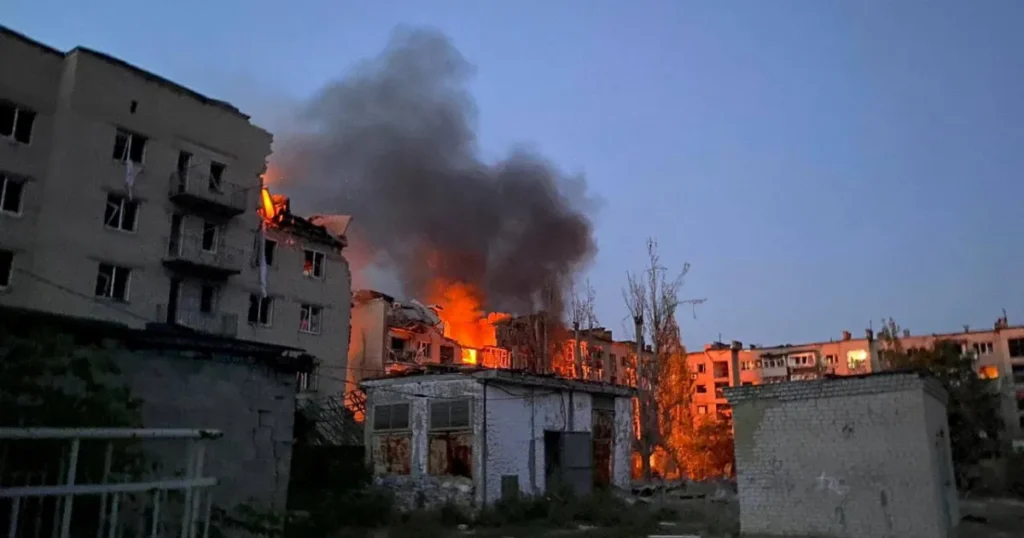
The diplomatic tensions unfolded as both sides in the war escalated nighttime aerial attacks. Ukraine’s Air Force said Russia launched 110 drones of various types nationwide; air defenses intercepted 84, while 24 struck targets. Ukrenergo, the national energy operator, warned of emergency blackouts in several regions following earlier Russian hits on power infrastructure.

Ukraine answered with a broad drone assault on Russian territory. Russia’s Ministry of Defense reported destroying 121 Ukrainian drones across multiple regions and occupied Crimea. In Chuvashia, roughly 900 kilometers northeast of the border, regional governor Oleg Nikolayev said the attack damaged residential buildings and injured nine people.

A Ukrainian official confirmed to The Associated Press that Ukraine’s Security Service carried out a drone strike Dec. 5 on an LPG terminal at the port of Temryuk in Russia’s Krasnodar region. The attack set more than 20 LPG tanks ablaze, the official said, and the fire burned for over three days, damaging rail tankers and a fuel transfer facility.

Zelenskyy’s refusal to consider territorial concessions marks one of his clearest public positions since peace discussions intensified. His stance reflects deep domestic opposition to any deal perceived as rewarding Russian aggression, but it also signals concern that Trump’s growing influence may reshape the diplomatic landscape. European leaders fear that if Trump succeeds in framing territorial concessions as the fastest path to peace, Ukraine could be cornered into accepting a settlement that leaves the region unstable and encourages further Russian opportunism.

For Zelenskyy, rallying Europe has become as vital as deterring Russia. European nations see the war not merely as a regional conflict but as a test of the continent’s long-term security architecture. Any settlement that cements Russian control over Ukrainian territory risks redrawing the map of Europe by force—an outcome EU leaders say they cannot accept.

The Vatican’s call for a ceasefire underscores a broader moral urgency but also highlights its limited leverage. With Russia making slow gains on the ground and Ukraine struggling to safeguard its energy grid amid relentless drone attacks, the gap between diplomatic proposals and battlefield realities continues to widen. The coming weeks may determine whether the U.S., Europe and Ukraine can reconcile their approaches—or whether Zelenskyy will be forced to navigate a geopolitical divide that complicates both the war effort and the path to peace.

Source: AP

Burkina Faso Detains 11 Nigerian Soldiers After Forcing Military Aircraft to Land

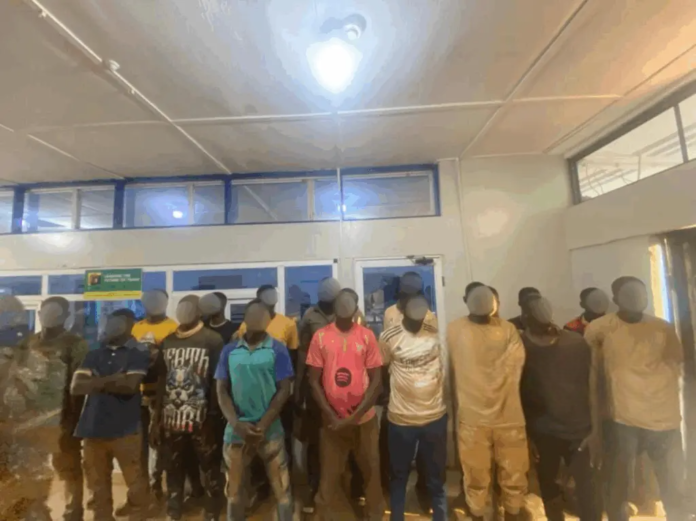
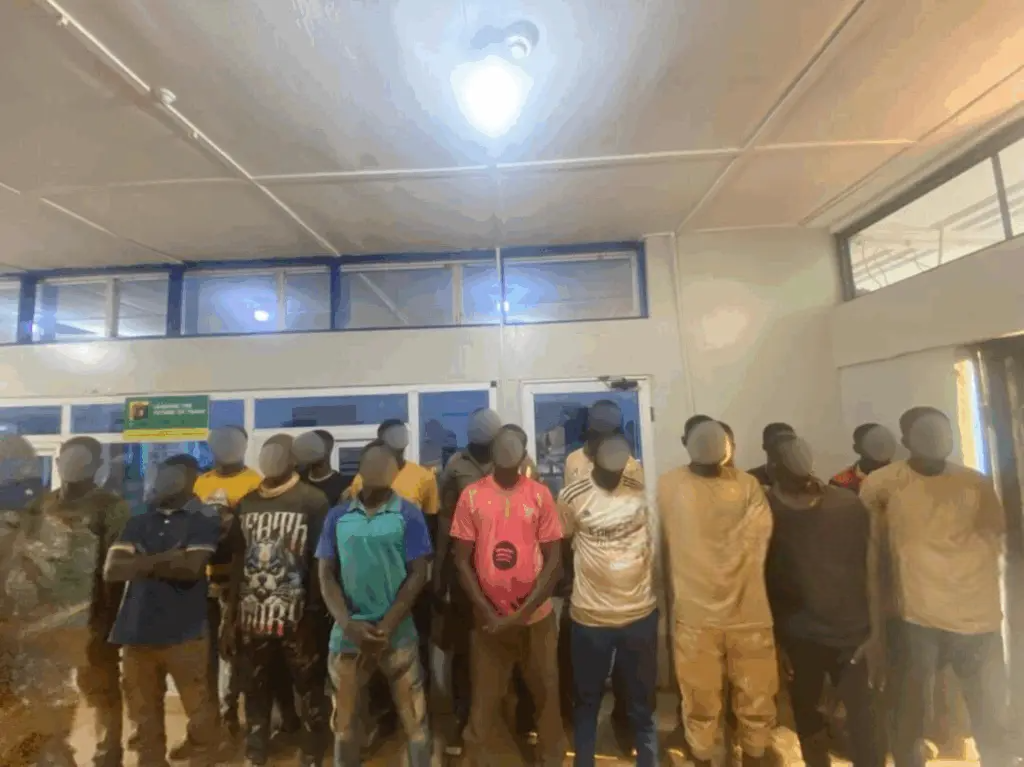
Burkina Faso forced a Nigerian Air Force transport plane carrying 11 soldiers to land Monday after determining the aircraft violated its airspace without authorization, escalating tensions between Nigeria and three breakaway Sahel nations that recently severed ties with the regional bloc Nigeria leads.

The C130 aircraft touched down in Bobo Dioulasso following what authorities described as an in-flight emergency while operating in Burkinabe airspace, the Confederation of Sahel States announced in a statement published by Agence d’Information du Burkina, the state-run news agency. The military transport carried two crew members and nine passengers, all military personnel.

“The Confederation of Sahel States informs the public that a C130 aircraft belonging to the Air Force of the Federal Republic of Nigeria was forced to land today, December 8, 2025, in Bobo Dioulasso, Burkina Faso, following an in-flight emergency while operating in Burkinabe airspace,” the statement read, translated from French.

An investigation by Burkinabe authorities “highlighted the absence of authorisation to fly over the territory of Burkina Faso for this military device,” the confederation said. The bloc condemned what it characterized as a sovereignty violation, stating it “condemns with the utmost firmness this violation of its airspace and the sovereignty of its member States.”

The statement, signed by Assimi Goita, the junta leader who heads the confederation, warned that air and anti-aircraft defenses across confederal space had been placed on maximum alert with authorization to “neutralise any aircraft that would violate the Confederate space,” Punchng reported.

“Faced with this unfriendly act carried out in defiance of international law and international civil and/or military aviation rules, arrangements are made to guarantee the security of the Confederal airspace, the sovereignty and territorial integrity of its Member States, as well as the safety of the Populations of the Confederation AES,” TheCableng quoted the statement as saying.

Reports indicated Burkinabe authorities have detained the 11 Nigerian soldiers, though their current status and location remain unclear. Neither the Nigerian Air Force nor the Federal Government had issued official comment as of Monday evening.

The forced landing occurred just one day after Nigerian Air Force jets conducted strikes on fleeing plotters of a failed coup attempt in neighboring Benin Republic. Bayo Onanuga, presidential spokesperson, confirmed President Bola Tinubu authorized the operation at the request of Beninese authorities.

The air strikes, which lasted more than 30 minutes and involved multiple coordinated bombardments by Nigerian fighter jets operating within Beninese airspace, targeted individuals who attempted to overthrow Benin’s government, Onanuga said. Benin authorities also requested support from Nigerian ground troops, though it remains unclear whether those forces were deployed.

Onanuga noted that a separate request from Benin wanted Nigerian Air Force assets to remain within Beninoise airspace for “surveillance and rapid intervention operations” under Benin-led coordination. Whether the mission that ended in Burkina Faso was connected to operations in Benin Republic remains uncertain, though Burkina Faso lies northwest of Benin.

The incident highlights deepening fractures in West Africa’s security architecture following military coups that toppled civilian governments in Burkina Faso, Mali, and Niger Republic. The three nations formally exited the Economic Community of West African States in January after being suspended from the bloc following their respective coups. Regional officials’ efforts to reintegrate the countries into ECOWAS proved unsuccessful.

The trio subsequently formed the Confederation of Sahel States, known by its French acronym AES, creating a rival bloc that has positioned itself in opposition to ECOWAS, which Nigeria dominates both economically and militarily. The new confederation has adopted increasingly assertive postures toward its former regional partners, including coordination on security matters and mutual defense commitments.

The forced landing and detention of Nigerian military personnel represents one of the most serious confrontations between Nigeria and the breakaway Sahel states since their ECOWAS departure. Nigeria, as West Africa’s most populous nation and largest economy, has historically played a stabilizing role in regional security through ECOWAS mechanisms, including peacekeeping operations and military interventions.

The timing of the incident, occurring immediately after Nigeria conducted military operations in Benin at that government’s request, raises questions about whether the aircraft’s presence in Burkinabe airspace was accidental, the result of navigational error, or potentially related to extended surveillance operations across the Sahel region. The claim of an in-flight emergency could explain an unplanned entry into Burkina Faso’s airspace, though Burkinabe authorities appear skeptical.

International aviation protocols typically require military aircraft to obtain diplomatic clearance before entering foreign airspace, even in emergency situations. If the C130 experienced a genuine emergency requiring an unscheduled landing, standard procedure would involve immediately notifying air traffic control and requesting permission for emergency landing rights. Whether Nigerian pilots followed these protocols remains unclear from available information.

The confederation’s threat to “neutralise” unauthorized aircraft reflects heightened security concerns across the Sahel, where armed insurgencies, terrorist networks, and intercommunal violence have proliferated in recent years. 

All three AES member states face ongoing battles with jihadist groups affiliated with al-Qaeda and the Islamic State, contributing to a siege mentality among military governments that seized power promising to restore security.

Relations between ECOWAS and the breakaway states have grown increasingly tense since the confederation’s formation. ECOWAS imposed economic sanctions on the coup governments and threatened military intervention to restore civilian rule, though those threats never materialized. The regional bloc’s decision following Benin’s foiled coup to deploy elements of its standby force to the West African nation further complicates the security landscape.

Nigeria’s role in authorizing that ECOWAS deployment while simultaneously conducting unilateral military operations in Benin at that government’s request demonstrates the complex, sometimes contradictory nature of West African security cooperation in the post-coup environment. The detention of Nigerian soldiers by Burkina Faso adds another volatile element to an already unstable regional order.

For Nigeria, the incident creates diplomatic complications at a moment when President Tinubu is attempting to maintain regional stability while respecting sovereignty concerns. Nigeria’s traditional role as West Africa’s hegemon—using its military and economic weight to shape regional outcomes—now faces pushback from governments that view such influence as neo-colonial interference.

The fate of the 11 detained soldiers will likely depend on diplomatic negotiations between Abuja and Ouagadougou, possibly mediated through neutral parties given the absence of normal diplomatic channels between Nigeria and the AES confederation. 

Whether the incident escalates into a prolonged diplomatic crisis or gets resolved quietly through back-channel communications could signal whether the growing divide between ECOWAS and its former members remains manageable or hardens into permanent antagonism.

Trump Administration Halts Citizenship Oaths for Immigrants From 19 Nations

BOSTON — Immigrants preparing to complete the final step toward American citizenship found themselves abruptly turned away from oath ceremonies nationwide this week after the Trump administration ordered a freeze on naturalizations for people from 19 countries, leaving dozens in legal limbo just moments before they would have become U.S. citizens.

At Boston’s historic Faneuil Hall, prospective citizens scheduled to take their oaths were pulled from line based on their countries of birth and told their ceremonies had been canceled without explanation, witnesses said. The scene repeated itself at naturalization venues across the country as U.S. Citizenship and Immigration Services instructed employees to halt all immigration pathways for people from nations the administration deems high risk.

“One of our clients said that she had gone to her oath ceremony because she hadn’t received the cancellation notice in time,” Gail Breslow, executive director of Project Citizenship, a nonprofit serving immigrants in Massachusetts and New England, told WGBH. 

“She showed up as scheduled, and when she arrived, officers were asking everyone what country they were from, and if they said a certain country, they were told to step out of line and that their oath ceremonies were canceled.”

The citizenship oath represents the culmination of a years-long process involving background checks, interviews, testing on U.S. history and civics, and payment of substantial fees. Twenty-one clients of Project Citizenship alone received cancellation notices this month, Breslow said, describing the emotional toll on families who thought they were hours away from achieving citizenship.

“People are devastated and they’re frightened,” Breslow said, as the Daily Beast reported. “People were plucked out of line. They didn’t cancel the whole ceremony.”

Boston Mayor Michelle Wu expressed outrage over the weekend at the scene that unfolded in a building synonymous with American revolutionary ideals. “It’s despicable and it is deeply painful to see this happening across the country but to feel it at the cradle of liberty in Boston at Faneuil Hall, a place that represents the foundation of this country and the very values that have made our nation who we are,” Wu said.

The administration’s directive targets immigrants from 19 countries classified as “of concern”: Afghanistan, Burma, Chad, the Republic of the Congo, Equatorial Guinea, Eritrea, Haiti, Iran, Libya, Somalia, Sudan, Yemen, Cuba, Burundi, Laos, Sierra Leone, Togo, Turkmenistan, and Venezuela. 

The list encompasses nations across multiple continents with varying relationships to the United States, from countries experiencing humanitarian crises to those under authoritarian rule to nations with historically complex diplomatic ties to Washington.

President Trump intensified scrutiny of applicants from these countries following last month’s shooting of two National Guardsmen in Washington that killed 20-year-old Sarah Beckstrom and wounded 24-year-old Andrew Wolfe. Authorities identified the suspect as 29-year-old Rahmanullah Lakanwal, an Afghan immigrant granted asylum in April under the current administration.

USCIS Director Joseph B. Edlow vowed in a statement after the shooting to “ensure that every alien is vetted and screened to the maximum degree possible.” He announced immediate policy changes authorizing officers to consider country-specific factors as “significant negative factors when reviewing immigration requests,” adding, “American lives come first.”

Edlow wrote Friday in a press release announcing a new screening center headquartered in Atlanta that the administration had reversed previous approaches to immigration vetting. “We changed that approach on day one of the Trump administration. 

Under President Trump, we are building more protective measures that ensure fraud, deception, and threats do not breach the integrity of our immigration system,” NBC confirmed Edlow said.

Internal guidance obtained by CBS News instructed USCIS staff to “stop final adjudication on all cases,” including “all form types and making any final decisions (approvals, denials) as well as completing any oath ceremonies” for applicants from the targeted countries.

Several applicants said they received cancellation notices through an online portal but the messages provided no explanation, timeline for resolution, or guidance on next steps, leaving them uncertain whether their applications remained active or had been suspended indefinitely.

The freeze has created widespread confusion among immigration attorneys struggling to advise clients who completed every requirement for citizenship only to be blocked at the final moment. “There is no time frame—nobody knows how long this is going to be,” immigration lawyer Teresa Coles-Davila told the New York Times. “Literally, no one knows what is happening.”

Rosanna, a student in Texas who was born in Libya and holds Canadian citizenship, told the Times she anticipated receiving an email setting the date for her oath ceremony but instead got a cancellation notice. “It’s definitely disappointing. Having come from a third-world country, it’s just never-ending disappointment,” she said. “I definitely feel unwelcome here.”

USCIS and its parent agency, the Department of Homeland Security, did not respond to requests for comment Sunday. The White House also declined to address questions about the policy.

The administration’s decision to single out applicants by country of origin during naturalization ceremonies raises complex legal and ethical questions about discrimination in the citizenship process. 

While federal law grants broad authority to set immigration policy and conduct security screening, pulling approved applicants from ceremony lines based solely on their birthplace tests the boundaries of that discretion.

Legal experts note that applicants who reached the oath ceremony stage had already undergone extensive vetting, including FBI fingerprint checks, reviews of their immigration history, verification of continuous residence and physical presence requirements, assessment of good moral character, and demonstration of English language proficiency and civic knowledge.

 The sudden reversal after clearing these hurdles suggests either a fundamental reassessment of screening adequacy or a policy shift using national origin as a proxy for security risk.

The freeze particularly impacts refugees and asylum seekers who fled persecution, conflict, or violence in their home countries—precisely the populations the targeted nations list comprises. Many applicants from Afghanistan assisted U.S. military operations during two decades of war, putting their lives at risk as interpreters, guides, and cultural advisors. 

Others escaped authoritarian regimes in Cuba, Venezuela, and Iran. The irony of denying citizenship to people who sought America as refuge from the very conditions that made their home countries unstable has not escaped critics.

The timing of cancellations, occurring literally as applicants stood in line ready to take their oaths, amplifies the cruelty of the policy in the eyes of immigrant advocates. Families who arranged time off work, traveled significant distances, dressed in their finest clothing, and brought relatives to witness their citizenship moment instead experienced public rejection and humiliation.

Beyond the immediate human impact, the freeze creates practical complications. Applicants in limbo cannot enjoy benefits of citizenship including voting rights, eligibility for federal jobs requiring citizenship, ability to sponsor family members for immigration, protection from deportation, and access to U.S. passports for international travel. Some may face expired work authorizations or other immigration statuses while their citizenship applications remain suspended.

The administration’s citation of the National Guard shooting as justification for the sweeping freeze glosses over the fact that the suspect had already been granted asylum and undergone screening before the current policy was announced. 

Using a single incident involving an individual who entered through asylum channels to justify blocking citizenship for thousands who completed the naturalization process conflates distinct immigration pathways and treats an entire category of applicants as presumptively suspect based on national origin.

As the policy enters its second week with no clear timeline for resolution, the 21 Project Citizenship clients and potentially hundreds more across the country remain suspended between their former status and the citizenship they believed was within grasp. 

Whether the administration will resume ceremonies after implementing enhanced screening procedures, indefinitely maintain the freeze, or deny applications outright remains unclear, leaving families to navigate uncertainty about their futures in the only country many of their children have ever known.

DailyBeast/NBC

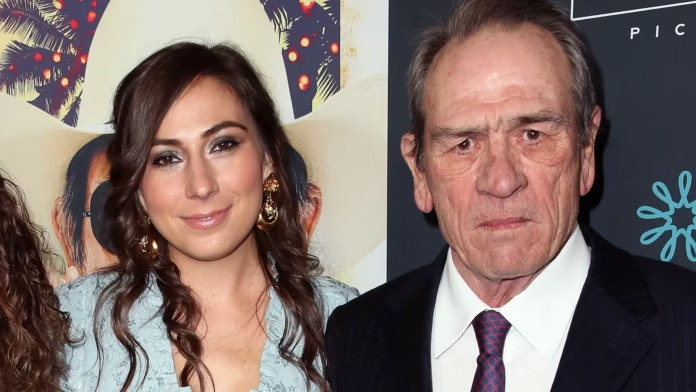
Texas Democrat Crockett Jumps Into Senate Race as Allred Abandons Campaign

0

AUSTIN, Texas — Democratic Rep. Jasmine Crockett submitted paperwork Monday to challenge Republican Sen. John Cornyn in 2026, entering the contest on the final day of qualifying just hours after former Rep. Colin Allred abandoned his own Senate bid to pursue a House comeback instead, dramatically reshuffling the political landscape for a seat Democrats view as potentially winnable amid Republican disarray.

Crockett, the 44-year-old congresswoman who has built a national following through sharp-tongued criticism of President Donald Trump, announced her candidacy with a provocative social media video in which she remains silent while Trump’s voice plays offscreen calling her a “very low IQ person.” She turns to face the camera, smiles, and the clip cuts to the message: “Crockett for US Senate,” CNN reported.

The wordless announcement signals Crockett intends to embrace her combative reputation and opposition to Trump even in deep-red Texas, where national Democrats believe Republican infighting could create an opening. Some party operatives privately question whether Crockett’s confrontational style makes an already difficult race even harder to win.

Cornyn dismissed Crockett’s chances in blunt terms Monday. “I think she wins the Democratic primary, and she is the worst possible candidate they could have in Texas,” Cornyn told reporters, as CNN confirmed. “She’s not electable.”

Allred, who unsuccessfully challenged Republican Sen. Ted Cruz in 2024, launched his second Senate campaign in July but reversed course Monday, announcing he would instead seek election to Texas’ redrawn 33rd Congressional District. CNN previously confirmed that Crockett asked Allred to drop out and cited polling showing her in strong position for the Democratic nomination.

Allred acknowledged speaking with Crockett, whom he described as “a friend,” about the race in what he characterized as “a professional, friendly conversation.” He told the network that avoiding a protracted primary battle influenced his decision.

“To me, going through a bruising primary, and in Texas, we have a runoff — and we would certainly have a runoff in this case — was not in the best interest of the state or the party,” Allred said in an interview. “I needed to try and decide what I thought would be best for the state, for the party in a time and in a year where there is so much at stake.”

Crockett now faces Texas State Sen. James Talarico in the March 3 Democratic primary. Talarico, a former teacher who elevated his profile through high-profile battles over Republican redistricting efforts this summer, entered the race in September and has already surpassed Allred’s fundraising totals, network reporting showed.

“We’re building a movement in Texas — fueled by record-breaking grassroots fundraising and 10,000 volunteers who are putting in the work to defeat the billionaire mega-donors and puppet politicians who have taken over our state,” Talarico said in a statement. “Our movement is rooted in unity over division — so we welcome Congresswoman Crockett into this race.”

The Democratic field reshuffle follows seismic shifts in Texas politics that have altered strategic calculations heading into next year’s midterm elections. State Republicans executed unprecedented mid-decade redistricting this summer that scrambled the House map, while a contentious GOP Senate primary has emboldened Democratic hopes of capturing Cornyn’s seat.

Cornyn, who has held office in Texas since the 1990s and served in the Senate since 2002, faces the toughest primary challenge of his career from Texas Attorney General Ken Paxton and Rep. Wesley Hunt from the 38th District. Trump has declined to endorse any candidate, triggering a fierce competition among GOP contenders for his supporters’ allegiance.

Democrats hope to exploit Republican divisions and finally put a statewide Texas race within reach after years of frustration watching the state slip further from their grasp despite demographic changes and urbanization that should theoretically favor their party. Whether Crockett or Talarico gives Democrats their best opportunity remains an open question dividing party strategists.

Democrats need a net gain of four Senate seats to reclaim majority control from Republicans next November. Most seats up for reelection sit in states Trump won last year, making Texas part of a challenging map for the party. The state has remained stubbornly Republican at the statewide level for decades despite Democrats’ repeated predictions that changing demographics would flip it blue.

Crockett spent recent weeks floating a potential Senate candidacy, making calls and gauging support among potential backers as Democrats gamed out a reshuffled slate for 2026, sources familiar with the discussions said. She coordinated with Rep. Marc Veasey, a fellow Dallas Democrat whose current district was carved up through gerrymandering, on timing so he could file to run in her House district shortly after she submitted Senate paperwork.

The rapid-fire developments Monday injected fresh intrigue into a Texas Senate contest already marked by high drama. If Crockett had joined the race while Allred remained, three viable candidates competing in the Democratic primary would have virtually guaranteed no one captured a majority in March, forcing a May runoff that could deplete resources and expose divisions before the general election.

Allred’s House comeback bid sets up a competitive primary against Rep. Julie Johnson, who plans to move from the 32nd District to run in the redrawn 33rd. Johnson issued a pointed statement Monday questioning Allred’s decision to return after his Senate campaign faltered.

“This new district deserves representation that has been present in the tough moments, including throughout the redistricting fight, instead of parachuting back when another campaign doesn’t work out,” Johnson said. “Families here are dealing with rising costs, housing pressures, and real economic strain. They deserve someone with a strong record in Democratic collaboration and support.”

Rep. Joaquin Castro, who considered running for Texas attorney general before opting to seek reelection, defended Crockett’s Senate ambitions on CNN’s “The Situation Room.” “Jasmine is a fighter, she’s an incredibly dynamic person,” Castro said. “She’s got a message that’s resonating, not only with the Democratic base, but I think with Americans across the country.”

Crockett’s decision to lean into her status as a Trump antagonist represents a calculated gamble in Texas, where the former president remains popular among Republican voters but has shown vulnerability in suburban areas that have trended Democratic in recent cycles. Her confrontational style has made her one of Congress’ most outspoken Democrats and a frequent target of GOP attacks, raising her national profile while potentially limiting her appeal to moderate and independent voters crucial to winning statewide in Texas.

The chaotic redistricting process that scrambled multiple House districts created the opening for Crockett’s Senate bid by forcing several Democratic incumbents to reconsider their political futures. State Republicans’ controversial decision to redraw congressional maps mid-decade sparked legal challenges and accusations of partisan gerrymandering designed to entrench Republican advantages despite population growth concentrated in Democratic-leaning urban and suburban areas.

Talarico has built his own following through viral social media posts challenging Republican education policies, including private school vouchers and requirements to display the Ten Commandments in public school classrooms. His ability to outraise Allred despite entering the race later demonstrates fundraising prowess that could make the March primary competitive, according to the Associated Press.

The Republican primary battle between Cornyn, Paxton, and Hunt has generated its own fireworks. Paxton, who survived impeachment proceedings last year on corruption allegations, commands fierce loyalty among Trump’s most devoted supporters but carries significant baggage that could complicate a general election. Hunt, an African American congressman and military veteran, offers Republicans demographic diversity but lacks statewide name recognition. Cornyn’s establishment credentials and fundraising advantage make him the frontrunner, but Trump’s refusal to weigh in has left the race fluid.

As both parties sort out their primary fields, the 2026 Texas Senate contest has already become one of the most closely watched races of the midterm cycle. Whether Democrats can finally crack the code in Texas after decades of disappointment may depend on factors beyond any single candidate’s control, including national political winds, turnout patterns, and whether Republican divisions persist through November 2026.

Second U.S. Deportation Flight Sends 55 Iranians Home Amid Persecution Fears

MESA, Ariz. — A chartered aircraft carrying approximately 55 Iranian citizens departed from Arizona on Sunday bound for Tehran, marking only the second time in American history that the United States has organized a mass deportation flight to Iran, officials confirmed, intensifying concerns among advocates that deportees could face interrogation or worse upon arrival in the Islamic Republic.

The plane lifted off from Mesa airport carrying Iranians alongside deportees from Arab nations and Russia, according to two Iranian officials who spoke on condition of anonymity because they lacked authorization to discuss the matter publicly. The aircraft will make intermediate stops in Egypt and Kuwait before Iranian passengers complete the final leg to Tehran, the officials told the New York Times.

Mojtaba Shasti Karimi, director of consular services for Iran’s Foreign Ministry, confirmed Tehran expected to receive about 55 deportees in the coming days. Iran’s official judiciary news agency Mizan quoted Karimi as saying the individuals had expressed willingness to return home due to “continuation of anti-immigration and discriminative policy against foreign nationals particularly Iranians by the United States.”

Karimi claimed Tehran had received reports of “inhumane” treatment of Iranians held in Immigration and Customs Enforcement custody, characterizing their departure as voluntary responses to “racist and anti-immigration policies” of the U.S. government.

A U.S. official, speaking on condition of anonymity to discuss operational details, confirmed the flight departed Sunday but described it as a routine deportation operation that included nationals from multiple countries beyond Iran. The Department of Homeland Security declined to comment on the flight.

The deportation flight represents the second such operation since September, when the first planeload of Iranian deportees touched down in Tehran after months of negotiations between Washington and Tehran brokered through intermediaries. That inaugural flight carried 45 people, at least eight of whom reportedly resisted deportation and pleaded not to be sent to Iran because they feared for their safety, according to the Associated Press.

Two deportees from the September flight later recounted disturbing experiences, alleging they had been beaten by immigration officials in the United States and Qatar, then physically forced onto the aircraft. The United States and Qatar both denied allegations of violence against deportees or coercing them onto Iran-bound flights.

Upon landing in Tehran in October, deportees described being terrified as they underwent questioning at the airport and were required to complete forms explaining why they had fled Iran and sought asylum in America. Several deportees said they subsequently received summonses for interrogation by the intelligence wing of the Revolutionary Guards Corps, raising alarm among human rights advocates about the fate awaiting those returned to Iranian custody.

One Iranian official familiar with Sunday’s passenger manifest said those aboard had entered the United States through the southern border, spent months in detention facilities, and ultimately had their asylum requests denied. The identities of individual deportees and their specific circumstances, including whether they voluntarily accepted deportation or were compelled onto the plane, remained unclear as of Sunday evening.

Representative Yassamin Ansari, an Iranian-American Democrat from Arizona, issued warnings on social media as reports of the pending flight circulated over the weekend. Ansari cautioned that the aircraft could include “vulnerable individuals who could face persecution” if returned to Iran, according to the New York Times.

The deportations unfold against a backdrop of elevated tensions between Washington and Tehran following American airstrikes on Iranian nuclear facilities during Iran’s 12-day conflict with Israel in June. Activists abroad have voiced deep concern about returning deportees to a country where the theocratic government has intensified crackdowns on intellectuals and ramped up executions to rates unseen in decades.

The United States and Iran have maintained no diplomatic relations since the 1979 Islamic Revolution that toppled the Shah and established the current theocratic government. For more than four decades, the United States has provided refuge to Iranian dissidents, religious and ethnic minorities, LGBTQ community members, and others fleeing persecution in their homeland. This longstanding policy created a substantial Iranian-American community, particularly in states like California, that has maintained cultural ties while building new lives in America.

The Trump administration’s agreement with Tehran to coordinate deportation of an estimated 2,000 Iranian citizens facing removal orders marks a dramatic policy shift. Previously, the United States deported Iranians individually on commercial airlines rather than organizing dedicated charter flights, making the current operation unprecedented in scope and methodology.

The deportation program represents a collision between President Trump’s top priority of targeting illegal immigration and decades of U.S. practice welcoming Iranian exiles and dissidents. The administration has declared its intention to execute the largest deportation operation in American history, targeting undocumented immigrants and those who crossed the border illegally. Officials have also said they would drastically reduce asylum grants and limit them primarily to white migrants from South Africa or English-speaking Europeans.

Iranians are among citizens of 19 countries targeted in Trump’s travel ban. Their legal immigration pathways have been further restricted following new limits Trump announced after the fatal shooting of a National Guard member in Washington last month. The suspect in that incident is an Afghan immigrant, though the administration expanded restrictions beyond Afghanistan in response.

Iranian officials acknowledged in September that as many as 400 Iranians could be returned under Trump administration policy, suggesting Sunday’s flight represents merely one installment in a much larger deportation campaign. One Iranian official who has worked closely with American counterparts on the transfers explained that Arab and Russian nationals would disembark when the plane lands in Cairo, while Iranians would continue to Kuwait to transfer onto a chartered Kuwait Airways aircraft for the final segment to Tehran.

The mechanics of the deportation arrangement highlight the complex diplomatic gymnastics required when two nations lacking formal relations coordinate on sensitive matters. Switzerland has traditionally served as the protecting power representing U.S. interests in Iran, while Pakistan has performed similar functions for Iran in Washington, providing channels for communication on issues ranging from prisoner swaps to, now, deportation logistics.

Iran has maintained that only individuals facing criminal charges face prosecution upon return, insisting others can travel freely within the country. However, Tehran’s history of detaining Westerners and dual nationals with ties abroad to use as leverage in prisoner exchanges undermines official assurances about safety for returnees. U.S. federal prosecutors have accused Iran of hiring hitmen to target dissidents living in America, further amplifying concerns about what awaits deportees.

The treatment of September’s deportees, who reported being interrogated by Revolutionary Guards intelligence officers, suggests returned asylum seekers face heightened scrutiny regardless of whether they face specific criminal charges. For those who fled Iran citing political persecution, association with opposition movements, religious conversion, or LGBTQ identity, such interrogations could expose them to arrest, prosecution, or worse.

The deportation flights also raise troubling questions about due process and asylum adjudication. If deportees entered through the southern border and languished in detention for months before having asylum claims denied, did they receive adequate legal representation and fair hearings? Were country conditions in Iran properly evaluated, including the documented increase in executions and crackdowns on dissent? These procedural questions will likely fuel legal challenges and congressional scrutiny as the deportation program continues.

As the chartered plane made its way across the Atlantic on Sunday, the 55 Iranians aboard faced an uncertain future in a country many had risked everything to escape. Whether they truly volunteered to return home, as Iranian officials claim, or were coerced by indefinite detention and denied asylum claims remains a central question that will shape how history judges this extraordinary deportation program.

NewYorkTimes/AP

Kitchen Fire at Indian Nightclub Kills 25, Mostly Staff, as Safety Probe Launched

ARPORA, India — A fire that erupted in the kitchen of a packed nightclub near one of Goa’s most popular beaches killed 25 people early Sunday, with authorities confirming that 20 of the dead were staff members and raising urgent questions about fire safety enforcement at entertainment venues across India’s smallest state.

The blaze broke out around midnight Saturday at Birch by Romeo Lane, a nightclub in Arpora village in North Goa, a renowned party destination that draws millions of tourists annually to its coastal stretches along the Arabian Sea. Emergency crews worked through the night to extinguish the flames and recover bodies, completing operations by Sunday morning, according to Shri Alok Kumar, Goa’s Director General of Police.

“The fire was mainly concentrated around the kitchen area on the ground floor,” Kumar told the BBC, adding that the location of victims suggested most were employees working at the club. “Two bodies have been found on the staircase. The fire occurred around midnight. It has now been brought under control.”

The government of Goa confirmed that five domestic tourists died alongside the 20 staff members. Four of the tourists had traveled from Delhi, while the fifth came from Karnataka, the neighboring state that shares a border with Goa. Six additional people sustained injuries in the incident, though all were reported in stable condition and receiving medical treatment at nearby hospitals, officials said.

Videos circulating on social media platforms showed emergency services vehicles lined up outside the venue as paramedics rushed to assist the wounded. The scenes captured the chaotic aftermath as first responders transported victims to medical facilities across the coastal region.

Dr. Pramod Sawant, Goa’s chief minister, visited the fire site Sunday and immediately ordered a comprehensive inquiry into the tragedy. “I am deeply grieved and offer my heartfelt condolences to all the bereaved families in this hour of unimaginable loss,” Sawant said in a statement.

Speaking later after assessing the damage, Sawant outlined the scope of the investigation. “The inquiry will examine the exact cause of the fire and whether fire safety norms and building rules were followed,” he said, according to Skynews. “Those found responsible will face most stringent action under the law — any negligence will be dealt with firmly.”

Indian Prime Minister Narendra Modi described the incident as “deeply saddening” and said he had spoken directly with Goa’s chief minister to coordinate response efforts. Modi confirmed that “the state government is providing all possible assistance to those affected,” according to Reuters news agency.

The discovery of two bodies on the staircase suggests some victims attempted to flee the building but became trapped as smoke and flames spread from the ground floor kitchen. The concentration of fatalities among kitchen staff indicates the fire likely spread rapidly through cooking areas before employees could escape or alert patrons in other sections of the venue.

Goa’s unique status as India’s smallest state by area, combined with its outsized role in the country’s tourism economy, makes fire safety at hospitality and entertainment venues a particularly sensitive issue. The former Portuguese colony has transformed itself into a magnet for both international and domestic tourists drawn by its distinctive cultural blend, pristine beaches stretching along the Arabian Sea coast, and vibrant nightlife scene that operates year-round.

The tragedy at Birch by Romeo Lane raises troubling questions about enforcement of building codes and fire safety regulations across Goa’s hospitality sector. Rapid development to accommodate surging tourist numbers has sometimes outpaced regulatory oversight, with nightclubs, restaurants and hotels proliferating across beach communities like Arpora and nearby Baga, where this incident occurred, according to People.com citing the Indian Express.

Fire safety experts note that commercial kitchens pose particular hazards due to open flames, hot cooking oils, gas lines and electrical equipment all concentrated in confined spaces. Proper ventilation systems, fire suppression equipment, clearly marked emergency exits and regular safety drills are essential, yet enforcement remains inconsistent across India’s entertainment venues, particularly in rapidly developing tourist zones.

The high death toll among staff members also highlights vulnerabilities faced by hospitality workers, who often labor in back-of-house areas with limited emergency exits and may lack adequate safety training. Kitchen staff working late-night shifts during peak tourist season would have been preparing food and cleaning when the fire erupted, potentially trapping them in the very area where flames originated.

Sawant’s promise of “most stringent action” suggests authorities recognize the potential for systemic failures beyond this single venue. Whether the investigation reveals problems with building permits, inadequate fire suppression systems, blocked emergency exits, overcrowding or other violations will determine whether the tragedy prompts broader reforms across Goa’s entertainment industry.

The timing of the fire, occurring during the height of the winter tourist season when Goa welcomes visitors escaping colder climates across India and abroad, could have economic reverberations for a state heavily dependent on hospitality revenue. Tourist confidence in safety standards may suffer if the investigation uncovers widespread regulatory lapses.

As authorities continue their probe into what sparked the blaze and why so many people died, the incident serves as a grim reminder that rapid economic development and tourism growth must be matched by rigorous safety enforcement. The 25 lives lost represent not just a local tragedy but a potential inflection point for how India’s most tourism-dependent state balances growth with public safety in venues that pack hundreds of people into confined spaces night after night.

Rebels Seize Strategic Congo Town Hours After U.S.-Brokered Peace Deal Signed

Rebel forces captured the strategic town of Luvungi and pushed deeper into South Kivu Province through Saturday, defying a U.S.-mediated peace agreement signed just two days earlier between Congo and Rwanda that was supposed to halt the escalating violence in eastern Africa’s most volatile conflict zone.

The March 23 Movement, known as M23, mounted sustained attacks across multiple fronts from Tuesday through the weekend, seizing territory around Kaziba, Lubarika, Rurambo and Luvungi while battling toward the heights of Mount Munanira, military sources confirmed. The rebel advance threatens Uvira, South Kivu’s temporary administrative seat, raising alarm among Congolese authorities that the province could become a second major war theater after Bukavu, the provincial capital, fell to insurgents in February.

“The rebels launched several attacks on our positions and attempted to bypass our defensive arrangements along the Kaziba-Luvungi axis, but the army continues to repel these attempts. Fighting is still ongoing,” FARDC spokesperson Reagen Mbuyi said Thursday, speaking for the Armed Forces of the DRC. By Friday, however, local sources confirmed M23 had broken through toward the Ruzizi Plain and established control over corridors leading to Uvira from Luvungi.

The rebel breakthrough occurred even as Congolese and Rwandan officials put pen to paper Thursday in Washington on an agreement that DRC presidential spokesperson Tina Salama described as addressing three critical objectives: ending violence in the east, restoring Congo’s sovereignty and territorial integrity, and dismantling illicit mineral supply chains that bankroll the conflict. The stark disconnect between diplomatic assurances and battlefield realities has deepened skepticism about whether international mediation can contain a war that has displaced millions and destabilized the mineral-rich Great Lakes region.

Congolese forces, fighting alongside Burundian troops and several local armed groups, have pulled back from contested areas, residents said. The retreat triggered a fresh wave of civilian displacement, with hundreds of families streaming into Uvira while others fled from Kamanyola, a strategic crossroads in the province, into Rwanda to escape artillery fire. Photographs distributed by Xinhua showed displaced children and families boarding buses bound for refugee camps in Bugarama, Rwanda, on December 5.

Uvira occupies a critical position on the transportation artery connecting Bukavu with Burundi and Tanzania. The town serves as a logistical hub for FARDC operations across the Ruzizi Plain, an area teeming with local and foreign armed factions. Loss of control over Uvira would sever supply lines and leave government forces vulnerable across a broad swath of South Kivu.

“If the rebels reach the outskirts of Uvira, the security impact would be considerable,” warned a Goma-based Congolese analyst who requested anonymity due to the sensitivity of the conflict. “South Kivu would effectively become a second epicenter of the conflict.”

The expansion of M23 operations into South Kivu represents a significant strategic shift. The group, which takes its name from a failed March 23, 2009 peace agreement, has long operated primarily in North Kivu Province. Its push southward suggests either a broadening of military objectives or increased confidence in its capacity to hold captured territory against government counteroffensives.

The violence unfolds against a backdrop of bitter diplomatic accusations between Kinshasa and Kigali. Congo has consistently accused Rwanda of providing military backing to M23, allegations that Kigali denies while countering that Congolese forces collaborate with the Democratic Forces for the Liberation of Rwanda, a group linked to the 1994 genocide against the Tutsi. These mutual recriminations have poisoned regional diplomacy for years, making sustainable peace agreements difficult to achieve or enforce.

The human toll continues to mount at catastrophic levels. United Nations figures show that more than 2.4 million people have been forcibly displaced since January 2025 alone, bringing the total number of internally displaced persons to nearly 6 million. An additional 1 million Congolese have sought refuge in neighboring countries, while 27 million people face severe food insecurity, according to Xinhua reporting originally published by English.news.

The humanitarian emergency reflects not just the immediate violence but the collapse of agricultural production, disruption of trade routes, and breakdown of basic services across eastern Congo. Displaced populations overwhelm host communities and strain resources in areas already struggling with poverty and weak infrastructure. The flow of refugees into Rwanda and other neighboring states creates additional regional tensions and complicates diplomatic efforts to resolve the underlying conflict.

The timing of the rebel advance, occurring virtually simultaneous with the Washington peace signing, raises uncomfortable questions about the sincerity of commitments made by the parties and whether external mediation can compel compliance from armed groups operating with apparent impunity in Congo’s eastern borderlands. The agreement’s third pillar, addressing illicit mineral supply chains, acknowledges the economic incentives driving the conflict. Eastern Congo’s vast deposits of coltan, gold, and other valuable minerals have long fueled armed groups, but enforcement mechanisms to cut off these revenue streams remain unclear.

Military analysts note that M23’s ability to sustain multi-front operations suggests access to steady supplies of weapons, ammunition, and logistical support that would be difficult to maintain without external backing. The group’s tactical sophistication and coordination across dispersed combat zones indicate command structures more elaborate than typical militia organizations.

As fighting continued into the weekend, the gap between diplomatic rhetoric and ground-level violence illustrated the immense challenge facing peacekeepers, humanitarian organizations, and regional governments attempting to stabilize eastern Congo. The displacement of civilians into Rwanda, ironically the country Congo accuses of sponsoring the rebels, underscores how desperate populations seek safety wherever they can find it, regardless of political complications.

Source: Xinhua/Africanews

Gunmen Kill 12, Including 3 Children, in South African Bar Massacre

Three gunmen stormed an unlicensed bar in a township hostel early Saturday, unleashing random gunfire that killed 12 people, among them a 3-year-old boy, authorities said, marking the latest mass casualty shooting to plague South Africa’s escalating violence crisis.

The attackers entered the establishment in Saulsville township, west of Pretoria, around 4:15 a.m. and began shooting indiscriminately at patrons, according to police spokesperson Brig. Athlenda Mathe, who spoke with national broadcaster SABC. Ten victims died where they fell. Two more succumbed to their injuries after reaching the hospital, bringing the confirmed death toll to 12 by Saturday evening.

The dead included three children: a 3-year-old boy, a 12-year-old boy, and a 16-year-old girl. Thirteen additional victims remained hospitalized with gunshot wounds, though authorities declined to release details about their ages or medical conditions.

Investigators have yet to determine what prompted the bloodshed. “We are told that at least three unknown gunmen entered this hostel where a group of people were drinking and they started randomly shooting,” Mathe said. Despite the shooting occurring before dawn, police received no notification until 6 a.m., raising questions about the two-hour delay in emergency response.

Law enforcement has launched a manhunt for three male suspects believed responsible for the attack.

The massacre underscores a deepening public safety emergency across South Africa, where violent crime has reached crisis levels despite strict firearms legislation. The nation of 62 million recorded more than 26,000 homicides in 2024 alone, translating to an average of more than 70 killings every single day. Firearms remain the predominant weapon in these deaths, with authorities acknowledging that illegal guns drive much of the violence despite stringent ownership laws.

Unlicensed drinking establishments have become particular flashpoints for mass violence. Between April and September of this year, police shut down more than 11,000 illegal taverns and arrested over 18,000 individuals connected to unlawful alcohol sales, according to Mathe. The crackdown reflects growing alarm over what she described as a serious and worsening problem.

Saturday’s attack follows a grim pattern. In 2022, gunmen killed 16 people at a bar in Soweto, Johannesburg’s sprawling township. That same day, four more died in a separate bar shooting in another province, highlighting the nationwide scope of tavern-related violence.

Yet the carnage extends beyond drinking establishments. Last September, 18 people, including 15 women, were killed in coordinated shootings at two houses on the same rural road in Eastern Cape province. Police arrested seven men in connection with those murders and recovered three AK-style assault rifles believed used in the attacks. Those suspects face multiple murder charges.

The Saulsville shooting reveals troubling vulnerabilities in communities where illegal businesses operate beyond regulatory oversight. Unlicensed bars frequently lack basic security measures, adequate lighting, or emergency protocols, creating environments where violence can erupt unchecked. The presence of three young children at the scene at 4 a.m. also raises questions about the circumstances that brought families into such settings during overnight hours.

Public health experts and criminologists point to South Africa’s staggering homicide rate as symptomatic of broader societal challenges, including persistent inequality, unemployment hovering near 33 percent, and fragmented law enforcement capacity across sprawling informal settlements. The proliferation of illegal firearms, often trafficked from neighboring states or stolen from legal owners, has overwhelmed police efforts to control gun violence despite laws requiring background checks, competency tests, and registration for lawful ownership.

As investigators piece together what happened inside the hostel bar, the community faces difficult questions about how to protect vulnerable populations, particularly children, in environments where violence has become disturbingly routine. The attack also intensifies pressure on authorities to accelerate efforts against illegal establishments that operate as magnets for criminal activity while existing beyond the reach of safety regulations.

Police have urged anyone with information about the three suspects to come forward as the investigation continues.

TMZ/ABCnews

Florida man arrested after ‘dirty bomb’ claim triggers shutdown

Authorities in central Florida say a routine traffic stop escalated into a major emergency response after a man claimed he had a “dirty bomb” in his truck, prompting road closures, a multi-agency investigation and the deployment of explosive experts before officials determined the device was a hoax, the Independent reports.

Police arrested Benjamin Johnson, 43, after the incident unfolded near a Publix supermarket in Davenport, where Haines City officers stopped his Chevrolet Silverado in connection with a reported crash. Officers said Johnson refused repeated commands to get out of the vehicle before he was forcibly removed. A search of the truck revealed firearms, ammunition, speed loaders, night-vision goggles, knives, thermal scopes, a battering ram, cannabis and THC-infused gummies.

The encounter intensified when Johnson, held in a patrol car, told officers there was a “dirty bomb” inside the truck. A yellow plastic container secured by chains and locks and marked with a radioactive warning label was discovered. Authorities immediately sealed off the area, shut down nearby roads and summoned the Bureau of Fire, Arson, and Explosives along with state hazardous-materials teams. A Florida State Fire investigator confirmed the container was giving off radioactivity, escalating concerns before the bomb squad arrived.

Investigators later determined the container held a Moisture Density Gauge, a soil-testing instrument that emits only low-level radiation and carries far less exposure than a medical X-ray. Officials said the device did not pose a threat to the public but was improperly handled and had triggered the emergency response because of Johnson’s bomb claim.

Johnson faces charges including hoax weapon of mass destruction, false bomb report, unlawful possession of a controlled substance and resisting officers without violence. Police said he previously faced a marijuana possession charge in Tennessee and told officers he had been living inside the truck with his dog. Animal Control took custody of the dog after the arrest.

Authorities said the yellow container was turned over to the Florida Bureau of Radioactive Materials for further analysis, and the weapons seized from the vehicle remain under investigation.

The Independent.com