

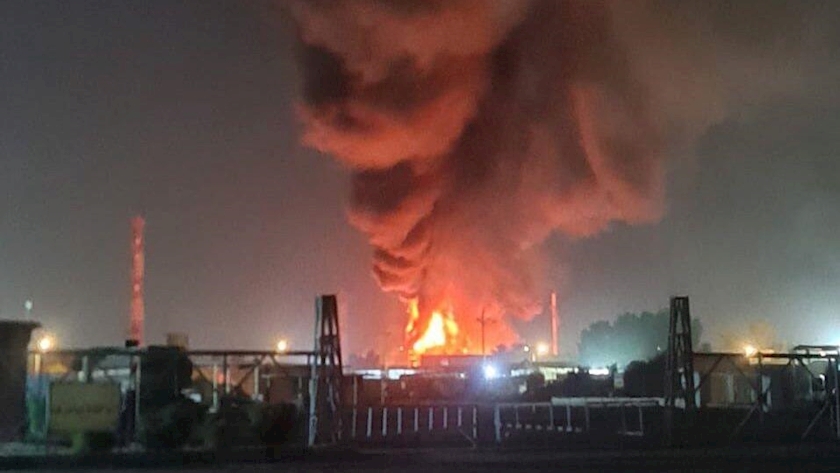
A series of explosions struck areas near a military installation hosting United States forces in northern Iraq on Friday, only hours after the U.S. military announced it had completed another overnight wave of airstrikes against targets in Iran.
An Associated Press journalist in Irbil heard at least seven explosions at about 9:30 a.m. local time and observed at least four columns of black smoke rising from areas near or inside the military base. The cause of the blasts was not immediately known, and there was no immediate confirmation of casualties or damage.
Tuesday, 24 June 2025
Explosions were reported near a United States military base in Irbil shortly after American forces completed a thirteenth consecutive night of strikes against Iran. The incidents unfolded amid a rapidly expanding regional conflict that has disrupted global energy markets and heightened security concerns across the Middle East.
What We Know So Far
The explosions occurred near a military facility that hosts U.S. personnel in Irbil, the capital of Iraq’s semi autonomous Kurdish region.
An Associated Press journalist at the scene confirmed hearing multiple explosions and witnessing heavy smoke rising from the vicinity of the installation.
No group immediately claimed responsibility, and military officials had not identified the source of the blasts.
The incident came hours after United States Central Command announced that American forces had completed another overnight round of strikes targeting Iranian military infrastructure.
The U.S. military said the operation targeted military command centers, naval capabilities and other assets that could threaten commercial shipping in regional waters.
Iranian state media said the latest American strikes killed four people and injured nine others in different parts of the country.
United States Expands Military Operations
United States Central Command said the overnight operation was intended to further reduce Iran’s ability to threaten civilian shipping and commercial vessels operating in regional waters, particularly around the Strait of Hormuz, one of the world’s most important maritime trade routes.
Iranian media reported strikes in several locations, including a Revolutionary Guard naval facility in northern Iran, military positions on Qeshm Island, facilities in Isfahan Province, and additional sites in Khuzestan, Fars, Lorestan, and Bandar Abbas.
Iranian authorities said four people were killed near Ahvaz while several others were injured in separate attacks across the country.
Regional Tensions Continue to Spread
The conflict is widening beyond Iran.
Bahrain activated emergency warning sirens twice after detecting incoming projectiles, urging residents to seek shelter.
Meanwhile, Yemen’s Iran backed Houthi movement claimed responsibility for attacks on two Saudi oil tankers operating in the Red Sea, raising fears that another critical shipping corridor could face prolonged disruption.
The Houthis have also threatened action against vessels using the Bab el Mandeb Strait, a strategic gateway linking the Red Sea with the Gulf of Aden and a route that carries roughly 12 percent of global trade and about one quarter of the world’s container traffic.
Maritime analysts warned that simultaneous disruptions in both the Strait of Hormuz and Bab el Mandeb could significantly affect global energy supplies and international commerce.
Iraq Calls for Restraint
Iraqi Prime Minister Ali al Zaidi traveled to Tehran on Thursday to encourage dialogue and de escalation between Washington and Tehran.
His office said Iraq remains committed to preventing its territory from being used to launch attacks against neighboring countries, reflecting Baghdad’s effort to maintain relations with both the United States and Iran.
Economic Impact Deepens
The expanding conflict continues to unsettle international energy markets.
Brent crude oil climbed above 100 dollars per barrel, reaching its highest level since the collapse of last month’s temporary ceasefire agreement.
Higher oil prices have renewed concerns about inflation, shipping costs and fuel prices as global markets monitor developments across the Middle East.
What Authorities Are Saying
United States Central Command said its latest strikes were designed to weaken Iran’s ability to threaten civilian maritime traffic.
President Donald Trump warned of what he described as “major military punishment” if Houthi attacks on commercial shipping continue.
Trump also said frozen Iranian assets under United States control could be used to compensate owners of ships damaged during the conflict, though he did not explain the legal process that would permit such action.
Iranian Foreign Minister Abbas Araghchi criticized the proposal, arguing that confiscating another country’s assets would undermine international financial security.
Why This Matters
The explosions near the U.S. base in Irbil underscore the growing risk that the conflict between the United States and Iran could spread across the wider Middle East.
Military installations hosting American forces remain potential targets as regional armed groups continue to align themselves with either Washington or Tehran.
The simultaneous threats to the Strait of Hormuz and Bab el Mandeb also carry significant consequences for global trade. Together, the two waterways serve as critical arteries for energy exports and international shipping. Any prolonged disruption could further increase oil prices, raise transportation costs and place additional pressure on the global economy.
What Happens Next
Investigators are working to determine what caused the explosions near the Irbil base and whether they were linked to the broader regional conflict.
The United States continues military operations against Iranian targets, while regional governments pursue diplomatic efforts aimed at preventing further escalation.
Global markets and international shipping companies are expected to remain on high alert as security conditions across the Middle East continue to evolve.
Source: AP




