Home Blog Page 15

Prince Andrew Released Under Investigation After Arrest in Epstein-Linked Misconduct Probe

0

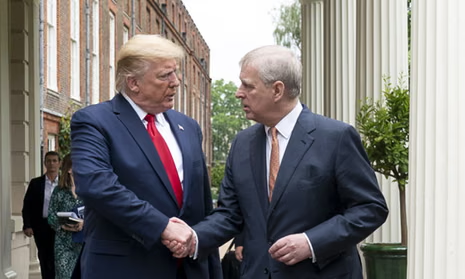
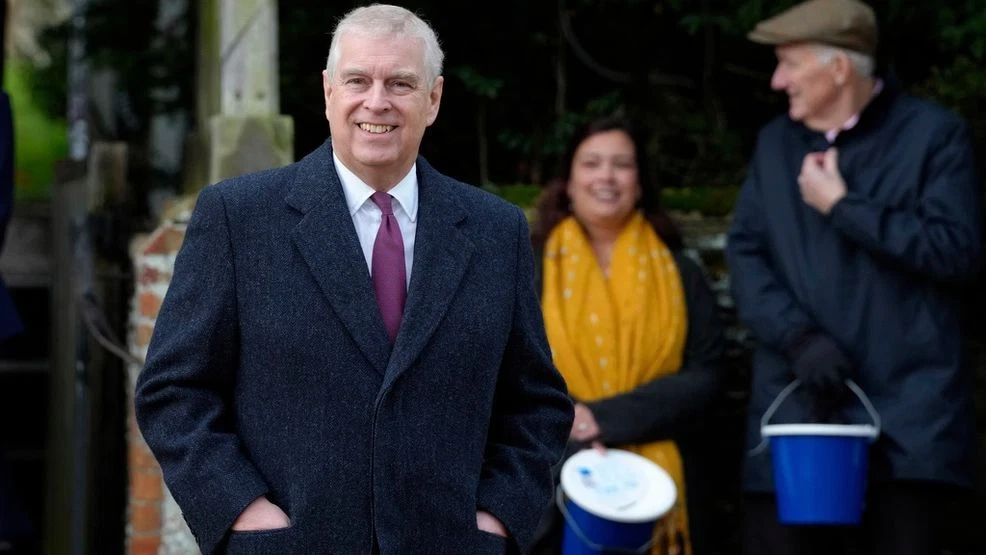
Prince Andrew, the younger brother of King Charles III, was released under investigation Thursday evening after being arrested on suspicion of misconduct in public office in connection with allegations he shared confidential government documents with the late financier Jeffrey Epstein.

Thames Valley Police confirmed that a man in his 60s had been detained and later freed pending further inquiries. A spokesperson for the force indicated that properties in Berkshire and Norfolk were searched as part of what authorities described as an ongoing criminal investigation.

Andrew Mountbatten-Windsor, who turned 66 on Thursday and is eighth in line to the British throne, spent much of the day being questioned by detectives. The arrest marks an extraordinary moment for the monarchy, representing the first time in modern history that a senior royal has been detained on suspicion of such an offense.

A Reuters journalist observed Andrew departing a police station in Aylsham, eastern England, shortly after 1900 GMT. Photographs taken after his release show him seated inside a vehicle, appearing shaken as cameras gathered outside.

Earlier this month, Thames Valley Police announced that officers were assessing allegations that Andrew had transmitted official briefing materials to Epstein during his tenure as the United Kingdom’s Special Representative for Trade and Investment. Assistant Chief Constable Oliver Wright said the force had initiated a formal inquiry following what he characterized as a “thorough assessment” of the claims.

“We understand the significant public interest in this case, and we will provide updates at the appropriate time,” Wright said.

Police action followed renewed scrutiny after the U.S. government released millions of pages of documents tied to its investigation into Epstein, who was convicted in 2008 of soliciting prostitution from a minor. The files suggested Andrew forwarded reports in 2010 regarding official visits to Vietnam, Singapore and other countries.

Andrew has consistently rejected allegations of wrongdoing connected to Epstein and previously expressed regret over their association. His office did not respond to requests for comment following the arrest.

Buckingham Palace indicated that it had not been informed in advance of the detention. King Charles addressed the matter in a written statement, declaring that he had learned of the development “with the deepest concern.”

“Let me state clearly: the law must take its course,” the monarch said, adding that authorities would have the royal family’s “full and wholehearted support and cooperation.” The king proceeded with a scheduled appearance at a London fashion event but refrained from further public remarks.

The BBC disclosed that detectives planned to continue searches at Royal Lodge in Berkshire, Andrew’s former residence, following his release. Officers were also present earlier at Wood Farm on the Sandringham Estate in Norfolk, where Andrew recently relocated.

An arrest in the United Kingdom requires reasonable suspicion of involvement in a criminal offense but does not constitute proof of guilt. Misconduct in public office, a common law offense not codified in statute, carries a potential maximum sentence of life imprisonment if proven in Crown Court.

The investigation is separate from a 2022 civil lawsuit in the United States brought by Virginia Giuffre, who accused Andrew of sexual abuse when she was a teenager. Andrew settled the case without admitting liability. Giuffre’s family issued a statement Thursday asserting that “no one is above the law, not even royalty.” Giuffre died by suicide last year.

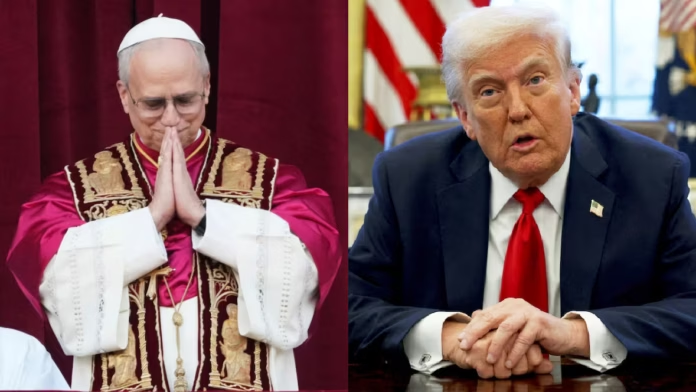
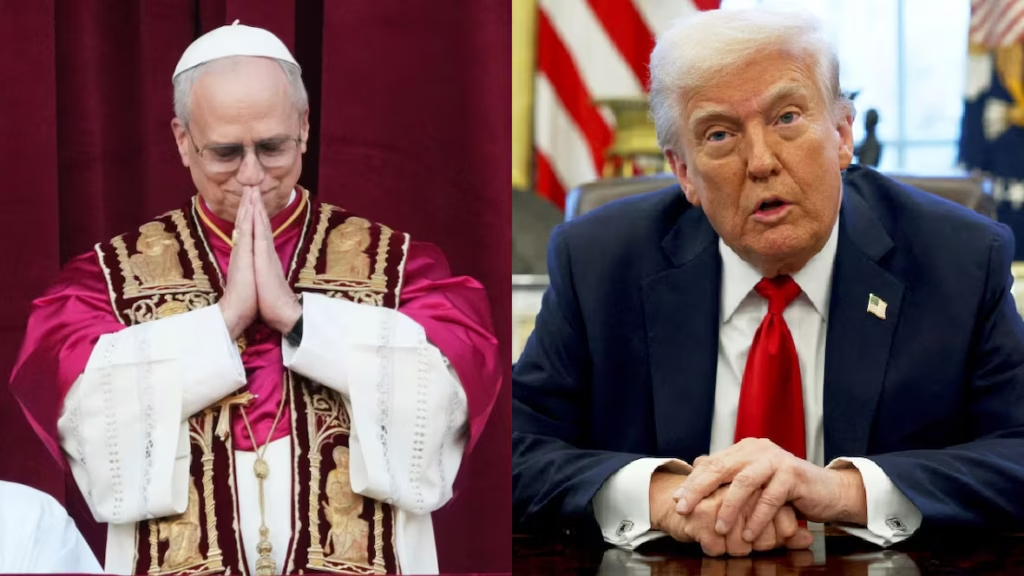
The fallout has reverberated internationally. U.S. President Donald Trump described the situation as “very sad,” telling reporters it was “so bad for the royal family.” Democratic Congressman Suhas Subramanyam, who has advocated for greater transparency regarding Epstein-related documents, told the BBC that the arrest was being monitored closely in Washington.

“In the UK they’re starting to see real accountability for people like Andrew Mountbatten-Windsor,” Subramanyam said. He argued that in the United States, consequences for those named in Epstein files often unfold in the “court of public opinion” rather than through criminal proceedings. He added that Andrew’s detention could intensify calls for voluntary testimony before U.S. lawmakers, though British law does not compel him to appear before Congress.

Separately, anti-monarchy campaign group Republic has referred allegations to police asserting Andrew may have facilitated the movement of a woman to Britain in 2010. Thames Valley Police has indicated it is reviewing claims concerning travel to an address in Windsor. Essex Police confirmed it is examining questions surrounding the passage of women through Stansted Airport during the period in question, following calls from former Prime Minister Gordon Brown for further scrutiny.

Andrew’s legal jeopardy compounds a series of reputational setbacks. In 2019, he withdrew from public duties amid backlash over his association with Epstein. Last October, King Charles removed his military titles and patronages.

Historically, prosecutions of senior royals are exceedingly rare. Princess Anne was fined for speeding in 2001 and pleaded guilty in 2002 to failing to control a dog that bit two children. The last monarch tried for a serious crime was King Charles I, executed in 1649 following a conviction for treason during the English Civil War.
The arrest and subsequent release of Prince Andrew underscore a pivotal test for Britain’s constitutional monarchy. While the royal family remains insulated from political authority, its members are subject to the same criminal statutes as other citizens. King Charles’ emphasis that “the law must take its course” signals a deliberate attempt to reinforce that principle publicly.

The case also highlights the enduring transatlantic shadow cast by Epstein’s criminal enterprise. The release of extensive U.S. investigative files has revived scrutiny of figures previously associated with him, even in the absence of new charges. Legal experts note that being referenced in such documents does not in itself establish wrongdoing, yet public perception often blurs that distinction.

For the monarchy, the investigation arrives at a delicate moment. King Charles has sought to streamline royal operations and project stability following Queen Elizabeth II’s death. Renewed controversy involving his brother risks complicating that effort, particularly as republican movements intensify debate over the institution’s future.

In the United States, lawmakers continue to weigh whether additional hearings or disclosures are warranted. Subramanyam’s remarks suggest congressional interest remains active, though jurisdictional limitations persist.

Ultimately, the outcome of the British inquiry will shape both legal accountability and the monarchy’s moral authority. For now, Andrew remains free but under investigation, a status that preserves the presumption of innocence while keeping the spotlight fixed on the House of Windsor.

Reuters/BBC
Former Prince Andrew Detained by British Police in Historic Epstein-Related Arrest

0

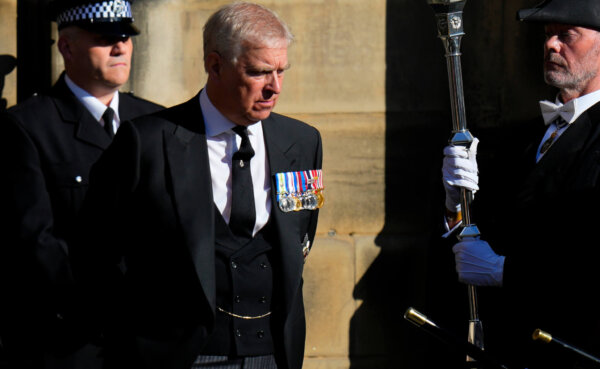
Former Prince Andrew was arrested and detained for approximately 11 hours Thursday by British authorities investigating suspected misconduct in public office connected to his relationship with convicted sex offender Jeffrey Epstein, marking the first time in nearly four centuries that a senior British royal has faced arrest—an extraordinary development in a nation where law enforcement traditionally shielded the monarchy from public embarrassment.

Thames Valley Police confirmed that Andrew Mountbatten-Windsor, as he is now legally known following King Charles III’s decision to strip him of royal titles, was taken into custody Thursday morning at his residence on the royal Sandringham Estate in eastern England. He was released Thursday evening without charges, though authorities emphasized he remains under investigation and has neither been exonerated nor formally accused.

The arrest represents a spectacular fall from grace for Queen Elizabeth II’s second son, who once served as Britain’s special representative for international trade and investment. His detention underscores how profoundly public deference toward the monarchy has eroded in recent years as Britons increasingly demand that wealth and aristocratic lineage provide no immunity from legal accountability.

King Charles III, whose late mother famously governed by the principle “never complain, never explain,” took the unusual step of issuing a public statement addressing his brother’s arrest—a departure from traditional royal silence regarding family legal troubles.

“Let me state clearly: the law must take its course,” the monarch declared. “As this process continues, it would not be right for me to comment further on this matter.” The statement signals Charles’s determination to distance the institution of monarchy from his brother’s legal jeopardy while maintaining minimal public commentary that might prejudice ongoing investigations.

The Associated Press confirms that police detained Mountbatten-Windsor, 66, for approximately 11 hours before releasing him under investigation—a legal status indicating authorities have not gathered sufficient evidence to file formal charges but have not eliminated him as a suspect. He was photographed departing the police station in a vehicle, concluding an ordeal that captivated Britain and reverberated internationally.

Thames Valley Police, which covers regions west of London including Windsor and areas where Mountbatten-Windsor previously resided, confirmed Thursday that a man in his sixties from Norfolk had been arrested and remained in custody. Police declined to identify the suspect by name, adhering to standard British procedures protecting suspects’ identities until formal charges are filed.

Mountbatten-Windsor relocated to the monarch’s private Norfolk estate following his recent eviction from Royal Lodge near Windsor Castle, where he had resided for more than two decades. The forced relocation represented another humiliation orchestrated by King Charles as the monarch worked aggressively to insulate the royal family from escalating scandal.

Assistant Chief Constable Oliver Wright confirmed that authorities opened a formal investigation after conducting a “thorough assessment” of allegations that Mountbatten-Windsor transmitted confidential trade information to Epstein in 2010, when the former prince served as Britain’s special envoy for international trade and investment.

“Following a thorough assessment, we have now opened an investigation into this allegation of misconduct in public office,” Wright stated, confirming that the inquiry focuses on whether Mountbatten-Windsor violated legal obligations protecting government information by sharing classified material with a convicted criminal.

The investigation centers on correspondence between Mountbatten-Windsor and Epstein released by the U.S. Justice Department late last month as part of millions of pages of documents from American investigations into Epstein’s sex trafficking enterprise. Email exchanges appear to show Mountbatten-Windsor forwarding reports from a two-week Southeast Asia tour he conducted in 2010—including confidential details about investment opportunities in Singapore, Hong Kong, and Vietnam—to Epstein, who by that time had already been convicted of soliciting a minor for prostitution.

Official terms of reference for British trade envoy positions explicitly state the role “carries with it a duty of confidentiality in relation to information received,” establishing clear legal obligations that prosecutors will examine in determining whether Mountbatten-Windsor’s conduct constitutes criminal misconduct.

Police executed search warrants at two properties: Mountbatten-Windsor’s current Sandringham residence and his former home at Royal Lodge in Windsor. Images circulating online appeared to show unmarked police vehicles at Wood Farm on the Sandringham Estate with plainclothes officers gathering outside—visual evidence of the investigation’s serious nature and the extraordinary spectacle of law enforcement searching royal properties.

Mountbatten-Windsor has consistently denied wrongdoing in his association with Epstein, maintaining that his relationship with the disgraced financier was limited and that he severed contact following Epstein’s 2008 conviction. However, the released correspondence directly contradicts those claims, revealing ongoing communication including Epstein offering to arrange a meeting between Mountbatten-Windsor and a young Russian woman in 2010, and the former prince inviting Epstein to dinner at Buckingham Palace.

Thursday’s arrest addresses allegations separate from those made by Virginia Giuffre, who claimed she was trafficked to Britain and forced to have sexual relations with the prince in 2001 when she was 17 years old. Giuffre died by suicide last year, but her family issued a statement praising the arrest as vindication that accountability extends even to royalty.

“Our broken hearts have been lifted at the news that no one is above the law, not even royalty,” the Giuffre family stated. “He was never a prince. For survivors everywhere, Virginia did this for you.”

Craig Prescott, a royal expert at Royal Holloway, University of London, characterized the arrest as unprecedented in modern royal history. “This is the most spectacular fall from grace for a member of the royal family in modern times,” Prescott observed, comparing its severity to the constitutional crisis precipitated by Edward VIII’s 1936 abdication to marry American divorcée Wallis Simpson. “And it may not be over yet,” he cautioned.

The last arrest of a senior British royal occurred nearly 400 years ago during the turbulent reign of King Charles I, when escalating tensions between crown and Parliament erupted into civil war. After Charles I attempted to arrest lawmakers in the House of Commons in 1642, conflict intensified into the English Civil War, concluding with parliamentary forces’ victory under Oliver Cromwell. Charles I was subsequently arrested, tried, convicted of high treason, and beheaded in 1649—a historical parallel that underscores the gravity of Thursday’s events even if contemporary consequences will differ dramatically.

Thursday’s arrest followed an announcement by the National Police Chiefs’ Council that it had established a coordination group to assist forces across the United Kingdom assessing whether Epstein and his associates committed crimes in Britain. Beyond concerns about Mountbatten-Windsor’s correspondence, documents released by American authorities suggest Epstein utilized his private aircraft to traffic women to and from Britain, potentially implicating additional individuals in criminal activity on British soil.

U.S. President Donald Trump commented on the arrest, characterizing it as “a shame” and “very sad.” “I think it’s so bad for the royal family,” Trump told journalists in Washington, expressing sympathy for an institution facing unprecedented public scrutiny over the scandal.

The Epstein files have similarly rocked British politics. Prime Minister Keir Starmer faced persistent questioning about his judgment after documents revealed that Peter Mandelson—whom Starmer appointed as ambassador to the United States—maintained a longer and closer relationship with Epstein than previously disclosed. London’s Metropolitan Police Service announced investigations into allegations of misconduct in public office related to Mandelson’s correspondence with Epstein. Starmer subsequently dismissed Mandelson as ambassador in September, though the former diplomat denies wrongdoing.

However, Mountbatten-Windsor’s relationship with Epstein has brought scandal directly to Buckingham Palace’s doorstep, threatening to undermine public support for the monarchy at a moment when republican sentiment is gaining traction, particularly among younger Britons questioning hereditary privilege’s continued relevance.

Concerns about Mountbatten-Windsor’s Epstein connections have plagued the royal family for more than a decade. Queen Elizabeth II forced her second son to relinquish royal duties and terminate charitable work in 2019 following a catastrophic BBC interview in which he attempted to explain away his friendship with Epstein. His claim that he could not have been at a London nightclub with Giuffre because he was dining at a Pizza Express in Woking—combined with his assertion that a medical condition prevented him from sweating, contradicting Giuffre’s account—became subjects of widespread ridicule and intensified public skepticism.

As concerns mounted about what additional Epstein files might reveal, King Charles moved decisively to distance the institution from his brother’s conduct. Since October, Charles has stripped Mountbatten-Windsor of the right to be called prince, forced his relocation from Royal Lodge after more than 20 years of occupancy, and issued public statements supporting women and girls abused by Epstein—measures designed to demonstrate the monarchy’s alignment with victims rather than alleged perpetrators.

Last week, Buckingham Palace announced its readiness to cooperate fully with police investigations into Mountbatten-Windsor, signaling institutional commitment to transparency that represents a significant departure from historical royal practice of resisting external scrutiny.

Danny Shaw, a British law enforcement expert, told the BBC that Mountbatten-Windsor would receive no preferential treatment during detention. “He would likely be placed in a cell in a custody suite with just a bed and a toilet, where he will wait until his police interview,” Shaw explained. “There’ll be no special treatment for him.”

The BBC confirms that both the Prince and Princess of Wales are supporting King Charles’s statement, while Prince Harry’s representatives indicated they would not comment. The King and Queen maintained their scheduled public engagements Thursday, with Charles attending an event in central London—a deliberate signal that royal duties continue despite family turmoil.

Anti-monarchy organization Republic confirmed it filed the police report that triggered the investigation, based on BBC News reporting about emails disclosed in American Epstein files. The group has advocated for years that hereditary monarchy is incompatible with democratic values and that royals should face identical legal scrutiny as ordinary citizens.

The investigation’s outcome will profoundly impact both Mountbatten-Windsor’s personal future and the monarchy’s institutional standing. If prosecutors determine evidence warrants criminal charges, a trial would subject the royal family to sustained negative publicity and potentially devastating testimony about relationships with a convicted sex offender. Conversely, if authorities conclude insufficient evidence supports prosecution, republican critics will likely characterize the decision as preferential treatment protecting the privileged.

For King Charles, the crisis presents an excruciating dilemma balancing familial loyalty against institutional preservation. His decisive actions distancing the monarchy from his brother demonstrate recognition that public tolerance for royal misconduct has fundamentally shifted. In an era when deference must be earned rather than assumed, even princes face accountability that previous generations of royals successfully evaded.

As the investigation proceeds, Britain confronts uncomfortable questions about how thoroughly Epstein’s criminal network penetrated British elite circles and whether authorities adequately responded to earlier warnings about his activities. The scandal has already claimed political casualties including Ambassador Mandelson and threatens additional revelations that could implicate other prominent figures in British society.

For Mountbatten-Windsor, Thursday’s 11-hour detention in a provincial police station represents a humiliation unimaginable during his mother’s reign, when royal scandal was carefully managed and legal jeopardy for senior royals remained inconceivable. Whether he ultimately faces criminal charges or eventual exoneration, his reputation lies irreparably damaged and his once-privileged life reduced to legal jeopardy and public disgrace.

AP/BBC

South Korean Court Delivers Life Sentence to Former President Yoon for Martial Law Insurrection

0

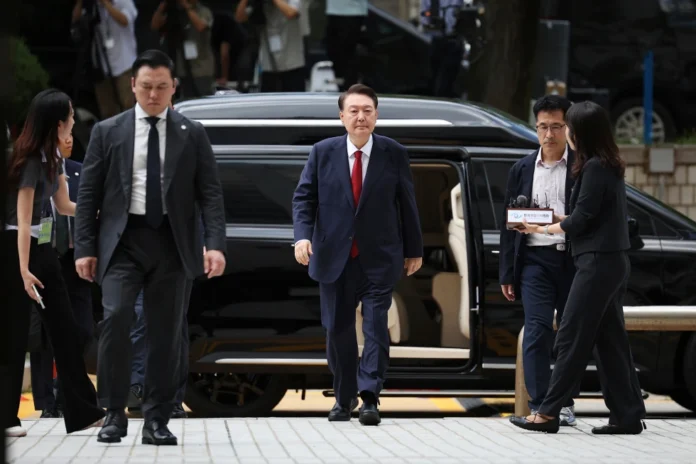
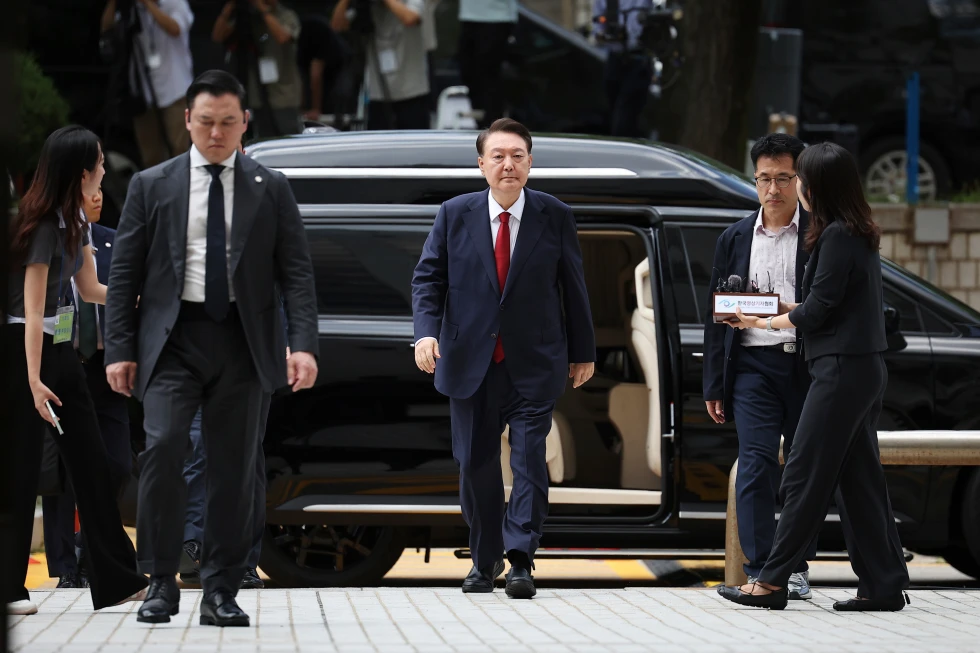
A South Korean court sentenced former President Yoon Suk Yeol to life imprisonment Thursday for orchestrating a failed insurrection through his shocking declaration of martial law and deployment of military forces to surround the National Assembly, concluding the nation’s most severe constitutional crisis in decades with an unprecedented judicial rebuke of presidential overreach.

Judge Jee Kui-youn of the Seoul Central District Court determined that Yoon committed rebellion by illegally mobilizing military and police forces in a calculated attempt to seize the opposition-controlled legislature, arrest political leaders, and establish unchecked authoritarian power for what the court characterized as “a considerable” duration.

The life sentence represents the harshest punishment imposed on a former South Korean president since military dictator Chun Doo-hwan received a death sentence in 1996 for his 1979 coup and the 1980 Gwangju massacre that left more than 200 pro-democracy protesters dead or missing. Chun’s sentence was subsequently reduced to life imprisonment before a 1997 presidential pardon secured his release.

Yoon’s bewildering martial law declaration on December 3, 2024—the first such emergency decree in more than four decades—evoked traumatic memories of South Korea’s authoritarian past when military-backed governments routinely proclaimed emergency measures enabling soldiers, tanks, and armored vehicles to occupy streets, schools, and public spaces to suppress dissent.

As lawmakers frantically converged on the National Assembly building upon learning of Yoon’s decree, his martial law command issued a proclamation asserting sweeping powers including suspending all political activities, controlling media and publications, and authorizing arrests without judicial warrants—provisions fundamentally incompatible with South Korea’s democratic constitution.

The constitutional crisis lasted approximately six hours before a sufficient quorum of lawmakers successfully breached a military blockade surrounding the Assembly building and unanimously voted to nullify the martial law measure, exercising their constitutional authority to override presidential emergency declarations.

Yoon faced suspension from office on December 14, 2024, following his impeachment by the National Assembly. The Constitutional Court formally removed him from the presidency in April 2025, completing his political downfall. He has remained incarcerated since last July while confronting multiple criminal prosecutions, with the rebellion charge carrying the most severe potential punishment under South Korean law.

Judge Jee’s verdict emphasized that Yoon’s decision to dispatch military forces to the National Assembly constituted the decisive evidence establishing his actions amounted to rebellion rather than merely an ill-conceived exercise of executive authority.

“This court finds that the purpose of (Yoon’s) actions was to send troops to the National Assembly, block the Assembly building and arrest key figures, including the National Assembly speaker and the leaders of both the ruling and opposition parties, in order to prevent lawmakers from gathering to deliberate or vote,” Jee declared in his ruling. “It’s sufficiently established that he intended to obstruct or paralyze the Assembly’s activities so that it would be unable to properly perform its functions for a considerable period of time.”

The court’s determination that Yoon harbored intent to disable democratic institutions for an extended period proved critical in distinguishing his conduct from constitutionally permissible emergency measures. Prosecutors presented evidence demonstrating Yoon planned to maintain military control over the legislature beyond the immediate crisis he claimed justified the decree.

Yoon Kap-keun, an attorney representing the former president, angrily rejected the conviction as illegitimate, accusing Judge Jee of issuing a “predetermined verdict” based exclusively on prosecution arguments while ignoring defense evidence. “The rule of law has collapsed,” the lawyer declared, though he indicated the defense team would consult with their client before determining whether to pursue an appeal.

Yoon Suk Yeol told the court during proceedings that his martial law declaration was intended merely to elevate public consciousness about how opposition lawmakers were paralyzing state governance, and that he remained prepared to respect parliamentary authority if legislators voted against the measure. This defense proved unpersuasive to judges who found his deployment of military forces to prevent such voting fundamentally contradicted his professed respect for democratic processes.

Prosecutors argued convincingly that Yoon’s actions transparently aimed to disable the legislature and prevent lawmakers from exercising their constitutional prerogative to nullify his decree—conduct that exceeded any executive authority even under legitimate martial law circumstances.

The sentencing proceeding occurred amid intense security precautions as hundreds of police officers established perimeters around the Seoul judicial complex. Yoon’s supporters rallied outside, their anguished cries intensifying as the prison transport vehicle carrying the former president passed. A counter-demonstration of Yoon’s critics gathered nearby, some brandishing signs demanding capital punishment for what they characterized as treasonous conduct.

Authorities reported no major confrontations between opposing demonstrator groups following the verdict’s announcement, though tensions remained elevated as South Korea continues processing the political trauma of witnessing a sitting president attempt to overthrow constitutional governance.

Special prosecutors had requested the death penalty for Yoon, arguing his assault on democratic institutions constituted an existential threat to South Korea’s hard-won democracy that warranted the ultimate sanction. However, most legal analysts anticipated a life sentence given that his poorly conceived power seizure resulted in no fatalities and collapsed within hours due to swift legislative and military resistance.

South Korea has not executed a death row prisoner since 1997, establishing what observers widely interpret as a de facto moratorium on capital punishment amid sustained advocacy for formal abolition. The nation’s evolving away from executions made a death sentence politically and judicially unlikely despite prosecutors’ impassioned arguments about the severity of Yoon’s crimes.

The court simultaneously convicted and sentenced numerous former military and police officials who participated in enforcing Yoon’s martial law decree. Former Defense Minister Kim Yong Hyun received a 30-year prison term for his central role planning the measure and mobilizing military units to occupy the National Assembly grounds—conduct the court characterized as deliberate betrayal of his oath to defend the constitution.

Last month, Yoon received a separate five-year sentence for resisting lawful arrest, fabricating the martial law proclamation’s legal justifications, and circumventing constitutionally mandated procedures requiring full Cabinet deliberation before declaring emergency measures. That conviction addressed procedural violations distinct from the substantive rebellion charges adjudicated in Thursday’s life sentence verdict.

The Seoul Central Court has additionally convicted two members of Yoon’s Cabinet in related proceedings. Prime Minister Han Duck-soo received a 23-year prison sentence for attempting to legitimize the decree by coercing Cabinet approval through a hastily convened meeting, falsifying official records, and committing perjury during subsequent investigations. Han has filed an appeal challenging his conviction.

The cascade of convictions and lengthy sentences reflects judicial determination to establish clear precedents deterring future presidential adventurism. South Korea’s democratic institutions, established following decades of authoritarian military rule that ended in the late 1980s, faced their most serious threat since democratization when Yoon deployed armed forces against the elected legislature.

Yoon’s defense maintained throughout proceedings that he genuinely believed opposition lawmakers were obstructing governance to such a degree that extraordinary measures became necessary to protect national interests. However, prosecutors demonstrated that democratic mechanisms including legislative oversight, judicial review, and electoral accountability provided constitutional remedies for political disputes without requiring military intervention.

The former president’s martial law declaration shocked South Koreans who had lived their entire adult lives under democratic governance and viewed authoritarian emergency decrees as remnants of a discredited past. The decree’s invocation of powers associated with military dictatorships—suspending political activity, controlling media, authorizing warrantless arrests—proved particularly alarming to citizens and legislators who experienced those repressive measures or inherited collective memories of their destructive impact.

International observers closely monitored the crisis and subsequent judicial proceedings as tests of South Korea’s democratic resilience. The swift legislative response nullifying Yoon’s decree, followed by impeachment, removal, arrest, prosecution, and conviction, demonstrated institutional strength and constitutional fidelity that distinguished South Korea from nations where executive power grabs succeed through military loyalty or institutional collapse.

The verdicts send unmistakable signals that South Korean courts will vigorously defend democratic norms against executive overreach regardless of a defendant’s former status or political connections. Life imprisonment for a former president represents an extraordinary outcome reflecting the judiciary’s assessment that Yoon’s conduct threatened the constitutional order’s foundations.

As Yoon begins what likely constitutes the remainder of his natural life in prison, South Korea continues grappling with broader questions about how a democratically elected president could attempt overthrowing the system that elevated him to power. Investigations continue examining whether additional officials participated in planning or supporting the martial law scheme, with further indictments and trials anticipated.

The political opposition that Yoon attempted to suppress through military force now controls both the presidency and legislature following elections that functioned as referendums on the martial law crisis. The new government has prioritized democratic reforms intended to prevent future presidents from accumulating excessive power or circumventing institutional checks and balances.

For South Koreans who endured the terrifying hours when soldiers surrounded their National Assembly and uncertain whether democracy would survive, Thursday’s verdict provides validation that constitutional principles prevailed and accountability mechanisms functioned as designed. The life sentence stands as testament that no executive, regardless of position or prerogatives, operates above the law in a democratic republic committed to self-governance.

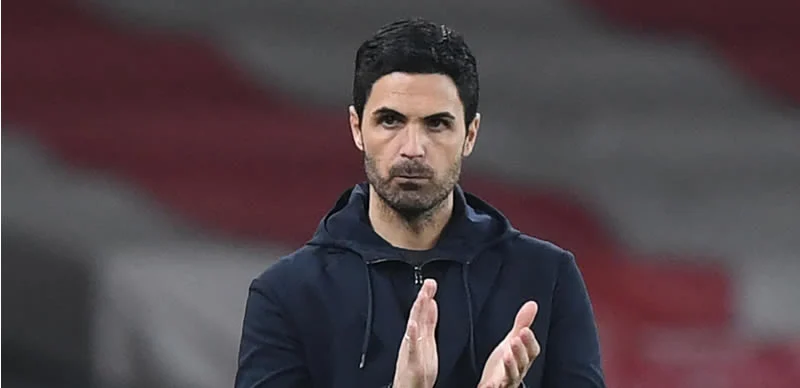
Arsenal blow two-goal lead as 20th place Wolves rally 2-2 late draw

0

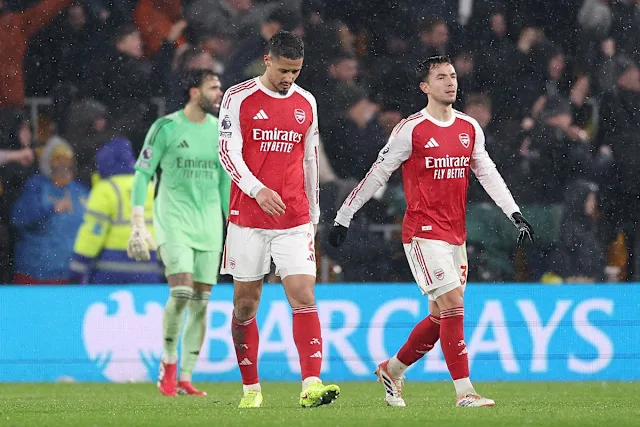
WOLVERHAMPTON, England (BN24) — Arsenal relinquished a commanding two-goal advantage as last-placed Wolverhampton Wanderers mounted a stirring comeback to secure a 2-2 draw in a pulsating Premier League encounter at Molineux Stadium on Wednesday night.

The visitors appeared firmly in control after Bukayo Saka struck early to end a lengthy scoring drought before Piero Hincapie extended Arsenal’s cushion. Yet Wolves, who began the evening rooted to the bottom of the table, responded with resilience and capitalized on defensive disarray to salvage a point that could prove significant in their fight against relegation.

The setback leaves Arsenal having squandered valuable ground in the championship pursuit and potentially offers Manchester City renewed encouragement in the battle atop the standings.

Saka broke the deadlock in the opening stages, finishing crisply to register his first goal in all competitions since December against Brentford. The England international had gone 15 appearances without finding the net for Arsenal his longest barren stretch for the club and his early strike seemed to restore both confidence and momentum.

Hincapié added the second before halftime, converting from close range to reinforce Arsenal’s dominance after sustained pressure. At that juncture, the visitors appeared poised to consolidate their position at the summit.

Wolves, however, regrouped after the interval. Hugo Bueno reduced the deficit with a powerful effort that shifted the energy inside Molineux. The hosts grew in belief, pressing forward with urgency and unsettling an Arsenal side that had previously dictated the tempo.

The equalizer arrived late and in dramatic fashion. A defensive mix-up in the Arsenal back line resulted in an own goal that leveled proceedings, igniting celebrations among the home supporters and sealing a comeback few would have anticipated at halftime.

Tensions flared following the final whistle, with players from both sides involved in heated exchanges, underscoring the intensity of the contest and its broader implications at both ends of the table.

Arsenal’s concerns were compounded by Saka’s substitution after he appeared to sustain a hip problem. The winger’s departure adds to fitness anxieties at a critical juncture in the campaign, particularly with a North London derby looming. PUNCH Online indicates that Arsenal will face Tottenham on Sunday, Feb. 22, 2026, in a fixture that could carry significant ramifications in the title race.

Statistical details published in a post-match review on Arsenal’s official website underscore the rarity of Wolves’ achievement. Four players have netted their first Premier League goal against Arsenal this season, three representing Wolves Tolu Arokodare in December, and both Hugo Bueno and Tom Edozie in this match. Brian Brobbey of Sunderland also accomplished the feat in November.

Edozie became the seventh player to score on his Premier League debut against a team that began the day atop the table, the first since Antony did so for Manchester United against Arsenal in September 2022.

Perhaps most strikingly, this marked the first occasion in Premier League history that a team starting the day at the foot of the standings avoided defeat against the league leader despite trailing by two or more goals. Wolves also halted a 31-game home losing sequence in matches where they had fallen behind by at least two goals, a streak dating back to their 3-2 victory over Manchester City in December 2019.

For Arsenal, the outcome may resonate beyond the single point earned. Having controlled much of the contest, their inability to secure victory raises questions about composure and defensive organization under pressure. Title-winning campaigns often hinge on converting dominant displays into maximum points, particularly against teams battling relegation.

From Wolves’ perspective, the draw represents more than a morale boost. It offers tangible evidence of resolve under their current circumstances and could galvanize belief within a squad striving to escape the drop zone. Securing a result against the league’s frontrunner may serve as a psychological turning point as the season approaches its decisive phase.

The broader title narrative now tightens. Manchester City, long accustomed to capitalizing on rivals’ missteps, may view Arsenal’s stumble as an opportunity to assert renewed authority in the standings. With fixtures intensifying and margins narrowing, consistency becomes paramount.

Original analysis suggests that Arsenal’s defensive lapse late in matches has surfaced intermittently this season, hinting at vulnerability when protecting leads. Squad rotation, injury management and psychological resilience will likely shape the trajectory of their campaign. Meanwhile, Wolves’ spirited display illustrates how teams fighting relegation can disrupt established hierarchies, particularly when urgency overrides expectation.

As the Premier League season enters its defining stretch, both ends of the table remain fiercely contested. Arsenal must regroup swiftly ahead of their derby encounter, while Wolves seek to channel momentum from a historic comeback that could prove pivotal in their survival bid.

Canada Revamps Express Entry for 2026, Introduces New Immigration Categories for Skilled Professionals

0

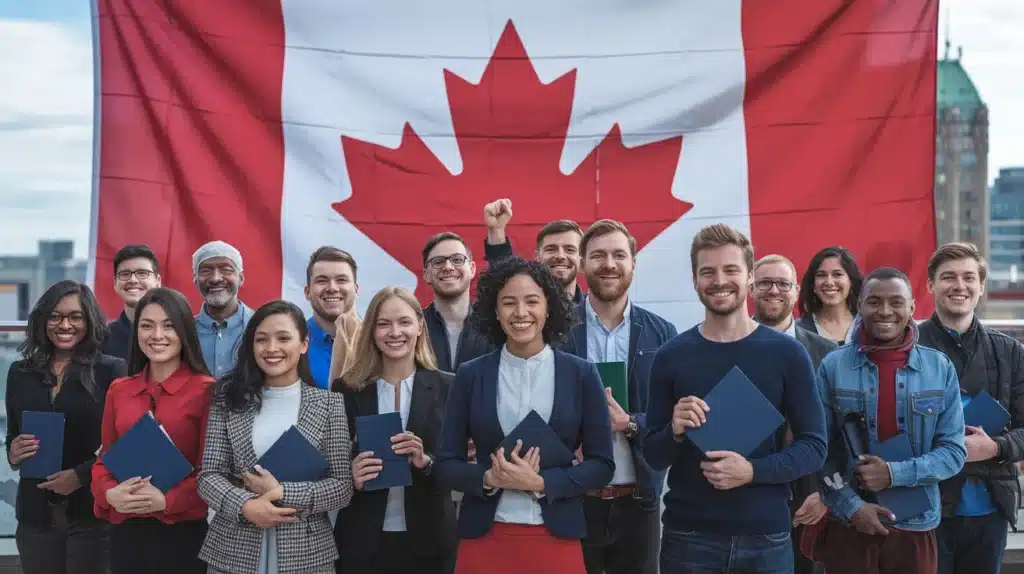
OTTAWA, Ontario (BN24) — Canada is reshaping its primary economic immigration pathway for 2026, unveiling expanded categories and stricter eligibility standards aimed at drawing highly skilled professionals while addressing persistent labor shortages.

The federal government introduced the changes Thursday as part of its broader International Talent Attraction Strategy. Details were published on the website of Immigration, Refugees and Citizenship Canada, the department commonly known as IRCC.

Minister of Immigration, Refugees and Citizenship Lena Diab said the revisions are intended to recalibrate the immigration system and strengthen public trust while ensuring newcomers are prepared to contribute immediately.

“Right now, my department is investing a great deal of focus and energy on attracting and retaining global talent bringing in the right people to help build a stronger future,” Diab said in a statement posted online.

“Getting this right largely depends on how we select newcomers,” she added. “Across departments, our government has embarked on an ambitious International Talent Attraction Strategy. At Immigration, we are using the tools at our disposal to attract talent that grows our economy and fills key labour shortages.”

Diab described Express Entry as central to that approach.

“Express Entry is an online system that we use to manage applications for three permanent residence programs,” she said, referring to the Canadian Experience Class, the Federal Skilled Worker Program and the Federal Skilled Trades Program.

Under category-based invitation rounds, the government selects candidates from the Express Entry pool who possess skills deemed essential for priority sectors.

The 2026 update preserves existing priority streams, including healthcare and social services occupations such as nurse practitioners, pharmacists, dentists, psychologists and chiropractors. Skilled trades including carpenters, plumbers and machinists will remain eligible, as will science, technology, engineering and mathematics professionals, including engineers and cybersecurity specialists.

French-language proficiency will continue to serve as a key selection factor, reinforcing Canada’s objective of strengthening Francophone communities outside Quebec.

At the same time, Ottawa is adding several new priority categories reflecting evolving economic and national security considerations.

Among them are foreign-trained medical doctors with Canadian work experience, who will now have a clearer route to permanent residency. The measure is designed to ease chronic physician shortages across provinces.

Researchers and senior managers with Canadian experience are also being prioritized, aligning with a federal initiative valued at $1.7 billion intended to recruit leading global researchers and bolster innovation capacity.

The reforms further extend eligibility to transport professionals including pilots, aircraft mechanics and inspectors — viewed as critical to trade, logistics and supply chain resilience.

Another new category includes skilled military recruits, such as doctors, nurses and pilots who have job offers from the Canadian Armed Forces, supporting national defense and the country’s Defence Industrial Strategy.

While expanding categories, IRCC is tightening certain requirements. The minimum work experience threshold for most targeted occupations will increase from six months to 12 months. Applicants must have gained that experience within the previous three years, whether in Canada or abroad.

Cooks have been removed from the trade occupations list and will no longer qualify for category-based Express Entry draws.

Canada is also intensifying its efforts to attract French-speaking immigrants outside Quebec. The government indicated it surpassed its Francophone immigration targets for the fourth consecutive year, with nearly 9% of admissions outside Quebec in 2025 consisting of French-speaking newcomers.

Officials say they intend to admit more than 30,000 Francophone immigrants annually beginning in 2026, aiming for a 12% share outside Quebec by 2029.

Diab emphasized predictability as a guiding principle.

“A predictable and consistent immigration system benefits employers, communities and provinces,” she said, adding that targeted selection helps address workforce gaps, improve access to health care, advance infrastructure projects and stimulate technology development, including artificial intelligence and cybersecurity.

The first invitation rounds under the revised framework are expected in the coming days, beginning with foreign medical doctors and other health-care professionals. Applicants will continue to be assessed under a points-based system that evaluates education, language proficiency, work experience and other human capital factors.

Original analysis suggests the reforms reflect a broader recalibration of Canada’s immigration policy amid mounting domestic pressures. Provinces have reported acute shortages in health care and skilled trades, while public debate has intensified over housing availability and infrastructure capacity.

By raising experience requirements and narrowing eligibility in certain trades, Ottawa appears to be signaling a shift toward quality and sector-specific alignment over sheer volume. The addition of military and transport professionals also underscores how immigration policy is increasingly intertwined with national security and economic resilience.

Moreover, the strong emphasis on Francophone admissions outside Quebec reflects longstanding demographic objectives. Sustaining French-language communities beyond Quebec has been a federal priority for decades, and setting measurable annual targets indicates a renewed commitment to that goal.

Whether the changes will alleviate labor gaps quickly remains uncertain. Immigration pathways often take months or years to translate into workforce integration, particularly in regulated professions such as medicine, where credential recognition can pose barriers.

Still, by refining its selection criteria and expanding targeted categories, Canada is positioning its Express Entry system as both an economic instrument and a strategic policy lever. The government’s challenge will be balancing growth ambitions with public confidence and infrastructure readiness as it seeks to build what Diab described as a “stronger, more resilient workforce” for the years ahead.

Gabon Orders Indefinite Social Media Shutdown, Citing Threats to National Unity

0
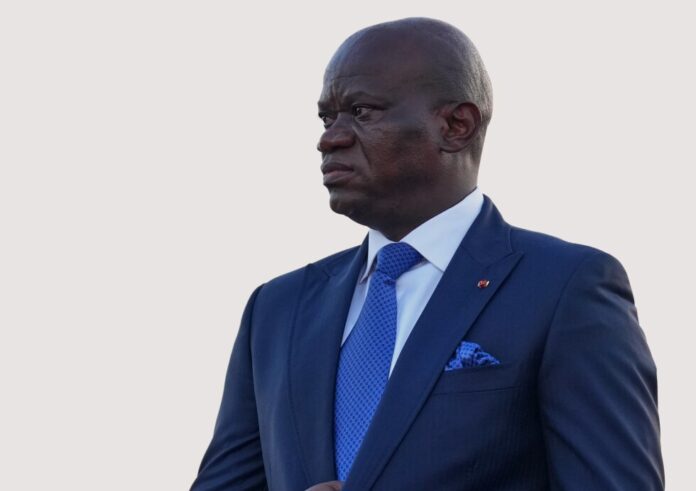
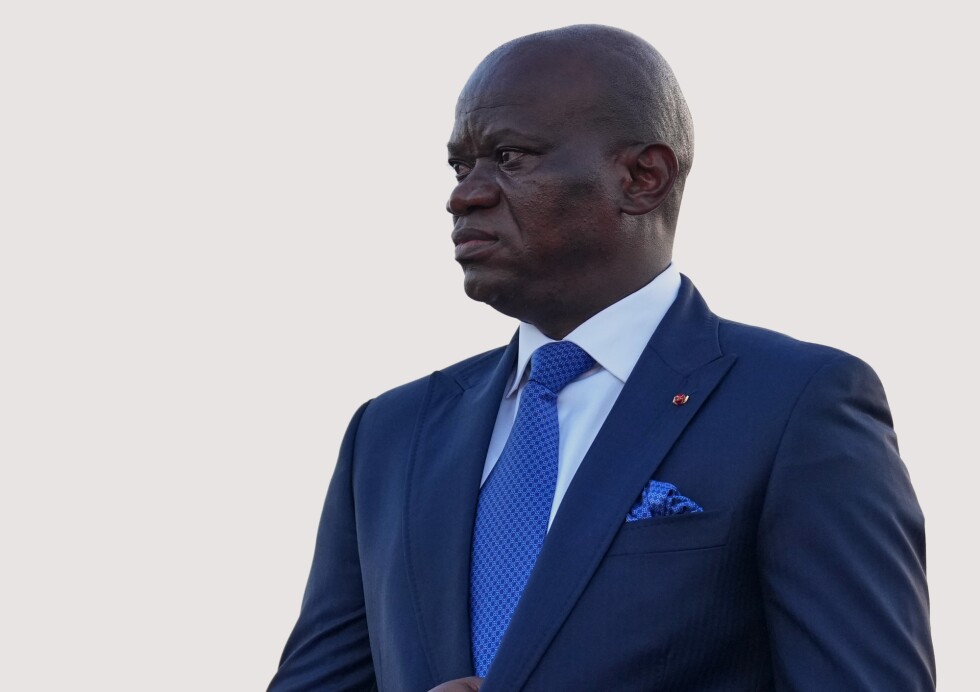
FILE - Gabon's President Brice Oligui Nguema waits to welcome France's President Emmanuel Macron at the Leon-Mba International Airport in Libreville, Gabon, Sunday, Nov. 23, 2025. (AP Photo/Thibault Camus, file)

LIBREVILLE, Gabon (BN24) — Gabon’s media regulator has ordered the immediate suspension of social media platforms nationwide, describing the measure as necessary to safeguard public order and national cohesion amid rising tensions.

FILE – Gabon’s President Brice Oligui Nguema waits to welcome France’s President Emmanuel Macron at the Leon-Mba International Airport in Libreville, Gabon, Sunday, Nov. 23, 2025. (AP Photo/Thibault Camus, file)

In a televised announcement, the High Authority for Communication declared that social media services would be halted “until further notice.” Officials did not identify which specific platforms would be affected by the directive.

Spokesman Jean-Claude Mendome said the decision followed what authorities characterized as an increase in online material deemed defamatory, hateful and inflammatory. According to Mendome, such content was eroding “human dignity, public morality, the honour of citizens, social cohesion, the stability of the Republic’s institutions and national security.”

He also cited the circulation of false information, cyberbullying and the unauthorized release of personal data as factors that prompted the suspension.

“These actions are likely, in the case of Gabon, to generate social conflict, destabilise the institutions of the Republic and seriously jeopardise national unity, democratic progress and achievements,” Mendome said.

Despite the sweeping order, the regulator affirmed that freedom of expression remains protected under Gabonese law, describing it as “a fundamental right enshrined in Gabon,” including the right to comment and criticize.

The announcement comes less than a year after President Brice Oligui Nguema was elected and amid continuing labor unrest across the country.

Labor Strikes and Social Tension

Teachers have been on strike since December, pressing for improved pay and working conditions. Similar industrial actions have spread to other public sectors, including health services, higher education and state broadcasting.

While authorities did not explicitly link the suspension to the strikes, the timing has raised questions about the role of social media in organizing demonstrations and amplifying public grievances. Digital platforms in Gabon have become central channels for civic discussion, labor mobilization and political commentary.

Government officials framed the suspension as a precautionary measure aimed at preventing escalation. The regulator’s statement suggested that unchecked online discourse could inflame divisions during a sensitive period.

Gabon’s decision aligns with a broader trend in parts of Africa where governments have temporarily restricted digital platforms during periods of political tension. Authorities often argue that such steps are necessary to counter misinformation or prevent unrest, while critics contend that blanket bans risk limiting transparency and curbing legitimate public debate.

Internet disruptions can carry economic consequences as well. Small businesses, journalists and community organizations rely heavily on social networks for communication and commerce. A prolonged suspension could disrupt transactions, marketing efforts and information flow, particularly in urban centers such as Libreville.

The High Authority for Communication did not indicate how long the restrictions might remain in effect. Without a defined timeline, uncertainty persists for citizens and businesses dependent on digital connectivity.

The indefinite nature of the suspension underscores the delicate balance governments face between safeguarding security and upholding civil liberties. In transitional political environments, online platforms can both empower civic engagement and amplify unrest.

For President Nguema’s administration, the move may reflect a calculation that limiting digital amplification of protests could reduce tensions. However, prolonged restrictions may deepen skepticism among segments of the population who view social media as a critical outlet for accountability.

Research across multiple regions suggests that internet shutdowns can sometimes intensify rumors by pushing discourse into less visible channels. When official communication is limited, speculation may flourish. Governments that employ such measures often confront scrutiny from international observers and digital rights groups.

Gabon’s assertion that freedom of expression remains intact despite the suspension presents a complex legal and political question. While constitutional protections may formally remain, practical access to widely used communication tools shapes how those rights are exercised in daily life.

As labor disputes continue and political consolidation remains underway, the duration and scope of the shutdown will likely influence perceptions of the government’s commitment to democratic norms. Whether authorities introduce targeted moderation strategies or maintain a blanket suspension could signal the direction of digital governance in the country.

For now, citizens await further clarification on when access to social platforms will resume, as Gabon navigates a period marked by economic demands, social activism and heightened scrutiny of public discourse.

Rising Star Rapper Lil Poppa Dies at 25 Days After Releasing New Single

0

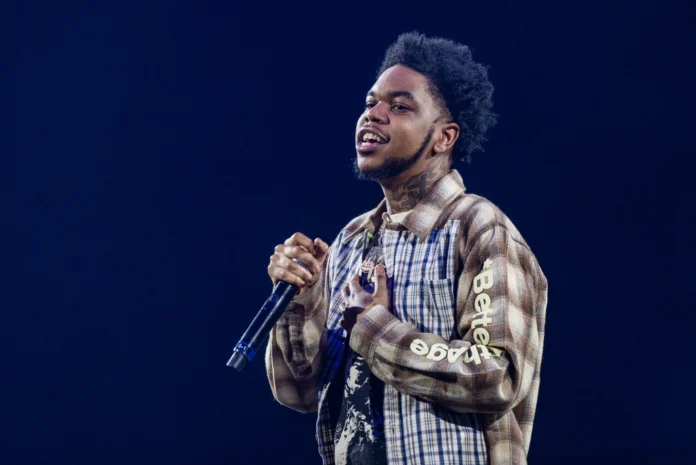
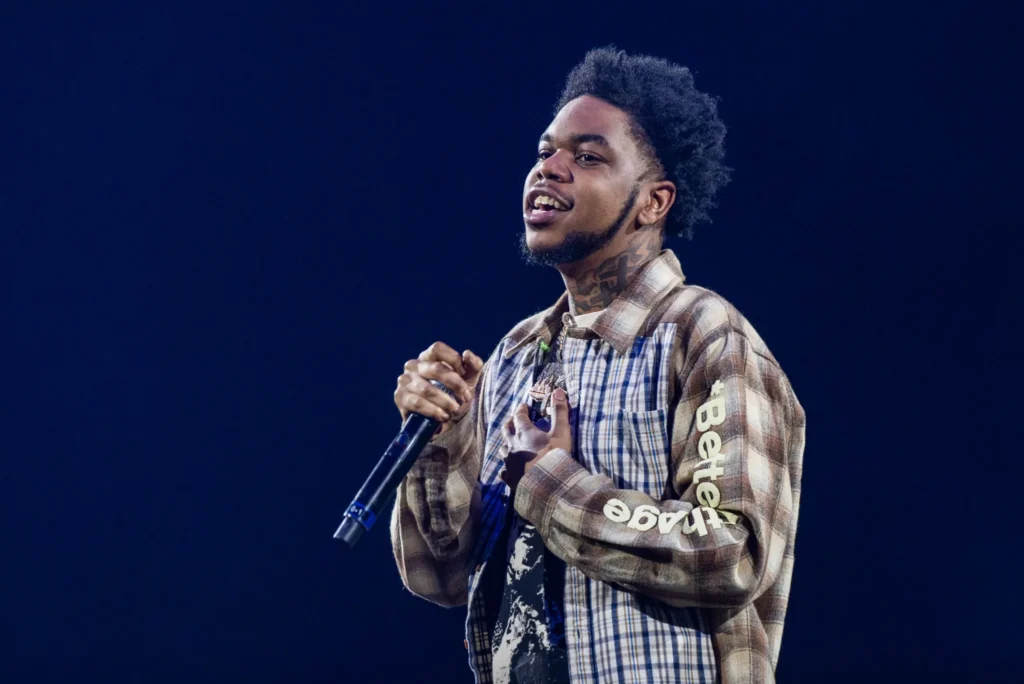
Lil Poppa, a fast-rising hip-hop artist from Jacksonville, Florida, who built a loyal following with emotionally candid lyrics and melodic storytelling, has died at 25, officials confirmed Wednesday.

The Fulton County Medical Examiner’s Office in Atlanta verified that the rapper, born Janarious Mykel Wheeler, was pronounced dead at 11:23 a.m. Wednesday in Georgia. Authorities did not immediately disclose a cause of death.

News of his passing spread rapidly across social media, prompting an outpouring of tributes from fans and fellow artists. The musician had released a new single, “Out of Town Bae,” on Feb. 13, just days before his death.

Lil Poppa was signed to Collective Music Group, the label founded by rapper Yo Gotti. The imprint has backed several prominent acts in recent years, including GloRilla. His affiliation with the label marked a turning point in a career that began in adolescence and steadily gained momentum through independent releases.

The Independent confirmed the death through the Fulton County Medical Examiner’s Office, while TMZ first disclosed that authorities in Atlanta had announced the loss without detailing the circumstances.

In the hours before the confirmation became public, speculation circulated online. Fans inundated the rapper’s Instagram account with messages pleading for clarity. Comments beneath his recent posts reflected disbelief and heartbreak.

“Poppa tell me they lying,” one follower wrote beneath a music video posted five days before his death. Another added, “This can’t be true,” punctuated by broken-heart emojis.

Lil Poppa’s final Instagram Story, shared Tuesday night, showed him riding in a vehicle while Rod Wave’s “Letting It Go” played in the background. The lyrics, which speak about inner turmoil and the search for peace, resonated deeply with listeners in retrospect. The song’s refrain — “Hearts all gotta break sometimes” — took on a haunting weight after his death was confirmed.

Born and raised in Jacksonville, Lil Poppa emerged from a region that has become a significant incubator of Southern hip-hop talent. He began rapping in church alongside friends and his older brother before constructing a makeshift recording setup in his bedroom closet at age 12, using a laptop and a Radio Shack microphone.

His breakthrough arrived in 2018 with “Purple Hearts,” an independently released single that amassed millions of views on YouTube. The song drew inspiration from a drive-by shooting that claimed the life of a close friend, underscoring the autobiographical intensity that would define his catalog. Another early track, “Nightmare on Elm St,” expanded his reach that same year.

Lil Poppa’s music frequently explored themes of grief, romantic struggle, mental health and survival. His Instagram biography captured the stark tone that ran through his lyrics: “First We’re Born, Next We Suffer, Then We Die… The End!!”

Over time, his discography expanded to include widely streamed songs such as “Love & War,” “Mind Over Matter” and “HAPPY TEARS.” His 16-track album “Almost Normal Again,” released in August, showcased his signature blend of confessional songwriting and melodic rap flows.

He had been scheduled to perform in New Orleans in March to celebrate his birthday, a date fans now view with painful irony.

At the time of his death, Lil Poppa had amassed more than 960,000 followers on Instagram and cultivated a dedicated audience on streaming platforms. His Spotify page indicates he began releasing music professionally in 2017, when he was still a teenager.

Messages of remembrance continued to multiply across Instagram and X. One user wrote, “Lil Poppa was super talented. Unfortunate to hear, RIP.” Another lamented missing the opportunity to attend one of his concerts.

The rapper’s death adds to a string of losses within the hip-hop community in recent years, a pattern that has reignited conversations about the pressures young artists face both personally and professionally.

Lil Poppa’s ascent illustrates the changing architecture of modern music careers. Like many of his generation, he leveraged social media and streaming platforms to build an audience before aligning with an established label. His early YouTube traction demonstrated how independent distribution channels can function as incubators for national recognition.

His signing to Collective Music Group reflected a broader industry trend in which regional talents are cultivated through strategic partnerships with larger brands. The label’s expansion into diverse markets underscores the South’s continued dominance in shaping contemporary hip-hop sounds.

Thematically, Lil Poppa belonged to a wave of artists who foreground vulnerability, trauma and mental health in their work. Songs such as “Love & War” and “Purple Hearts” resonated with listeners who identified with his unfiltered storytelling. His openness mirrored a generational shift in hip-hop, where emotional candor increasingly coexists with traditional bravado.

His sudden death may intensify scrutiny of how the industry supports young artists navigating rapid fame, financial pressure and personal struggles. While no cause of death has been disclosed, the absence of details has fueled speculation online — a dynamic that often accompanies high-profile losses in the digital age.

In Jacksonville, his hometown, Lil Poppa represented both a success story and a reflection of the community’s challenges. His lyrics often chronicled violence, loss and resilience, capturing realities familiar to many listeners.

For fans, the release of “Out of Town Bae” now carries a bittersweet significance. The track’s debut just days before his death underscores the unpredictability that shadows even the most promising trajectories.

Authorities have not indicated when additional information regarding the cause of death might be released. Representatives for Collective Music Group have not yet issued a public statement.

As tributes continue to pour in, Lil Poppa’s legacy rests in a body of work marked by emotional transparency and Southern authenticity — music that, for many listeners, offered solace amid hardship.

TheSun/TheIndependent

 Ghana, Kenya Probe Suspected Russian Over Secret Sex Recordings Posted Online

0

Authorities in Ghana and Kenya have opened investigations into a man believed to be a Russian national who is accused of secretly recording sexual encounters with multiple women and distributing the footage online without their consent, triggering outrage and diplomatic engagement.

Ghana’s communications minister, Samuel Nartey George, said at a news conference Wednesday in Accra that the government has begun tracing digital and financial trails connected to the publication of the explicit videos. Officials are working to preserve electronic evidence and identify the full scope of the alleged violations.

“We are taking decisive steps to secure relevant data and financial records linked to the dissemination of this content,” George said, describing the matter as both a criminal investigation and a serious breach of privacy.

The controversy has extended beyond Ghana’s borders. Kenyan media outlets have circulated reports of viral clips purportedly involving Kenyan women, raising concerns that the suspected perpetrator may have operated across multiple countries.

In Nairobi, Kenya’s gender minister, Hanna Wendot Cheptumo, denounced the alleged conduct earlier this week and pledged cooperation with international partners. She characterized the secret filming of women as exploitation and urged potential victims to contact a confidential toll-free helpline established for survivors of abuse.

Authorities in both countries have indicated that the suspect is believed to have recorded and shared explicit material through social media platforms without the women’s consent, actions that would constitute criminal offenses under their respective laws governing privacy, cybercrime and sexual exploitation.

Ghana’s Ministry of Gender, Children and Social Protection confirmed it is coordinating with law enforcement agencies and exploring cross-border legal mechanisms to track the individual, who officials believe is no longer in Ghana. In a statement, authorities said the conduct “infringed upon the privacy and dignity of the victims.”

The case has also prompted diplomatic outreach. Ghana’s Foreign Ministry summoned Sergei Berdnikov, Russia’s ambassador to Ghana, on Tuesday to formally register what it described as “strong displeasure” over the alleged actions. Officials described the conduct as “atrocious” and in violation of Ghanaian law and sought Moscow’s cooperation in bringing the suspect to justice.

According to Ghana’s Foreign Ministry, Berdnikov acknowledged concerns about the alleged privacy violations and the broader cybercrime implications. He conveyed Russia’s readiness to cooperate with Ghanaian authorities. However, the ambassador said he could not confirm that the suspect is a Russian national and suggested that the name circulating in media coverage does not appear to be a recognized Russian name, instead resembling a vulgar expression in the Russian language.

The uncertainty over the suspect’s nationality has not slowed the investigation. Ghanaian officials said they are focusing on digital forensic analysis, including tracking IP addresses, payment systems and platform activity to identify where the videos were uploaded and monetized, if applicable.

The case has ignited widespread debate on Ghanaian social media platforms, where users have called for accountability, tougher cybercrime enforcement and expanded protections against digital sexual exploitation. Advocates say the incident underscores the vulnerability of women in online spaces and the challenges of prosecuting cross-border offenses in an era of rapidly evolving technology.

Legal experts note that both Ghana and Kenya have strengthened cybercrime statutes in recent years, criminalizing non-consensual sharing of intimate images. Enforcement, however, can be complicated when suspects operate across jurisdictions or when evidence is stored on servers outside national borders.

In addition to criminal investigations, officials say psychosocial and legal assistance is being offered to affected women through confidential channels. Ghanaian authorities indicated that support services include counseling and legal advice, coordinated discreetly to protect survivors’ identities.

The episode also highlights broader regional concerns about online abuse and gender-based violence. Digital platforms have become increasingly central to social and economic life across Africa, but regulatory frameworks and enforcement capabilities often lag behind the pace of technological change. Civil society organizations have called for closer cooperation among governments, tech companies and international partners to address exploitation that crosses borders.

While investigators have not disclosed the suspect’s identity or current location, they have emphasized that collaboration between Ghana, Kenya and foreign authorities is ongoing. Officials in both countries say their objective is to ensure accountability while safeguarding the rights and dignity of victims.

The diplomatic dimension of the case adds another layer of complexity. Although Ghana has sought assurances of cooperation from Russia, the question of nationality remains unresolved. Law enforcement agencies are expected to rely on mutual legal assistance treaties and international cybercrime frameworks to pursue evidence and possible extradition, if warranted.

For now, authorities are urging caution in sharing unverified content online and encouraging anyone who believes they may have been affected to contact official support channels. The investigations in Accra and Nairobi continue as officials work to determine the full extent of the alleged exploitation and whether additional victims are involved.

The case has become a focal point in conversations about privacy, consent and digital accountability in West and East Africa, with governments signaling that violations of intimate privacy — particularly when amplified online — will face heightened scrutiny and legal consequences.

The Associated Press original

Suspected Carbon Monoxide Leak Kills 37 Workers Dozens Hospitalized in Kaduna, Nigeria

0

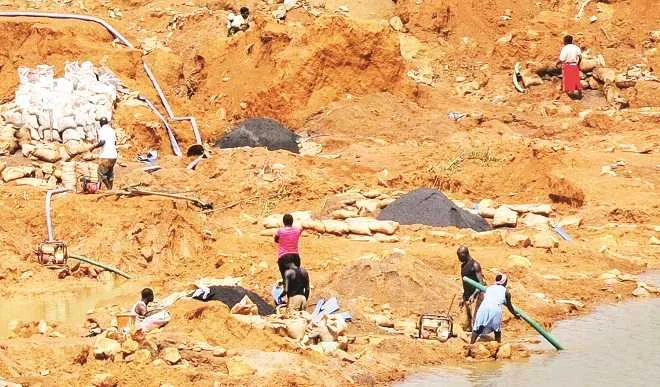
ZURAK, Nigeria (BN24) — A suspected buildup of carbon monoxide deep inside an underground mining shaft has claimed the lives of at least 37 workers in Plateau State, with 25 others hospitalized, prompting renewed scrutiny of safety practices in Nigeria’s solid minerals sector.

The fatal incident unfolded early Wednesday at a mining facility operated by Solid Mining Company in Zurak, a community within Wase Local Government Area. Local accounts indicate that the victims were carrying out routine excavation activities when toxic gas accumulated in poorly ventilated tunnels, overwhelming those underground.

Individuals familiar with the emergency response, who spoke to security analyst Zagazola Makama, indicated that the deceased were predominantly young men between the ages of 20 and 35. The exposure occurred while they were working several meters below ground level, where limited airflow may have intensified the concentration of the odorless gas.

Witnesses described a frantic rescue effort as miners began collapsing inside the shafts. Co-workers reportedly scrambled to pull out those who were still breathing, carrying some to the surface before organized rescue operations were fully underway.

Emergency teams, assisted by site personnel, sealed off the affected section of the mine and transported 25 survivors to a nearby primary health center for urgent medical care. Medical personnel have indicated that several of the injured remain in critical condition, battling complications linked to prolonged carbon monoxide inhalation.

Security officials confirmed that the mining location has been secured to prevent additional exposure and to preserve the area for examination. One official, speaking on condition of anonymity because they were not authorized to brief the media, said strict emergency measures were activated.

“The site is under strict control, and emergency protocols are being followed to manage the situation,” the official disclosed.

Authorities have initiated an inquiry to determine the precise chain of events that led to the suspected gas leak. The investigation will examine ventilation systems, gas monitoring measures and adherence to established mining safety guidelines. Regulators are also expected to evaluate whether the operating company complied with statutory requirements governing underground mining operations.

The identities of the deceased had not been formally released as of Wednesday evening, pending notification of families. Community leaders in Zurak said the tragedy has cast a pall over the area, where mining activities provide a primary source of employment for many households.

Carbon monoxide, a colorless and odorless gas, can accumulate in confined environments, especially in underground sites lacking sufficient ventilation. Prolonged exposure deprives the body of oxygen, often resulting in unconsciousness and death if not swiftly treated. Safety experts stress that continuous gas detection systems and functional ventilation shafts are critical safeguards in such settings.

Broader Safety Concerns in Nigeria’s Mining Sector

Wednesday’s disaster has intensified debate about occupational hazards in Nigeria’s mining industry. Plateau State, rich in mineral deposits, has long been a hub for artisanal and commercial mining. However, enforcement of safety standards has often been uneven, particularly in remote operations.

Industry analysts note that while federal regulations mandate ventilation systems, regular inspections and emergency response frameworks, implementation varies widely. Resource constraints, limited oversight personnel and the proliferation of informal mining ventures have complicated regulatory compliance.

In recent years, federal authorities have pledged reforms aimed at formalizing the sector and improving oversight. The Ministry of Solid Minerals Development has repeatedly emphasized modernization efforts designed to reduce fatalities and environmental damage. Still, recurring incidents suggest systemic gaps persist.

The tragedy in Wase underscores the inherent dangers of subterranean extraction work, where unseen hazards can prove lethal within minutes. Experts argue that beyond regulatory compliance, investment in worker training and advanced monitoring technology remains essential.

Community advocates in Plateau have also raised concerns about the socioeconomic pressures that drive young men into high-risk mining jobs. With limited alternative employment opportunities, many workers accept hazardous conditions in exchange for steady income. This dynamic, observers say, amplifies the human toll when safety measures fail.

Investigation and Accountability

Officials have pledged a comprehensive probe into the circumstances surrounding the gas buildup. The inquiry is expected to determine whether mechanical failure, inadequate ventilation or operational negligence contributed to the disaster. Findings could lead to administrative sanctions or legal consequences if violations are established.

Legal analysts say that accountability mechanisms will be closely watched, particularly by families of the victims and labor rights groups. Transparent disclosure of investigative results, they contend, will be crucial in restoring public confidence.

The Solid Mining Company had not issued a public statement as of Wednesday night. Regulatory authorities are anticipated to release further details once preliminary assessments are completed.

While investigations focus on the immediate cause, the incident raises broader questions about industrial safety governance in Nigeria. A fatality count of this magnitude suggests potential lapses not only at the operational level but also in systemic monitoring.

Strengthening inspection frameworks may require increased funding, digital tracking of compliance records and collaboration with international mining safety bodies. Additionally, integrating real-time gas detection systems and automated ventilation alerts could significantly reduce risk in deep mining operations.

The economic implications are also significant. Mining remains central to diversification efforts beyond oil dependence. However, repeated safety failures could deter both domestic and foreign investment, particularly if they expose weaknesses in regulatory enforcement.

For local communities, the loss extends beyond immediate grief. Families dependent on miners’ incomes face financial instability, compounding the social impact. This reality may intensify calls for compensation mechanisms and social protection schemes for affected households.

Ultimately, the Plateau disaster may serve as a turning point. Whether it catalyzes substantive reforms or fades into a cycle of recurring tragedies will depend on the thoroughness of investigations and the resolve of policymakers to address structural deficiencies.

Further official briefings, including confirmation of victims’ identities and statements from regulatory agencies, are expected in the coming days as authorities continue their assessment of the mining site in Wase.

Vatican Declines Role in Trump’s ‘Board of Peace,’ Affirms United Nations as Proper Forum for Global Crises

0

VATICAN CITY (BN24) — The Vatican on Tuesday announced it will not take part in the “Board of Peace” initiative launched by U.S. President Donald Trump, asserting that the United Nations remains the proper institution to address international conflicts and humanitarian crises.

The decision came despite a January invitation extended to Pope Leo XIV to join the body, which Trump initially unveiled at the World Economic Forum in Davos, Switzerland. Vatican Secretary of State Cardinal Pietro Parolin made clear that the Holy See would refrain from participation, emphasizing the unique diplomatic nature of the Vatican.

“The Holy See will not participate in the Board of Peace because of its particular nature, which is evidently not that of other states,” Parolin said.

He underscored that responsibility for managing global crises rests primarily with the United Nations. “For us, there are some critical issues that should be resolved,” Parolin said, adding that “at the international level, it is above all the UN that manages these crisis situations. This is one of the points on which we have insisted.”

Trump introduced the “Board of Peace” during the annual gathering in Davos, presenting it as a new platform to address geopolitical instability. The initiative was initially framed as a supervisory mechanism for Gaza’s interim governance following the most recent conflict in the region. The U.S. president later broadened its proposed scope, saying the board with himself as chair would expand to address conflicts worldwide.

According to organizers, at least 19 countries have signed the board’s founding charter since its unveiling. Among them are Argentina, Hungary, Saudi Arabia, Russia and the United Arab Emirates.

However, participation from Western democracies has been limited. Italy and the European Union have indicated that representatives may attend in observer capacities, but neither has formally joined. Several other Western governments have remained absent, citing concerns that the initiative could sideline or weaken the authority of the United Nations.

Vatican’s Position Reflects Diplomatic Tradition

The Holy See’s decision aligns with its longstanding multilateral diplomatic approach. For decades, the Vatican has championed the UN as the primary venue for international conflict resolution, humanitarian coordination and peacekeeping efforts.

Cardinal Parolin’s remarks reflect that institutional continuity. By declining participation, the Vatican signaled reluctance to endorse alternative structures that operate outside established global frameworks. While Parolin did not elaborate extensively on the “critical issues” he referenced, his emphasis on the UN suggests apprehension about parallel diplomatic mechanisms that might complicate international consensus-building.

Pope Leo XIV, the first U.S.-born pontiff, has previously voiced criticism of several policies advanced by Trump since the president returned to office. Though the Vatican did not directly link its decision to those criticisms, the development underscores a nuanced relationship between the Holy See and Washington.

‘Board of Peace’ Draws Mixed International Reaction

Since its announcement in Davos, the Board of Peace has generated both interest and skepticism. Supporters argue that it represents a pragmatic forum capable of acting swiftly in crises where UN mechanisms can be slowed by political gridlock, particularly in the Security Council.

Critics, however, contend that the initiative risks fragmenting global governance by establishing a parallel body without universal legitimacy. Concerns have also emerged over leadership structure, given Trump’s role as chair, and whether the board’s decision-making authority would overlap with or challenge UN mandates.

The initiative’s expansion beyond Gaza governance to broader global conflicts has further fueled debate. Observers note that such an enlargement of scope raises questions about operational capacity, jurisdictional clarity and adherence to international law.

Broader Implications for Global Governance

The Vatican’s refusal carries symbolic weight beyond the immediate diplomatic exchange. As a sovereign entity with global moral influence, the Holy See’s engagement in international initiatives often signals legitimacy and encourages broader participation. Its decision to abstain may reinforce hesitation among other nations weighing formal involvement.

From a geopolitical perspective, the episode highlights ongoing tensions between multilateral institutions and emerging ad hoc coalitions. The UN, established in the aftermath of World War II, remains the cornerstone of international governance. Yet frustrations over perceived inefficiencies have led some leaders to propose alternative frameworks.

Analysts say the Vatican’s stance could strengthen arguments in favor of reforming existing institutions rather than creating new ones. Calls for UN reform — particularly regarding Security Council veto powers have intensified in recent years. Advocates argue that modernization could address many of the frustrations that give rise to parallel initiatives.

At the same time, the Board of Peace’s roster of signatories illustrates shifting alliances in global diplomacy. The inclusion of countries spanning Latin America, Eastern Europe, the Middle East and Eurasia suggest that some governments view the initiative as an opportunity to recalibrate diplomatic influence.

For now, the Board of Peace remains in its formative stages. It is unclear how frequently it will convene or what formal authority it will wield. Meanwhile, the Vatican’s position reaffirms its commitment to established multilateral channels and its cautious approach to new geopolitical constructs.

Whether Trump’s initiative gains broader traction or remains limited to a subset of participating states may depend on its ability to demonstrate effectiveness without undermining existing international norms. The Holy See’s decision ensures that any evolution of the Board of Peace will proceed without one of the world’s most influential moral and diplomatic voices at the table.

DON'T MISS ANY OF OUR UPDATE