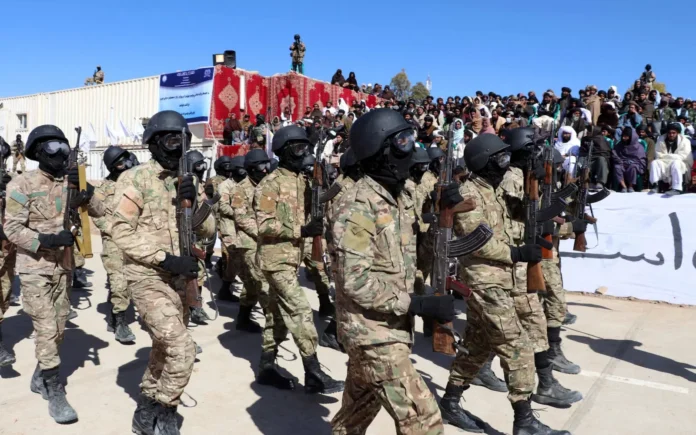
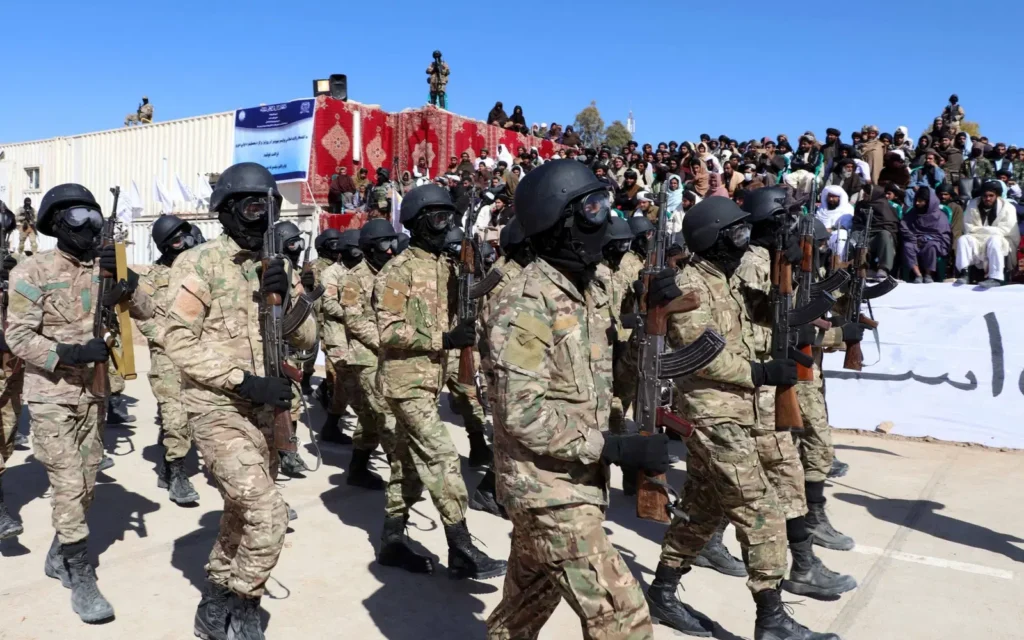
KABUL, Afghanistan (BN24) — Taliban authorities executed a man in public on Thursday in western Afghanistan after convicting him of killing two people, marking the latest use of capital punishment under the group’s interpretation of Islamic law since their return to power.
The execution took place in a sports stadium in Qala-i-Naw, the capital of Badghis province, before thousands of spectators, according to a statement from the Taliban-controlled Supreme Court.
The court said the man had been sentenced to “retaliatory punishment” a form of retributive justice, for fatally shooting a man and a woman. His case was reviewed “very precisely and repeatedly,” the statement added.
Witnesses told AFP that the man was shot three times by a relative of the victims, in keeping with the principle of qisas, or retribution, which permits the family of murder victims to execute the murderer under Islamic law. The families of the victims were reportedly offered an opportunity to grant amnesty but declined, according to the court.
Official notices inviting the public to attend were widely circulated on Wednesday. Large crowds gathered in the stadium on Thursday morning as the execution was carried out.
The man’s identity was not publicly released, and Taliban officials have not commented further on the nature of the crime or the date of his arrest and conviction.
This marks at least the 11th known public execution in Afghanistan since the Taliban seized control of the country in August 2021, according to a tally by Agence France-Presse. It underscores the group’s commitment to enforcing its strict interpretation of Islamic law despite widespread condemnation from international human rights organizations.
Public executions and corporal punishments were common during the Taliban’s first rule from 1996 to 2001. After regaining control, the group promised a more moderate approach, but observers say public punishments, floggings, and executions have resumed in several provinces over the past two years.
The United Nations and human rights groups have criticized the return of public executions as violations of international law and fundamental human rights. The Taliban, however, argue that such punishments serve as a deterrent and reflect religious and cultural traditions.
There was no immediate reaction from international observers or human rights watchdogs following Thursday’s execution.
NAIROBI, Kenya (BN24) — Four people were killed in Kenya’s capital Thursday after security forces fired shots and teargas to disperse huge crowds at a stadium where the body of opposition leader Raila Odinga was lying in state, sparking chaotic scenes that also forced a temporary shutdown of Nairobi’s international airport.
Odinga, a major figure in Kenyan politics for decades who was once a political prisoner and ran unsuccessfully for president five times, died Wednesday aged eighty in India, where he had been receiving medical treatment.
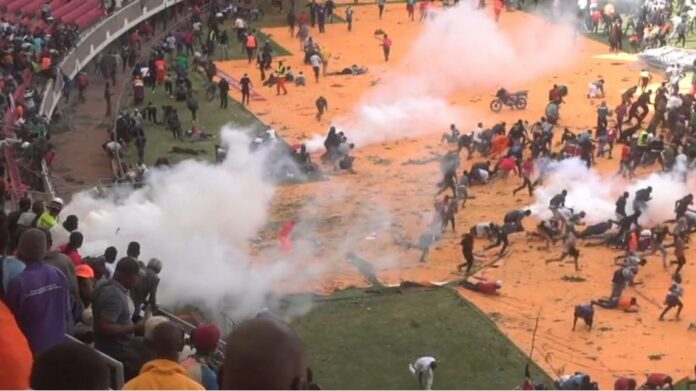
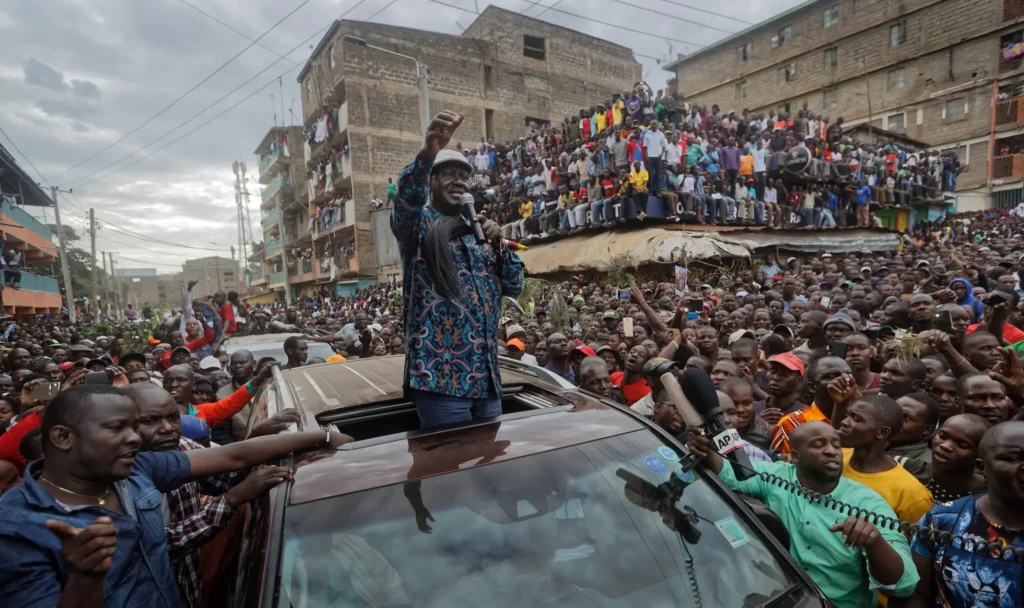
Chaos erupted when a huge crowd breached a gate at Nairobi’s main stadium, prompting soldiers to fire in the air, a Reuters witness said. A police source told Reuters that two people were shot dead at the stadium. KTN News and Citizen TV later said the death toll had increased to four, with scores injured.
After security forces fired shots, police used teargas to disperse thousands of mourners, the two broadcasters reported, leaving the stadium deserted. Local news footage showed tear gas canisters being hurled into the crowds, leading to scenes of chaos as thousands fled the stadium.
Earlier Thursday, thousands of mourners briefly stormed Nairobi’s international airport, interrupting a ceremony for President William Ruto and other officials to receive Odinga’s body with military honors. The incident prompted a two-hour suspension of airport operations.
Crowds also flooded nearby roads and tried to breach parliament, where the government had originally scheduled the public viewing.
Odinga’s body arrived in Nairobi early Thursday morning, where tens of thousands of supporters had gathered in anticipation of viewing it at the Nyayo National Stadium. The procession turned violent when crowds overwhelmed the stadium’s gates, breaching security perimeters and pushing past barriers meant to manage the large numbers of mourners.
A police source, speaking to Reuters under condition of anonymity, confirmed that at least two people were killed when security forces opened fire in an effort to regain control of the situation. The situation escalated further when soldiers fired warning shots into the air, prompting crowds to scatter.
Though mainly known as an opposition figure, Odinga became prime minister in 2008 and also struck a political pact with Ruto last year in a career marked by shifting alliances. He commanded passionate devotion among supporters, especially in his Luo community based in western Kenya, many of whom believe he was denied the presidency by electoral fraud.
Many of Odinga’s mourners, who were not yet born in 1991 when Kenya became a multi-party democracy, paid tribute to Odinga’s efforts as an activist.
Felix Ambani Uneck, a university student, said at the stadium: “He fought tirelessly for multi-party democracy, and we are enjoying those freedoms today because of his struggle.”
As a central figure in Kenya’s political landscape for decades, Odinga had earned a deep and loyal following for his outspoken advocacy on issues such as democratic reforms and social justice. His political legacy includes a history of imprisonment during Kenya’s more authoritarian periods and five unsuccessful bids for the presidency.
The government has yet to issue an official statement on the deaths. The events underscore deep political divisions in Kenya, with many supporters frustrated by what they perceived as inadequate handling of the mourning process.
Many of Odinga’s supporters have expressed anger at what they view as the government’s mishandling of the public funeral and mourning process. Critics have pointed to heavy-handed tactics in dealing with a grieving public, particularly the use of force in controlling crowds.
For many supporters, Odinga’s death represents the loss of a leader who embodied their aspirations for a more equitable and just Kenya. His political journey, marked by years of imprisonment under previous regimes and later battles for democratic reforms, made him an icon for many, especially among marginalized communities.
The body of former Kenyan Prime Minister Raila Odinga, who had been receiving medical treatment in India when he died, arrives at the Jomo Kenyatta International Airport in Nairobi, Kenya October 16, 2025. REUTERS/Thomas Mukoya
The shooting deaths and subsequent chaos at the stadium have sparked calls for greater accountability and transparency from the government. As the country remains on edge, it remains unclear how the government will address growing public discontent surrounding the handling of Odinga’s death and the mourning process.
The violence raises broader concerns about the state of political and civil unrest in Kenya, a nation that has long grappled with political polarization. In recent years, tensions have been exacerbated by allegations of electoral malpractice and the continued marginalization of opposition groups.
How the government responds to these events in the coming days will be crucial in determining whether the situation will escalate further or whether a peaceful resolution can be found.
Kenya has experienced periodic episodes of political violence, particularly surrounding elections and the deaths of prominent political figures. The country’s 2007-2008 post-election violence left more than one thousand people dead and hundreds of thousands displaced, leading to the power-sharing agreement that made Odinga prime minister.
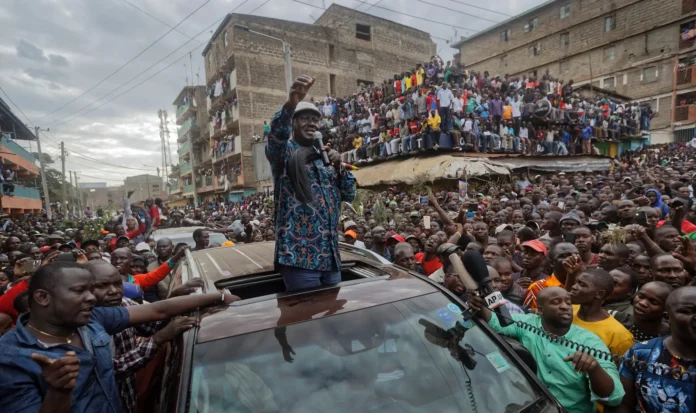
The massive turnout for Odinga’s viewing demonstrates his enduring influence on Kenyan politics and the deep emotional connection many citizens felt to his decades-long struggle for democratic reforms. His supporters see him as a champion of the marginalized who never stopped fighting for political and economic justice despite repeated setbacks.
Thousands of Kenyans gathered Thursday at Nairobi’s main airport to receive the body of former Prime Minister Raila Odinga, one of Africa’s most prominent political figures, a day after his death in India.
Odinga’s body arrived on a chartered flight and received a ceremonial water salute on the runway. Crowds of mourners lined the airport grounds to pay their respects before the body was transported to the national parliament for a public viewing scheduled in the afternoon.
Odinga, widely revered for his decades-long struggle for democracy and political reform, died Wednesday after collapsing during a morning walk in India’s Kerala State. Efforts to revive him at a local hospital were unsuccessful.
The Kenyan government announced that Odinga will be honored with a state funeral, including final rites on Sunday in his hometown of Bondo, located in the country’s western region. In accordance with his wishes, the burial will take place within 72 hours — an unusual practice for a national leader in Kenya.
Friday has been declared a public holiday to allow Kenyans to attend a state funeral service at a football stadium in Nairobi. A second public viewing is planned for Saturday in Kisumu County, near Odinga’s rural home.
President William Ruto, who defeated Odinga in the 2022 election but later formed a political pact with him that brought opposition figures into the Cabinet, led the nation in mourning. He declared seven days of national mourning, describing Odinga as “a patriot of uncommon courage, a pan-Africanist, a unifier who sought peace and unity above power and self-gain.”
Odinga’s political career spanned more than three decades, during which he ran for president five times. His closest bid came in 2007, when he narrowly lost to incumbent President Mwai Kibaki in a disputed election that triggered widespread ethnic violence.
From 2008 to 2013, Odinga served as Kenya’s prime minister in a unity government brokered by the international community. He remained a central figure in Kenyan politics, challenging electoral outcomes and pushing for reforms. In 2017, Kenya’s Supreme Court nullified a presidential election for the first time in Africa following his petition, though he boycotted the subsequent rerun.
Despite never winning the presidency, Odinga was widely regarded as a statesman whose activism and leadership helped shape Kenya’s transition to a vibrant multiparty democracy. His death marks the end of an era in the nation’s political landscape, drawing tributes from across Africa and beyond.
Washington (BN24) – President Donald Trump confirmed Wednesday that he has authorized the Central Intelligence Agency to conduct covert operations in Venezuela, a significant escalation in U.S. efforts to pressure President Nicolas Maduro’s government and pursue regime change.
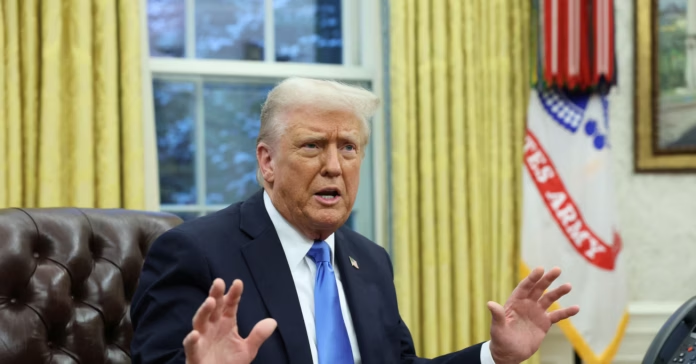
The directive, first reported by The New York Times and later acknowledged by Trump during remarks in the Oval Office, marks a rare public admission of a classified action. According to officials cited by the newspaper, the authorization gives the CIA broad powers to conduct lethal operations inside Venezuela and throughout the Caribbean, as part of a strategy to remove Maduro from power. The Trump administration has also offered a $50 million reward for information leading to Maduro’s arrest and conviction on drug trafficking charges.
Trump justified the authorization by citing drug trafficking and what he described as Venezuela’s release of prisoners who later entered the United States. “I authorized for two reasons really,” Trump told reporters. “Number one, they have emptied their prisons into the United States of America… they came in through the border. They came in because we had an open border. And the other thing are drugs.” Trump did not provide evidence for his claims.
The president said the United States has made progress intercepting drug shipments by sea and that new operations will focus on land routes. “We are looking at land now, because we’ve got the sea very well under control,” he said. The White House declined to elaborate on the scope or specific targets of the CIA operations, and Reuters was unable to independently verify the details of the directive.
The CIA’s involvement in Latin America has deep historical roots, ranging from direct paramilitary interventions during the Cold War to intelligence-gathering missions. The agency was instrumental in toppling major cocaine trafficking empires in the late 20th century and has conducted long-running covert operations in Mexico to track high-value drug traffickers.
Venezuela’s government condemned Trump’s remarks, calling the U.S. authorization a violation of international law and accusing Washington of pursuing a “regime change” agenda aimed at seizing the country’s oil resources. “Our Permanent Mission to the UN will raise this complaint with the Security Council and the Secretary-General tomorrow, demanding accountability from the United States government,” Venezuelan Foreign Minister Yvan Gil said in a statement on Telegram.
Trump has repeatedly accused Venezuela of being a major hub for fentanyl trafficking, though U.S. records show that Mexico remains the main source of the drug. Asked why the U.S. Coast Guard was not used to intercept suspected smuggling vessels, Trump dismissed such operations as “politically correct” and ineffective. He declined to say whether the CIA has the authority to target Maduro personally, stating only: “I think Venezuela is feeling heat.”
Under Trump’s direction, the United States has deployed a large military buildup in the southern Caribbean and carried out at least five strikes on vessels the administration has described as drug trafficking operations, though evidence has not been made public. The Pentagon recently told Congress that Trump determined the United States is engaged in “a non-international armed conflict” with drug cartels, a legally significant designation.
Trump also accused Venezuela of releasing prisoners, including individuals from mental health institutions, into the United States, though he did not specify how they entered the country. Venezuela’s Information Ministry and representatives for opposition leader Maria Corina Machado did not immediately respond to requests for comment.
The administration’s limited disclosure of the operations has drawn criticism from lawmakers, including some Republicans. Senator Jeanne Shaheen, the top Democrat on the Senate Foreign Relations Committee, warned that the U.S. was being moved “closer to outright conflict.” “The American people deserve to know if the Administration is leading the U.S. into another conflict, putting service members at risk or pursuing a regime-change operation,” she said.
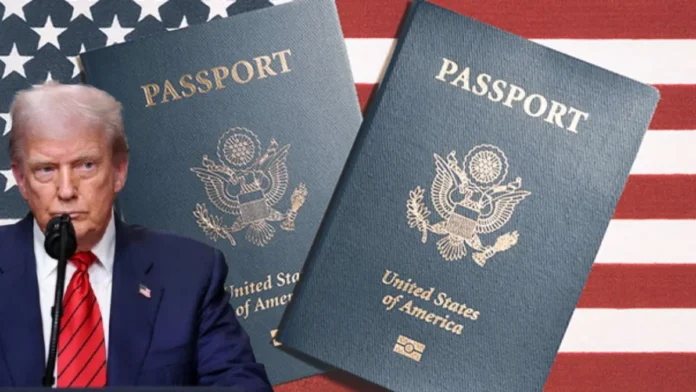
NEW YORK (BN24)— The United States passport has fallen out of the top 10 most powerful passports for the first time since the Henley Passport Index began 20 years ago, signaling a shift in global travel mobility.
The index, compiled by global citizenship advisory firm Henley & Partners with data from the International Air Transport Association, ranks passports by the number of destinations their holders can enter visa-free or with a visa-on-arrival. The U.S. passport is now tied for 12th place with Malaysia, offering access to 180 of 227 destinations tracked worldwide.
Leading the rankings are Asian passports, with Singapore in first place at 193 visa-free destinations, followed by South Korea with 190, and Japan with 189.
The U.S. passport’s decline follows several international policy changes affecting visa arrangements. Brazil withdrew visa-free entry for U.S. citizens in April, citing a lack of reciprocity. China expanded visa exemptions for several European countries but excluded the U.S., and countries such as Papua New Guinea, Myanmar, Somalia, and Vietnam introduced new restrictions or visa policies limiting U.S. travel mobility.
Christian H. Kaelin, chairman of Henley & Partners, said the decline “signals a fundamental shift in global mobility and soft power dynamics.” He added that “nations that embrace openness and cooperation are surging ahead, while those resting on past privilege are being left behind.” The United Kingdom also dropped two places to eighth, its lowest ranking ever.
Other nations have improved their positions. China has risen sharply from 94th place in 2015 to 64th this year, while the United Arab Emirates climbed 34 places over the past decade to eighth place.
Afghanistan remains last on the list, ranked 106th, with visa-free access to just 24 destinations.
The drop in the U.S. ranking also reflects a disparity in visa policies: While Americans can visit 180 countries without a visa, the U.S. allows only 46 nationalities visa-free entry. This gap is among the widest in the world and has fueled demand for alternative citizenship and residency options among Americans.
Despite the shift, experts say the practical difference for most travelers remains small. The Henley Passport Index is one of several tools measuring passport strength, with Arton Capital’s Passport Index naming the UAE the most powerful passport in 2025.
As global travel policies evolve, the U.S. passport’s slip out of the top 10 underscores changing dynamics in international travel and diplomacy.
WASHINGTON (BN24) — The International Monetary Fund has revised upward its economic growth forecast for Nigeria, projecting the West African nation’s GDP will expand by 3.9% in 2025, with growth expected to accelerate to 4.1% in 2026. The update, published in the IMF’s latest World Economic Outlook during its Annual Meetings in Washington, reflects growing confidence in Nigeria’s macroeconomic trajectory under ongoing fiscal and structural reforms.
The IMF attributed the improved outlook to a combination of higher oil production, rising investor confidence, exchange rate stabilization, and broader domestic policy shifts. Nigeria’s enhanced position comes in contrast to the global trend, where the Fund expects economic growth to slow from 3.3% in 2024 to 3.2% in 2025 and 3.1% in 2026 amid rising trade protectionism and waning temporary growth drivers.
“Whereas growth in Nigeria is revised upward on account of supportive domestic factors, including higher oil production, improved investor confidence, and a supportive fiscal stance in 2026, many other economies see significant downward revisions because of the changing international trade and official aid landscape,” IMF Economic Counsellor Pierre-Olivier Gourinchas said during a press briefing on the report.
He pointed to Nigeria’s limited exposure to the effects of rising U.S. tariffs and the country’s stable foreign reserves as contributing factors. The ongoing rebasing of Nigeria’s Gross Domestic Product also bolstered the Fund’s optimism.
Central Bank of Nigeria (CBN) Governor Olayemi Cardoso welcomed the IMF’s outlook, citing reforms implemented under President Bola Tinubu’s administration as key to restructuring the economy. Speaking during the Intergovernmental Group of Twenty-Four (G-24) briefing, Cardoso emphasized Nigeria’s evolving trade dynamics and currency competitiveness.
“We now have a more competitive currency and, for once, a positive balance of trade surplus expected to remain around six percent of GDP,” Cardoso said. “The economy is witnessing a shift from import dependency to domestic production and export growth.”
He noted that the fiscal and monetary reforms have helped reduce the economy’s vulnerability to global disruptions, including tariff tensions.
The IMF report underscored the broader challenges facing the global economy, including declining growth in advanced economies, which are forecast to hover around 1.5% in the coming years. While emerging and developing economies are projected to grow above 4%, downside risks persist due to protectionist policies, geopolitical tensions, and labor market disruptions.
“The global economy has shown resilience to trade policy shocks, but the drag from shifting policies is becoming visible,” the report stated. “Suboptimal reallocation of resources and technological decoupling may restrain growth in the years ahead.”
Petya Koeva Brooks, IMF Deputy Research Director, said growth in Sub-Saharan Africa is projected to remain stable at 4.1% in 2025, edging up to 4.4% in 2026. She noted Nigeria’s upward revision sets it apart as a leading growth prospect in the region.
The Fund urged governments worldwide to pursue credible and sustainable policies, rebuild fiscal buffers, and maintain the independence of central banks to safeguard long-term growth prospects.
WASHINGTON (BN24) — U.S President on Tuesday threatened to remove World Cup games scheduled for suburban Boston, citing civil unrest in the area and taking aim at the city’s mayor.
Foxborough, Massachusetts, home to Gillette Stadium and the NFL’s New England Patriots, is slated to host matches as part of the 2026 FIFA World Cup, which the United States is co-hosting alongside Mexico and Canada. The venue is one of several across North America chosen for the 104-match tournament.
During comments made while meeting with Argentine President Javier Milei, Trump criticized Boston Mayor Michelle Wu, a Democrat, describing her as “intelligent” but “radical left.” He went on to suggest that World Cup matches could be relocated from the region.
“We could take them away,” Trump said of the matches scheduled for Foxborough. “I love the people of Boston, and I know the games are sold out. But your mayor is not good.”
Trump did not provide specific details but claimed that “they’re taking over parts of Boston,” implying civil disorder. He added, “We could get them back in about two seconds.”
The president’s remarks come amid broader national tensions around domestic protests and public safety. Earlier this month, a pro-Palestinian demonstration on Boston Common turned violent, resulting in multiple arrests and injuries to at least four police officers.
Trump has previously suggested he may intervene in World Cup planning by declaring certain cities “not safe” for the tournament. FIFA finalized the match locations in 2022, selecting major NFL stadiums in metropolitan areas, including New York, Los Angeles, San Francisco, and Boston’s neighboring town of Foxborough.
The Trump administration had previously deployed National Guard troops to cities such as Washington and Memphis, and attempts to extend that deployment to Chicago and Portland led to legal disputes.
It remains unclear whether Trump, currently campaigning for a return to the White House in 2024, could legally alter FIFA’s hosting commitments, which were made in coordination with U.S. Soccer and international partners.
FIFA and U.S. Soccer have not publicly responded to Trump’s comments.
RIO DE JANEIRO (BN24) — A 33-year-old influencer and her 15-year-old daughter found dead in their apartment in the Barra da Tijuca neighborhood of Rio de Janeiro after neighbors reported a suspicious odor coming from the residence, according to multiple local reports.
The bodies of Lidiane Aline Lorenço, a model and social media personality, and her daughter Miana Sophya Santos were discovered on Friday, October 10, after several days of their unexplained absence. Authorities were alerted when neighbors in the building noticed a strange smell emanating from the apartment. Local police, along with the fire department, responded to the scene and made the grim discovery.
Upon entering the apartment, officers found Miana’s body in the living room and her mother’s body in one of the bedrooms. The two were reported to have been missing for five days, raising concerns among family and friends who had not heard from them during that time.
Initial reports from local outlet G1, citing the Barra da Tijuca police department (16th DP), stated that no signs of violence or external injuries were found on either of the bodies. A forensic examination of the apartment also revealed no signs of a struggle or forced entry. The Civil Police confirmed in a statement that while autopsies were conducted, the cause of death has not yet been determined. Authorities indicated that additional tests would be carried out to help clarify the circumstances surrounding the deaths.
Despite the lack of visible signs of trauma, the deaths of Lorenço and Miana remain unexplained. Local authorities are actively investigating the case, though it is not yet clear whether foul play is involved or if other factors may have contributed to the tragedy. As of now, investigators have not ruled out any potential causes, including possible accidental death or a natural event.
Lorenço, who had over 54,000 followers on Instagram, was a well-known figure in Brazil’s influencer and modeling scene. She was also a medical student at a private university in Rio de Janeiro, according to her social media profiles and local reports. Lorenço had moved to Rio over five years ago, and Miana was reported to have recently moved in with her mother. Both were originally from Santa Cecília, a town in the southern Brazilian state of Santa Catarina.
In the days before the discovery, neighbors had not seen the pair for an extended period, which led to growing concern. Lorenço’s followers and friends on social media expressed their shock and sadness over her sudden disappearance and death. Family members also confirmed on social media that they had been unable to reach the mother and daughter for several days, which prompted the call to local authorities.
Funeral services for Lorenço and Miana took place on Sunday, October 12, at the Santa Cecília Municipal Cemetery in their hometown, Santa Cecília. Their deaths have drawn widespread media attention, with local outlets reporting extensively on the investigation.
A spokesman for the Civil Police told UOL Notícias that the investigation is ongoing. “We are conducting a thorough examination of all evidence available and will continue to explore all possibilities,” the spokesman said. Authorities are also reviewing surveillance footage from the building to identify any potential leads.
Lorenço’s death has raised concerns over the safety of influencers, particularly in the digital age, where online fame can sometimes bring unforeseen risks. Friends and followers alike have expressed their heartfelt condolences, remembering her not just for her social media presence but for her academic pursuits and ambitions as a medical student.
As of now, police continue to gather information, and updates on the case are expected in the coming days as authorities work to piece together the events leading up to the deaths of this mother and daughter.
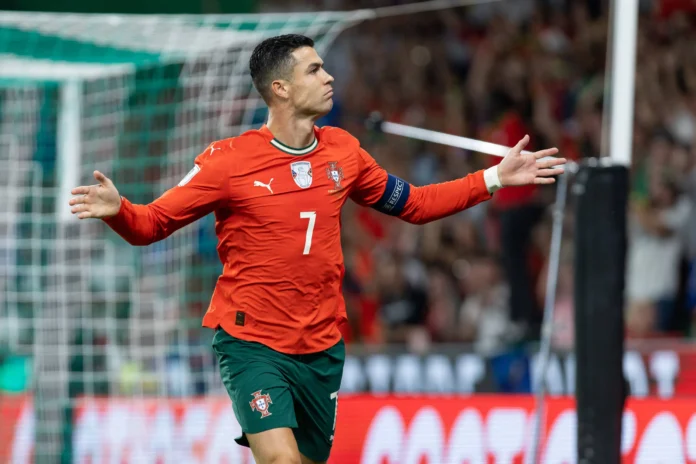
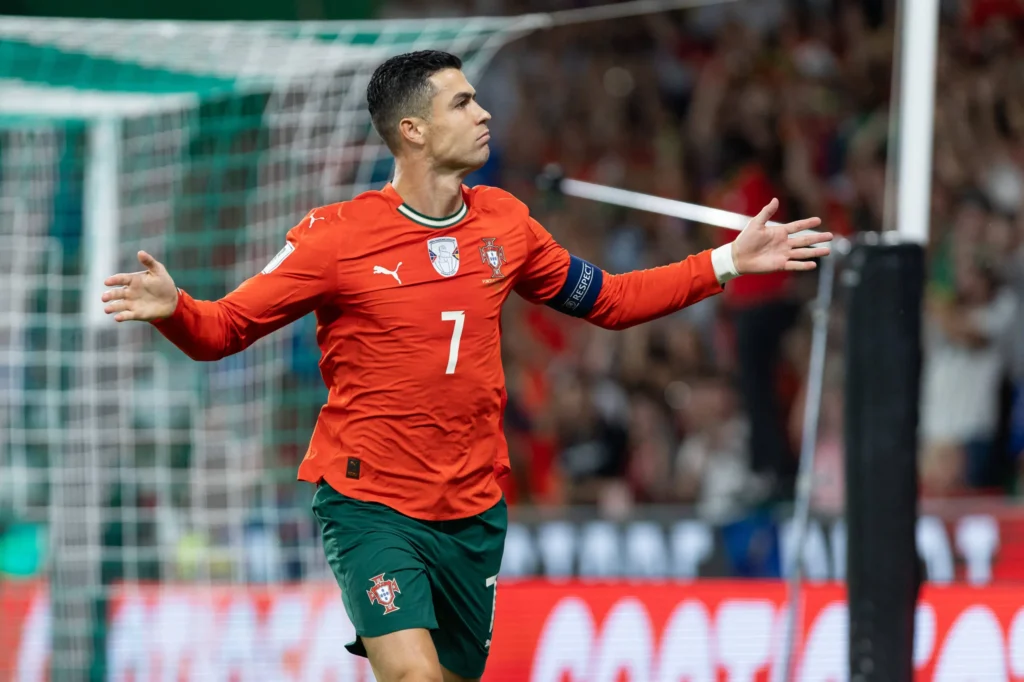
BUDAPEST, Hungary (BN24) — Cristiano Ronaldo added another milestone to his legendary career Tuesday, becoming the all-time top scorer in FIFA World Cup qualifying matches after netting twice in Portugal’s 2-2 draw with Hungary.
Ronaldo, 40, scored his 40th and 41st goals in World Cup qualifiers, surpassing former Guatemala striker Carlos Ruiz, who held the previous record of 39 goals scored between 1998 and 2016.
The Portugal captain equalized in the 22nd minute, converting a cross from Nelson Semedo. He added a second before halftime, finishing from close range after a pass by Nuno Mendes, giving Portugal a 2-1 lead.
Hungary’s Dominik Szoboszlai scored a stoppage-time equalizer, delaying Portugal’s bid to secure a spot in the 2026 World Cup, which the United States, Mexico, and Canada will jointly host.
Ronaldo, a five-time Ballon d’Or winner, already holds the record for most international goals in men’s football. His tally now stands at 143 in 205 appearances. He has expressed hope of playing in a record sixth World Cup, which would make him the first male player to do so.
Despite the result, Ronaldo’s latest achievement underscores his longevity and enduring impact at the international level, nearly two decades after his World Cup debut in 2006.
Portugal remains in a strong position to qualify, but will have to wait for future fixtures to confirm their place in the expanded 48-team tournament.
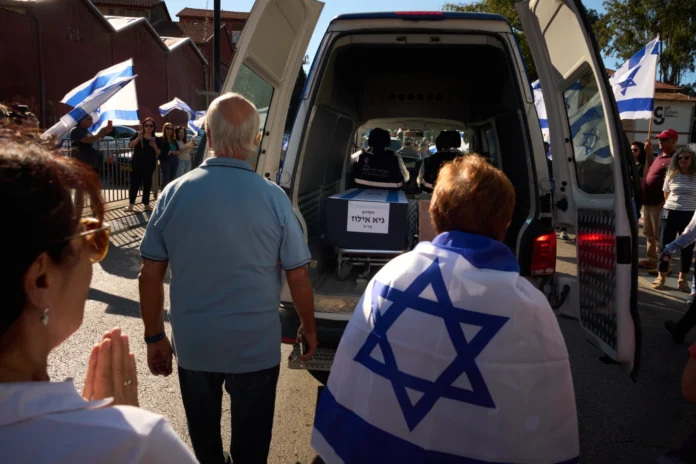
The Red Cross received the remains of two more Hamas hostages Wednesday, hours after the Israeli military said one of the bodies previously turned over was not that of a hostage held in Gaza, adding to tensions over the fragile truce that has paused the two-year war.
The Israeli military said the International Committee of the Red Cross received the remains, which were to be transferred to Israeli forces in Gaza. Military officials said earlier Wednesday that forensic testing showed “the fourth body handed over to Israel by Hamas does not match any of the hostages.” There was no immediate word on whose body it was.
The confusion over identification complicated implementation of the ceasefire agreement between Israel and Hamas. As part of the deal, four bodies of hostages were handed over by Hamas on Tuesday, following four on Monday that were returned hours after the last twenty living hostages were released from Gaza. In all, Israel has been awaiting the return of the bodies of twenty-eight hostages.
Meanwhile, the Gaza Health Ministry said it received forty-five more bodies of Palestinians from Israel, another step in implementation of the ceasefire agreement. That brings to ninety the total number of bodies returned to Gaza for burial. The forensics team examining the remains said they showed signs of mistreatment.
Sameh Hamad, a member of a commission tasked with receiving the bodies at Khan Younis’ Nasser Hospital, said some arrived with their hands and legs cuffed. “There are signs of torture and executions,” he told The Associated Press.
The bodies belonged to men ages twenty-five to seventy, Hamad said. Most had bands on their necks, including one that had a rope around the neck. Most of the bodies wore civilian clothing, but some were in uniforms, suggesting they were militants.
Hamad said the Red Cross provided names for only three of the dead, leaving many families uncertain of their relatives’ fate. The fighting has killed nearly sixty-eight thousand Palestinians, according to the Health Ministry, which is part of the Hamas-run government in Gaza. The ministry maintains detailed casualty records that are seen as generally reliable by U.N. agencies and independent experts.
Thousands more people are missing, according to the Red Cross and Palestinian Central Bureau of Statistics.
As forensic teams examined the first remains returned, the Health Ministry on Wednesday released images of thirty-two unidentified bodies to help families recognize missing relatives. Many appeared decomposed or burned. Some were missing limbs or teeth, while others were coated in sand and dust. Health officials have said Israeli restrictions on allowing DNA testing equipment into Gaza have often forced morgues to rely on physical features and clothing for identification.
Rasmiya Qudeih, fifty-two, waited outside Nasser Hospital, hoping her son would be among the forty-five bodies transferred from Israel on Wednesday. He vanished on October 7, 2023, the day of the Hamas-led attack that triggered the war. She was told he was killed by an Israeli strike. “God willing, he will be with the bodies,” she said.
In exchange for the release of the hostages, Israel freed around two thousand Palestinian prisoners and detainees Monday.
Israel is expected to turn over more bodies, though officials have not said how many are in its custody or how many will be returned. It is unclear whether the remains belong to Palestinians who died in Israeli custody or were taken from Gaza by Israeli troops. Throughout the war, Israel’s military has exhumed bodies as part of its search for the remains of hostages.
The ceasefire plan introduced by U.S. President Donald Trump had called for all hostages, living and dead, to be handed over by a deadline that expired Monday. However, under the deal, if that did not happen, Hamas was to share information about deceased hostages and try to hand them over as soon as possible.
Israeli Prime Minister Benjamin Netanyahu said Wednesday that Israel “will not compromise” and demanded that Hamas fulfill the requirements laid out in the ceasefire deal about the return of hostages’ bodies.
Trump, in an interview with CNN, warned that Israel could resume the war if he feels Hamas is not upholding its end of the agreement. “Israel will return to those streets as soon as I say the word,” Trump said.
Hamas’ armed wing said in a statement Wednesday that the group honored the ceasefire’s terms and handed over the remains of the hostages it had access to. Hamas and the Red Cross have said that recovering the remains of dead hostages was a challenge because of Gaza’s vast destruction, and Hamas has told mediators that some are in areas controlled by Israeli troops.
Two hostages whose bodies were released from Gaza were being buried Wednesday.
This is not the first time Hamas has returned a wrong body to Israel. During a previous ceasefire, the group said it handed over the bodies of Shiri Bibas and her two sons, among those taken in Hamas’ October 7 attack on Israel, in which some twelve hundred people were killed and two hundred fifty-one abducted. Testing in February 2025 showed that one of the bodies returned was identified as a Palestinian woman. Bibas’ body was returned a day later.
The World Food Program said its trucks began arriving in Gaza after the entrance of humanitarian aid into Gaza was paused for two days due to the exchange on Monday and a Jewish holiday Tuesday.
The timing of the scaled-up deliveries, which are part of the ceasefire deal, had been called into question after Israel said Tuesday that it would cut the number of trucks allowed into Gaza, saying Hamas was too slow to return the hostages’ bodies.
Abeer Etefa, spokesperson for the World Food Program, lauded the trucks’ passage but said the situation remained unpredictable. “We’re hopeful that access will improve in the coming days,” she said.
The Egyptian Red Crescent said four hundred trucks carrying food, fuel and medical supplies were bound for Gaza on Wednesday. COGAT, the Israeli military body responsible for Palestinian civilian affairs, declined to comment on the number of trucks expected to enter Gaza on Wednesday.
“Throughout this crisis, we have insisted that withholding aid from civilians is not a bargaining chip,” U.N. humanitarian chief Tom Fletcher said in a statement.
The confusion over body identification and the discovery of apparent mistreatment of Palestinian remains in Israeli custody have complicated what was already a tenuous ceasefire implementation. The exchange of remains represents one of the most sensitive aspects of the agreement, with families on both sides desperate for closure after more than two years of conflict.