Home Blog Page 2

Many Soldiers, Civilians Feared Dead As Boko Haram Terrorists Attack Military Base, IDP Camp In Borno

0

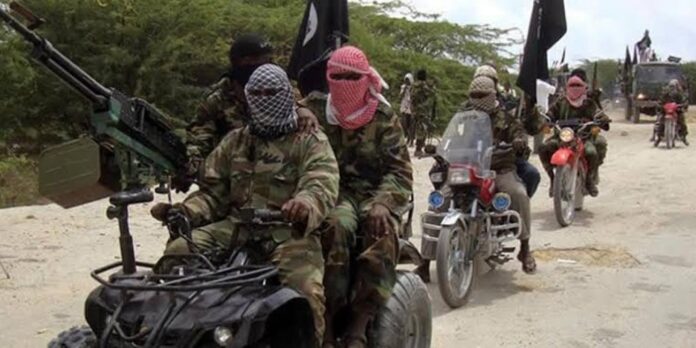
MAIDUGURI, Nigeria (BN24) — Suspected fighters from the Islamic State West Africa Province launched a coordinated predawn assault on a military installation and a nearby camp for displaced civilians in northeastern Nigeria, leaving an undetermined number of soldiers and residents feared dead, security officials said Wednesday.
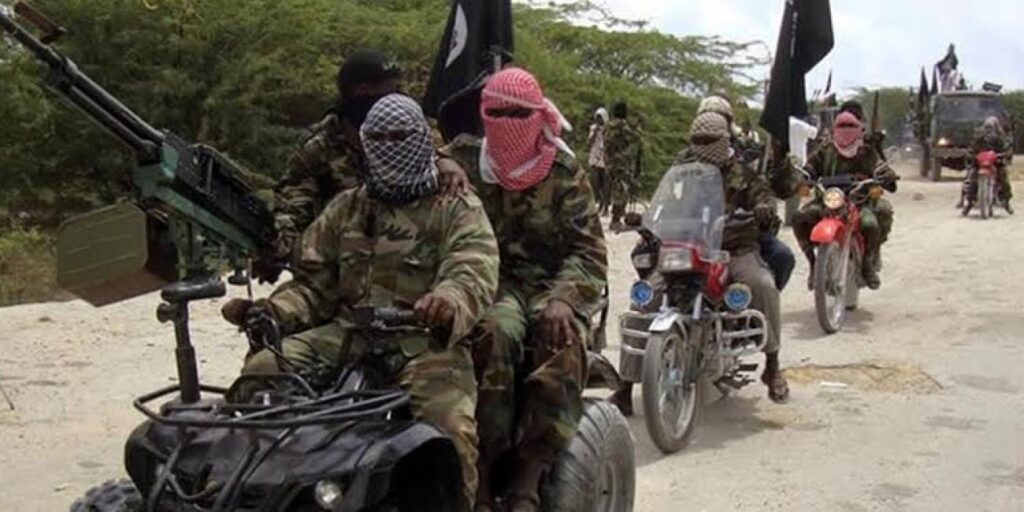
The attack targeted Ngoshe, a town in Gwoza Local Government Area of Borno state, a region that has endured more than a decade of insurgent violence. Military sources familiar with the incident told SaharaReporters that the assailants struck at about 4 a.m., operating in multiple groups and sustaining their offensive until first light.

According to accounts relayed to SaharaReporters by security personnel, the militants overran the 82 Division Task Force Battalion under the 26 Brigade. During the raid, they set fire to military structures, armored vehicles, and other equipment before advancing on a camp housing internally displaced persons located near the base.

One military official described the attack as highly organized, with fighters arriving in large numbers. The source indicated that the attackers torched buildings within the displacement camp and combed through homes in the surrounding community, claiming they were searching for soldiers who might have sought refuge among civilians.

The same source conveyed that an unspecified number of troops and civilians were killed in the violence, while others fled into nearby bushland to escape the onslaught. Casualty figures remain unclear, as recovery efforts were still underway and additional bodies were being discovered hours after the assault, the official said.

The attackers were also said to have seized ammunition and other military hardware. The scale of materiel losses could not immediately be verified.

The militant faction involved is widely known as ISWAP, an Islamic State-backed offshoot of Boko Haram, formally called Jamā’at Ahl as-Sunnah lid-Da’wah wa’l-Jihād. The group has intensified operations in parts of Borno in recent months, frequently targeting military outposts and convoys.

The Ngoshe assault follows a string of recent attacks in the region. A few days earlier, gunmen believed to be Boko Haram fighters struck a Forward Base at Banki junction along the Bama-Gwoza Road, resulting in the death of an Army major identified as Ibrahim Mairiga and several other soldiers. A senior source had told SaharaReporters that the bodies were being transported to the 7 Division Military Hospital in Maiduguri.

In February, insurgents attacked another military position in Jakana, Kaga Local Government Area, along the Maiduguri-Damaturu Road. Security sources cited by SaharaReporters at the time said armored vehicles were destroyed and ammunition taken during that assault.

Earlier still, on Jan. 26, 2025, seven military personnel, including a recently promoted lieutenant colonel, identified as Mohammed, were killed when their convoy was ambushed en route from Maiduguri to Damasak in Mobbar Local Government Area. Military sources told SaharaReporters that explosives and sustained gunfire were used in that ambush, and that several soldiers were wounded or declared missing.

Nigerian authorities have not publicly issued a comprehensive casualty count for the Ngoshe attack as of Wednesday evening. Efforts to reach defense officials for independent confirmation were not immediately successful.

Borno state, which borders Cameroon, Chad, and Niger, remains the epicenter of Nigeria’s long-running conflict with jihadist groups. Although the military has reclaimed significant territory from insurgents since the peak of Boko Haram’s territorial control in 2014 and 2015, militants continue to stage deadly raids on isolated bases and rural communities.

Security analysts say the pattern of coordinated early-morning assaults reflects evolving insurgent tactics designed to exploit gaps in surveillance and response. By targeting both military positions and displacement camps, the attackers may be aiming to undermine public confidence in state protection and to disrupt fragile stabilization efforts in areas previously declared secure.

Humanitarian organizations have repeatedly warned that camps for internally displaced persons in Borno face chronic security vulnerabilities. The destruction of shelters and infrastructure in Ngoshe could compound an already dire humanitarian situation, particularly if residents are forced to flee again.

The renewed spate of violence also raises questions about force deployment and resource allocation in remote communities. Military bases in rural corridors often serve as the primary line of defense for nearby civilians. When such installations are overrun, residents are left exposed to reprisals, lootings,g and further displacement.

Regional cooperation remains central to counterinsurgency efforts. Nigeria participates in the Multinational Joint Task Force alongside neighboring countries to combat ISWAP and other extremist factions operating across porous borders. However, the persistence of cross-border supply lines and recruitment networks continues to challenge security operations.

While official figures are pending, the psychological toll of repeated attacks is evident. Communities such as Ngoshe, Ban, ki and Jakana have endured cycles of destruction, rebuilding, and renewed violence. Each incident strains already limited medical and humanitarian resources, including facilities in Maiduguri that receive casualties from across the state.

For residents of Borno, the latest assault underscores the enduring volatility of a conflict that has displaced millions and claimed tens of thousands of lives over the past decade. As recovery teams continue to assess the damage in Ngoshe, questions linger over how insurgents were able to mount another large-scale operation despite ongoing military campaigns aimed at degrading their capabilities.

Authorities have yet to announce whether reinforcements have been deployed to the affected area or whether a broader review of base security will follow. Until casualty counts are finalized and an official briefing is issued, the full impact of the Ngoshe attack may not be known.

What remains clear is that northeastern Nigeria continues to confront a resilient insurgency, with civilians and security forces alike bearing the brunt of its violence.
EPL: 10-Man Newcastle Stun Manchester United with Late Goal in 2-1 Premier League Thriller

0

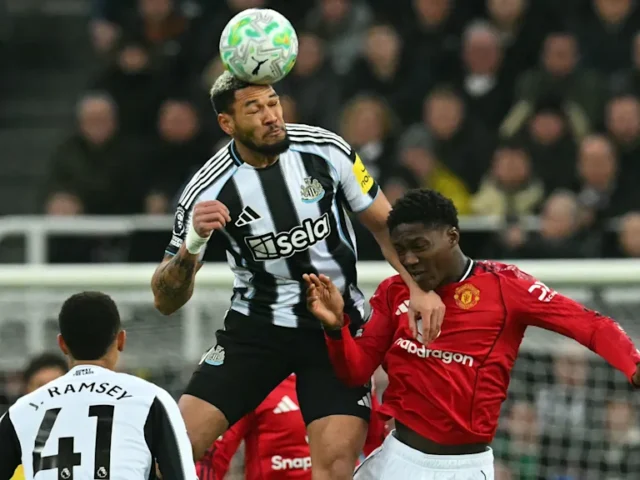
NEWCASTLE, England (BN24) — Ten-man Newcastle United struck deep into stoppage time to secure a dramatic 2-1 victory over Manchester United in a pulsating Premier League encounter at St James’ Park on Wednesday.

The hosts, reduced to 10 players before halftime, withstood sustained pressure in the second half before snatching the decisive goal in the 90th minute to claim all three points.

Newcastle opened the scoring in first-half stoppage time after being awarded a penalty. Anthony Gordon stepped up and calmly converted from the spot in the 45+6th minute, sending the home crowd into celebration.

Manchester United responded moments later. From a free kick delivered by Bruno Fernandes, Casemiro rose highest to head home the equalizer, drawing the visitors level at 1-1 before the interval.

The first half had swung dramatically in its closing stages. Newcastle’s Jacob Ramsey was dismissed after receiving a second yellow card for simulation as goalkeeper Senne Lammens advanced off his line. The decision left the home side a man down for the entirety of the second half.

Despite their numerical disadvantage, Newcastle maintained their composure after the break. Manchester United enjoyed extended spells of possession and sought to exploit the extra space, but clear-cut opportunities proved limited.

As the match appeared to be heading toward a draw, Newcastle found a breakthrough. In the 90th minute, Osula capitalized on a late attacking move, firing home to restore the hosts’ lead and seal a memorable victory.

The result ended Manchester United’s lengthy unbeaten run under interim manager Michael Carrick. Carrick, a former United midfielder, had overseen a strong sequence of results since taking charge but saw that streak halted against the same opponent his side faced on Boxing Day when their run began.

In its post-match account, Manchester United’s official website acknowledged the setback, noting that the club’s “long unbeaten run” had come to an end. The report added that Carrick experienced his first defeat as manager, describing it as a setback in United’s pursuit of a UEFA Champions League qualification spot.

The club’s summary detailed how Newcastle controlled much of the early exchanges before the game intensified late in the first half. It highlighted Bryan Mbeumo’s missed opportunity to open the scoring, Ramsey’s sending-off for attempting to draw a penalty, and Gordon’s successful spot kick.

The account also referenced Casemiro’s headed goal, pointing out the Brazilian midfielder had previously scored in a similar fashion against Newcastle in the 2023 Carabao Cup final.

For Newcastle, the victory reinforces their resilience at home. Playing an entire half with 10 men against one of England’s biggest clubs typically demands defensive discipline and mental fortitude. The Magpies demonstrated both absorbing pressure and waiting for a decisive moment.

From a broader perspective, the result could carry significant implications in the race for European qualification. Manchester United’s ambitions of securing a Champions League place suffered a blow, particularly given their inability to capitalize on the man advantage.

Newcastle’s tactical approach in the second half reflected a calculated risk. Rather than retreat entirely into a defensive shell, the hosts continued to commit players forward selectively. That balance between caution and ambition ultimately paid dividends with Osula’s late strike.

For Carrick, the defeat presents a test of response. Interim managers often benefit from short-term momentum, but sustaining consistency across a congested fixture list can be challenging. The loss underscores the fine margins in Premier League competition, especially in high-stakes matches where a single lapse can determine the outcome.

Manchester United will not feature in the FA Cup this weekend and next return to league action a week on Sunday, when they host Aston Villa at Old Trafford. The pause may offer Carrick an opportunity to regroup and address defensive lapses that proved costly in Newcastle.

Meanwhile, Newcastle’s triumph could serve as a springboard in their campaign, particularly given the adversity they overcame. Winning with 10 men against a direct rival adds both points and psychological advantage in a tightly contested league table.

As the final whistle sounded at St James’ Park, the home supporters celebrated not just three points but a statement performance, one defined by resilience, late drama, and a reminder that in the Premier League, momentum can shift in an instant.

Israel vows to assassinate Iran’s new leader

0

JERUSALEM (BN24) — Israel’s defense minister declared Wednesday that any successor to Iran’s Supreme Leader who pursues policies hostile to Israel would be considered a target, escalating rhetoric following reports that Ayatollah Ali Khamenei was killed in joint U.S.-Israeli strikes on Tehran.

Defense Minister Israel Katz issued the warning in a statement posted on the social media platform X, saying that no potential leader would be immune if they continued what he described as efforts to threaten Israel and its allies.

“Any leader selected by the Iranian terror regime to continue leading the plan for Israel’s destruction, threatening the United States, the free world, and countries in the region, and suppressing the Iranian people, will be a certain target for assassination, no matter his name or where he hides,” Katz wrote.

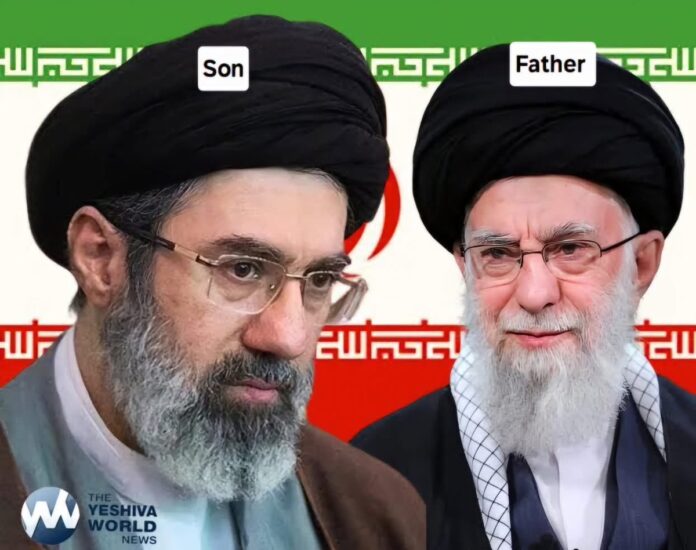
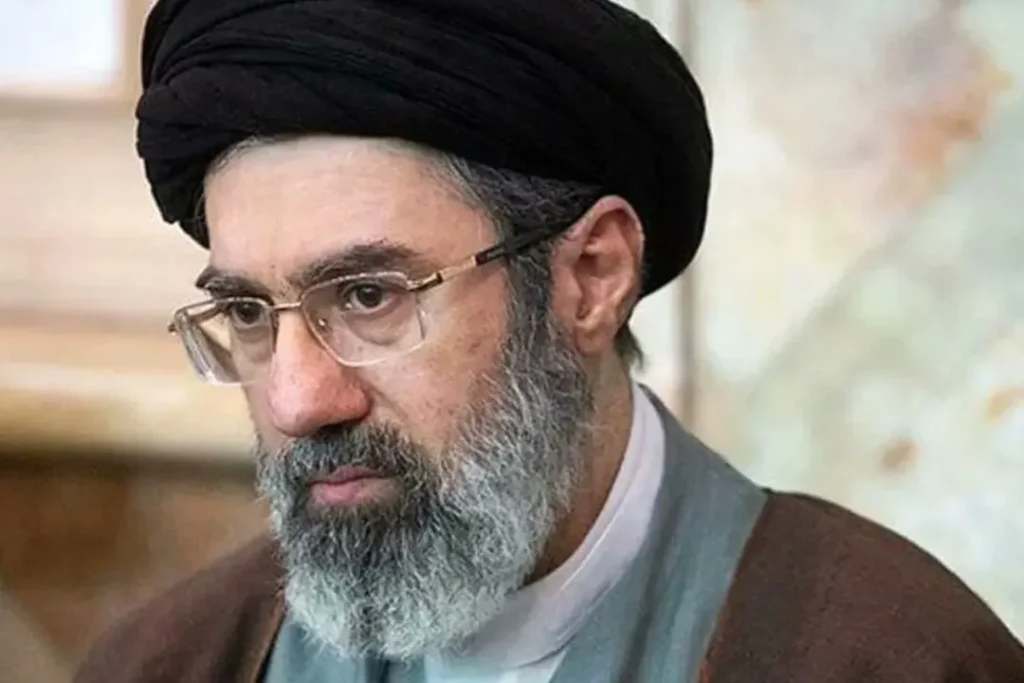
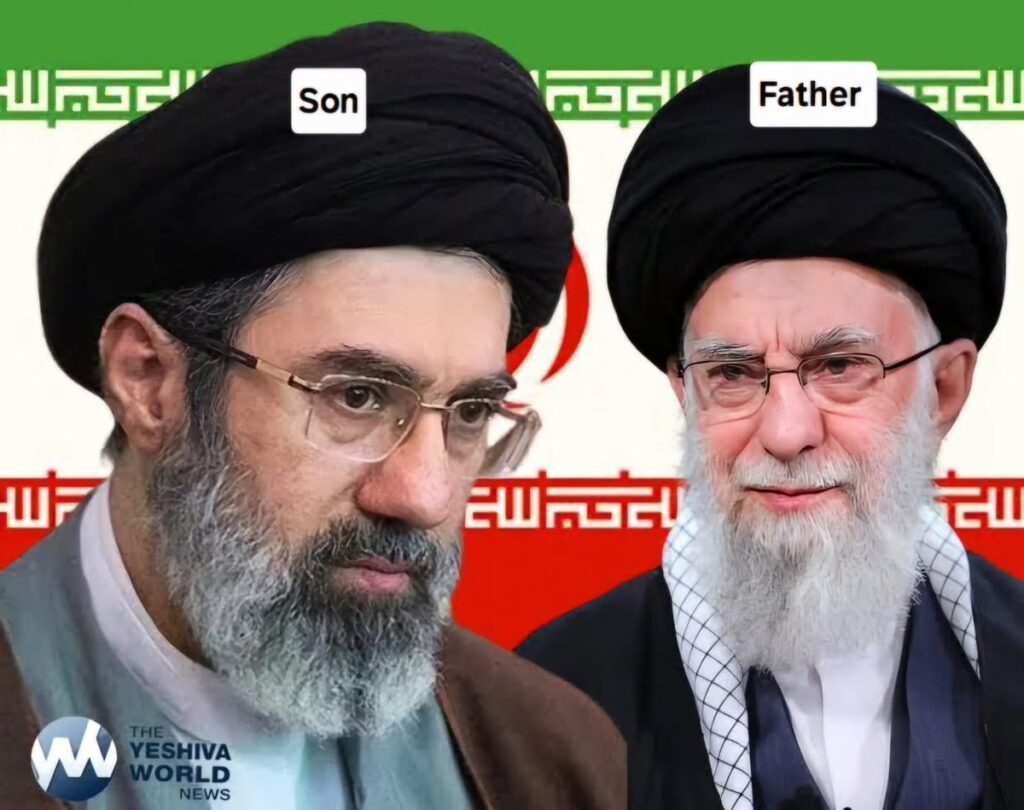
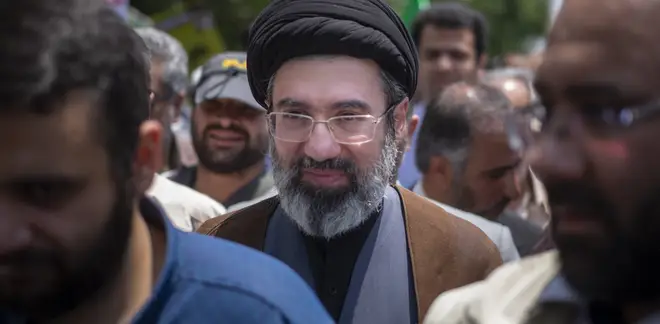
The statement came amid mounting speculation over who will succeed Khamenei, Iran’s most powerful political and religious authority. Iranian opposition outlet Iran International has indicated that Mojtaba Khamenei, the late leader’s 56-year-old son, is viewed as a leading contender.

According to Iran International, Mojtaba Khamenei was favored by Iran’s Assembly of Experts, the clerical body constitutionally tasked with appointing and overseeing the Supreme Leader, under pressure from elements within the Islamic Revolutionary Guard Corps, or IRGC. The claims could not be independently verified.

Mojtaba Khamenei, the second-oldest son of the late supreme leader, is not a senior-ranking cleric and has never held elected office or an official government post. However, he maintains longstanding ties to the IRGC and is widely believed by analysts to exert significant influence behind the scenes. He served in Iran’s armed forces during the 1980-1988 Iran-Iraq war.

For years, Mojtaba Khamenei has been mentioned in political circles as a possible successor to his father, though his potential candidacy has been controversial. Critics inside and outside Iran have argued that his elevation would resemble dynastic succession, drawing comparisons to the hereditary rule of the U.S.-backed Shah, who was toppled during the 1979 Iranian Revolution.

Reports have previously suggested that Ali Khamenei had identified three senior clerics as possible successors in the event of his death. Mojtaba’s name was not publicly associated with the reported shortlist. Some accounts indicated that the elder Khamenei had reservations about promoting his son, concerned it could undermine the Islamic Republic’s foundational rejection of monarchy.

Iranian authorities have not publicly confirmed details surrounding the reported strikes on Tehran or the status of succession deliberations. The absence of official statements has fueled uncertainty within Iran and across the region.

Israel has long viewed Iran as its primary regional adversary, citing Tehran’s support for armed groups hostile to Israel and its rhetoric regarding the Jewish state. Iranian leaders, in turn, have accused Israel of aggression and covert operations inside Iranian territory. Tensions have frequently manifested in proxy conflicts across Lebanon, Syria, and Gaza.

Katz’s remarks signal a potential hardening of Israel’s posture during a moment of leadership transition in Tehran. Public threats directed at a future Iranian leader represent an escalation in tone, even within the context of longstanding hostilities.

Security analysts say that leadership uncertainty in Iran could have far-reaching consequences for regional stability. A succession process perceived as opaque or influenced heavily by the IRGC may deepen internal divisions, particularly at a time when Iran faces economic strain and domestic discontent.

At the same time, overt Israeli threats may bolster hardline factions within Iran who argue that confrontation with Israel and the United States is inevitable. Historically, external pressure has sometimes strengthened the position of security institutions such as the IRGC, which portray themselves as guardians of national sovereignty.

The Assembly of Experts, composed of senior clerics elected by popular vote but vetted by state bodies, is responsible for appointing the Supreme Leader. While its deliberations are typically conducted behind closed doors, the selection carries immense weight. The Supreme Leader controls the armed forces, appoints key judicial and media officials, and has the final say on major state policies.

Any move to elevate Mojtaba Khamenei could test the legitimacy of the Islamic Republic’s political framework. The 1979 revolution was rooted in opposition to hereditary monarchy, and critics argue that transferring power within the same family risks eroding ideological credibility.

International observers are closely watching developments, particularly given Iran’s role in regional security dynamics and its nuclear program. A new leader’s stance on negotiations, military posture, and relations with neighboring countries could reshape diplomatic calculations.

For now, Israel’s warning underscores the fragility of an already volatile situation. Whether Katz’s statement is intended as deterrence or as a signal of future operational intent remains unclear. What is evident is that the leadership transition in Tehran — combined with direct rhetoric from Jerusalem — has introduced a new layer of unpredictability into Middle Eastern geopolitics.

As regional actors await confirmation from Iranian authorities, the prospect of further escalation looms, with succession politics in Tehran intersecting sharply with Israel’s security doctrine.

U.S. Submarine Sinks Iranian Warship Near Sri Lanka, 87 Dead in Escalation of Regional Conflict

0

A U.S. submarine torpedoed and sank an Iranian naval vessel in international waters south of Sri Lanka, leaving at least 87 sailors dead and widening the geographic scope of the intensifying conflict between Washington and Tehran, Sri Lankan authorities and U.S. officials said.

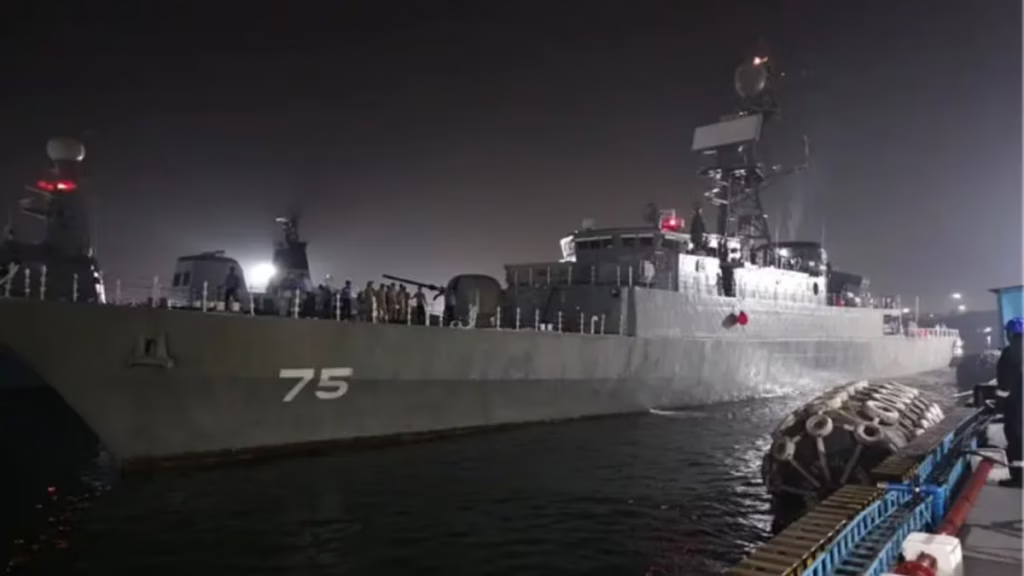
Sri Lanka’s deputy foreign minister identified the vessel as the Iranian frigate IRIS Dena, stating that the warship had been returning to Iran after visiting an eastern Indian port. The strike occurred hundreds of miles from the Persian Gulf, where U.S. and Israeli forces have been carrying out operations against Iranian targets and Tehran has responded with missile and drone attacks.

U.S. Defense Secretary Pete Hegseth confirmed the operation during remarks at the Pentagon, asserting that an American submarine had targeted the Iranian vessel while it was operating in what he described as international waters.

“An American submarine sank an Iranian warship that believed it was safe in international waters,” Hegseth said. “Instead, it was struck by a torpedo and went down.”

Hospital officials in Galle, a southern Sri Lankan port city, stated that military rescue teams transported 87 bodies to Karapitiya Teaching Hospital following an early morning distress call. Medical staff reported that an additional 32 survivors were admitted for treatment. Sri Lankan authorities indicated that approximately 60 individuals remained unaccounted for from an estimated crew of 180.

Sri Lanka’s navy initiated search-and-rescue operations after receiving the distress signal. Navy spokesperson Commander Buddhika Sampath told reporters that responding vessels encountered an oil slick at the scene.

“We located individuals floating in the water and brought them aboard,” Sampath said. “Subsequent inquiries confirmed they were crew members of the Iranian ship.”

Although the incident occurred outside Sri Lankan territorial waters, Sampath emphasized that Colombo had provided humanitarian assistance. Rescue teams later transported bodies covered in white sheets by truck to the Galle hospital morgue.

Two Sri Lankan sources with knowledge of the rescue operation told Reuters that the warship’s commanding officer and several senior officers survived the attack. According to those sources, the officers informed Sri Lankan authorities that the vessel had been struck by a submarine-launched torpedo.

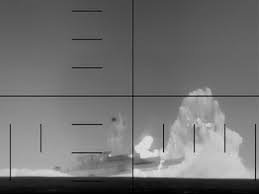
The Pentagon released video footage it said depicted the strike. The recording shows a large explosion erupting from the rear section of a warship, lifting part of the vessel from the water before it begins sinking from the stern. The date of the recording and the specific vessel shown could not be independently verified. However, the ship’s deck configuration and mast structure appear consistent with file imagery of the IRIS Dena.

The frigate had recently participated in the “Milan” multilateral naval exercise hosted by India in the Bay of Bengal from Feb. 18 to 25, according to the exercise’s official website. The vessel was listed as “IRINS Dena,” an alternate prefix sometimes used for ships of the Iranian navy. IRIS, or Islamic Republic of Iran Ship, is the more commonly used designation.

On Feb. 17, the Indian Navy’s Eastern Naval Command posted on X that it welcomed the IRIS Dena to Visakhapatnam, describing the visit as a reflection of longstanding ties between India and Iran. The post included photographs of the vessel and its officers. An Indian Navy spokesperson did not respond to requests for comment following news of the sinking.

The strike marks a notable expansion of hostilities into the Indian Ocean, far beyond the Gulf region that has traditionally been the focal point of U.S.-Iran naval tensions. Analysts say the geographic spread could complicate regional security calculations for countries such as India and Sri Lanka, both of which maintain strategic maritime interests and diplomatic ties with Washington and Tehran.

While U.S. officials framed the action as a military engagement against an adversarial naval asset, Tehran had not publicly commented at the time of publication. The incident raises questions about maritime security in major shipping lanes that carry significant portions of global energy and trade flows.

Regional observers note that naval operations in the Indian Ocean could heighten risks for commercial shipping and increase pressure on neutral states to clarify their positions. Sri Lanka’s swift rescue response underscores the challenges coastal nations face when major powers extend military operations into shared waterways.

The sinking of the IRIS Dena represents one of the deadliest naval incidents involving Iranian forces in recent years and signals a sharp escalation in the broader confrontation between the United States and Iran. Whether the incident prompts further retaliation or diplomatic intervention remains uncertain, but security experts warn that expanding the conflict zone increases the potential for miscalculation in already volatile waters.

Reuters

Iranian Navy Vessel Sinks Near Sri Lanka; About 140 Feared Missing as Rescue Effort Intensifies

0

COLOMBO, Sri Lanka (BN24) —An Iranian navy vessel sank off the coast of Sri Lanka early Tuesday, leaving about 140 people unaccounted for after search teams pulled 32 survivors from the water, Sri Lankan naval authorities said.

The ship, identified as the Iranian navy vessel IRIS Dena, issued a distress signal before disappearing beneath the surface in waters that fall within Sri Lanka’s designated search-and-rescue zone, naval officials in Colombo said.

Sri Lanka’s navy indicated that approximately 180 people had been aboard the vessel, citing documentation linked to the ship. While 32 individuals were rescued, the fate of the remaining passengers and crew remained uncertain as of Tuesday evening.

Budhika Sampath, a spokesman for the Sri Lanka Navy, said the alert was received during the early hours of March 4. Although the vessel went down outside Sri Lanka’s territorial waters, it was still within the country’s internationally recognized maritime rescue region.

“Even though the location was beyond our territorial sea, it lies within our search and rescue area of responsibility,” Sampath told the BBC. “Under international maritime obligations, we were required to respond.”

Rescue crews arriving at the coordinates reported spotting oil slicks and floating life rafts, but did not immediately locate the vessel itself. Survivors were found adrift in the water and were brought aboard Sri Lankan naval ships for medical attention and questioning.

“When our teams reached the scene, the ship was not visible,” Sampath said in remarks carried by the BBC. “We observed patches of oil and lifeboats. We then located individuals in the water and brought them to safety. Subsequent checks confirmed they were from an Iranian naval vessel.”

Sri Lankan authorities said they were working to determine the exact number of those missing. Although ship records indicated 180 people were on board, officials cautioned that final figures could shift as verification continues.

The cause of the sinking has not been established. Sampath dismissed speculation that a submarine strike may have brought down the vessel, describing such claims as unsubstantiated.

“There is no evidence at this stage to support assertions of a submarine attack,” he told the BBC. “The circumstances leading to the sinking remain under investigation.”

Sri Lanka’s military has not offered further details on possible mechanical failure, collision, weather conditions, or other contributing factors. Maritime tracking data and communication logs are expected to form part of the inquiry.

The incident unfolded against a backdrop of escalating tensions in the Middle East. Israel has launched a new wave of strikes across parts of the region. In Lebanon, several fatalities were recorded in attacks that the Israel Defense Forces said were aimed at Hezbollah operatives and infrastructure.

While no immediate connection between the naval sinking and regional hostilities has been established, the broader security climate has drawn attention to naval movements and military deployments in international waters.

Iran has not publicly disclosed additional information about the mission or purpose of the IRIS Dena at the time of the incident. Tehran’s naval operations frequently include patrols, training exercises, and long-distance deployments intended to project maritime presence beyond the Persian Gulf.

International maritime law obligates coastal states to respond to distress calls within designated search-and-rescue zones, regardless of a vessel’s nationality. Sri Lanka’s swift mobilization reflects those conventions, maritime analysts say.

Search operations were ongoing Tuesday, with Sri Lankan naval units combing the area for additional survivors. Weather and sea conditions were not immediately detailed by authorities, though oil sheens and scattered debris complicated visibility at the scene.

The sinking of a foreign naval vessel in the Indian Ocean carries geopolitical as well as humanitarian implications. Iran has,s in recent years, rs expanded its naval reach, deploying ships to distant waters in a demonstration of strategic capability. The IRIS Dena’s presence near Sri Lanka underscores Tehran’s broader maritime ambitions.

If mechanical failure or navigational error is ultimately determined to be the cause, the incident could prompt scrutiny of maintenance standards and operational readiness within Iran’s navy. A catastrophic systems breakdown at sea would likely intensify domestic and international questions about fleet sustainability.

Should evidence suggest external involvement, though none has been presented, the ramifications could extend far beyond maritime safety. The Middle East is already experiencing heightened volatility, with Israel conducting strikes in Lebanon targeting Hezbollah positions, as acknowledged by the Israel Defense Forces. Any perception of interconnected military events would amplify regional tensions.

At present, however, there is no official indication linking the naval loss to hostilities elsewhere.

For Sri Lanka, the episode highlights the strategic importance of its maritime zone. Positioned along major shipping routes in the Indian Ocean, the country plays a critical role in global trade corridors. Its response also reflects adherence to international maritime conventions, reinforcing its standing within global shipping networks.

Humanitarian concerns remain paramount. The survival window for individuals lost at sea narrows rapidly, depending on water temperature, weather patterns, and available flotation devices. The discovery of life rafts suggests that at least some evacuation procedures were initiated before the vessel sank, raising cautious hope that additional survivors could be located.

As search efforts continue, families in Iran and elsewhere await confirmation of the missing. Naval disasters are comparatively rare but often devastating, given the concentration of personnel on board and the inherent dangers of open-water operations.

Further updates are expected as Sri Lankan authorities complete survivor interviews and coordinate with Iranian officials. Until then, questions surrounding the sinking of the IRIS Dena from technical failure to operational context, remain unresolved.

The humanitarian toll, meanwhile, is already significant, with roughly 140 people feared missing in one of the most serious naval incidents in the region in recent years.

House Oversight Panel Votes to Subpoena Attorney General Pam Bondi in Expanding Jeffrey Epstein Probe

0

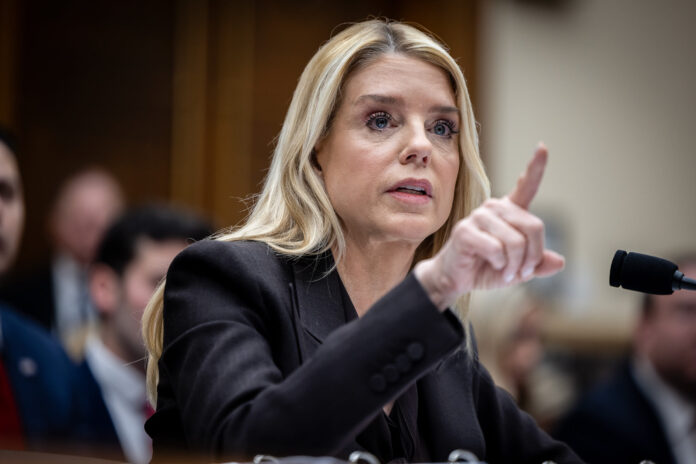
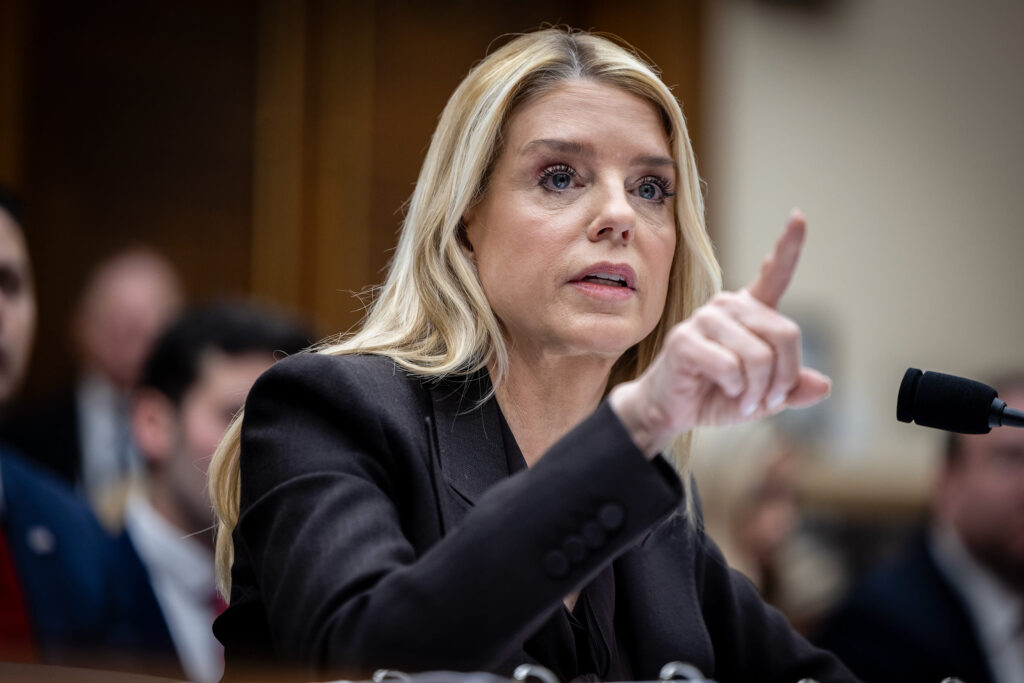
The House Oversight and Government Reform Committee voted Wednesday to subpoena Attorney General Pam Bondi for testimony as part of its continuing examination of the federal government’s handling of the case against convicted sex offender Jeffrey Epstein.

The panel adopted a motion introduced by Rep. Nancy Mace, R-S.C., directing that Bondi appear before the committee. Five Republicans joined Democrats in backing the measure, signaling bipartisan frustration over lingering questions surrounding the Justice Department’s management and release of investigative materials tied to Epstein.

In addition to Mace, Republican Reps. Lauren Boebert of Colorado, Tim Burchett of Tennessee, Michael Cloud of Texas and Scott Perry of Pennsylvania supported the subpoena effort.

The Justice Department did not immediately provide comment when contacted about the vote.

Rep. James Comer, R-Ky., who chairs the committee, said ahead of the vote that Bondi had offered to brief members at the Justice Department regarding the Epstein-related records and “anything else pertaining to that.” Lawmakers from both parties, however, indicated they preferred public testimony before the committee itself.

Rep. Robert Garcia of California, the panel’s top Democrat, said constituents continue to seek clarity about how the department handled the release of millions of pages of material.

“The attorney general has gone to speak, obviously, to other committees,” Garcia said. “I think it’s important that she is in front of our committee. She can directly answer questions about the release of the files, about transparency, about ensuring that victims and survivors are protected.”

Bondi testified before the House Judiciary Committee last month during a session focused on Justice Department oversight. During that appearance, Democratic lawmakers sharply questioned her about decisions surrounding the Epstein files. They contended that the department shielded certain prominent individuals whose names surfaced in the records while failing to sufficiently protect the identities of Epstein’s victims.

Bondi rejected allegations of a cover-up during that hearing.

The Oversight Committee’s action comes after a protracted dispute over the pace and scope of the Justice Department’s disclosure of materials from its Epstein investigation.

Last August, the committee issued a subpoena to the department seeking related documents. Congress subsequently passed the Epstein Files Transparency Act with bipartisan backing, and President Donald Trump signed the measure into law in November. The statute required the department to release all investigative material by Dec. 19, 2025.

The Justice Department ultimately disclosed millions of records in multiple installments, with the final tranche made public in late January. The staggered rollout drew criticism from some lawmakers who argued the law contemplated a more comprehensive release by the statutory deadline.

Early batches of documents drew attention for containing relatively few references to President Trump. Subsequent releases included records that mentioned the president. Trump has not been accused of wrongdoing in connection with Epstein.

A CBS News analysis determined that the Justice Department removed tens of thousands of files from the public archive. Some of those materials included explicit images or identifying details of survivors. The rationale for pulling other documents — including certain redacted call logs — has not been fully explained.

The investigation extends beyond the attorney general. Commerce Secretary Howard Lutnick, whose past associations with Epstein have drawn scrutiny, agreed to an interview with the Oversight Committee, Comer said Tuesday. A date for that session has not yet been announced.

Lutnick was among numerous prominent figures whose communications with Epstein surfaced following the Justice Department’s release of its investigative trove. Although Lutnick has said he severed ties with Epstein in 2005, documents indicated that contact continued after Epstein pleaded guilty in Florida state court in 2008 to prostitution-related charges and before his death by suicide in 2019 while facing federal sex-trafficking charges.

As part of its broader inquiry, the committee has sought testimony from former officials and individuals connected to Epstein, as well as documents from his estate.

Investigators conducted closed-door depositions last month with former President Bill Clinton and former Secretary of State Hillary Clinton. Video recordings of those sessions were released earlier this week. Bill Clinton told investigators, “There’s nothing that I saw when I was around him that made me realize he was trafficking women.” Hillary Clinton said she knew “nothing about him.”

The subpoena vote underscores the political sensitivity surrounding the Epstein case years after his death. Lawmakers from both parties face sustained public pressure to demonstrate transparency in cases involving wealthy and politically connected figures.

For Republicans, compelling Bondi’s testimony presents a complex dynamic. While some GOP members joined Democrats in seeking her appearance, the move also places scrutiny on an administration led by President Trump, who signed the transparency law and whose name appears in portions of the released records. Though no wrongdoing has been alleged against Trump, the political optics remain delicate.

For Democrats, pressing Bondi publicly allows them to frame the issue as one of institutional accountability and victim protection. Allegations that survivors’ identities were not adequately shielded may resonate beyond partisan lines, particularly given bipartisan passage of the transparency legislation.

The Justice Department, meanwhile, must balance competing obligations: safeguarding sensitive information while satisfying statutory disclosure requirements and congressional oversight demands. Decisions to redact or remove materials — even when justified by privacy or legal concerns — risk fueling speculation in a case already steeped in distrust.

The Oversight Committee’s next steps could shape broader debates about executive branch transparency. If Bondi appears and provides detailed explanations for the department’s actions, lawmakers may either quell concerns or intensify scrutiny depending on her testimony.

At stake is not only political accountability but public confidence in how the government handles investigations involving powerful individuals. The Epstein case, despite years of legal proceedings and document releases, continues to test the credibility of institutions tasked with delivering justice and transparency.

CBSNews

British Rapper Ghetts Jailed 12 Years For Killing Student In Drunken Hit-And-Run

0

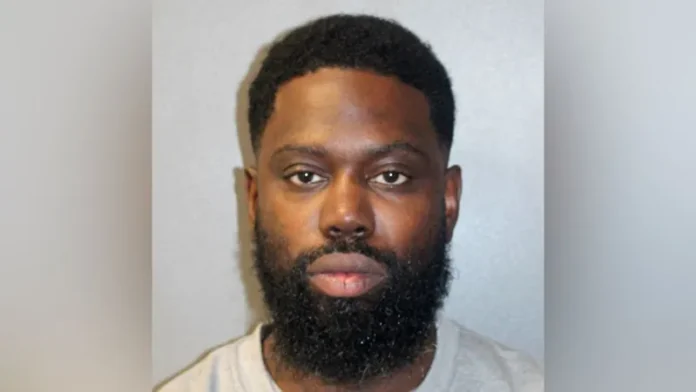
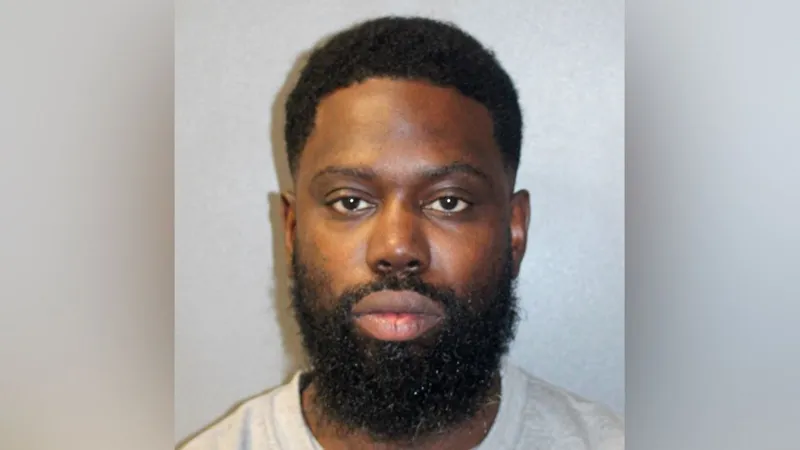
LONDON (BN24) — British grime performer Ghetts has been sentenced to 12 years in prison after admitting to dangerous driving and causing death by dangerous driving in a collision that killed a 20-year-old university student in northeast London.

The artist, whose legal name is Justin Clarke-Samuel, received the sentence at the Old Bailey, where Judge Mark Lucraft KC characterized the events leading up to the crash as a “shocking” course of reckless conduct.

The case, detailed by The Guardian, centered on a late-night incident on Oct. 18, 2025. Prosecutors outlined that Clarke-Samuel had spent the evening drinking at Omi Lounge in central London before getting behind the wheel of his BMW. Court proceedings established that he was approximately one-and-a-half times above the legal alcohol limit at the time he began driving.

According to evidence presented during the trial, CCTV footage captured what the court described as an “appalling litany of incidents” before the fatal collision. Prosecutors laid out that Clarke-Samuel allegedly drove at speeds exceeding 70 miles per hour in several areas, ignored six red traffic signals, mounted pavements, and swerved into oncoming lanes. The vehicle also struck other road users, including a motorcyclist, before the fatal impact.

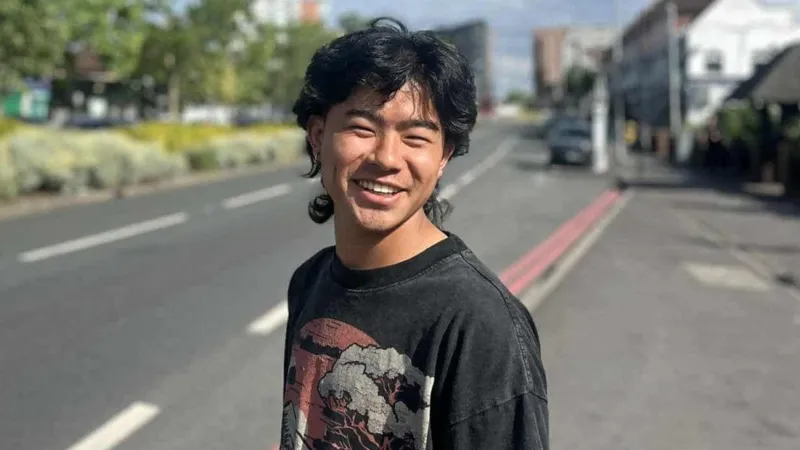
At approximately 11:33 p.m., Clarke-Samuel’s vehicle hit Yubin Tamang as the student crossed a road in Ilford, northeast London. Rather than stopping at the scene or contacting emergency responders, the court heard that Clarke-Samuel continued driving for nearly eight miles to his residence.

Tamang was transported to a hospital, where he died two days later from his injuries.

Officers who detained Clarke-Samuel hours after the crash testified that they detected alcohol on his breath at the time of arrest. Authorities also recovered his black BMW, which bore significant damage consistent with the collision.

In a victim impact statement read aloud in court, Tamang’s mother said her son had come to the United Kingdom to pursue higher education and build a better future. She told the court that his life was cut short by another person’s decisions. A roommate described Tamang as driven and hopeful, adding that the loss had irreversibly altered the lives of friends and family.

Clarke-Samuel maintained during proceedings that he drove erratically because he believed he was being followed. However, prosecutors told the court that surveillance footage did not substantiate claims of any pursuit. Defense counsel submitted that Clarke-Samuel’s fear was linked to a previous armed robbery incident involving the musician.

The court was informed that Clarke-Samuel had 12 prior convictions spanning 27 offenses dating back to his adolescence, including robbery and driving-related violations.

Although Judge Lucraft acknowledged written testimonials submitted on Clarke-Samuel’s behalf and recognized what he described as expressions of genuine remorse, the judge concluded that the seriousness and sustained nature of the conduct demanded a substantial custodial term. In addition to the 12-year prison sentence, Clarke-Samuel was banned from driving for 17 years.

Ghetts is widely known within the UK grime music scene and has collaborated with artists such as Skepta and Stormzy. He has also performed at major events, including Glastonbury Festival. In 2021, he secured the Best Male Act award at the MOBO Awards and later received the Pioneer Award at the same ceremony in 2024.

The sentencing marks a dramatic turn for an artist whose career had been defined by both critical acclaim and commercial recognition.

The case underscores the United Kingdom’s increasingly firm stance on dangerous driving offenses, particularly those involving alcohol. Courts in England and Wales have, in recent years, demonstrated a willingness to impose lengthy prison terms when fatalities result from reckless conduct behind the wheel. The 12-year sentence reflects judicial emphasis on deterrence, especially in high-profile cases where public scrutiny is intense.

The judge’s remarks regarding the “litany” of infractions captured on CCTV highlight the role of surveillance technology in modern prosecutions. Video evidence can provide a minute-by-minute reconstruction of events, reducing reliance on conflicting witness accounts and strengthening the prosecution’s narrative of sustained recklessness rather than a single lapse in judgment.

The case also raises broader questions about celebrity accountability. High-profile defendants often attract significant media attention, and courts must navigate public interest while adhering strictly to legal standards. In this instance, the sentencing appears aligned with established guidelines for causing death by dangerous driving, regardless of the defendant’s prominence.

From a road safety perspective, advocacy groups have consistently argued that alcohol-related crashes remain preventable tragedies. Data from UK transport authorities indicate that drink-driving continues to be a contributing factor in a notable proportion of fatal road incidents annually. The visibility of this case may reinforce public awareness campaigns aimed at discouraging impaired driving.

For the music industry, the conviction represents another instance where personal conduct outside artistic performance has reshaped a public figure’s career trajectory. While accolades and collaborations elevated Ghetts’ standing in grime music, the criminal proceedings now define a pivotal chapter of his public identity.

Ultimately, the case centers not on celebrity but on the loss of a young life. Yubin Tamang’s death reverberates beyond courtrooms and headlines, reflecting the irreversible consequences that can arise from decisions made in moments of impaired judgment.

Iran Says 555 Dead in U.S.-Israeli Strikes as Interim Leaders Vow Defiance After Khamenei’s Killing

0

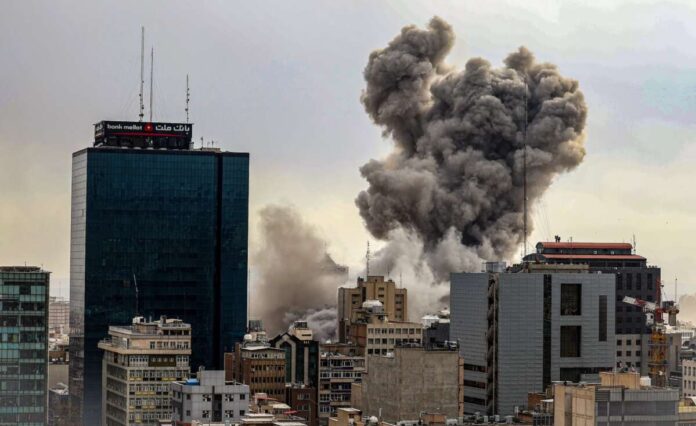
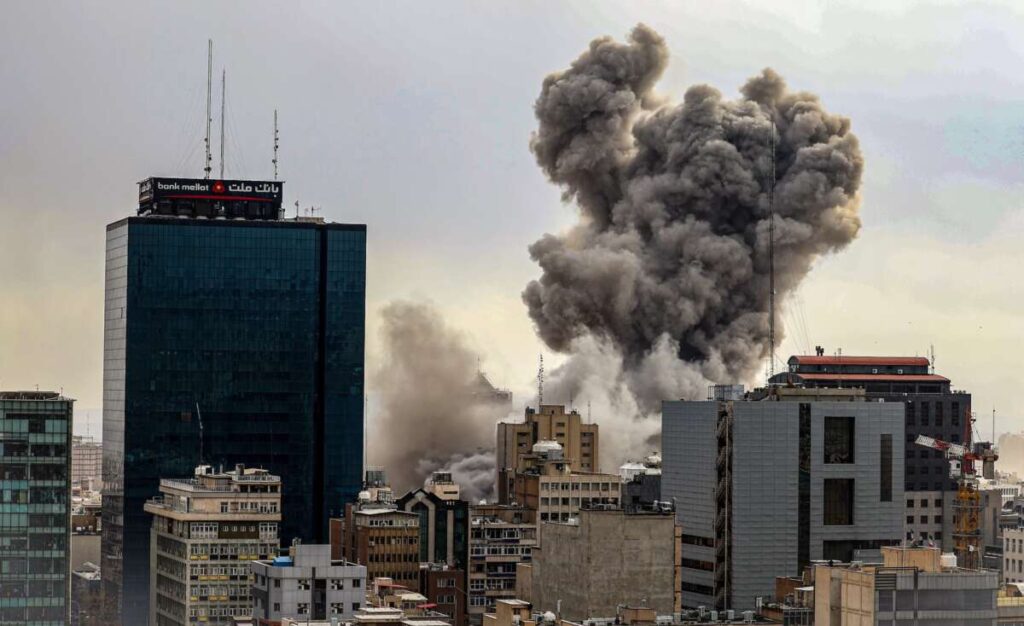
TEHRAN, Iran (BN24) — At least 555 people have been killed in U.S. and Israeli strikes across Iran, the Iranian Red Crescent announced, as emergency crews continue rescue operations in dozens of cities and the country’s interim leadership seeks to consolidate authority following the reported killing of Supreme Leader Ayatollah Ali Khamenei.

The humanitarian organization indicated that bombardments have affected a broad swath of the country, with attacks recorded in 131 cities nationwide. The figures were made public in a statement carried by The Telegraph, citing the Red Crescent’s assessment.

“Following enemy attacks in recent days, so far 131 cities have been involved in the incident,” the Iranian Red Crescent declared, adding that relief and medical teams were operating continuously.

The organization said 555 people had been killed and described ongoing efforts involving rescue, transport, and emergency medical services. More than 100,000 aid and relief personnel have been placed on heightened alert, it added, as authorities respond to what officials characterize as a widening humanitarian emergency.

The reported casualty toll emerges amid a dramatic shift in Iran’s political landscape. Iranian officials say the country’s Supreme Leader, Ayatollah Ali Khamenei, was killed in joint U.S.-Israeli strikes earlier in the conflict, an event that has intensified both domestic and regional tensions.

Iran’s temporary leadership council convened its second meeting late Sunday. Following the session, President Masoud Pezeshkian delivered a recorded address reaffirming continuity in governance and resistance to foreign pressure.

“The temporary leadership council started its work today and by God’s grace and power will continue the path of the late imam and the dear martyred leader and the path of all truth-seekers in the world,” Pezeshkian said.

He also directed pointed remarks toward Washington and Tel Aviv, asserting that the killing of Iran’s supreme leader would not diminish the country’s resolve.

“America and the Israeli regime should know that martyring the supreme leader of the Islamic Revolution will bring them nothing but humiliation,” Pezeshkian declared in the video message.

Calling on citizens to demonstrate unity during what he described as a period of mourning and national trial, Pezeshkian urged public solidarity in mosques, on the streets, and in civic spaces.

“Our dear nation is mourning this great martyr today, and all of us, with our presence on the scene and in the field, in mosques and streets, must thwart the enemies’ sinister plans with empathy and hand in hand,” he said.

He further maintained that Iran’s armed forces remain prepared for escalation.

“The armed forces of the Islamic Republic of Iran are ready and will be ready to crush the bases of enemies, and will disappoint enemies as always,” Pezeshkian said.

U.S. and Israeli officials have not immediately issued public responses to the casualty figures released by the Iranian Red Crescent. Independent verification of the toll was not immediately available.

The reported strikes represent one of the most expansive military operations inside Iran in recent years, affecting urban centers across multiple provinces. The geographic breadth of 131 cities suggests sustained and coordinated targeting rather than isolated incidents.

If confirmed, the death toll of 555 would mark a significant escalation in direct hostilities involving Iran, the United States, and Israel. Historically, confrontations between the three have often unfolded indirectly, through proxy groups or limited air operations. Large-scale strikes spanning more than 100 cities indicate a substantial shift in operational scope.

The killing of Ayatollah Ali Khamenei, if independently corroborated, would represent one of the most consequential geopolitical events in the Middle East in decades. As Iran’s supreme leader since 1989, Khamenei has been the country’s highest authority on military, political, and religious matters. His death could trigger both internal succession challenges and broader regional recalibrations.

Iran’s interim leadership council appears to be moving swiftly to project stability. Public messaging emphasizing continuity, religious symbolism,m and national unity reflects a strategic effort to prevent internal fragmentation. In times of crisis, Iranian officials have historically leaned on themes of martyrdom and resistance to rally public support.

At the same time, the mobilization of more than 100,000 relief workers underscores the humanitarian dimension of the crisis. Large-scale urban strikes often strain hospital capacity, infrastructure, re and supply chains. The Red Crescent’s description of round-the-clock operations suggests sustained casualty management efforts that could continue for days or weeks.

Regionally, the developments raise the prospect of broader conflict. Iran maintains alliances and partnerships with armed groups across the Middle East. Retaliatory measures, whether direct or through allied actors, could widen the confrontation beyond Iran’s borders.

Global energy markets may also respond to the instability. Iran occupies a strategic position along key oil transit routes, including the Strait of Hormuz. Heightened military activity in or near those waterways could disrupt shipping and influence global crude prices.

Diplomatically, the situation may intensify pressure on international mediators seeking to prevent a broader war. European governments, Gulf states,tes and multilateral organizations could face renewed calls to facilitate de-escalation.

For now, much of the available information comes from Iranian official channels, including the Red Crescent and statements by national leaders. Independent assessments of casualty figures, operational details, and the circumstances surrounding Khamenei’s reported death remain limited.

As rescue efforts continue across the country, the political and military consequences of the strikes appear poised to reverberate well beyond Iran’s borders, shaping the trajectory of Middle East security in the weeks ahead.

Belgium detains 2 suspected Cameroon separatists in war crimes probe

0

BRUSSELS (BN24) — Belgian authorities have taken three individuals into custody on suspicion of involvement in crimes against humanity and war crimes connected to Cameroon’s protracted separatist conflict, federal prosecutors confirmed Tuesday.

The detainees are believed to be senior figures within the Ambazonia Defence Forces (ADF), an armed separatist movement seeking independence for Cameroon’s English-speaking North-West and South-West regions. Cameroon is predominantly French-speaking, and tensions between its linguistic communities have fueled nearly a decade of violence.

In a statement, Belgium’s federal prosecutor’s office disclosed that the suspects are accused of coordinating or supporting militant operations from Belgian territory. Authorities contend that funds were allegedly raised in Belgium to sustain the armed campaign and to procure weapons and ammunition. Investigators also allege that operational directives for attacks in Cameroon may have been transmitted from within Belgium.

The arrests followed coordinated searches conducted Sunday in the port city of Antwerp and the Flemish municipality of Londerzeel. Four individuals were initially apprehended. After questioning, an investigating judge ordered three of them held in pretrial detention. The fourth individual was released under conditions that were not immediately disclosed.

Belgian prosecutors indicated that the inquiry began last summer and centers on individuals residing in Belgium suspected of belonging to the leadership structure of the ADF. The office emphasized that the investigation remains ongoing.

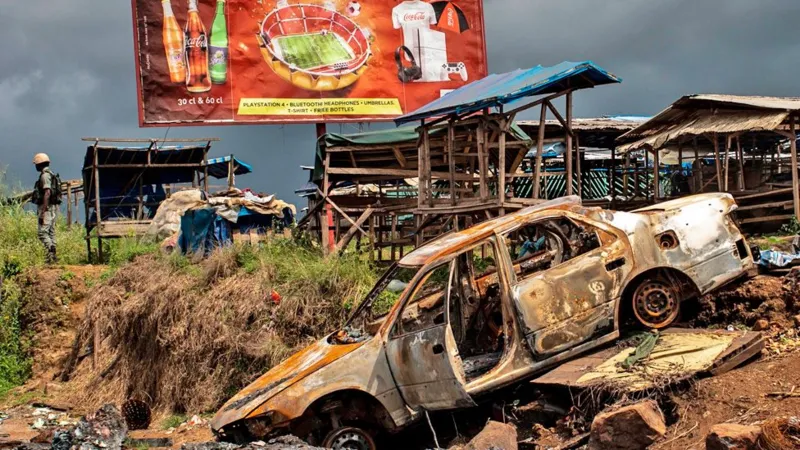
The United Nations estimates that more than 6,500 people have died since violence erupted in Cameroon’s Anglophone regions nearly a decade ago. The conflict has drawn international concern over allegations of serious abuses committed by both separatist fighters and government forces.

The ADF is among several armed groups that emerged after tensions escalated in 2017. Separatist fighters declared the formation of an independent state known as “Ambazonia,” intensifying clashes with security forces loyal to President Paul Biya’s government. Human rights organizations have documented allegations of extrajudicial killings, arbitrary detentions, village burnings and attacks on civilians on both sides of the conflict.

According to UN figures, the crisis has displaced more than 490,000 people internally and left over 1.5 million in need of humanitarian assistance. Entire communities have been uprooted as fighting continues across rural and urban areas of the North-West and South-West regions.

Belgium’s action comes amid a broader pattern of international scrutiny. Authorities in Norway and the United States have previously initiated investigations targeting individuals suspected of financing or directing separatist activities from abroad. The cross-border nature of these inquiries reflects growing concern over diaspora-based fundraising and coordination efforts tied to armed movements in Cameroon.

Cameroon’s Anglophone crisis traces its roots to late 2016, when lawyers and teachers in the English-speaking regions launched strikes to protest what they described as the imposition of French in courts and schools. Demonstrators argued that the Francophone-dominated government had marginalized the minority Anglophone population, eroding cultural and legal protections inherited from British colonial administration.

When activists proclaimed the independence of Ambazonia in 2017, security forces responded forcefully. The confrontation quickly evolved into a sustained armed insurgency involving the ADF and other separatist factions.

President Paul Biya, who has led Cameroon for more than four decades, has maintained that his administration has undertaken meaningful steps to address grievances and restore stability. The government has highlighted decentralization reforms and dialogue initiatives aimed at easing tensions.

Nonetheless, Biya’s administration continues to face criticism from opposition figures and civil society groups over its handling of the unrest and broader concerns regarding political freedoms. Rights advocates argue that restrictions on dissent and press activity have compounded mistrust in affected regions.

Belgian authorities have not disclosed the identities of the detainees, citing the sensitivity of the investigation. Prosecutors underscored that those arrested are presumed innocent unless proven guilty in court.

The detentions in Belgium underscore how Cameroon’s internal conflict has increasingly taken on international dimensions. European nations hosting diaspora communities are facing mounting pressure to examine whether fundraising and advocacy efforts cross into material support for armed groups accused of serious violations.

The legal framework underpinning Belgium’s investigation reflects the principle of universal jurisdiction, which allows national courts to prosecute certain grave crimes regardless of where they were committed. By pursuing allegations tied to crimes against humanity and war crimes, Belgian authorities signal that accountability mechanisms may extend beyond Cameroon’s borders.

Such cases also highlight the complex role of diaspora networks. While many expatriate Cameroonians engage in peaceful political advocacy or humanitarian support, authorities across Europe and North America have become more vigilant about the potential misuse of financial channels to sustain armed insurgencies.

For Cameroon, international investigations may intensify diplomatic sensitivities. The government in Yaoundé has long framed the separatist movement as a security threat requiring firm action. However, external probes focusing on alleged abuses by all sides risk amplifying calls for independent monitoring and judicial reform within Cameroon itself.

The humanitarian toll remains stark. With hundreds of thousands displaced and social infrastructure strained, the conflict continues to hinder economic development in affected regions. Schools have periodically closed due to violence, depriving children of consistent education. Agricultural production a key livelihood source has also suffered disruptions.

Whether Belgium’s investigation will lead to prosecutions remains uncertain. Yet the case illustrates a broader shift: conflicts once viewed as localized are now subject to transnational legal and financial scrutiny. As authorities in multiple countries examine alleged overseas coordination of separatist activity, the legal exposure for individuals operating beyond Cameroon’s borders may increase.

At the same time, sustainable resolution of the Anglophone crisis ultimately depends on political dialogue and domestic reforms within Cameroon. International legal action may address accountability, but it cannot substitute for negotiated solutions to the grievances that sparked the conflict in 2016.

For now, Belgian prosecutors continue their inquiry, while Cameroon’s long-running crisis shows little sign of immediate resolution.

Mojtaba Khamenei Emerges as Leading Contender to Succeed Father as Iran’s Supreme Leader Amid War

0

As Iran grapples with war and the sudden death of its long-serving supreme leader, attention has shifted to a familiar but largely unseen figure within the Islamic Republic’s power structure: Mojtaba Khamenei.

The son of the late Ali Khamenei, Mojtaba Khamenei has for years been viewed by insiders as a potential successor, despite never holding elected office or an officially appointed government post. The Israeli airstrike that killed his 86-year-old father at the outset of the conflict has now intensified scrutiny of his possible ascension.

Mojtaba Khamenei has not appeared publicly since the strike that targeted the supreme leader’s offices. His wife, Zahra Haddad Adel, whose family has longstanding ties to Iran’s clerical establishment, was also killed. Iranian state media have not disclosed his whereabouts, though analysts believe he remains alive and is likely in seclusion as U.S. and Israeli airstrikes continue.

Even before his father’s death, Mojtaba Khamenei’s name circulated among conservative clerics as a potential heir. The idea of a son succeeding his father in the Islamic Republic has drawn criticism from reformists and some conservatives, who warn it risks echoing the hereditary monarchy overthrown in the 1979 revolution.

Yet the narrative may be shifting. Hard-liners have portrayed Ali Khamenei and his daughter-in-law as martyrs in what they describe as a war against the United States and Israel. That framing could strengthen Mojtaba Khamenei’s standing among members of Iran’s 88-seat Assembly of Experts, the clerical body tasked with selecting the next supreme leader.

The stakes are immense. The next leader will assume command of Iran’s military forces during an active conflict and inherit authority over a stockpile of highly enriched uranium, which could potentially be used for a nuclear weapon if sanctioned by decree.

Born in 1969 in Mashhad, Mojtaba Khamenei grew up during the final years of Shah Mohammad Reza Pahlavi’s rule. His childhood coincided with his father’s political activism and periodic detention by the shah’s secret police.

After the 1979 Islamic Revolution, the family relocated to Tehran. Mojtaba later fought in the Iran-Iraq war as part of a Revolutionary Guard battalion whose members would go on to occupy senior intelligence and security roles.

When his father became supreme leader in 1989, Mojtaba Khamenei’s proximity to power deepened. Over time, he developed influence within his father’s office and cultivated alliances within the powerful Islamic Revolutionary Guard Corps, the paramilitary force that plays a central role in Iran’s military and economic life.

U.S. diplomatic cables published by WikiLeaks in the late 2000s described him as “the power behind the robes,” alleging he acted as a gatekeeper and political operator within the supreme leader’s circle. One cable suggested he was building his own base of influence, though it noted his limited theological credentials.

In 2019, the United States imposed sanctions on Mojtaba Khamenei during the administration of Donald Trump, accusing him of advancing his father’s regional and domestic agenda. U.S. officials have also alleged he maintained close ties with the Guard’s Quds Force and the Basij militia, which suppressed anti-government protests.

The supreme leader occupies the apex of Iran’s Shiite theocratic system, with final authority over the military, judiciary, state broadcasting and key policy decisions. Only one succession has occurred since the revolution: when Ruhollah Khomeini died in 1989 and Ali Khamenei assumed the role.

Following the recent killing, Iran moved swiftly to activate a constitutional mechanism for temporary leadership. A council composed of President Masoud Pezeshkian, Judiciary Chief Gholamhossein Mohseni Ejei and a cleric selected by the Guardian Council has taken on interim duties while the Assembly of Experts deliberates.

The transition unfolds against the backdrop of a 12-day war with Israel and ongoing U.S.-Israeli operations aimed at degrading Iran’s military infrastructure and nuclear capabilities. The Islamic Revolutionary Guard Corps — designated a terrorist organization by the United States in 2019 — remains a decisive actor, controlling ballistic missile forces and overseeing a network of allied militant groups across the Middle East.

Whether Mojtaba Khamenei ultimately secures the supreme leadership will depend on behind-the-scenes negotiations among senior clerics and power brokers within the Guard and the broader political establishment.

His critics argue that elevating him would blur the line between revolutionary theocracy and dynastic rule. Supporters contend his decades within the system and close ties to security institutions provide continuity at a moment of national crisis.

With Iran at war and its political future uncertain, the question of succession has become inseparable from the country’s broader struggle over identity, governance and regional power. The decision now rests with a clerical body whose deliberations are largely opaque — but whose choice will shape the trajectory of the Islamic Republic for years to come.

The Associated Press

DON'T MISS ANY OF OUR UPDATE