LAGOS (BN24) — Six people, including two men, three women, and a child, were confirmed dead following a road crash at Ibeju Bus Stop along the Lekki–Epe Expressway in Lagos on Tuesday, September 2.
The Lagos State Traffic Management Authority (LASTMA) reported that the collision involved a blue Volvo FL6 truck carrying wooden planks and a white commercial bus bearing registration number AKD 336 YD. The tragic accident occurred in the afternoon, resulting in multiple casualties.
In addition to the fatalities, nine survivors—three men and six women—were rescued by LASTMA officials with assistance from the Federal Road Safety Corps (FRSC), the Nigeria Police Force, and the Lagos Neighbourhood Safety Corps. The survivors were promptly taken to the Federal Medical Centre, Epe, and Hammond Hospital for medical treatment.
The bodies of the deceased victims were deposited at the Federal Medical Centre morgue in Epe as investigations continue.
Preliminary findings from the Lagos traffic agency suggest that the crash was caused by excessive speeding and reckless driving, underscoring ongoing concerns about road safety in the region. LASTMA General Manager Olalekan Bakare-Oki expressed deep condolences to the families affected by the accident. He also issued a stern warning to motorists, urging caution and adherence to speed limits, particularly during the Ember Months— a period known for increased traffic and accident risks.
BALTIMORE (BN24) — James Junior Aliyu, a 30-year-old Nigerian national residing in South Africa at the time, has pleaded guilty in a U.S. federal court to charges of conspiracy to commit wire fraud and money laundering tied to a $6 million business email compromise (BEC) scheme.
Aliyu is the last of three defendants to enter guilty pleas in connection with the multi-million-dollar fraud operation, which targeted individuals and businesses by hacking email accounts and sending fraudulent wiring instructions. Eight other defendants previously pleaded guilty in related cases within the District of Maryland.
U.S. Attorney for the District of Maryland, Kelly O. Hayes, announced Aliyu’s plea on August 26, 2025, alongside Acting Special Agent in Charge Evan Campanella of Homeland Security Investigations (HSI) in Baltimore. Aliyu was arrested and extradited from South Africa to the United States to face federal charges.
According to a federal indictment unsealed in July 2022, Aliyu, along with co-defendants Kosi Goodness Simon-Ebo and Henry Onyedikachi Echefu—also Nigerian nationals residing in South Africa—conspired from February to July 2017 to gain unauthorized access to email accounts. They sent “spoofed” emails with false wiring instructions designed to trick victims into transferring money into “drop accounts” controlled by the perpetrators.
In addition to wire fraud, Aliyu and his co-conspirators engaged in money laundering by moving the stolen funds through a series of transfers, withdrawals, and check transactions to conceal the origin and ownership of the assets.
Documents from Aliyu’s plea agreement state the intended loss amount for the transactions he controlled exceeded $4.1 million, with actual losses of at least $1.57 million. Aliyu directly controlled over $1.19 million of the stolen funds. He is required to pay a money judgment of at least $1.19 million and restitution totaling no less than $2.38 million to the victims.
Aliyu faces a maximum sentence of 20 years in federal prison when he appears for sentencing before U.S. District Judge Deborah L. Boardman on November 24, 2025.
U.S. Attorney Hayes praised the investigative work of the HSI Mid-Atlantic El Dorado Task Force and acknowledged critical assistance from South African law enforcement agencies and the Department of Justice’s Office of International Affairs. The DOJ’s Canadian International Assistance Group also supported the arrests and extraditions of co-defendants Echefu and Simon-Ebo. Assistant U.S. Attorney Megan S. McKoy is prosecuting the case.
OUAGADOUGOU, Burkina Faso (BN24) — Burkina Faso’s transitional parliament has passed a law banning homosexuality, imposing prison sentences of up to five years on offenders. The legislation, passed unanimously on Monday by the 71-member unelected parliament, also tightens rules on nationality and stateless persons.
The new Persons and Family Code law marks Burkina Faso as the latest African nation to criminalize lesbian, gay, bisexual, and transgender (LGBT) activities, joining a number of conservative countries across the continent that maintain strict anti-LGBTQ laws.
Justice Minister Edasso Rodrigue Bayala, speaking on state television, said the law provides prison terms ranging from two to five years along with fines. He added that those convicted of repeat offenses who are not Burkinabe nationals could face deportation.
“The law goes into effect immediately,” Bayala said, condemning homosexual acts as “bizarre behaviour.”
Burkina Faso’s military junta, led by Ibrahim Traore following a 2022 coup, has shown increasing intolerance toward dissent and minority rights amid escalating Islamist militant violence in the West African nation.
Anti-gay laws remain widespread in several African countries including Senegal, Uganda, and Malawi. However, some countries such as South Africa, Botswana, and Angola have decriminalized LGBTQ practices or enacted protective legislation.
While Western governments and human rights groups have criticized such laws, they continue to enjoy broad support within many African societies where homosexuality is often viewed as foreign to local cultures rather than an inherent sexual orientation.
The legislation now awaits the signature of military leader Ibrahim Traore to become law.
NEW YORK (BN24) — Carlos Alcaraz delivered another commanding performance at the US Open 2025, defeating Jiri Lehecka in straight sets to secure a spot in the semi-finals and continuing his bid for a sixth Grand Slam title.
The 22-year-old Spaniard, who won the US Open in 2022, needed just under two hours to dispatch the 20th-seeded Czech player 6-4, 6-2, 6-4 under the lights at Arthur Ashe Stadium on Tuesday. Alcaraz broke Lehecka’s serve in the opening game and never looked back, maintaining sharp focus throughout while showcasing the electrifying shot-making that has become his trademark.
“Sometimes I play a shot that I should not play in that moment, but it’s the way I love playing tennis,” Alcaraz told Sky Sports after the match. “I’m here to entertain the people, myself, and the team.”
Despite a pair of double faults in his opening service game, Lehecka showed resilience midway through the first set. Yet any momentum he gained was quickly erased as Alcaraz broke again to start the second. The world No. 2, who was beaten by Lehecka earlier this year at the Qatar Open, appeared in complete control, losing only six points on serve in the second set.
Alcaraz’s flair was on full display in the third, including a highlight-reel forehand drop shot played on the slide that left Lehecka motionless at the baseline. The shot drew roars from the New York crowd and reinforced Alcaraz’s reputation not just as a champion, but a performer.
This marks the third time Alcaraz has reached the semi-finals at Flushing Meadows. Remarkably, it’s the first time in his career he has reached the last four of a Grand Slam without dropping a set — making him the youngest man to achieve that feat since Rafael Nadal at the 2008 French Open.
Alcaraz, the tournament’s second seed, will face either fourth-seeded American Taylor Fritz or 24-time Grand Slam champion Novak Djokovic in the semi-final.
As he continues to chase his second US Open title and sixth overall major, Alcaraz’s message remains simple: winning is crucial, but entertaining is essential.
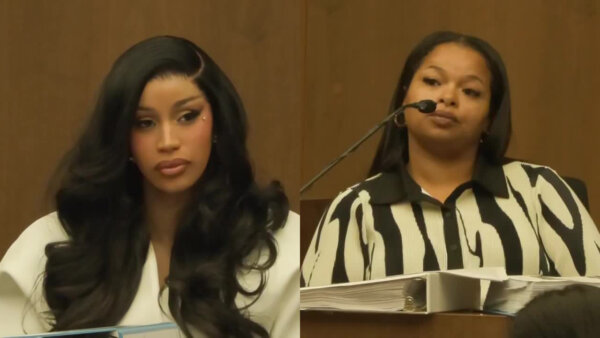
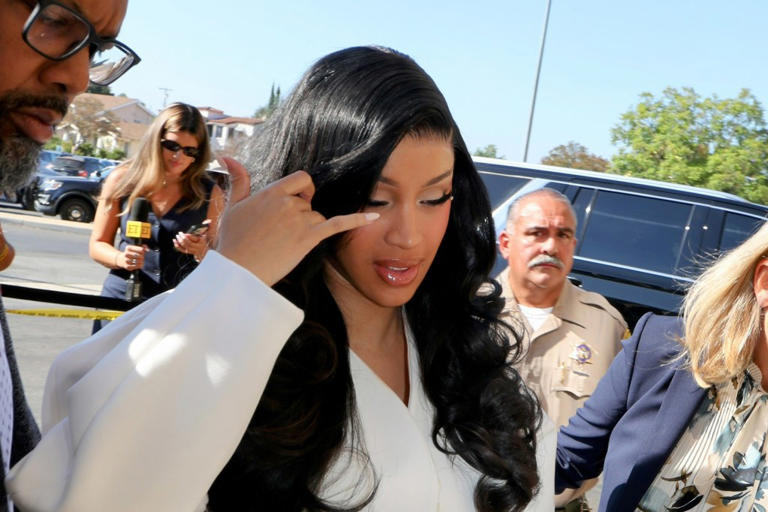
California (BN24) – A California jury delivered a swift and unanimous verdict in favor of rapper Cardi B on Tuesday, rejecting a lawsuit brought by a security guard who alleged the Grammy-winning artist assaulted her at a Beverly Hills doctor’s office during her first pregnancy in 2018.
The case, heard in a small courthouse in Alhambra, centered on claims from plaintiff Emani Ellis, who said the hip-hop star scratched her face with a fingernail and spat on her during an altercation in the hallway of an obstetrician’s office. Ellis further claimed the incident left her scarred, traumatized, and in need of cosmetic surgery.
After hearing two days of testimony, including Cardi B’s own account of the encounter, the jury of six men and six women deliberated for just about an hour before siding entirely with the rapper. Although only nine jurors were needed for a civil verdict, all 12 voted in Cardi’s favor.
Speaking outside the courthouse, Cardi B celebrated the outcome and condemned what she described as a pattern of frivolous lawsuits against celebrities. “The next person who tries to do a frivolous lawsuit against me, I’m going to counter-sue, and I’m gonna make you pay, because this is not OK,” she said, posing for photos with fans. “I am not that celeb that you sue, and you think is going to settle. I’m not gonna settle. Especially when I’m super completely innocent.”
The rapper, who said she missed her children’s first day of school because of the trial, added that the experience had been emotionally draining, even down to the elaborate wig changes she made each day, which she joked left her own lawyer unsure which hairstyle was real.
During testimony livestreamed last week, Cardi B acknowledged arguing with Ellis but insisted she never laid a hand on her. She told jurors that at the time she was four months pregnant and worried Ellis might reveal the pregnancy, which she had not yet made public. “I will say it on my deathbed. I did not touch that woman,” Cardi said after the verdict. “I didn’t lay my hands on that girl.”
According to Cardi, Ellis followed her into the building, appeared to be filming her, and even spoke her name into a phone before apologizing when confronted. The argument escalated, Cardi said, but remained verbal. A receptionist who intervened largely corroborated the rapper’s account.
Ellis testified that she felt humiliated and traumatized by the incident, claiming she was left with a facial scar that required surgery and ultimately cost her job. In her lawsuit, she sought compensation for medical bills, lost wages, emotional suffering, and punitive damages. Cardi B testified that Ellis was demanding $24 million in damages.
Ellis’s attorney, Ron Rosen Janfaza, said outside court that his client intends to appeal. He did not immediately respond to requests for comment following the verdict.
Cardi B, whose real name is Belcalis Almánzar, told jurors she had been in Los Angeles at the time promoting projects around the 2018 NBA All-Star Game. The obstetrician’s office, she said, had been closed to ensure her privacy during the pregnancy, which at that point had only been disclosed to her close inner circle.
The jury’s ruling marks another courtroom victory for Cardi B, who in recent years has successfully defended herself in multiple defamation and civil cases. For the Bronx-born rapper, Tuesday’s verdict was not only a legal win but also a public statement against lawsuits she views as attempts to exploit her fame.
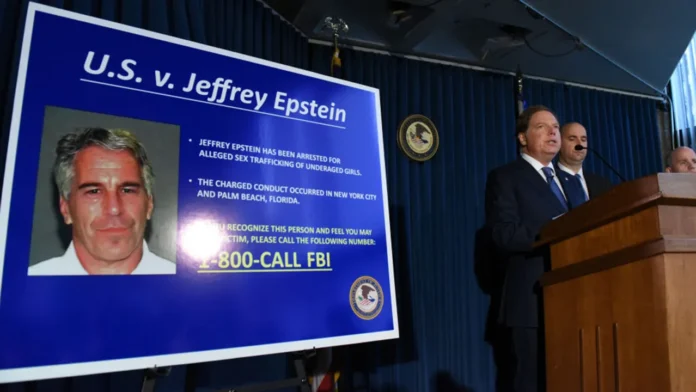
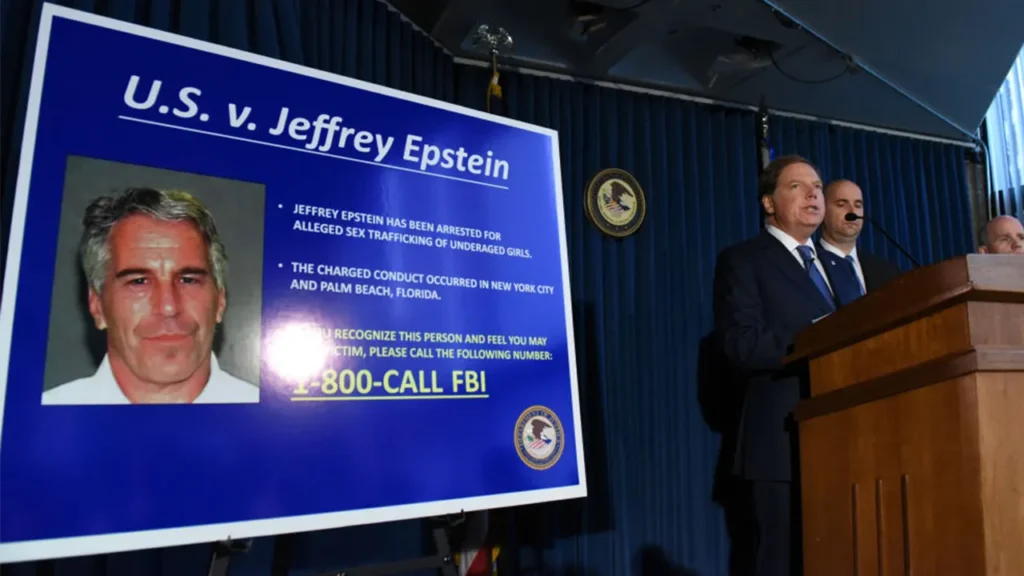
Washington (BN24) – The U.S. House Oversight Committee on Tuesday released more than 33,000 pages of records tied to disgraced financier and convicted sex offender Jeffrey Epstein, reviving public scrutiny over the government’s handling of the case.
The documents, posted online, include court filings, police interviews, and body camera footage dating back nearly two decades. Much of the material, however, appears to already be public, raising questions over whether the release would shed new light on Epstein’s extensive history of abuse and his connections to powerful figures. Epstein died by suicide in a Manhattan jail in 2019 while awaiting trial on federal sex trafficking charges.
The release comes as the Trump administration faces escalating criticism for resisting calls to disclose additional files related to Epstein. The White House has urged Republican lawmakers not to support a bipartisan discharge petition introduced by Rep. Thomas Massie, R-Ky., and Rep. Ro Khanna, D-Calif., that would compel the full release of all Epstein-related records.
House Speaker Mike Johnson, a Louisiana Republican, dismissed the petition as unnecessary following the committee’s move, saying it was “moot” now that the files were made public. “It’s superfluous at this point, and I think we’re achieving the desired end here,” Johnson said. He and other lawmakers also met with survivors of Epstein’s abuse, alongside victims of his longtime associate Ghislaine Maxwell, who was convicted in 2021 of aiding Epstein’s sex trafficking operation.
Committee chair James Comer, R-Ky., defended the release, arguing it addressed public concerns without needing the petition. But top Democrats criticized the decision, calling it an attempt to distract from the administration’s refusal to release additional information. “The 33,000 pages of Epstein documents James Comer has decided to ‘release’ were already mostly public information. To the American people – don’t let this fool you,” said Rep. Robert Garcia, the committee’s ranking Democrat.
Some of the records include evidence from the 2005 investigation into Epstein’s Florida estate, including a police interview with a former employee who described “a lot of girls that were very, very young” visiting Epstein’s home. The employee said he could not confirm if they were minors.
Despite the volume of the release, the material appears to have done little to quell public anger. A Reuters/Ipsos poll in July found that most Americans, including a majority of Republicans, believe the government continues to withhold key details about Epstein’s activities and his powerful network of associates.
President Donald Trump, who once counted Epstein as part of his social circle, has largely avoided the subject in recent weeks. Earlier this year, he sued the Wall Street Journal over its reporting on his past relationship with Epstein, dismissing the controversy as a political hoax.
The controversy underscores growing distrust in how the government has handled Epstein’s case. While the Oversight Committee insists its release represents transparency, critics argue the decision falls short of providing the accountability that survivors and the public continue to demand.
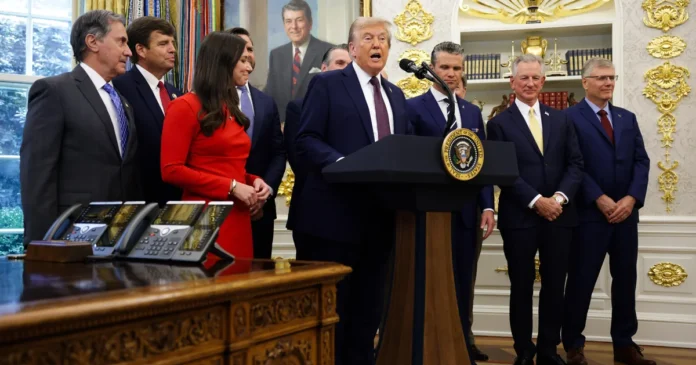
WASHINGTON (BN24) — President Donald Trump announced Tuesday that U.S. Space Command headquarters will relocate from Colorado Springs, Colorado, to Huntsville, Alabama, reversing years of debate over the permanent home of the nation’s newest military command.
Appearing in the Oval Office alongside Vice President JD Vance, Defense Secretary Pete Hegseth and Alabama lawmakers, Trump said the decision marked “seven years in the making” and would bring thousands of jobs to Huntsville, a city he hailed as “Rocket City.”
Trump said Alabama’s congressional delegation had lobbied aggressively for the move and credited their efforts for the outcome. “They fought harder for it than anybody else,” Trump said, adding that the command’s relocation would strengthen U.S. security while boosting Alabama’s economy.
The announcement represents a sharp break from President Joe Biden’s 2023 decision to keep the headquarters in Colorado, where Space Command had operated temporarily at Peterson Space Force Base. Biden had argued at the time that moving the command risked undermining military readiness, citing concerns raised by Air Force Gen. James Dickinson.
The Air Force inspector general later reported that Huntsville’s Redstone Arsenal was the service’s preferred site, though the timeline for building facilities comparable to those in Colorado could take years. Still, Alabama won the endorsement of Pentagon officials who pointed to its strong ties to NASA, the U.S. Army Space and Missile Defense Command, and the Missile Defense Agency.
Trump used the announcement to criticize Colorado, not only for losing the command but also for its reliance on mail-in voting, which he suggested factored into his decision. “That played a big factor,” he said.
Defense Secretary Hegseth praised the move, declaring it would ensure America stayed “leaps and bounds ahead” in future warfare. Vice President Vance called Huntsville “exactly the right place” for Space Command and described the decision as a “visionary move.”
U.S. Space Command, originally established in 1985, oversees military operations in space. It was dissolved in 2002 when its responsibilities shifted to U.S. Strategic Command, but Trump reestablished it during his first term and elevated it to one of 11 unified combatant commands. The current commander, Gen. Stephen Whiting, leads about 1,700 personnel in Colorado and oversees nearly 18,000 forces worldwide.
With the headquarters now set for Alabama, Huntsville will soon become the focal point of U.S. military efforts in space, reshaping the balance of defense infrastructure between the two states.
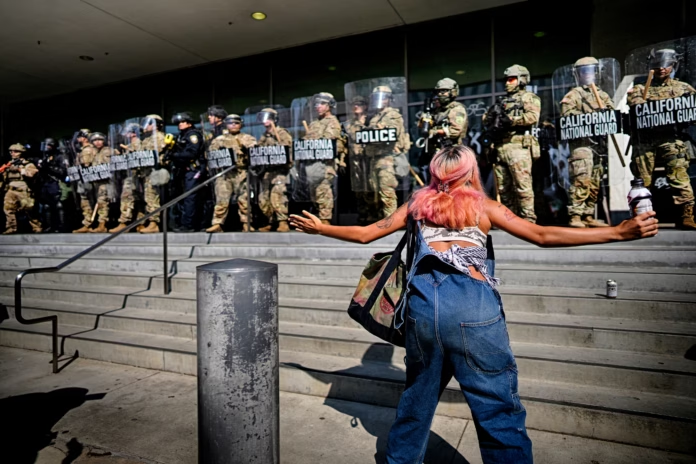
LOS ANGELES (BN24) — A federal judge in California has ruled that President Donald Trump’s deployment of the National Guard to Los Angeles in June was unlawful, saying the move violated a longstanding ban on the military’s involvement in domestic law enforcement.
U.S. District Judge Charles Breyer said Trump’s decision ran afoul of the Posse Comitatus Act, an 1878 law that restricts the use of federal troops for domestic policing unless expressly authorized by Congress. In his ruling, Breyer cited the Guard’s roles in traffic blockades, crowd control, and setting up security perimeters as examples of prohibited military activity.
The ruling stems from Trump’s decision to send troops into Los Angeles during protests against immigration raids earlier this summer. The White House had argued the deployment was necessary to quell violence, but California officials, including Gov. Gavin Newsom, said local law enforcement was capable of handling the unrest without federal military intervention.
In a statement, Newsom welcomed the decision, calling it a victory for “democracy and the Constitution.” His administration had sued Trump shortly after the June deployment, alleging the president unlawfully bypassed the governor’s authority to control California’s National Guard contingent.
The court ruling, however, is limited to California. Still, legal experts say it could create challenges for Trump’s broader efforts to use the Guard in cities such as Chicago, where he has signaled plans to deploy troops in the coming days.
The Trump administration strongly rejected the judge’s conclusion. White House spokeswoman Anna Kelly said Breyer’s ruling was an attempt by “a rogue judge” to strip the Commander-in-Chief of his constitutional authority to protect American cities. She added that the administration will appeal and that the president “remains committed to protecting law-abiding citizens.”
The order is on hold until Sept. 12, giving the administration time to challenge it in higher courts.
Breyer warned in his opinion that Trump’s actions raised serious concerns about the creation of “a national police force with the President as its chief,” if the National Guard continued to be used for arrests, searches, riot control, or other law enforcement duties barred by the Posse Comitatus Act.
Trump has previously ordered Guard deployments in Washington, D.C., and has weighed sending additional troops to other cities. The California ruling now places legal limits on how far such deployments can go.
Washington (BN24) – President Donald Trump will announce Tuesday that U.S. Space Command headquarters will relocate from Colorado to Alabama, overturning a Biden-era decision that kept the command at its temporary base in Colorado Springs, according to two people familiar with the plans.
Trump is scheduled to speak in the afternoon, and the Pentagon has set up a livestream of the event titled “U.S. Space Command HQ Announcement.” White House press secretary Karoline Leavitt described it as “an exciting announcement related to the Department of Defense,” but did not confirm the location in advance.
The decision comes after years of political and military debate over where the command should be permanently located. Both Alabama and Colorado aggressively lobbied to secure the headquarters, citing economic benefits and national security implications.
Huntsville, Alabama, widely known as “Rocket City,” has deep ties to the U.S. space program. It hosts the Army’s Redstone Arsenal, NASA’s Marshall Space Flight Center, and the Army Space and Missile Defense Command, making it a strong candidate when the Air Force evaluated six sites in 2021. Huntsville was initially named the preferred site after considering infrastructure, cost, and community support.
However, in 2023, President Joe Biden announced that the command would remain permanently in Colorado Springs, citing concerns that relocating would disrupt military readiness. A subsequent review by the Defense Department’s inspector general was inconclusive and could not determine why Colorado was favored over Alabama.
Trump’s reversal ends a four-year back-and-forth over the location of Space Command, which oversees critical operations including satellite-based navigation, troop communications, and missile launch detection.
The decision also carries political weight. Trump has strong support in Alabama, where officials have long argued that Huntsville’s established aerospace and defense industry makes it the most logical home for the command.
The announcement is expected to set in motion preparations for moving personnel and operations from Colorado to Alabama, marking a major shift for the U.S. military’s newest combatant command.
KABUL, Afghanistan (BN24) — The death toll from Afghanistan’s most devastating earthquake in years has risen to more than 1,400, with thousands more injured, as rescue teams struggle to reach remote villages in the country’s mountainous eastern region, authorities said Tuesday.
Taliban government spokesperson Zabihullah Mujahid confirmed that at least 1,411 people were killed, more than 3,100 injured, and over 5,400 homes destroyed after the 6.0-magnitude quake struck shortly after midnight on Monday. Officials and aid groups warned the toll is likely to climb as more victims are recovered from beneath the rubble.
The Afghan Red Crescent Society and U.N. officials said many people remain trapped in collapsed mud-and-brick houses, particularly in Kunar and Nangarhar provinces, where the quake caused the most destruction. The Hindu Kush mountain region, where the Indian and Eurasian tectonic plates converge, has long been vulnerable to deadly tremors.
Rescue teams were deployed to four badly damaged villages in Kunar on Monday, with operations expanding Tuesday to harder-to-reach communities along the Pakistani border. “We cannot accurately predict how many bodies might still be trapped under the rubble,” said Ehsanullah Ehsan, head of Kunar’s disaster management office. “Our effort is to complete these operations as soon as possible and to begin distributing aid.”
Difficult terrain, blocked mountain roads and harsh weather conditions have slowed rescue efforts. Helicopters flew in supplies and evacuated the injured to hospitals in Kabul and Nangarhar, while ambulances lined damaged roads trying to reach devastated communities.
The United Nations Children’s Fund warned that thousands of children are among those at risk, sending medical supplies, warm clothing, tents, and hygiene kits. The World Health Organization said over 12,000 people have been directly affected, warning that Afghanistan’s fragile healthcare system is overwhelmed and heavily dependent on external aid.
Taliban soldiers were deployed to secure the area and assist survivors. Authorities also rushed to remove animal carcasses to prevent contamination of water sources. “Damaged roads, ongoing aftershocks, and the remoteness of many villages severely impede the delivery of aid,” WHO said.
The disaster has further strained Afghanistan’s Taliban administration, already weakened by the sharp drop in international funding. The nation of 42 million, reeling from war and widespread poverty, has faced a steep decline in aid since international donors slashed programs in response to Taliban restrictions on women and humanitarian workers.
So far, Britain has pledged £1 million ($1.35 million) in emergency support, while India has sent 1,000 tents and 15 tons of food supplies to Kunar. Additional pledges of assistance have come from China, the United Arab Emirates, the European Union, Pakistan and Iran, though much of the aid has yet to arrive.
The quake has underscored Afghanistan’s vulnerability as global crises stretch donor priorities. “With their houses in ruins, many people are living in the open, afraid of aftershocks,” said Safiullah Noorzai, of Aseel, a humanitarian technology platform. “Food and tents are desperately needed.”
The tragedy adds to Afghanistan’s mounting humanitarian crisis, where millions already depend on relief aid to survive.