

Europe’s football governing body has threatened to pull its member nations from FIFA competitions after rejecting FIFA President Gianni Infantino’s proposal to open the commercial rights of the World Cup and other tournaments to private investment, escalating one of the most significant governance disputes in the history of international football.
UEFA announced Thursday that its 55 member associations unanimously agreed they would not participate in FIFA competitions if the governing body proceeds with plans to create a privately funded commercial enterprise linked to the World Cup. Hours later, the Confederation of North, Central American and Caribbean Association Football, known as CONCACAF, also rejected the proposal after raising concerns over transparency, governance and the speed of the approval process.
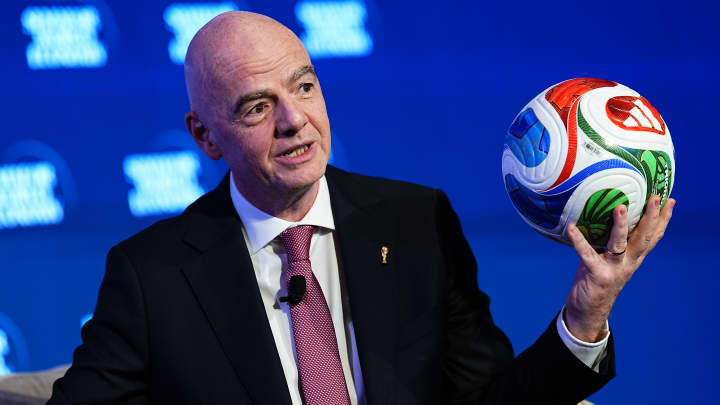
The coordinated resistance marks the strongest challenge yet to Infantino’s leadership and raises uncertainty over the future of FIFA competitions if the dispute remains unresolved.
What we know so far
FIFA is seeking approval from its 211 member associations for the creation of FIFA Forward Enterprise, a commercial subsidiary valued at about $20 billion that would oversee the marketing and commercial operations of major FIFA competitions, including the men’s and women’s World Cups and Club World Cups.
Under the proposal, outside investors would acquire a minority stake of up to 20 percent in the new company while FIFA maintains it would retain control over governance and competition rules. Investment firm Thrive Eternal, founded by Joshua Kushner, has been identified as the principal outside investor. FIFA has stated that the project would generate billions of dollars for football development worldwide.
Infantino has offered increased development funding to member associations that support the proposal before the September deadline, promising substantially larger financial distributions over the coming years if the plan is approved.
UEFA argues the proposal would fundamentally change the nature of international football by introducing commercial interests into competitions traditionally managed solely by football authorities.
The European body warned that football’s flagship tournament should remain under the stewardship of the sport rather than private investors.
“The FIFA World Cup belongs to football,” UEFA declared after an emergency meeting of its national associations. “It always will. And so long as Europe has a voice, it will never be for sale.”
CONCACAF echoed many of UEFA’s concerns following a separate meeting involving its 41 member associations.
The confederation questioned why FIFA requires outside investment after staging what it described as the most profitable World Cup in its history and criticized what it viewed as an unusually compressed approval timetable without sufficient consultation through FIFA’s governance structures.
The next FIFA tournament affected by any boycott could be the FIFA Women’s Under 20 World Cup scheduled to begin in Poland in September, while longer term uncertainty could also affect future international competitions if the dispute continues.
What authorities are saying
UEFA described the proposal as a serious departure from FIFA’s responsibility to protect football’s long term interests.
The organization warned that introducing private shareholders would permanently shift decision making toward financial returns rather than sporting priorities, potentially influencing tournament formats, scheduling, broadcasting strategies and future competition expansion.
European officials also criticized the absence of extensive consultation before FIFA presented the proposal to national associations for approval, arguing that an initiative of this scale should have undergone broader review throughout world football.
CONCACAF similarly expressed concerns over governance and transparency, stating that member associations were uncomfortable approving such a significant structural change without a more comprehensive review by FIFA’s established decision making bodies.
Earlier in the day, the Asian Football Confederation also voiced reservations, warning that unilateral action could undermine the existing balance between FIFA and continental confederations and affect domestic and regional competitions across Asia.
Why this matters
The dispute extends far beyond a disagreement over finances. It has evolved into a battle over who should shape the future of world football.
UEFA argues that introducing private equity into FIFA’s flagship competitions would fundamentally alter the governance of the sport. European officials contend that once outside investors obtain financial interests in tournaments such as the FIFA World Cup and Club World Cup, commercial returns could become a driving force behind decisions on competition formats, tournament expansion, broadcasting rights and the international match calendar.
Critics fear that investor expectations could encourage FIFA to stage larger tournaments more frequently, creating additional pressure on an already congested football calendar while reducing the commercial value of continental competitions organized by UEFA, the Asian Football Confederation, CONCACAF, the Confederation of African Football, CONMEBOL and the Oceania Football Confederation.
The controversy also represents one of the deepest divisions between FIFA and several continental confederations since the failed attempt to introduce a World Cup every two years in 2021, a proposal that was ultimately abandoned following widespread opposition led by UEFA.
Growing pressure on Infantino
The mounting resistance has placed FIFA President Gianni Infantino under increasing political pressure ahead of the next FIFA presidential election scheduled for 2027.
After more than a decade in office, Infantino had widely been viewed as the overwhelming favorite to secure another term. However, the coordinated opposition from UEFA, CONCACAF and criticism from the Asian Football Confederation has significantly altered the political landscape.
Although FIFA has maintained that the proposed commercial restructuring would leave all sporting decisions under its control, critics argue the process lacked transparency and was presented to member associations without adequate consultation through FIFA’s established governance channels.
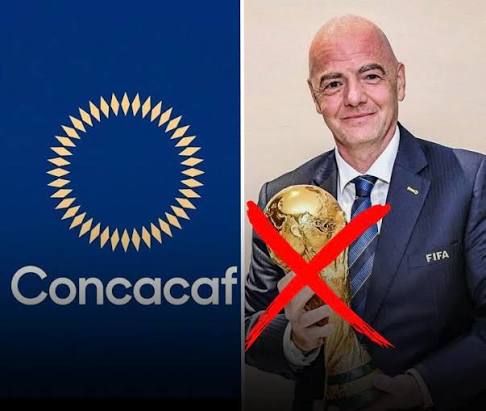
FIFA defends the proposal
FIFA has described the initiative as an opportunity to generate unprecedented investment for football development worldwide.
The governing body says the proposed FIFA Forward Enterprise would remain fully controlled by FIFA despite attracting minority outside investment. Under the plan, every one of FIFA’s 211 member associations could receive substantially increased development funding over the next decade through expanded FIFA Forward programs and a new Fast Forward initiative.
FIFA has insisted that governance, sporting regulations, tournament formats and the international calendar would remain exclusively under FIFA’s authority even if private investors purchase minority stakes in the commercial subsidiary.
The confrontation illustrates an increasingly visible struggle between two competing visions for global football.
Supporters of FIFA’s proposal view outside investment as a means of unlocking new financial resources that could accelerate football development, particularly in emerging football nations that depend heavily on FIFA grants.
Opponents believe the proposal introduces commercial obligations that could gradually influence sporting decisions. Their concern is not necessarily about immediate changes to tournament rules, but about the long term incentives created when investors expect sustained financial returns from football’s most valuable competitions.
The dispute also exposes broader governance questions. UEFA, CONCACAF and other confederations are challenging not only the proposal itself but also the decision making process behind it. Their objections suggest that future reforms affecting international football may face stronger institutional scrutiny, especially where commercial interests intersect with sporting governance.
If the European boycott threat is maintained, FIFA could face unprecedented disruption. European nations account for many of the world’s strongest men’s and women’s national teams, along with a significant share of global television audiences, commercial sponsorship and tournament revenue. Their absence would fundamentally reshape any FIFA competition.
What happens next
Attention now turns to FIFA’s consultation process and the approaching September deadline for member associations to decide whether to support the FIFA Forward Enterprise proposal.
Several continental confederations are expected to hold additional meetings before taking formal positions. The Confederation of African Football is scheduled to review the proposal, while the Oceania Football Confederation also plans discussions with its member associations.
Should FIFA proceed without addressing the concerns raised by UEFA and CONCACAF, world football could face one of its most significant governance crises, with the possibility of European nations withdrawing from future FIFA competitions and reshaping the international football calendar.
For now, negotiations remain possible, but the coming weeks are expected to determine whether the proposal moves forward or joins previous FIFA initiatives that failed in the face of widespread opposition.
Sources: The Associated Press, Reuters, FIFA, NBC News, FlashscoreUSA, Sports Illustrated.





