Home Blog Page 275

11 Dead After Kenyan Police Open Fire on Antigovernment Protesters

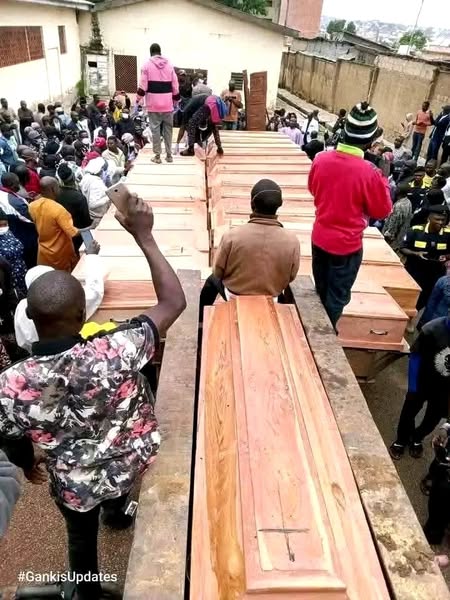
Nairobi, Kenya (BN24) – Kenyan police shot and killed at least 11 people during nationwide anti government protests on Monday, as annual commemorations of a landmark pro-democracy uprising turned into a sweeping call for President William Ruto to resign.

Authorities said 52 police officers were injured as officers fired live ammunition and water cannons at crowds in Nairobi and other cities. In the capital, hundreds of demonstrators marched through heavily policed streets, many blowing whistles in defiance, while officers blocked roads leading to the city center.

The July 7 protest, known as “Saba Saba”—Kiswahili for “seven seven,” reflecting the date—marks the anniversary of 1990 demonstrations demanding a return to multiparty democracy after years of one-party rule under President Daniel arap Moi. But this year, the rallies swelled into a broader outcry against corruption, poverty, police brutality, and the deaths of government critics.

Reporting from Nairobi, Al Jazeera’s Malcolm Webb said clashes erupted on multiple roads and in other regions as police attempted to contain demonstrators determined to reach the city center.

“We started receiving reports from several locations of people with gunshot wounds,” Webb said, noting that ambulances were dispatched to collect the wounded.

Most schools and at least one shopping mall in Nairobi closed preemptively amid fears of violence, following similar demonstrations last month that left dozens dead and thousands of businesses damaged.

“We are not ready to go back because who will fight for our rights then? We will be here till evening,” Francis Waswa, a construction worker, told Reuters.

Demonstrators accused authorities of paying armed vandals to infiltrate the protests and discredit the movement. The government, meanwhile, described the rallies as an “attempted coup.”

Interior Minister Kipchumba Murkomen insisted security forces were prepared to protect property and maintain order. “Our security agencies are on high alert to deal decisively with criminals and other elements of ill intent who may seek to infiltrate peaceful processions,” Murkomen said in a statement on X.

Prominent activist Hanifa Aden criticized the clampdown, posting on social media: “The police getting rained on as they block every road while we stay at home warming our beds. Total shutdown and forced holiday executed by the state.”

On Sunday, men wielding sticks stormed a Kenyan Human Rights Commission news conference where organizers condemned extrajudicial killings and enforced disappearances.

The unrest has been fueled by rising anger over inequality in a country where about 80% of people work informal, low-paying jobs despite growing economic expectations.

The death in police custody of Albert Ojwang, a teacher and blogger, in June galvanized public outrage. Prosecutors have since charged six people—including three police officers—with his murder. All pleaded not guilty.

Human rights monitors estimate at least 80 people have been killed in demonstrations since June, while dozens more have been detained without charge.

Despite mounting discontent, President Ruto—who came to power in 2022—maintains a firm political position. His alliance with longtime opposition figure Raila Odinga has left Kenya’s opposition fractured, with no clear challenger emerging ahead of the 2027 election.

Police in Nigeria Arrest Man With Woman’s Body Part, Rescue Kidnapped Driver

AWKA, Nigeria (BN24) — Police in Nigeria’s Anambra State have arrested a 25-year-old man found in possession of a woman’s breast and rescued a kidnapped truck driver while recovering millions of naira worth of stolen goods in separate security operations over the weekend.

The Anambra State Police Command announced Sunday that Samuel Eze was taken into custody after joint security teams discovered him carrying the severed body part during a routine patrol in the Awada area of Obosi. The arrest occurred on July 6 at approximately 3:30 p.m. along Jude Onyekwere Street when police officers working alongside local vigilante operatives encountered the suspect.

Command spokesman Tochukwu Ikenga said in a statement that the woman’s breast was immediately recovered and deposited at a morgue for preservation while Eze undergoes police interrogation. The suspect now faces investigation and potential prosecution for the disturbing crime, though authorities have not disclosed details about the victim or circumstances surrounding the acquisition of the body part.

In a separate operation conducted two days earlier, police officers attached to the Rapid Response Squad successfully rescued a kidnapped truck driver and recovered a vehicle loaded with custard powder valued at N9.5 million. The rescue operation took place on July 4 at 12:45 p.m. following what authorities described as credible intelligence information.

Three male suspects were arrested in connection with the truck hijacking scheme. Police identified the men as Udegenyi Ugochukwu, 38, Anayochukwu Okonkwo, 47, and Good Odigili, 47. During interrogation, the suspects confessed to authorities that they had planned to deliver the stolen goods to a warehouse in Asaba, Delta State, but instead abducted the driver, tied him up in nearby bushland, and diverted the valuable cargo to Enugwu Ukwu.

The coordinated criminal operation appears to have involved significant planning, with the perpetrators targeting the commercial truck specifically for its valuable cargo. The successful rescue of the driver and recovery of the goods demonstrates the effectiveness of intelligence-led policing operations in the region.

Police also announced the recovery of a suspected stolen Toyota Sienna vehicle bearing registration number 736 JP with “Forum of Accountants Delta State” inscribed on its body. Officers from the Obosi Division discovered the abandoned vehicle during a patrol along Okpuno-Umuota Village on July 5 at 4:30 p.m.

The command has issued a public appeal for the rightful owners of the recovered vehicle to come forward with valid proof of ownership for verification and possible collection. This procedure reflects standard protocol for recovered stolen vehicles to ensure proper return to legitimate owners while preventing fraudulent claims.

The series of arrests and recoveries highlights the ongoing security challenges facing Nigeria’s southeastern states, where criminal activities ranging from kidnapping to ritual killings have become persistent concerns for law enforcement agencies. The involvement of vigilante operatives alongside regular police forces demonstrates the collaborative approach being employed to combat crime in the region.

Command spokesman Ikenga emphasized that the Anambra State Police remain committed to maintaining public safety through sustained joint security operations. The collaborative effort involves multiple agencies including police, military personnel, Civil Defence Corps, Immigration Service, Department of State Services, and local vigilante groups working together across the state.

The diverse nature of crimes addressed in these recent operations underscores the complex security environment that Nigerian police forces must navigate. From violent crimes involving body parts to sophisticated truck hijacking schemes, law enforcement agencies are confronting various criminal enterprises that threaten public safety and economic activity.

The successful outcomes of these operations may serve to demonstrate improved coordination between different security agencies and the value of community-based vigilante groups in supporting formal law enforcement efforts. However, the presence of such serious crimes also reflects ongoing challenges in maintaining comprehensive security across Nigeria’s diverse regions.

All suspects remain in custody undergoing interrogation as investigations continue into their respective alleged crimes. The cases will likely proceed through Nigeria’s judicial system, where the suspects will face charges appropriate to their alleged offenses.

PUNCHNG

Trump Announces 25% Tariffs on Japan and South Korea Imports, Rattling Global Markets

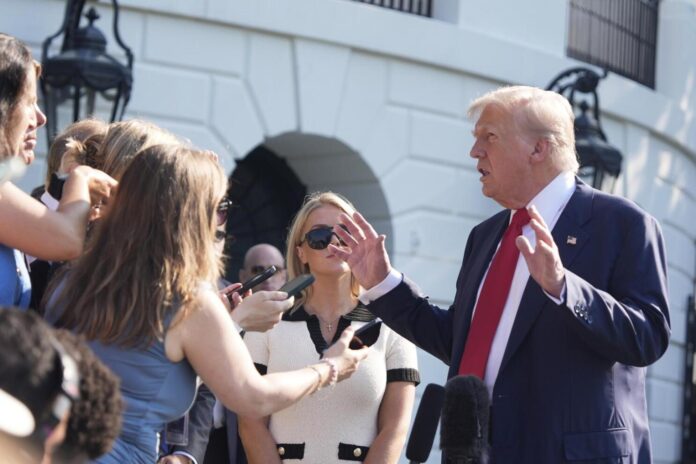
Washington, DC (BN24) – President Donald Trump said Monday the United States will impose sweeping 25% tariffs on imports from Japan and South Korea starting August 1, escalating his aggressive trade agenda and jolting financial markets already on edge over months of tariff threats.

In letters addressed to the leaders of Japan and South Korea—and posted on his Truth Social platform—Trump warned that any retaliatory tariff hikes would trigger even steeper U.S. levies. “If for any reason you decide to raise your Tariffs, then, whatever the number you choose to raise them by, will be added onto the 25% that we charge,” Trump wrote.

The move marks the first in a series of 12 letters the White House plans to issue to U.S. trading partners in coming days. Later Monday, Trump added that tariffs would also be imposed on Malaysia and Kazakhstan at 25%, South Africa at 30%, and Laos and Myanmar at 40%.

The new rate for Japan is one percentage point higher than the figure announced in April, while South Korea’s rate remains unchanged. Trump had temporarily capped the tariffs at 10% in the spring to allow time for negotiations, but only Britain and Vietnam have struck last-minute trade deals to avoid the higher duties.

White House spokeswoman Karoline Leavitt confirmed the executive order delaying the July 9 implementation deadline to August 1, giving countries three more weeks to clinch agreements. She declined to identify the remaining countries but said “there will be additional letters in the coming days” and that “we are close” to sealing several new deals.

Neither the Japanese nor South Korean embassies in Washington immediately commented.

The announcement sent U.S. stocks tumbling, with the S&P 500 dropping nearly 1% in its biggest decline in three weeks. Shares of Japanese automakers were hit especially hard, as Toyota fell 4.1% and Honda slid 3.8%. The dollar gained against the yen and the Korean won amid growing uncertainty about how the tariffs will reverberate through Asia’s export economies.

U.S. Treasury Secretary Scott Bessent said he expected a flurry of trade activity within 48 hours, as countries scrambled to avoid the tariffs. “My mailbox was full last night with a lot of new offers, a lot of new proposals,” Bessent told CNBC, predicting a “busy couple of days.”

Europe, meanwhile, continued efforts to head off its own tariff hikes. European Commission President Ursula von der Leyen held talks with Trump over the weekend that officials described as a “good exchange,” though it was unclear whether the EU’s efforts would yield an agreement before the deadline.

Without a deal, U.S. tariffs on most EU imports would jump from 10% to 20%. Trump has also threatened to slap a 17% duty on European food and agricultural goods.

Trump’s move underscores his willingness to challenge even longtime allies with steep trade penalties if they fail to meet his demands. It also follows his warning that any BRICS nation siding with “anti-American” policies would face an additional 10% tariff.

The BRICS bloc—comprising Brazil, Russia, India, China, South Africa, and recent additions Egypt, Ethiopia, Indonesia, Iran, and the United Arab Emirates—has been gathering in Brazil this week to emphasize multipolar cooperation. Kremlin spokesman Dmitry Peskov said Monday that BRICS was never intended to target the United States, calling it a “group of countries that share common approaches and a common world view.”

Across Europe, officials weighed whether to push for a limited trade pact or stand firm against Trump’s escalating demands. Germany’s government said Chancellor Friedrich Merz held weekend talks with French and Italian leaders to coordinate strategy, with Berlin warning that the country’s industries remain highly vulnerable to new tariffs.

Automaker Mercedes-Benz said Monday that its second-quarter vehicle sales dropped 9%, blaming the tariff turbulence for disruptions.

With the August 1 deadline looming, many countries now face an urgent choice: capitulate to Trump’s tariff threats or brace for a new wave of trade shocks.

3 Killed, 10 Wounded in South Philadelphia Shooting; One Suspect in Custody, Police Say

Philly, Pennsylvania (BN24) – Three people were killed and 10 others were wounded in a shooting early Monday that erupted on a residential block in South Philadelphia’s Grays Ferry neighborhood, according to authorities.

Philadelphia Police Commissioner Kevin Bethel said the violence broke out just before 1 a.m. along South Taney Street, leaving the neighborhood littered with shell casings. All three of the people killed were adults, and among the wounded were two juveniles, Bethel told reporters at the scene.

“We have numerous rounds that were shot on the block,” Bethel said, calling the gunfire “coward, want-to-be-thugs stuff” that tore through a community already reeling from a string of recent shootings.

Police said one person armed with a weapon was taken into custody. Investigators have not identified the suspect or described what might have led to the shooting.

The block had already drawn police attention in the previous 24 hours, Bethel noted. Officers had responded to the same area between Saturday night and early Sunday and made several arrests during that incident, though officials did not say whether those arrests were related to Monday’s gunfire.

The shooting unfolded amid a holiday weekend marked by gun violence in Philadelphia and around the country. Just days earlier, at least eight people were shot outside a nightclub in South Philadelphia, authorities said.

Police were continuing to process the scene Monday morning, combing the street for evidence and working to notify families of the deceased.

Russian Transport Minister Roman Starovoit Dies in Apparent Suicide After Dismissal by Putin Amid Corruption Probe

Moscow (BN24) – Russian Transport Minister Roman Starovoit was found dead from a gunshot wound in what investigators have described as an apparent suicide, just hours after President Vladimir Putin issued a decree dismissing him from his cabinet post. His death, confirmed Monday by the Investigative Committee of Russia, adds a chilling new layer to the widening corruption scandal engulfing the country’s military and infrastructure leadership.

Starovoit, 53, who served as governor of the Kursk region before taking over the transport ministry in May 2024, was discovered in his car in the upscale Odintsovo district outside Moscow, an area known for housing members of Russia’s elite. Authorities said a firearm, reportedly gifted to him officially, was found next to his body. His death comes as prosecutors intensify a sweeping investigation into the alleged embezzlement of state funds earmarked for building military fortifications in western Russia.

The Kremlin gave no reason for Starovoit’s dismissal, and the precise timing of his death remains unclear. Kremlin spokesman Dmitry Peskov declined to comment on the matter during a Monday briefing, focusing instead on praising Starovoit’s replacement, Andrei Nikitin.

Russian law enforcement agents were seen retrieving Starovoit’s body late Monday, with Investigative Committee spokesperson Svetlana Petrenko stating a criminal inquiry had been launched but that suicide remains the leading theory. Lawmaker Andrei Kartapolov, a former deputy defense minister and now head of the Duma’s defense committee, claimed in an interview that Starovoit “killed himself quite a while ago,” possibly even before his removal from office was made public.

Starovoit had last been seen publicly Sunday morning in an official ministry video, appearing to receive updates in the department’s situation room. Just hours later, the Kremlin’s website posted the official decree of his dismissal.

His death closely follows mounting scrutiny over the failure of Russian defensive positions in the Kursk region, which came under Ukrainian assault in August 2024. Ukrainian forces quickly breached Russian lines, overwhelming border units and capturing territory in a lightning strike. It was the first time Russian soil had been occupied since World War II. Although Moscow eventually reclaimed the area by April, the military’s initial collapse was a serious embarrassment for the Kremlin.

Russian media have linked the Kursk debacle to widespread embezzlement during the construction of border defenses. Starovoit’s successor as governor of Kursk, Alexei Smirnov, resigned in December and was arrested in April on related corruption charges. Reports suggest that Starovoit may have been under investigation and potentially faced similar charges.

Starovoit’s death came amid other developments in what appears to be an intensifying anti-corruption purge. On the same day, Andrei Korneichuk, a top official with Russia’s state rail agency under the Transport Ministry, died suddenly of a suspected heart attack during a business meeting, local media reported.

Also Monday, the Investigative Committee announced the arrest of Viktor Strigunov, former deputy chief of the National Guard, on charges of corruption and abuse of office. Separately, a military court sentenced former Deputy Chief of the General Staff Khalil Arslanov to 17 years in prison for corruption—part of a broader investigation into graft among officials tied to former Defense Minister Sergei Shoigu. Just last week, Shoigu’s former deputy Timur Ivanov was convicted of embezzlement and money laundering, receiving a 13-year sentence.

Shoigu, a longtime Putin ally, was removed from the Defense Ministry but has since been appointed secretary of Russia’s powerful Security Council, a move viewed by analysts as an effort to shield him from further fallout.

As Russia continues to reel from the long war in Ukraine and growing domestic discontent over military failures, the death of Starovoit underscores the increasingly high stakes for Kremlin insiders caught in the crosshairs of corruption probes and political realignment.

Trump Threatens 10% Tariffs on BRICS Countries as Leaders Convene in Brazil-Reuters

Washington, DC (BN24) – President Donald Trump warned Sunday that the United States will impose an additional 10% tariff on any nation aligning with what he described as the “Anti-American policies” of the BRICS group, just hours after the bloc’s leaders opened a summit in Rio de Janeiro focused on strengthening ties among emerging economies.

The BRICS—originally Brazil, Russia, India, China, and South Africa—has expanded to include Egypt, Ethiopia, Indonesia, Iran, and the United Arab Emirates. The grouping now represents more than half the world’s population and around 40% of global economic output. In his remarks to business leaders on Saturday, Brazilian President Luiz Inacio Lula da Silva underscored the bloc’s rising clout and likened BRICS to the Cold War-era Non-Aligned Movement, portraying it as a counterweight to what he called growing protectionism and divisions in Western-led institutions.

“With multilateralism under attack, our autonomy is in check once again,” Lula said. “BRICS is the heir to the Non-Aligned Movement.”

The group’s joint statement, issued on Sunday, warned that surging tariffs—including U.S. trade measures—threaten to destabilize global commerce. Hours later, Trump responded on Truth Social.

“Any Country aligning themselves with the Anti-American policies of BRICS will be charged an ADDITIONAL 10% Tariff. There will be no exceptions to this policy. Thank you for your attention to this matter!” Trump posted, without detailing which policies he considers anti-American.

Trump’s administration is racing to finalize dozens of trade agreements ahead of a July 9 deadline he set for imposing sweeping retaliatory tariffs. His threat underscores growing tensions between Washington and the Global South, even as developing nations press to overhaul institutions such as the United Nations Security Council and the International Monetary Fund to reflect what they call a multipolar 21st-century reality.

The summit drew an array of leaders to Rio’s Museum of Modern Art, including Indian Prime Minister Narendra Modi and South African President Cyril Ramaphosa. Russian President Vladimir Putin joined virtually due to the International Criminal Court’s arrest warrant over the Ukraine war, while China’s President Xi Jinping sent Premier Li Qiang in his place.

Indonesia’s senior economic minister, Airlangga Hartarto, attended in person and plans to travel to the United States on Monday for tariff negotiations, an official confirmed.

In their closing communique, BRICS leaders voiced support for Ethiopia and Iran joining the World Trade Organization, condemned Israeli military action in Gaza, and criticized attacks on Iran’s civilian infrastructure. They also described a recent assault in India-administered Kashmir as a terrorist act.

While the bloc’s expansion has bolstered its diplomatic weight, it has also raised questions about whether a group that now includes regional rivals can maintain a coherent agenda.

Leaders also advanced plans to pilot a BRICS Multilateral Guarantees initiative within the group’s New Development Bank to lower borrowing costs and spur investment. In a separate statement on artificial intelligence, they called for safeguards against unauthorized data collection and a framework to ensure fair compensation for AI-driven content.

Brazil, which will host the United Nations climate summit in November, has sought to showcase the role of developing countries in tackling climate change—an effort that contrasts sharply with Trump’s rollback of U.S. climate commitments. According to two people familiar with the talks, China and the UAE signaled to Brazilian officials their intention to invest in a proposed Tropical Forests Forever Facility to fund protection of endangered forests worldwide.

Crew Abandons Red Sea Ship After Explosive Drone Attack in Renewed Houthi Assault-Politico

Tel Aviv, Israel (BN24) – Crew members aboard a Liberian-flagged bulk carrier attacked in the Red Sea evacuated the vessel Sunday night as it caught fire and began taking on water, marking the first major assault on shipping in the corridor in months, according to British military officials.

The attack struck the Greek-owned Magic Seas as it sailed about 60 miles southwest of Yemen’s Houthi-controlled port of Hodeidah, the United Kingdom Maritime Trade Operations center reported. The crew’s evacuation underscores the seriousness of the assault, which security analysts say signals that Yemen’s Houthi rebels may be resuming their campaign of targeting commercial shipping despite diplomatic efforts to reduce regional tensions.

While Houthi-run media reported the incident without claiming responsibility, suspicion fell squarely on the group. Private security firm Ambrey said armed skiffs attacked first, followed by bomb-laden drone boats. The firm reported that two of the drone boats successfully struck the Magic Seas while shipboard security teams managed to destroy two others before impact.

The ship, which was headed north through the Red Sea, broadcast distress calls as fires spread onboard. “Authorities are investigating,” UKMTO said, confirming the crew had abandoned ship. The U.S. Navy’s Bahrain-based 5th Fleet referred questions to U.S. Central Command, which said it was aware of the incident but did not offer further details.

Moammar al-Eryani, information minister for Yemen’s exiled government, blamed the Houthis and called the attack part of Iran’s strategy to destabilize the region. “The attack also proves once again that the Houthis are merely a front for an Iranian scheme using Yemen as a platform to undermine regional and global stability,” al-Eryani wrote on X, alleging Tehran has provided the militants with advanced weaponry, including drones, sea mines and missiles.

Since the start of the Israel-Hamas war last October, the Houthis have repeatedly targeted shipping in the Red Sea in what they describe as acts of solidarity with Palestinians. Between late 2023 and early 2025, Houthi forces attacked more than 100 merchant vessels, sinking two and killing four sailors, severely disrupting maritime trade in a corridor that typically handles $1 trillion in goods annually.

The group declared a pause in attacks earlier this year after U.S. forces launched an intense campaign against its positions. However, the lull ended in mid-March, and Sunday’s strike is the most significant since then.

“The attack likely serves as a message that the Houthis continue to possess the capability and willingness to strike at strategic maritime targets regardless of diplomatic developments,” wrote Yemen analyst Mohammad al-Basha.

The timing comes as the region braces for more instability. A possible ceasefire between Israel and Hamas remains uncertain, and Iran has hinted it could resume nuclear talks after U.S. strikes on its nuclear facilities amid Israel’s conflict with Tehran-backed militias.

The Magic Seas incident also highlights the evolving tactics in Red Sea waters, where pirates and Yemen’s coast guard have previously engaged in firefights. However, neither group is known to deploy explosive drone boats.

Houthi officials offered no additional comment beyond acknowledging the incident on their al-Masirah satellite channel as the group’s secretive leader Abdul Malik al-Houthi delivered a televised speech.

Israel Strikes Yemeni Ports and Power Plant in Retaliation for Houthi Attacks

Tel Aviv, Israel (BN24) – Israel launched airstrikes against Houthi-controlled targets across Yemen early Monday, hitting three ports and a power plant in the first Israeli assault on Yemeni territory in nearly a month, the Israeli military said.

The strikes targeted facilities in the ports of Hodeidah, Ras Isa and Salif, as well as the Ras Qantib power plant, which Yemeni residents said was knocked out of service, plunging the Red Sea port city of Hodeidah into darkness.

An Israeli military statement said the bombardment was a direct response to what it described as repeated Houthi attacks on Israel and international shipping lanes. The Iran-backed Houthis have launched dozens of missiles and drones at Israeli territory and vessels in the Red Sea since the outbreak of the Gaza war in October 2023, framing their campaign as an act of solidarity with Palestinians. Most of the projectiles have been intercepted or fell short.

The Israeli military also confirmed that warplanes struck the Galaxy Leader, a ship the Houthis seized last year in Ras Isa port. According to Israel, Houthi forces had installed a radar system on the vessel to track maritime traffic and support operations against international shipping.

“The Houthi terrorist regime’s forces installed a radar system on the ship, and are using it to track vessels in international maritime space, in order to promote the Houthi terrorist regime’s activities,” the statement said.

Houthi military spokespersons claimed their air defences responded to the Israeli assault with large numbers of domestically produced surface-to-air missiles. However, they did not specify whether any Israeli aircraft were hit.

Residents in Hodeidah described a series of powerful explosions that damaged port infrastructure and crippled the city’s electricity grid. There were no immediate reports of casualties from the strikes.

The attacks came just hours after another vessel was struck off Hodeidah’s coast. Its crew was forced to abandon ship as it began taking on water. While no group claimed responsibility for that incident, the maritime security firm Ambrey said the circumstances matched the Houthis’ pattern of targeting commercial ships.

The Houthis have emerged as one of Iran’s most formidable regional allies, evolving under leader Abdul Malik al-Houthi from a loose group of mountain fighters into a force with tens of thousands of troops, ballistic missiles and armed drones. Western governments and Saudi Arabia accuse Tehran of arming the group, a charge Iran denies.

Israel has repeatedly struck Iranian-backed groups in the region, including Hezbollah in Lebanon and Hamas in Gaza, but the Houthis remain a significant military power despite more than nine years of war with a Saudi-led coalition.

Reuters

Boko Haram Gunmen Kill 9, Wound 4 in Northeast Nigeria Attack

Nigeria (BN24) – Boko Haram militants attacked a remote community in northeastern Nigeria’s Borno state, killing nine people and injuring four others, regional authorities said Sunday, marking the latest deadly assault in an area grappling with renewed extremist violence.

The assault targeted the Malam Fatori community near Nigeria’s border with Chad, roughly 270 kilometers (167 miles) from the state capital, Maiduguri, according to Borno state governor Babagana Zulum. The governor, who did not specify exactly when the attack occurred, dispatched local government commissioner Sugun Mai Mele to the area to deliver a warning to residents against any cooperation with insurgents.

“Anyone found collaborating with the insurgents to bring harm or attack to the people of Malam Fatori will be cursed,” Mele said during the visit. He added that the government is implementing measures to better secure the community and prevent future raids.

The assault comes amid a worrying resurgence of Boko Haram operations in Nigeria’s northeast, where fighters have increasingly overrun military positions, planted roadside bombs and carried out raids on civilians in recent months. The renewed attacks are fueling fears that the region could slide back toward the scale of violence seen during Boko Haram’s peak in the mid-2010s, despite military claims of steady progress.

Last month, a suspected female suicide bomber detonated explosives inside a restaurant in the Konduga area of Borno state, killing at least 10 people and wounding several more.

Since launching its campaign in 2009 to impose a radical version of Islamic law and eradicate Western education, Boko Haram’s insurgency has killed some 35,000 civilians and displaced over 2 million in Nigeria’s northeast alone, according to United Nations estimates. The violence has also destabilized neighboring countries across the Lake Chad region.

Beyond the northeast, Africa’s most populous nation is confronting escalating security crises in its north-central and northwestern states, where attacks by armed groups have left hundreds dead or wounded in recent months.

Israeli Army Says Hamas Naval Commander Killed as Airstrikes Intensify Ahead of Ceasefire Talks

Tel Aviv, Israel (BN24) – The Israeli military announced Sunday that its forces had killed Ramzi Ramadan Abd Ali Saleh, described as the commander of Hamas’s naval force in northern Gaza, during intensified operations in Gaza City.

In a statement, the army also listed other senior Hamas figures it claims to have eliminated, including Hisham Ayman Atiya Mansour, the deputy head of Hamas’s mortar shell operations, and Nissim Muhammad Suleiman Abu Sabha, alleged to be part of the same unit.

The surge in attacks comes as Israel’s military escalation has reached levels not seen since the first weeks of the war, with near-continuous bombardment across the enclave. In a span of two hours Sunday, at least seven airstrikes struck targets in the Gaza Strip.

Shortly before noon, a vehicle was hit on al-Jalal Street in Gaza City, killing one person and critically wounding others. Just an hour earlier, another vehicle was targeted nearby, leaving three people dead and several more injured. Those wounded were rushed to al-Shifa Hospital as rescuers struggled to clear the debris.

In the Sheikh Radwan neighborhood and the Tuffah district in eastern Gaza City, rescue teams continued working to recover bodies from the rubble of two residential buildings demolished in overnight air raids.

In northern Deir el-Balah, an airstrike struck a local community kitchen that had been providing food to displaced families. Three people were killed, including the kitchen’s main operator.

The intensified bombardment comes as negotiators prepare to relaunch mediated ceasefire talks aimed at halting the nearly 21-month conflict. Israeli officials have insisted military pressure will continue alongside the negotiations, which are expected to resume in Qatar this week.